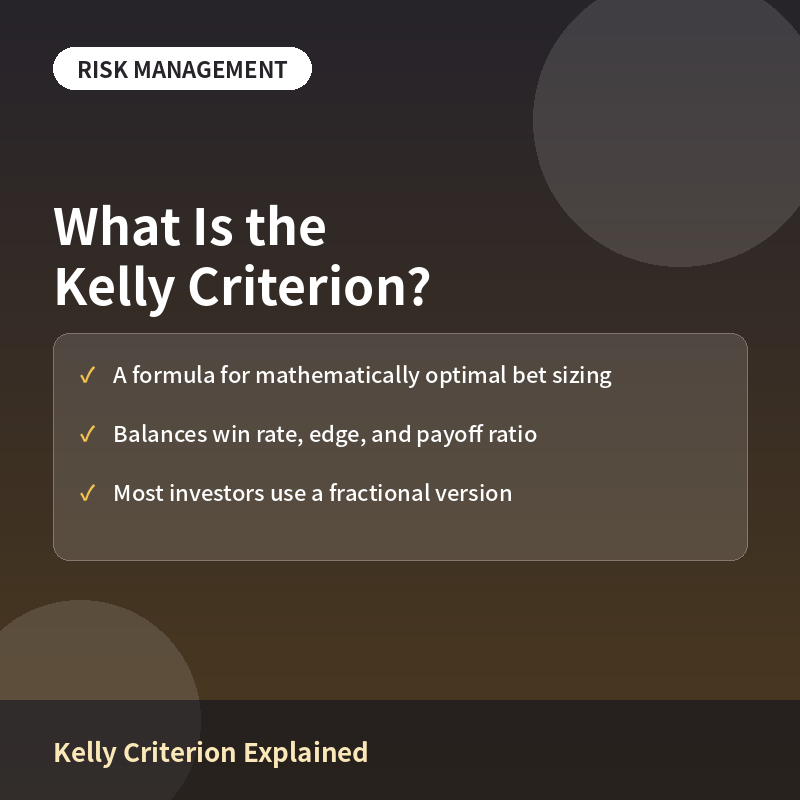
What Is the Kelly Criterion?
The Kelly Criterion is a formula developed by Bell Labs scientist John Kelly in 1956 to determine the optimal fraction of capital to allocate to a favorable bet or investment in order to maximize the long-run geometric growth rate of capital, given a known statistical edge.
The Kelly Formula
The standard formula is: f* = W − [(1 − W) ÷ R], where W is the probability of winning, R is the win/loss ratio (the average size of a winning outcome divided by the average size of a losing outcome), and f* is the fraction of capital the formula recommends allocating.
Worked Example
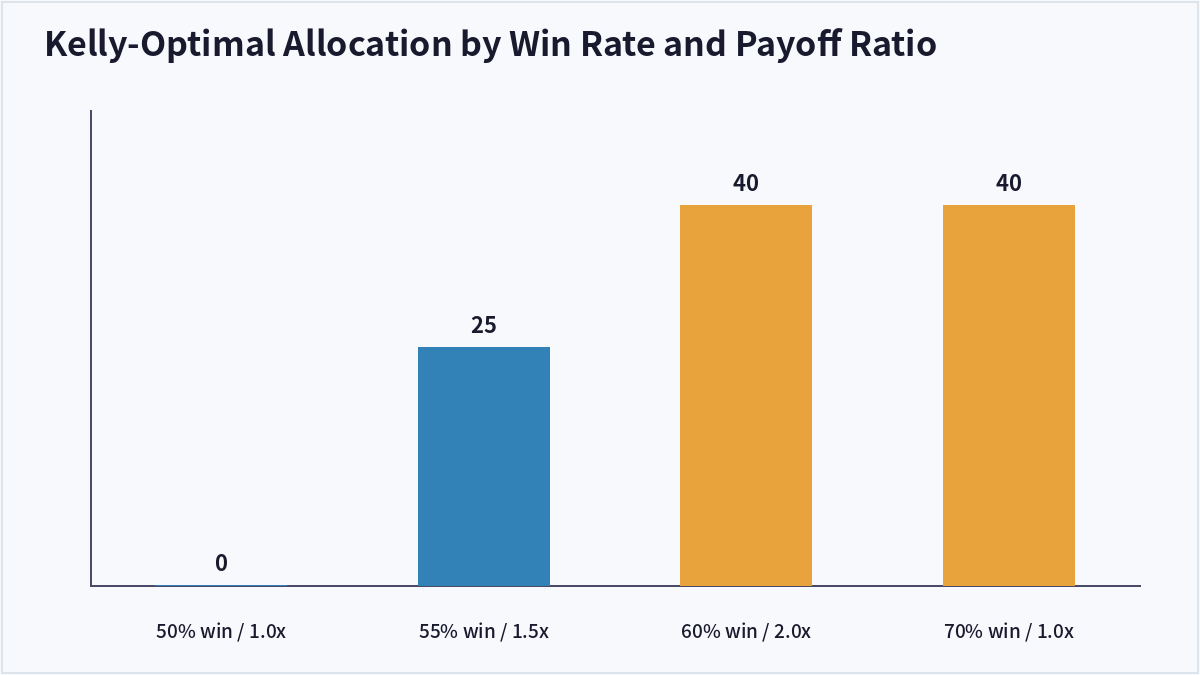
Suppose a trading strategy wins 55% of the time (W = 0.55), and the average win is 1.5 times the average loss (R = 1.5). Then f* = 0.55 − (0.45 ÷ 1.5) = 0.55 − 0.30 = 0.25. The Kelly Criterion suggests allocating 25% of available capital to this strategy.
| Win Probability (W) | Win/Loss Ratio (R) | Kelly Fraction (f*) |
|---|---|---|
| 50% | 1.0x | 0% |
| 55% | 1.5x | 25% |
| 60% | 2.0x | 40% |
| 70% | 1.0x | 40% |
Why Investors Use “Fractional Kelly”
Full Kelly sizing is mathematically optimal for long-run capital growth, but it also produces very large volatility and drawdowns, especially since real-world estimates of W and R are never perfectly precise. Because overestimating an edge and betting full Kelly can lead to severe losses, most professional investors and traders use a fraction of the formula’s result — commonly half-Kelly or quarter-Kelly — to meaningfully reduce swings while still capturing most of the long-term growth benefit.
Frequently Asked Questions
Does the Kelly Criterion guarantee profits?
No. It assumes the win probability and payoff ratio inputs are accurate, which is rarely true in practice. If those estimates are wrong, the formula’s output can lead to overexposure and losses even for a genuinely favorable strategy.
What happens if you bet more than the Kelly fraction?
Betting beyond the full Kelly fraction actually reduces expected long-run geometric growth and sharply increases the risk of large drawdowns or ruin, even though the edge itself is still favorable.
Why do most professional investors use fractional Kelly?
Fractional Kelly reduces sensitivity to estimation error in the win rate and payoff ratio, smooths out volatility, and still captures the majority of the growth benefit that full Kelly targets — a more practical trade-off for real portfolios.
Can the Kelly Criterion be applied to a stock portfolio, not just bets?
Yes, in a generalized form. Portfolio-level applications use expected returns, volatility, and correlations to derive an optimal allocation across multiple assets, extending the same underlying logic of balancing edge against risk of ruin.
Key Takeaways
The Kelly Criterion offers a mathematical framework for sizing positions based on a strategy’s win rate and payoff ratio, aiming to maximize long-run growth. Because real-world inputs are always estimates, most practitioners apply a fractional version of the formula to manage the risk of overconfidence. This article is for informational purposes only and does not constitute investment advice.

QuantPro: AI Finds the Trade Before You Do
From AI-powered chart analysis to real-time market intelligence — everything a serious investor needs, in one platform.
- Automated AI chart analysis with precision trend timing
- Bull Radar: real-time visualization of geopolitical & economic shifts
- Live market-moving news and insights, curated for you
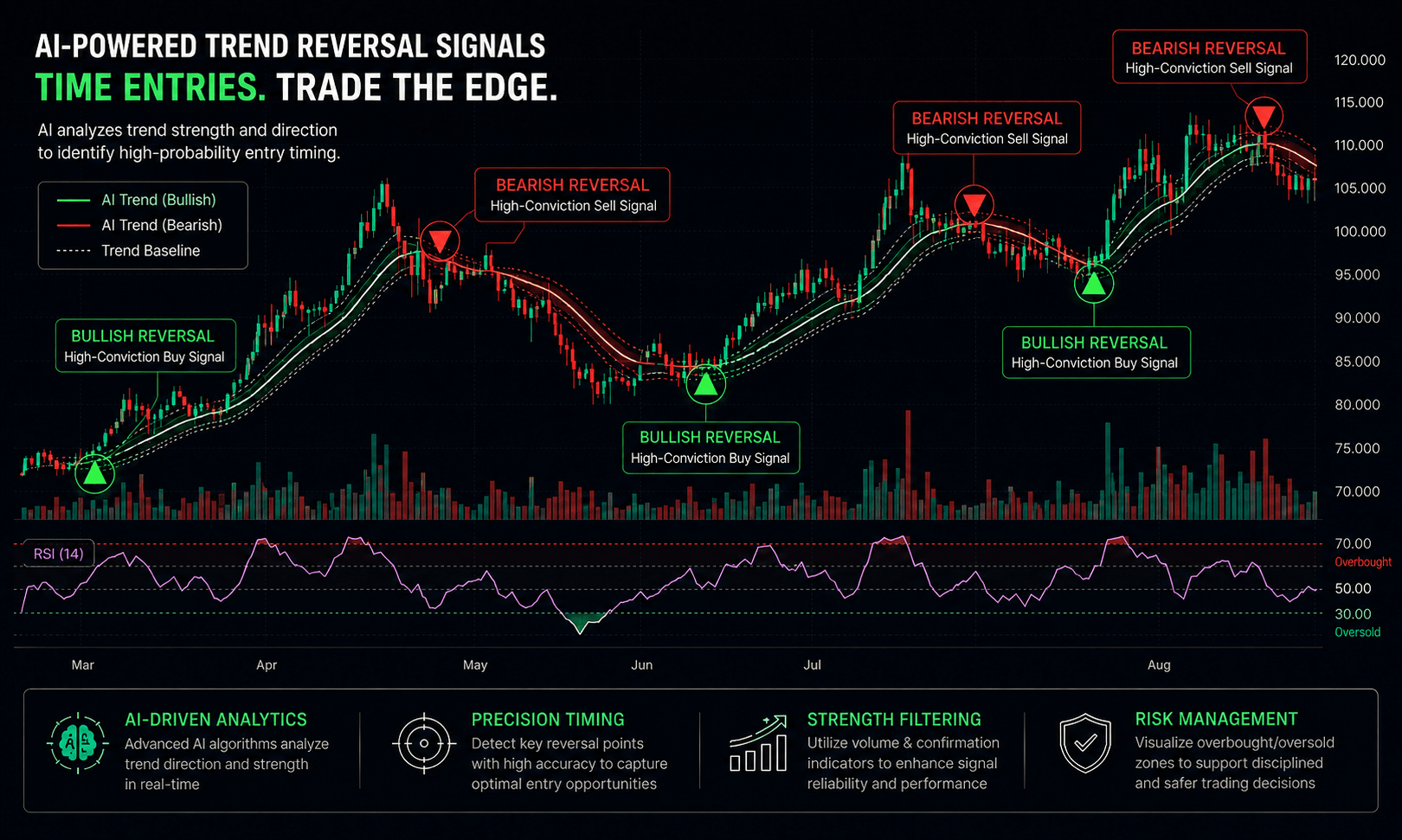
Bull Wave / Bear Wave Forecast Model
Engineered to help you read market direction and momentum faster than the crowd.
- Instantly separate bullish momentum from bearish pressure
- Pinpoint high-probability entry zones with confidence
- Chart signals clear enough for beginners, sharp enough for pros
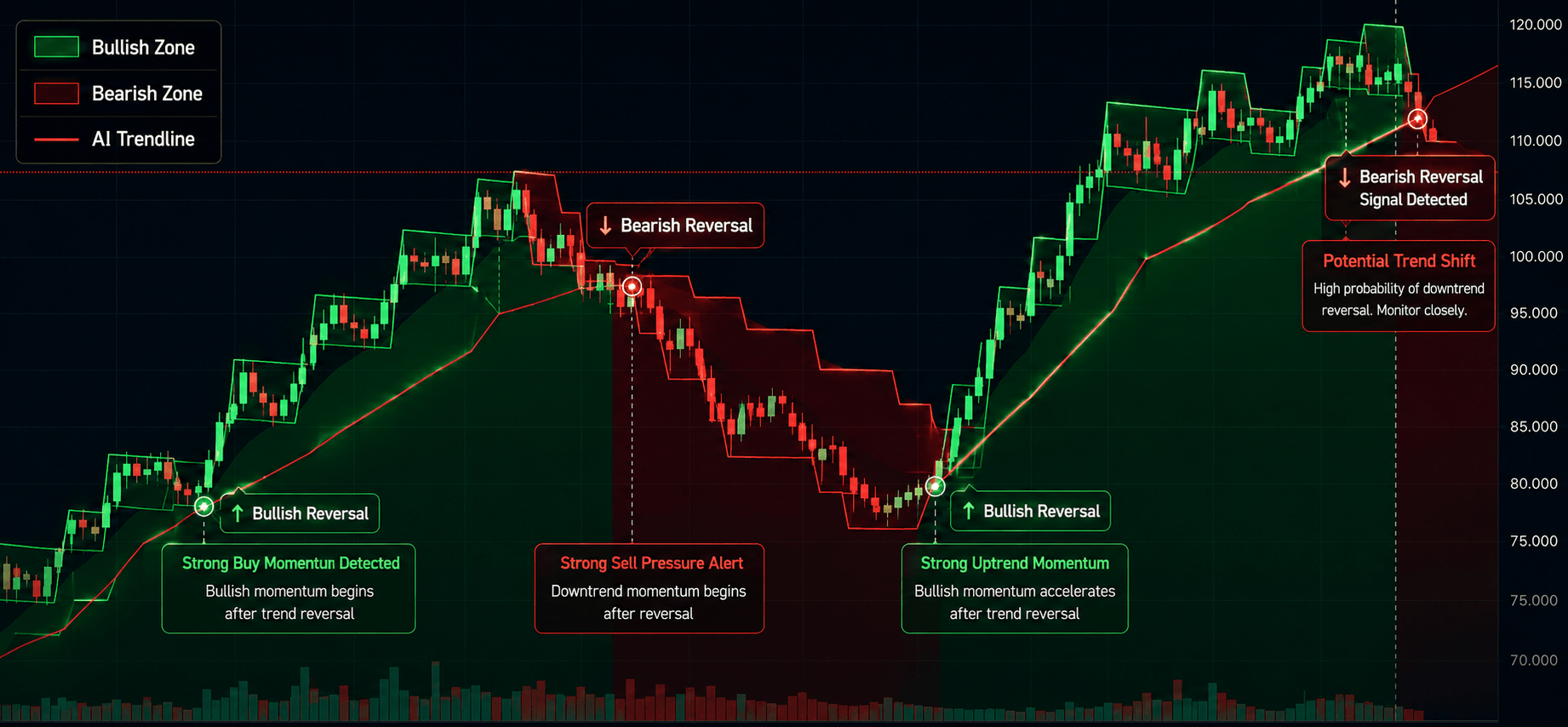
Winning Pattern Detection
Instantly surfaces the high-probability setups that repeat across the charts — a trusted edge for timing your entries and exits.
- Spot momentum building in real time
- Catch trend-reversal points before they break
- Built for active traders who need results, not theory

AI Live Economic Dashboard
AI analyzes real-time market data — turning complex, global investment flows into clear insight in seconds.
- Track global stock markets in real time
- See exactly which assets are strong — and which are fading
- Watch how geopolitical events move the markets
About the Author