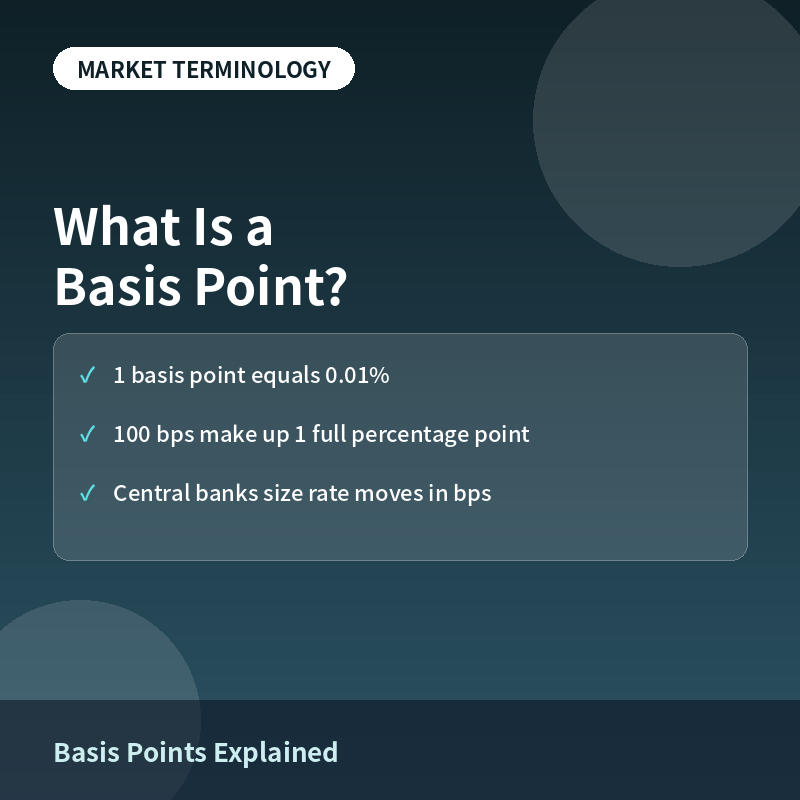
What Is a Basis Point?
A basis point, commonly abbreviated bps and pronounced “bip,” is a unit equal to one hundredth of one percentage point: 1 bps = 0.01% = 0.0001 in decimal form. It takes 100 basis points to equal 1 full percentage point.
Why Markets Use Basis Points Instead of Percentages
Basis points remove a common source of ambiguity. If a rate moves “from 5% to 5.5%,” someone could read that as either a 0.5 percentage-point increase or a 10% relative increase (0.5 divided by 5). Describing the same move as “up 50 basis points” is unambiguous — it always refers to the absolute change, never a relative percentage of the starting value.
Converting Basis Points to Percentages
| Basis Points | Percentage | Decimal |
|---|---|---|
| 1 bps | 0.01% | 0.0001 |
| 10 bps | 0.10% | 0.0010 |
| 25 bps | 0.25% | 0.0025 |
| 50 bps | 0.50% | 0.0050 |
| 100 bps | 1.00% | 0.0100 |
How Basis Points Are Used in Practice
Central Bank Rate Decisions
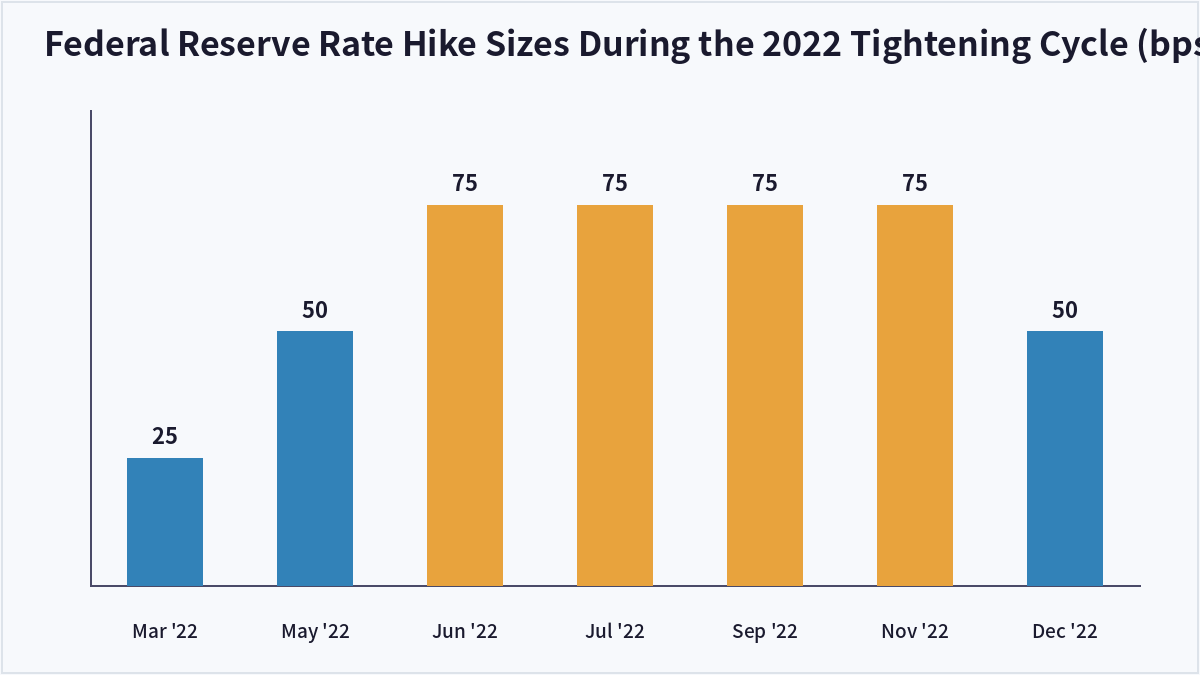
Central banks typically move policy rates in 25 bps increments under normal conditions, with a 50 bps move considered a “double hike” and 75 bps historically reserved for aggressive tightening. During its 2022 inflation-fighting campaign, the Federal Reserve raised rates by 25 bps in March, 50 bps in May, then four consecutive 75 bps hikes from June through November, before stepping back down to 50 bps in December — one of the fastest tightening cycles in decades.
Bond Yields and Credit Spreads
Bond traders quote yield changes and credit spreads in basis points because the moves involved are often fractions of a percent. A statement like “the spread widened by 15 bps” conveys precision that “0.15 percentage points” would state just as accurately but far less conventionally on a trading desk.
Fund Expense Ratios and Fees
Management fees, expense ratios, and advisory fees are frequently quoted in basis points as well. A fund charging “50 bps” has an annual expense ratio of 0.50%, meaning $50 per year in fees for every $10,000 invested.
Frequently Asked Questions
How many basis points are in 1%?
There are 100 basis points in 1 percentage point. So 1% equals 100 bps, 0.5% equals 50 bps, and 0.25% equals 25 bps.
Why don’t markets just use percentages?
Percentages can be interpreted as either an absolute change or a relative change from a base value, which creates ambiguity, especially for small moves. Basis points always refer to an absolute change, eliminating that confusion in fast-moving trading conversations.
What does it mean when the Fed “hikes 25 basis points”?
It means the Federal Reserve raised its target policy rate by 0.25 percentage points. If the target range was 5.00%–5.25%, a 25 bps hike would move it to 5.25%–5.50%.
How are basis points used for mutual fund fees?
Fund expense ratios are commonly expressed in bps. A fund with a 75 bps expense ratio charges 0.75% of assets annually, or $75 per year for every $10,000 invested, deducted gradually from the fund’s returns.
Key Takeaways
A basis point equals 0.01%, giving investors, traders, and central bankers a precise, unambiguous unit for describing small rate and yield changes. Whether it’s a Fed rate decision, a bond spread, or a fund’s expense ratio, converting the bps figure to a percentage is as simple as dividing by 100. This article is for informational purposes only and does not constitute investment advice.

QuantPro: AI Finds the Trade Before You Do
From AI-powered chart analysis to real-time market intelligence — everything a serious investor needs, in one platform.
- Automated AI chart analysis with precision trend timing
- Bull Radar: real-time visualization of geopolitical & economic shifts
- Live market-moving news and insights, curated for you
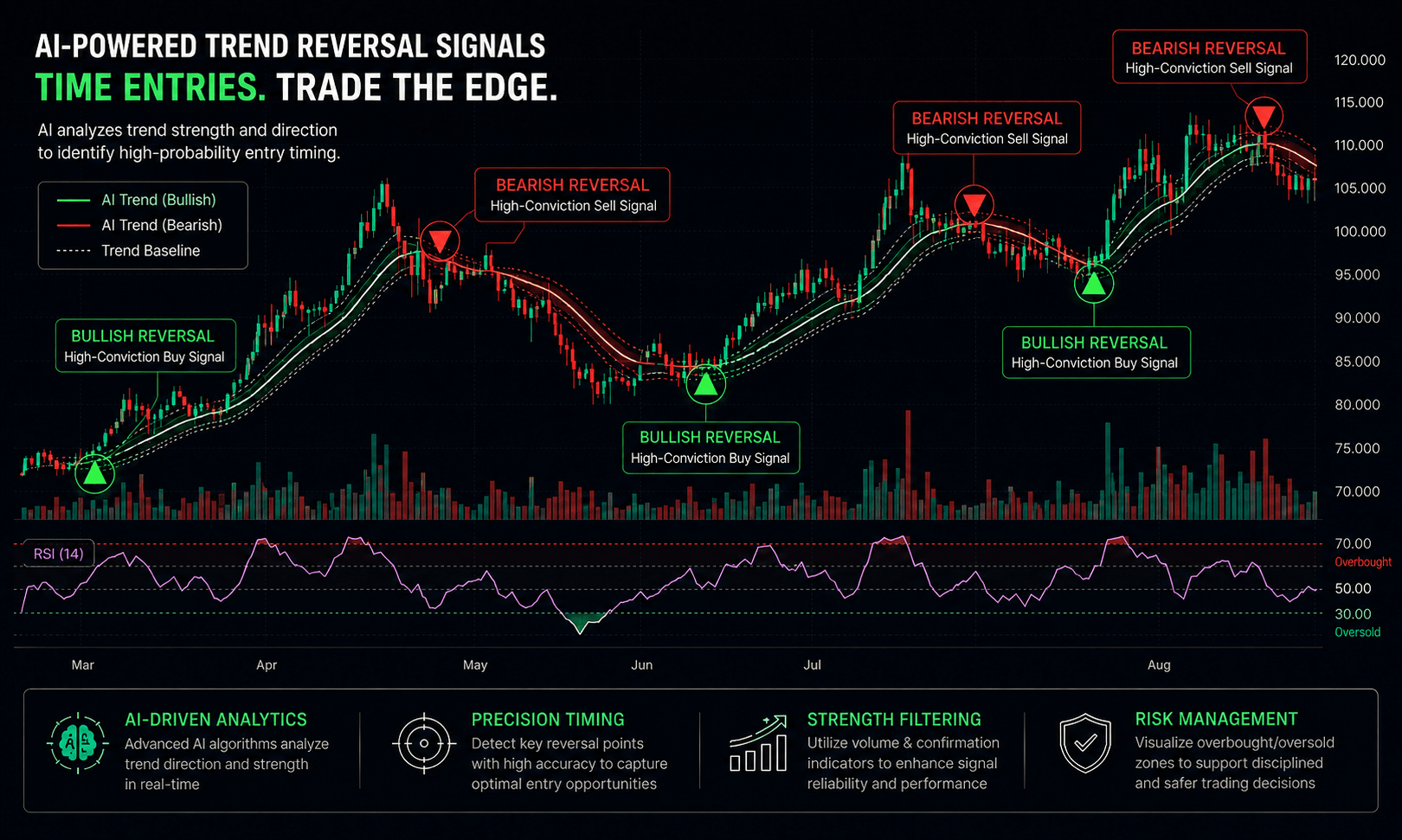
Bull Wave / Bear Wave Forecast Model
Engineered to help you read market direction and momentum faster than the crowd.
- Instantly separate bullish momentum from bearish pressure
- Pinpoint high-probability entry zones with confidence
- Chart signals clear enough for beginners, sharp enough for pros
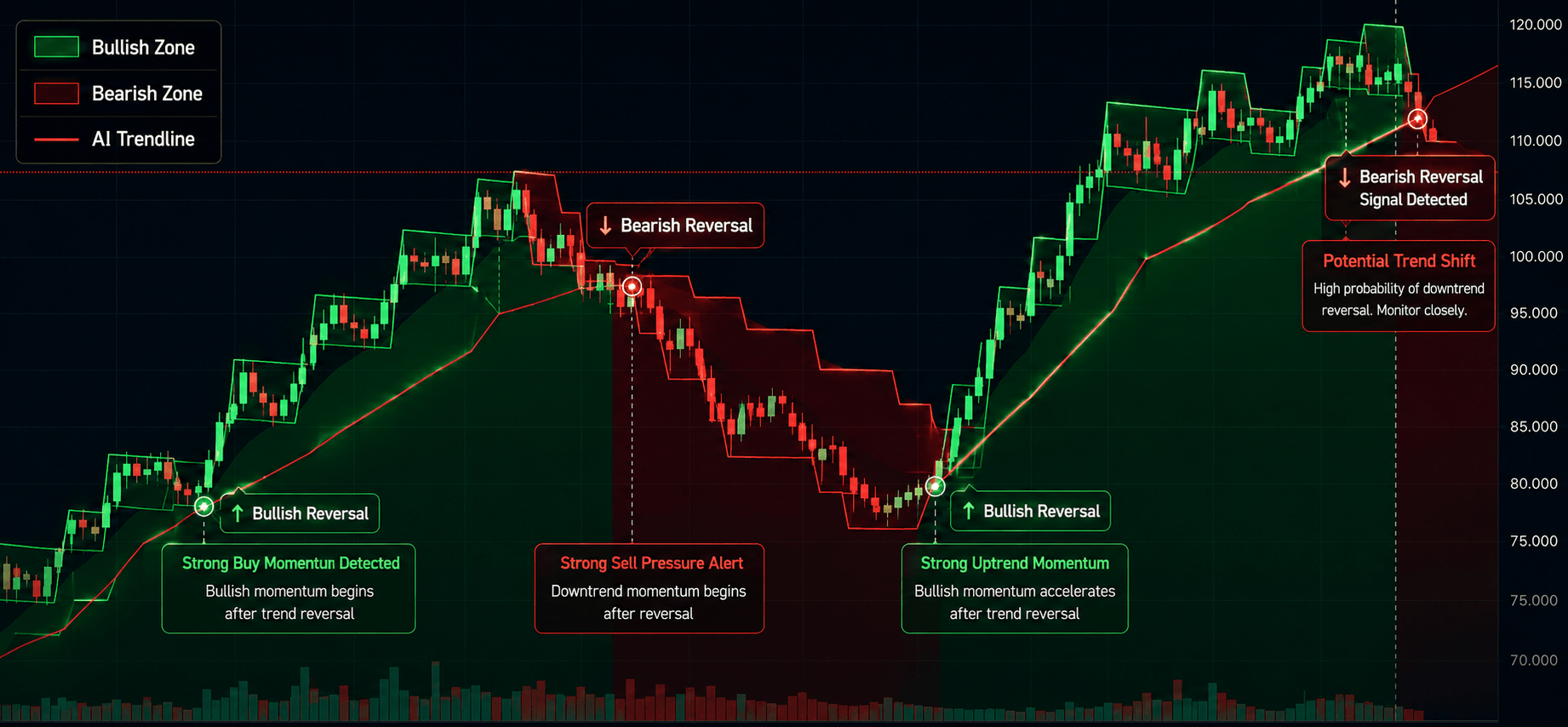
Winning Pattern Detection
Instantly surfaces the high-probability setups that repeat across the charts — a trusted edge for timing your entries and exits.
- Spot momentum building in real time
- Catch trend-reversal points before they break
- Built for active traders who need results, not theory
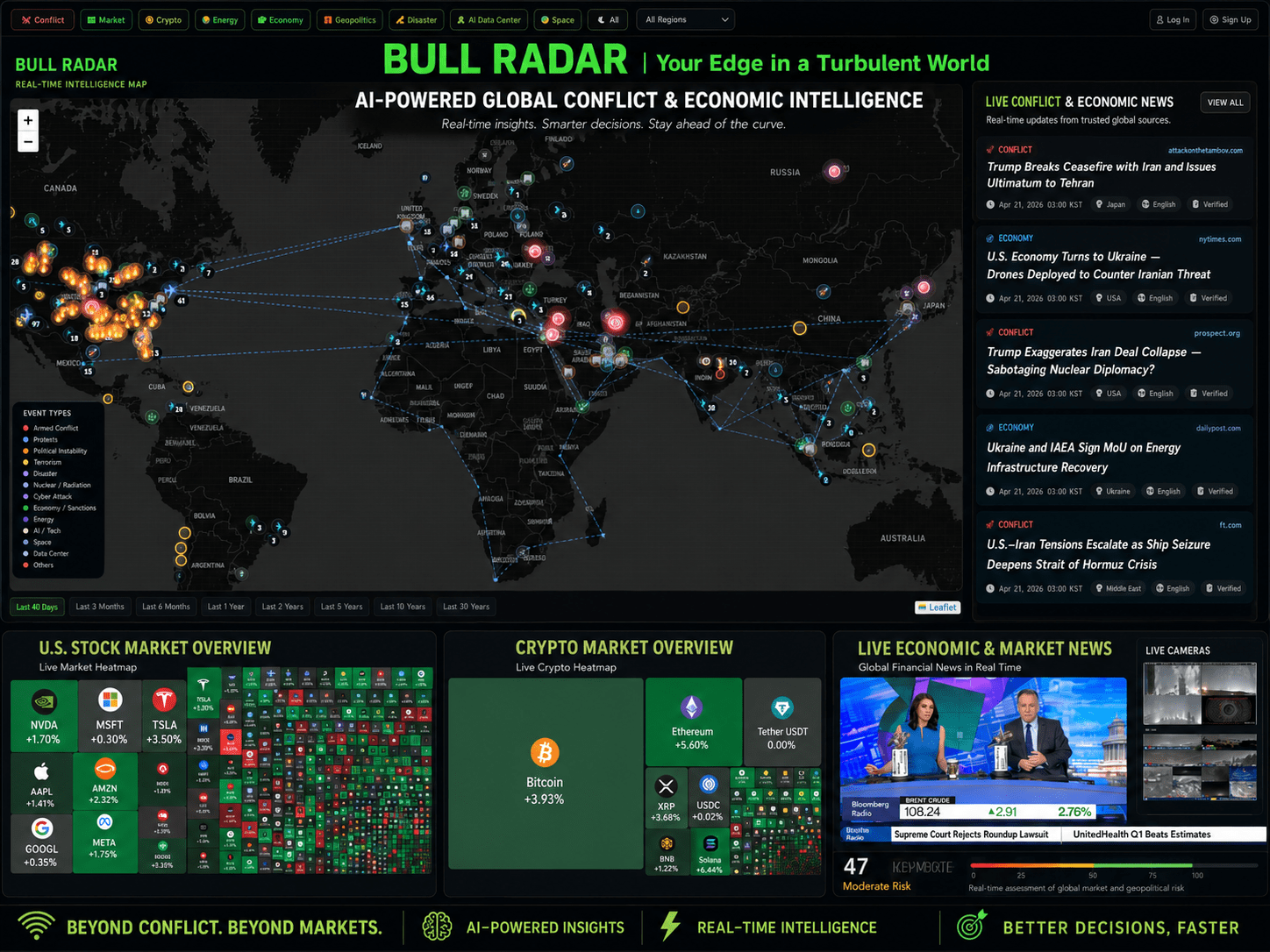
AI Live Economic Dashboard
AI analyzes real-time market data — turning complex, global investment flows into clear insight in seconds.
- Track global stock markets in real time
- See exactly which assets are strong — and which are fading
- Watch how geopolitical events move the markets
About the Author