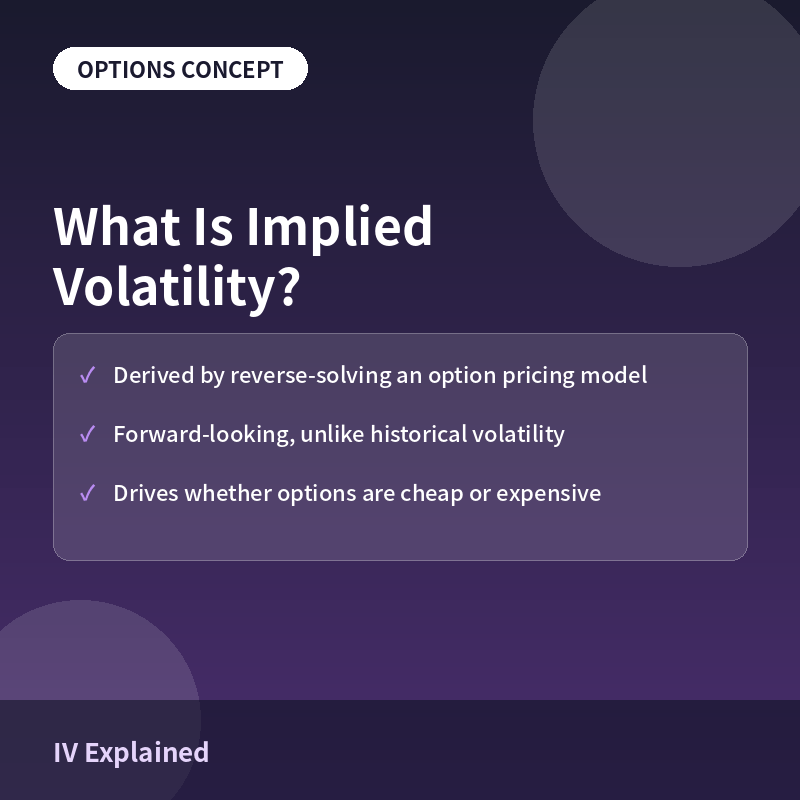
What Is Implied Volatility?
Implied volatility (IV) is the market’s forecast of a security’s future volatility, embedded in the current price of its options. It is derived by taking an option’s observed market price and an option-pricing model, such as Black-Scholes, and solving backward for the volatility input that would produce that price. This is different from historical (or realized) volatility, which is calculated directly from a security’s past price movements rather than implied from current option prices.
How Implied Volatility Is Derived
A pricing model like Black-Scholes normally works forward: feed in volatility, interest rates, time to expiration, and strike price, and it outputs a theoretical option price. Implied volatility runs that process in reverse — the actual market price is already known, so the model is solved for whatever volatility figure would justify that price. The result is expressed as an annualized percentage, and it changes constantly as option prices move throughout the trading day.
Implied Volatility vs. Historical Volatility
| Aspect | Implied Volatility | Historical Volatility |
|---|---|---|
| Basis | Derived from current option prices | Calculated from past price returns |
| Orientation | Forward-looking (an expectation) | Backward-looking (already realized) |
| Driven by | Supply/demand for options, sentiment | Actual price movement over the measured window |
| Typical use | Pricing options, gauging expected risk | Benchmarking against IV to spot potential mispricing |
IV Rank and IV Percentile
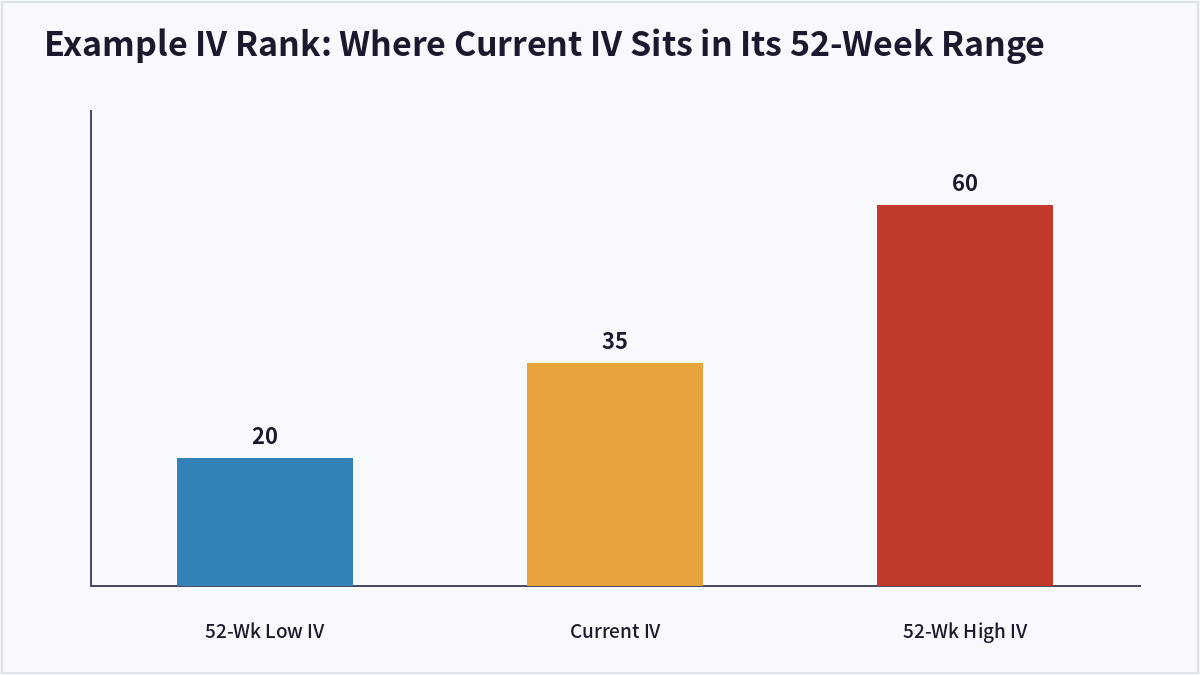
Because IV itself varies enormously by underlying security, traders often normalize it using IV Rank: (Current IV − 52-Week Low IV) ÷ (52-Week High IV − 52-Week Low IV) × 100. For example, if current IV is 35%, and the stock’s 52-week IV range has run from a low of 20% to a high of 60%, IV Rank = (35 − 20) ÷ (60 − 20) × 100 ≈ 38. That tells a trader current IV sits closer to the low end of its own one-year range, even if 35% sounds high in isolation.
How Traders Use Implied Volatility
Pricing and Selecting Option Strategies
When IV Rank is high, options are relatively expensive, which tends to favor premium-selling strategies such as covered calls or credit spreads. When IV Rank is low, options are relatively cheap, which tends to favor premium-buying strategies such as long calls, puts, or debit spreads.
The Volatility Risk Premium
On average, implied volatility tends to run somewhat higher than the volatility that subsequently gets realized, because option sellers demand compensation for taking on uncertainty. This persistent gap, known as the volatility risk premium, is part of why systematic option-selling strategies have historically shown a statistical edge over long periods — though that edge comes with real tail risk during volatility spikes.
Frequently Asked Questions
Is high implied volatility bullish or bearish?
Neither on its own. High IV signals the market expects a large price swing, but it does not indicate direction. Options traders read IV as a measure of expected magnitude, not sentiment about which way the price will move.
How is implied volatility different from the VIX?
The VIX is essentially the market-wide implied volatility of S&P 500 index options, aggregated into a single index. Implied volatility, more broadly, can be calculated for any individual stock or asset’s options, not just the index.
What causes implied volatility to spike?
Upcoming events with uncertain outcomes — earnings releases, FDA decisions, court rulings, macroeconomic data — as well as broad market stress or sudden liquidity shocks typically drive IV higher as demand for options increases.
Can implied volatility predict price direction?
No. IV reflects the expected size of a move, not its direction. A stock with high IV ahead of an earnings report could just as easily gap up as gap down.
Key Takeaways
Implied volatility is the market’s forward-looking estimate of future price swings, reverse-engineered from current option prices rather than measured from history. Tools like IV Rank help traders judge whether options are relatively cheap or expensive before choosing a strategy. This article is for informational purposes only and does not constitute investment advice.
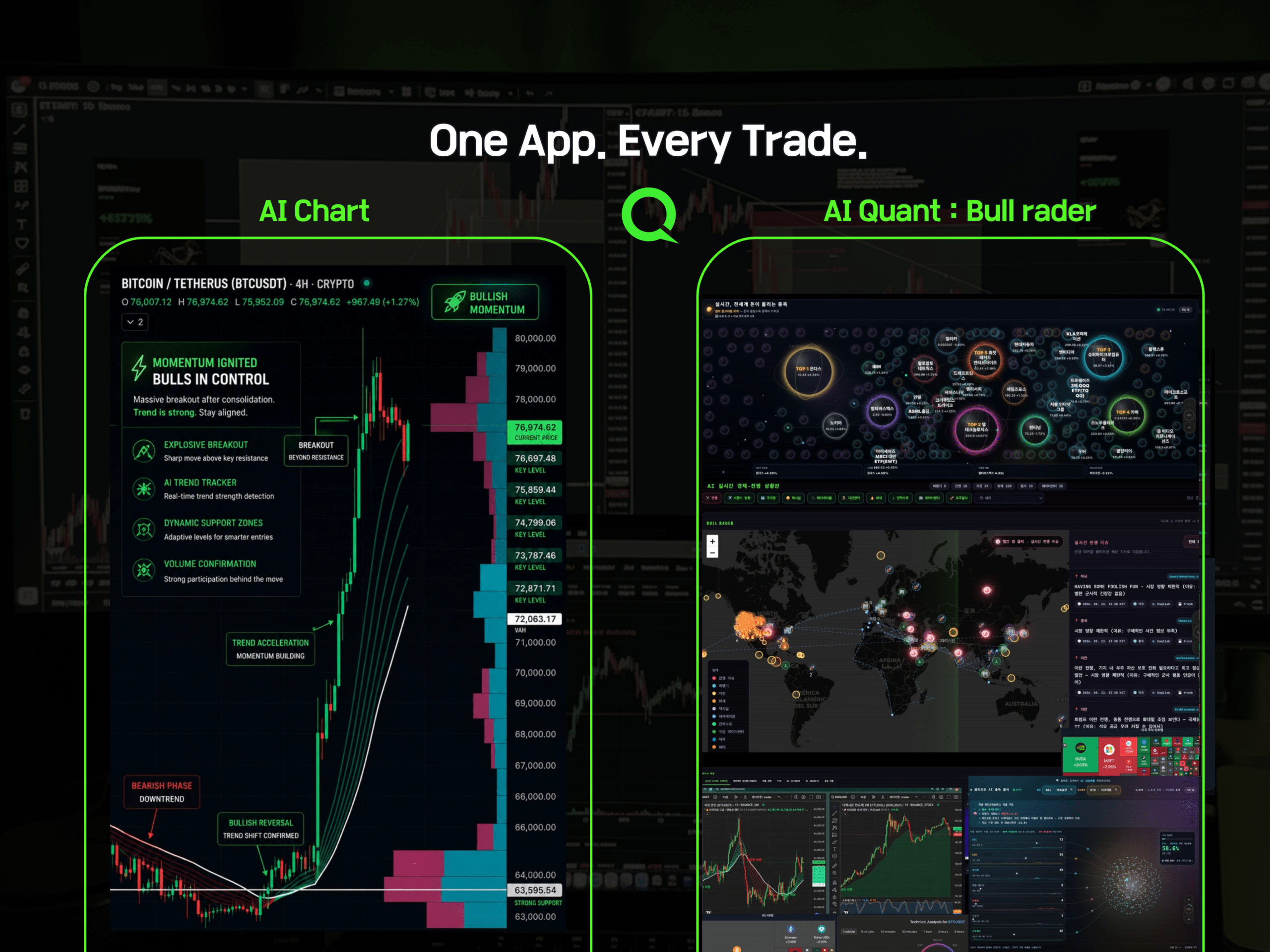
QuantPro: AI Finds the Trade Before You Do
From AI-powered chart analysis to real-time market intelligence — everything a serious investor needs, in one platform.
- Automated AI chart analysis with precision trend timing
- Bull Radar: real-time visualization of geopolitical & economic shifts
- Live market-moving news and insights, curated for you
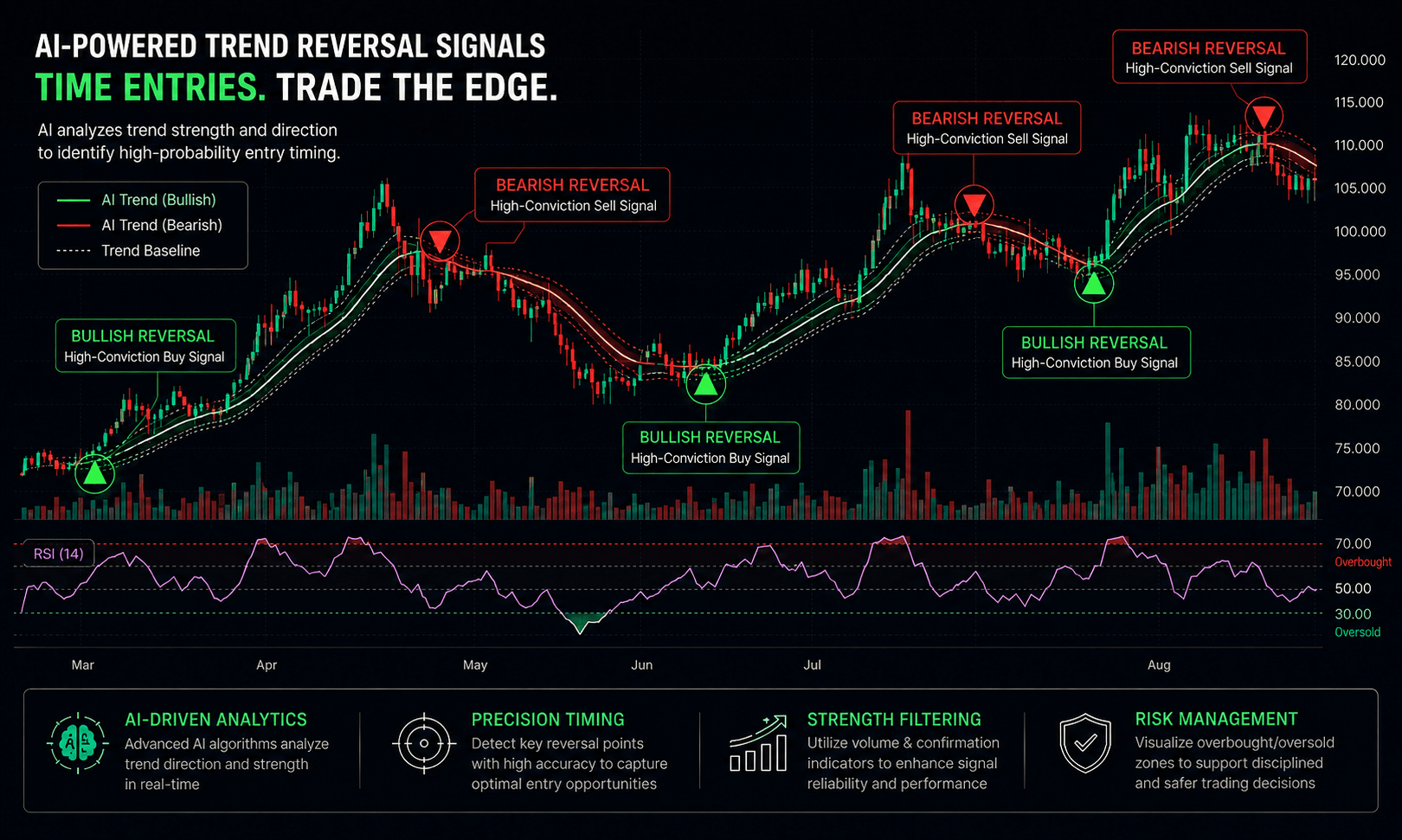
Bull Wave / Bear Wave Forecast Model
Engineered to help you read market direction and momentum faster than the crowd.
- Instantly separate bullish momentum from bearish pressure
- Pinpoint high-probability entry zones with confidence
- Chart signals clear enough for beginners, sharp enough for pros
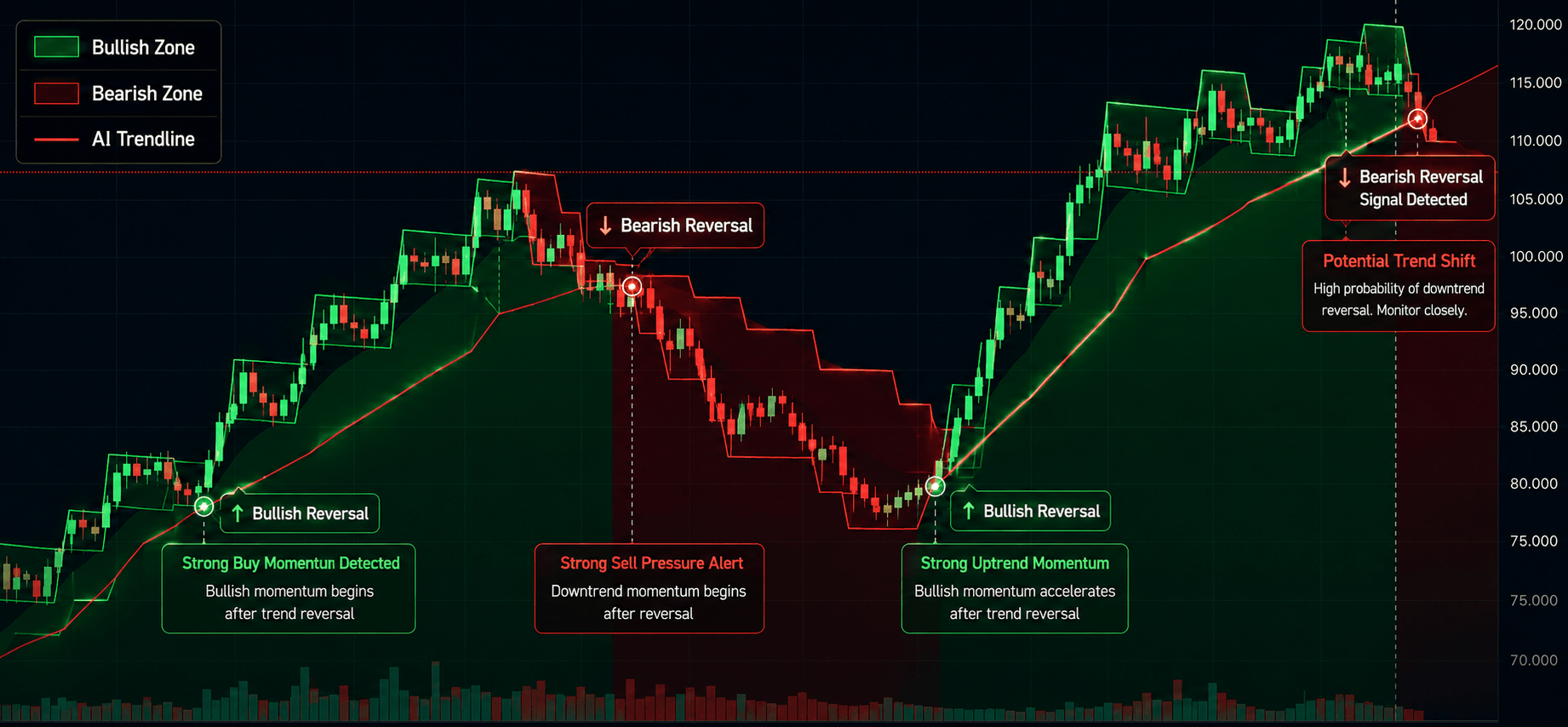
Winning Pattern Detection
Instantly surfaces the high-probability setups that repeat across the charts — a trusted edge for timing your entries and exits.
- Spot momentum building in real time
- Catch trend-reversal points before they break
- Built for active traders who need results, not theory
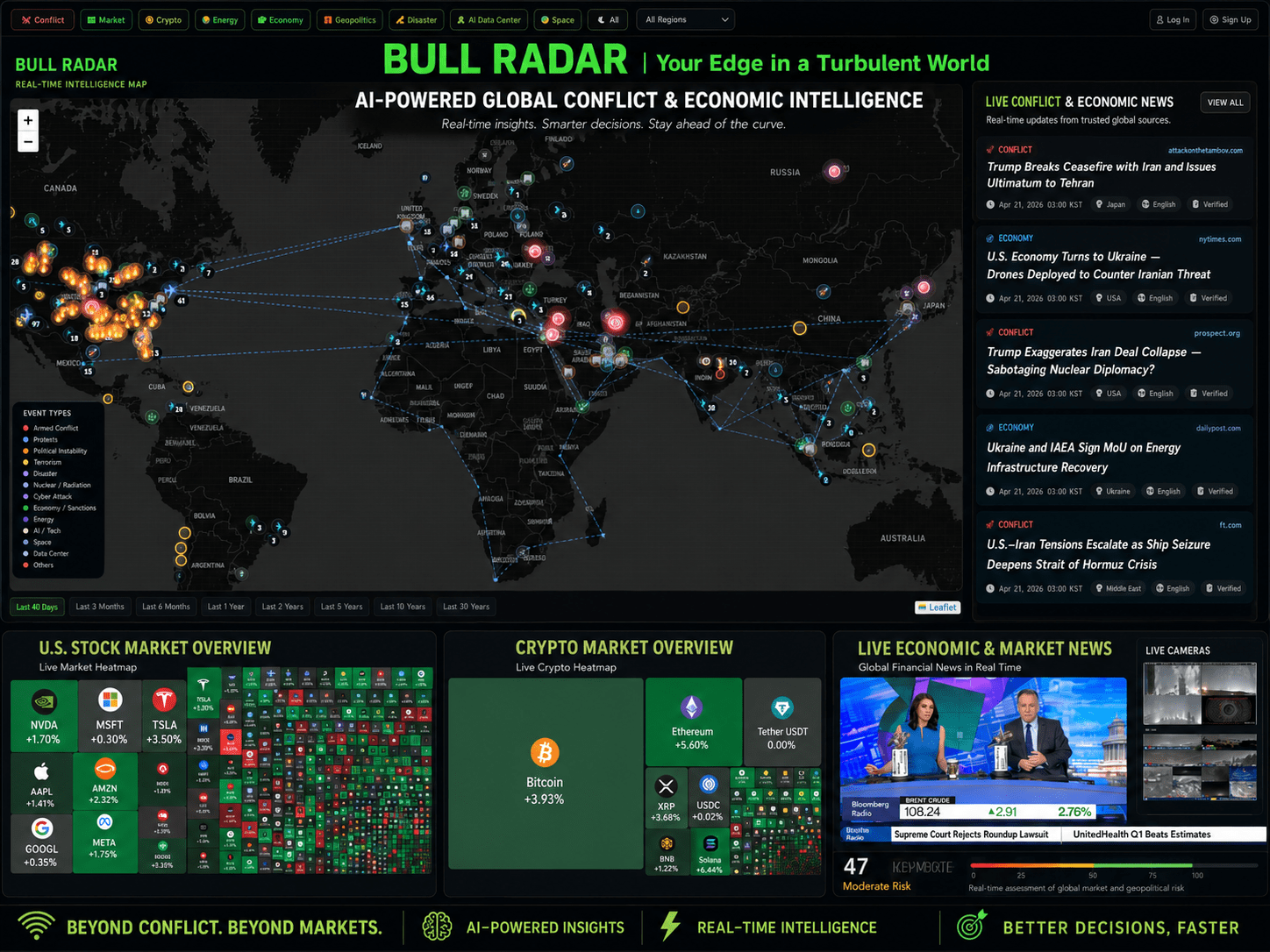
AI Live Economic Dashboard
AI analyzes real-time market data — turning complex, global investment flows into clear insight in seconds.
- Track global stock markets in real time
- See exactly which assets are strong — and which are fading
- Watch how geopolitical events move the markets
About the Author