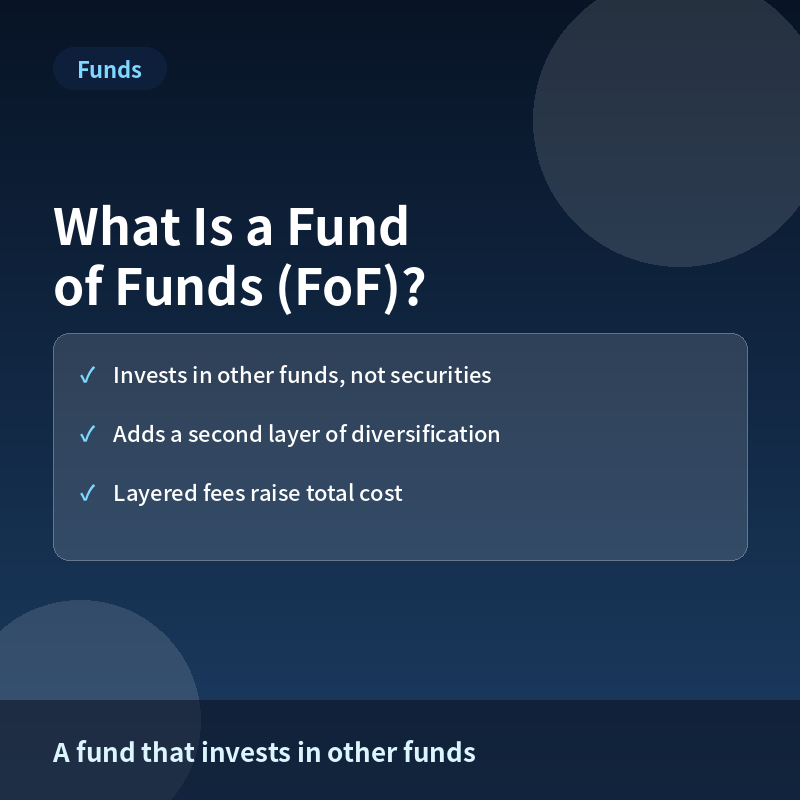
What Is a Fund of Funds?
A Fund of Funds (FoF) does not buy individual stocks or bonds directly. Instead, it allocates capital across a selection of other funds managed by different firms, giving an investor exposure to multiple strategies and asset classes through a single vehicle.
The Structure of an FoF
Double Diversification
An FoF adds a second layer of diversification on top of whatever diversification already exists inside each underlying fund. This can reduce the impact of any single manager’s poor performance or a single strategy’s underperformance on the overall portfolio.
The Layered-Fee Problem
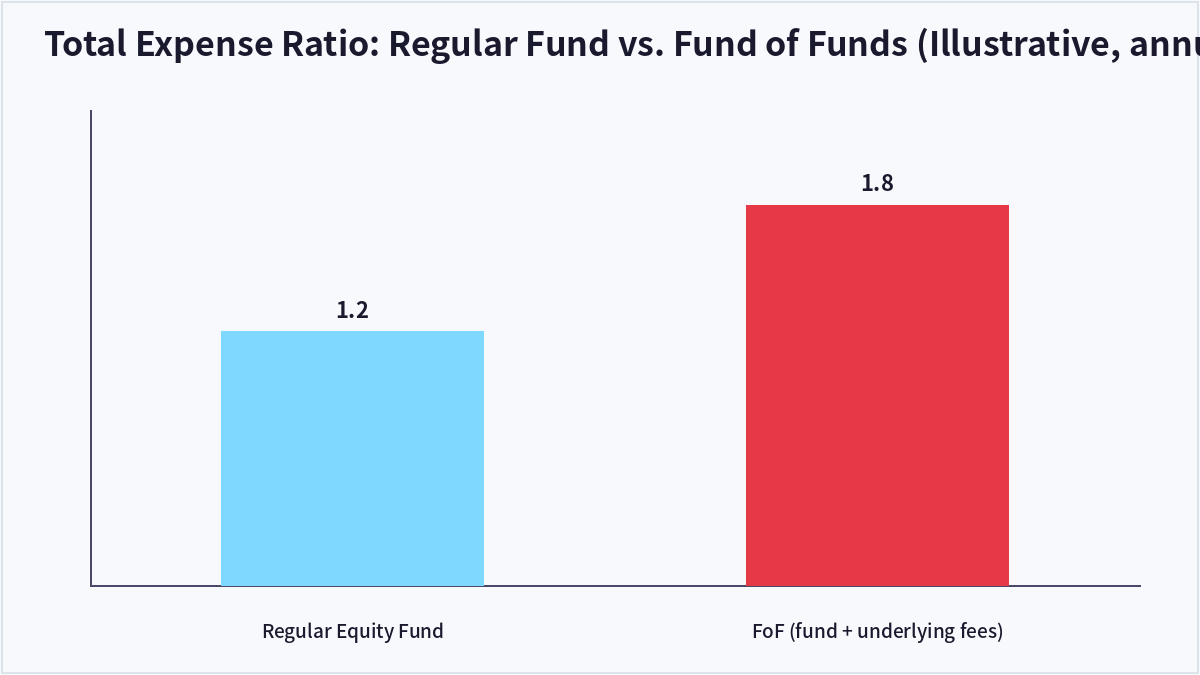
Because an FoF charges its own management fee on top of the fees already charged by each underlying fund, its total expense ratio is often higher than that of a fund that invests directly in securities. Checking the combined total expense ratio (TER) before investing is essential.
What to Check Before Investing
It’s worth confirming that the underlying funds do not overlap excessively in strategy, and that the team responsible for selecting and allocating across funds has a credible track record. Many target-date retirement funds are structured as FoFs for exactly this reason.
| Feature | Regular Fund | Fund of Funds |
|---|---|---|
| Invests directly in | Individual securities | Other funds |
| Diversification level | Security-level | Security + fund + manager level |
| Fee structure | Single layer | Layered (fund fee + underlying fees) |
| Common example | Active equity fund | Target-date fund, global allocation fund |
Frequently Asked Questions
How is an FoF different from a regular asset-allocation fund?
A regular allocation fund buys individual securities directly and allocates among them, while an FoF allocates capital among already-existing funds, adding an extra layer of manager selection on top.
Is the layered fee always a bad thing?
It raises costs, but it can be viewed as the price paid for professional selection and ongoing monitoring of underlying funds. Whether that expertise translates into real added value is worth tracking over time.
Why are target-date funds often structured as FoFs?
Because they need to shift between equity and bond exposure automatically as the target date approaches, using already-vetted underlying funds is often more efficient than managing individual securities directly.
What is the first thing to check before buying an FoF?
Start with the total expense ratio, then review the list of underlying funds for strategy overlap, and look at the track record of the team responsible for the fund selection and allocation process.
Key Takeaways
A Fund of Funds invests in a basket of other funds to achieve an extra layer of diversification, which is why it underpins many target-date and multi-asset retirement products. The trade-off is a higher combined fee load, so comparing the total expense ratio and the quality of underlying fund selection is essential before investing. This article is for informational purposes only and does not constitute investment advice.

QuantPro: AI Finds the Trade Before You Do
From AI-powered chart analysis to real-time market intelligence — everything a serious investor needs, in one platform.
- Automated AI chart analysis with precision trend timing
- Bull Radar: real-time visualization of geopolitical & economic shifts
- Live market-moving news and insights, curated for you
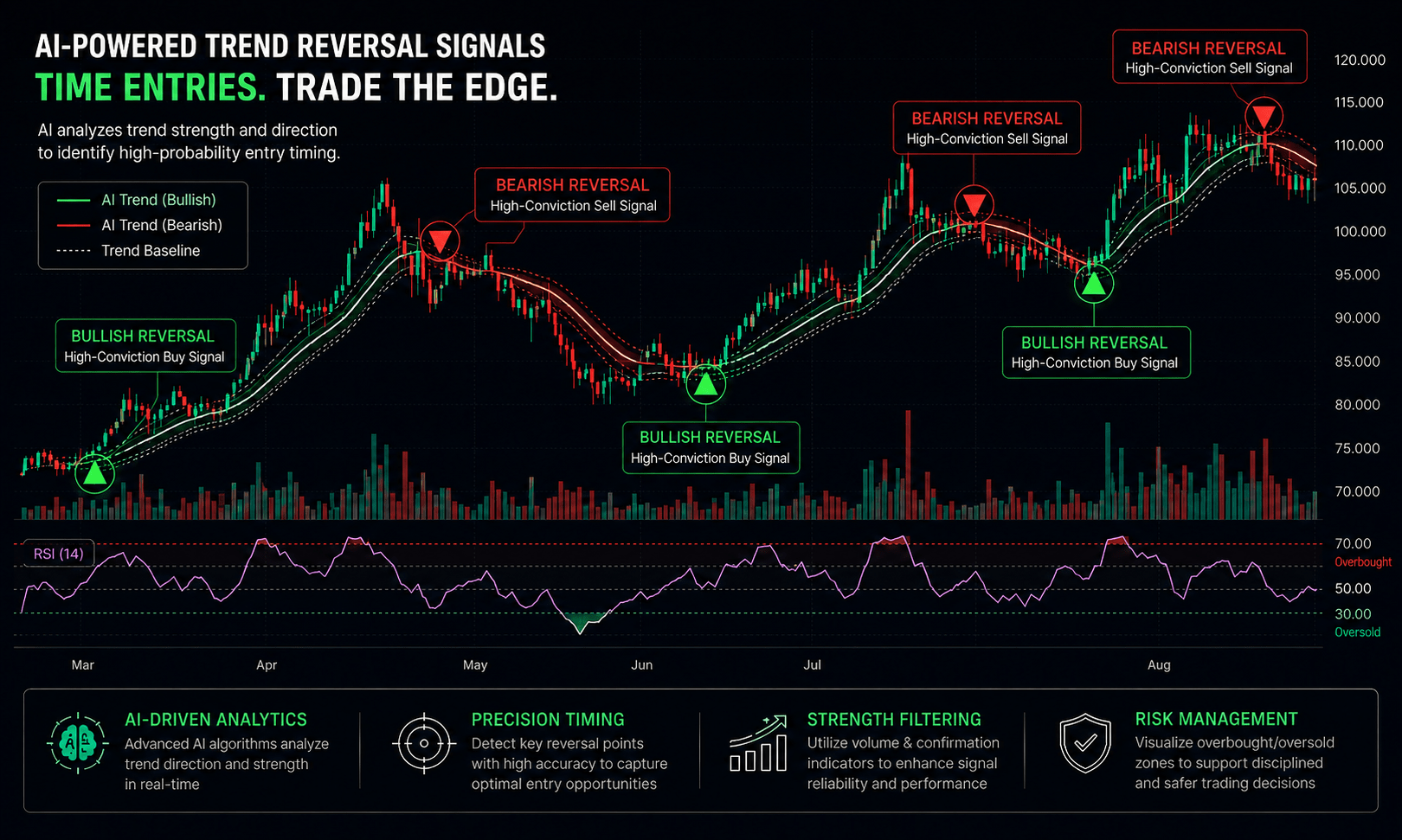
Bull Wave / Bear Wave Forecast Model
Engineered to help you read market direction and momentum faster than the crowd.
- Instantly separate bullish momentum from bearish pressure
- Pinpoint high-probability entry zones with confidence
- Chart signals clear enough for beginners, sharp enough for pros
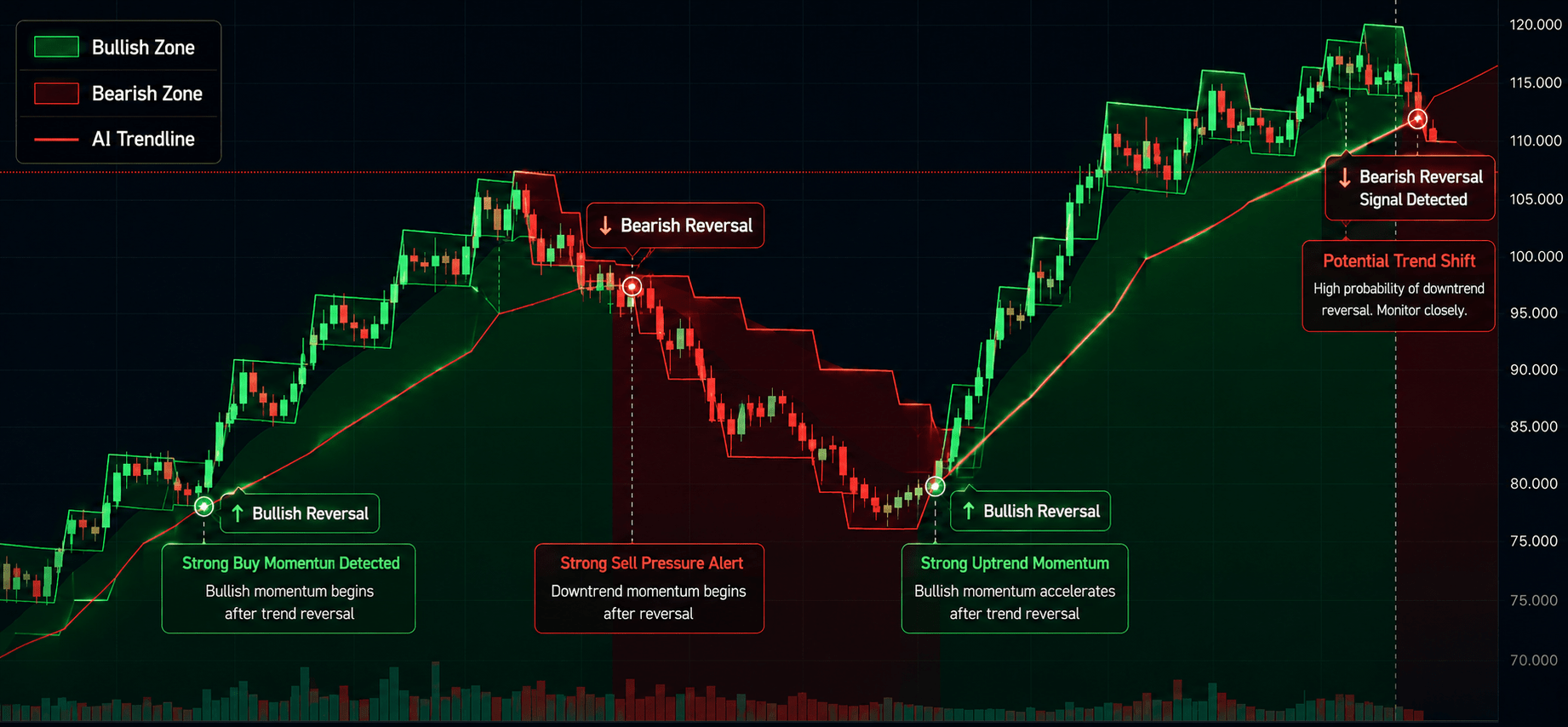
Winning Pattern Detection
Instantly surfaces the high-probability setups that repeat across the charts — a trusted edge for timing your entries and exits.
- Spot momentum building in real time
- Catch trend-reversal points before they break
- Built for active traders who need results, not theory
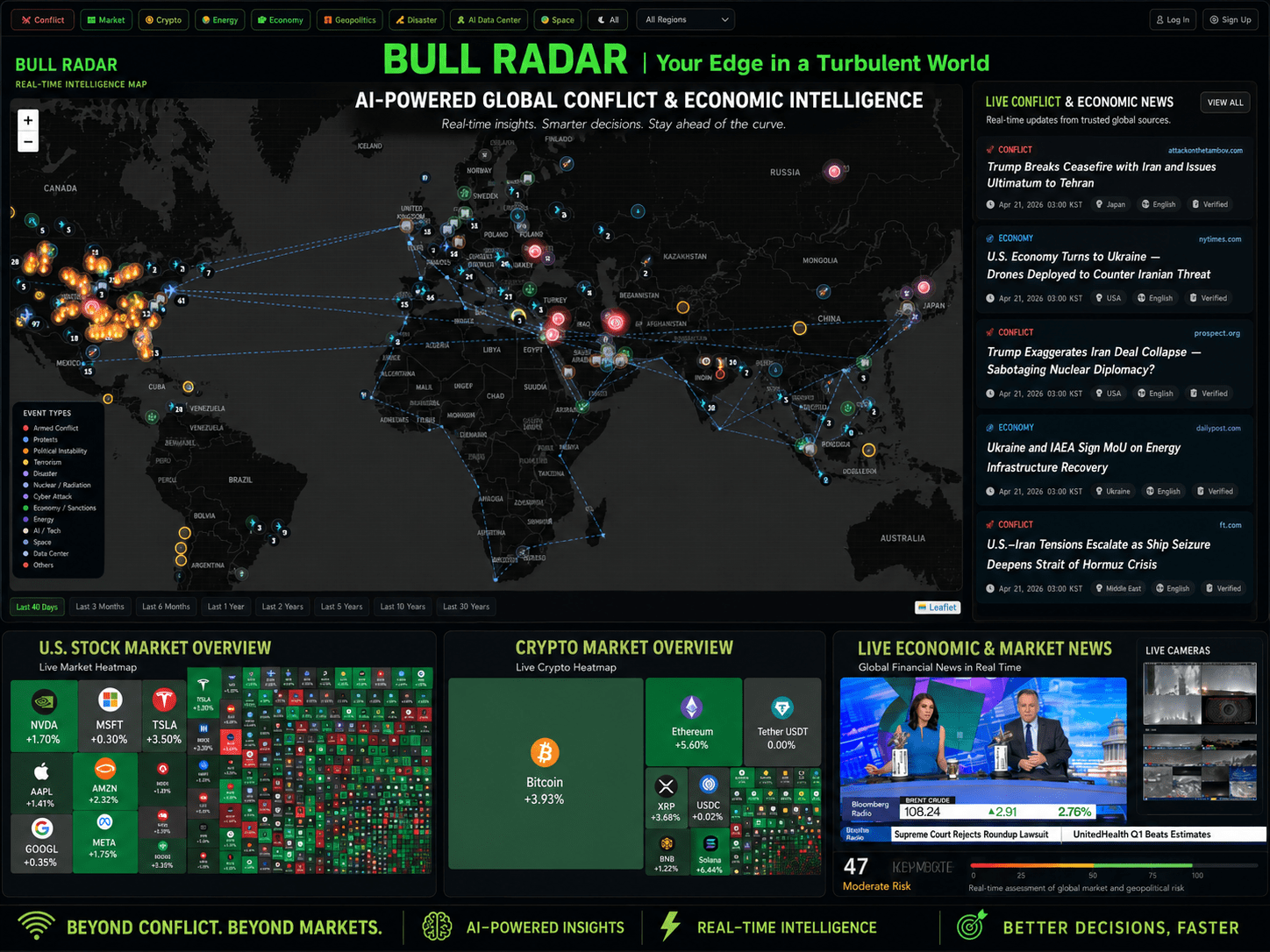
AI Live Economic Dashboard
AI analyzes real-time market data — turning complex, global investment flows into clear insight in seconds.
- Track global stock markets in real time
- See exactly which assets are strong — and which are fading
- Watch how geopolitical events move the markets
About the Author