What Is a Unicorn Company?
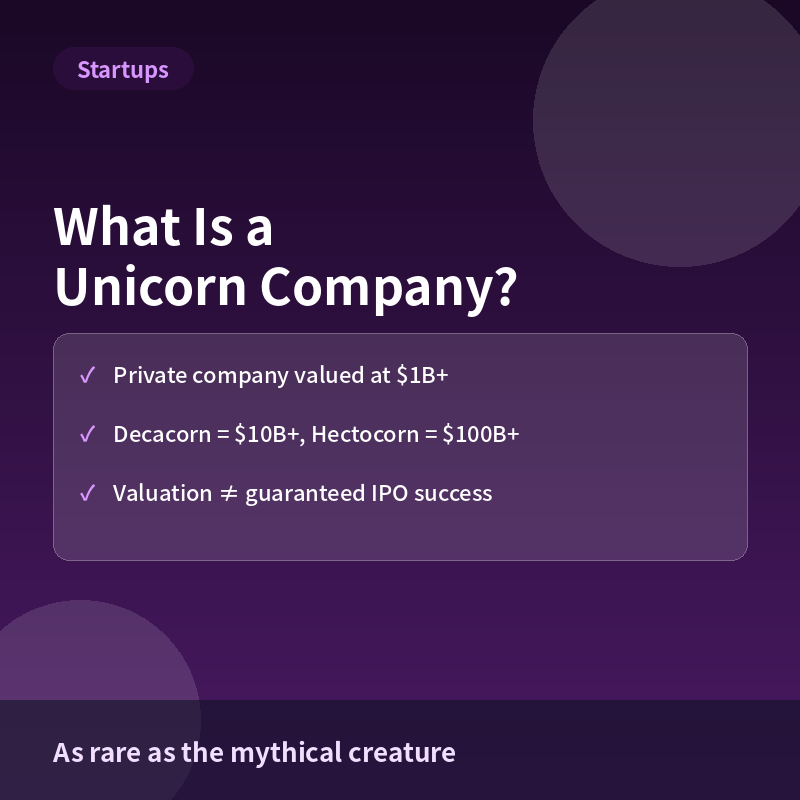
A unicorn is a privately held startup valued at $1 billion or more. Venture capitalist Aileen Lee coined the term in 2013 to emphasize just how rare it was, at the time, for a startup to reach that scale of valuation before ever going public.
How the Tiers Above Unicorn Are Defined
Decacorn
A decacorn is a private company valued at $10 billion or more. The prefix ‘deca’ signals an order of magnitude beyond a standard unicorn, marking a company that has grown into one of the largest private businesses in its category.
Hectocorn
A hectocorn refers to the extremely rare group of private companies valued at $100 billion or more. Globally, only a handful of companies have ever reached this tier while still private.
What the Unicorn Label Actually Means for Investors
A unicorn valuation is set by the price venture capital investors paid for shares in a private funding round, not by a public market. That valuation can prove overly optimistic once a company goes public and the market re-prices it based on actual financial performance.
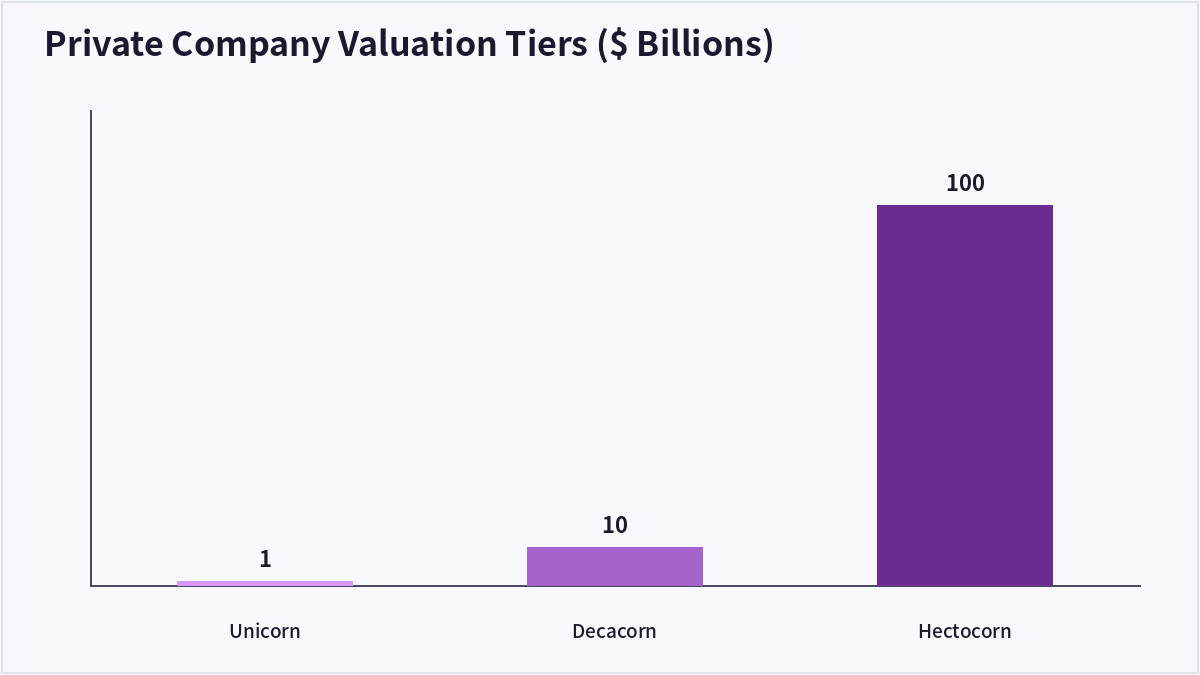
| Tier | Valuation Threshold | Notes |
|---|---|---|
| Unicorn | $1 billion+ | High-growth private startup |
| Decacorn | $10 billion+ | A small subset of unicorns |
| Hectocorn | $100 billion+ | Extremely rare worldwide |
Frequently Asked Questions
Who decides a unicorn’s valuation?
The valuation is typically derived from the price new investors pay for shares in the most recent venture capital or private equity funding round, extrapolated across the company’s total outstanding shares.
Does going public always increase a unicorn’s value?
No. Several unicorns that were valued aggressively in private funding rounds have seen their valuations fall once public markets re-assessed them based on actual revenue and profitability.
Is unicorn status the same as being profitable?
No. Unicorn status reflects investors’ assessment of growth potential, not current profitability, so it’s important to check a company’s actual financial statements separately.
How many unicorns exist worldwide?
The number changes frequently as new companies cross the threshold and others go public, get acquired, or have their valuations written down, so tracking a current, dated source is the only reliable way to get an up-to-date count.
Key Takeaways
A unicorn is a private company valued at $1 billion or more, with decacorn and hectocorn marking successively larger tiers above it. The label reflects investors’ valuation in private funding rounds rather than proven profitability, so it shouldn’t be mistaken for a guarantee of IPO success. This article is for informational purposes only and does not constitute investment advice.

QuantPro: AI Finds the Trade Before You Do
From AI-powered chart analysis to real-time market intelligence — everything a serious investor needs, in one platform.
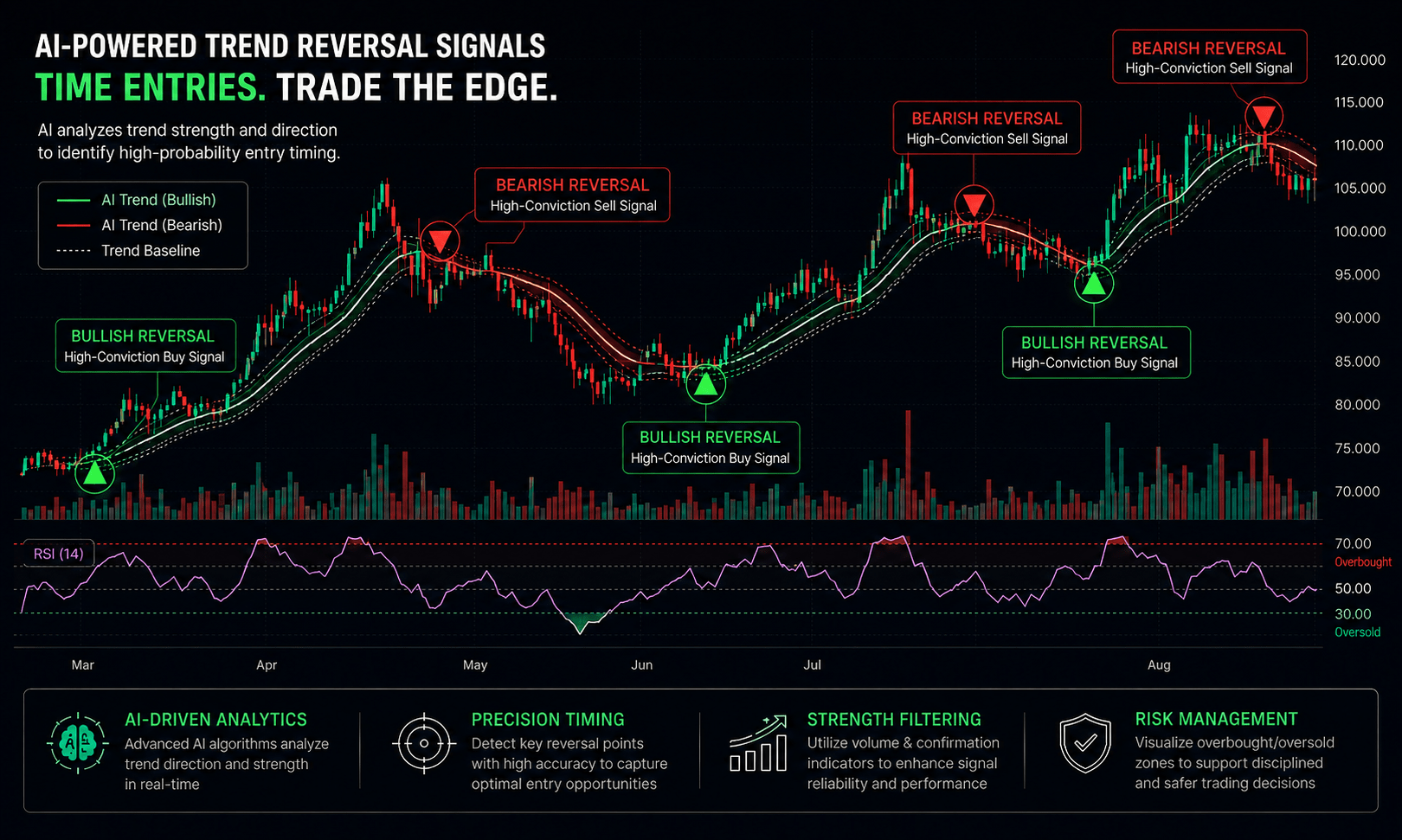
- Automated AI chart analysis with precision trend timing
- Bull Radar: real-time visualization of geopolitical & economic shifts
- Live market-moving news and insights, curated for you
Bull Wave / Bear Wave Forecast Model
Engineered to help you read market direction and momentum faster than the crowd.
- Instantly separate bullish momentum from bearish pressure
- Pinpoint high-probability entry zones with confidence
- Chart signals clear enough for beginners, sharp enough for pros
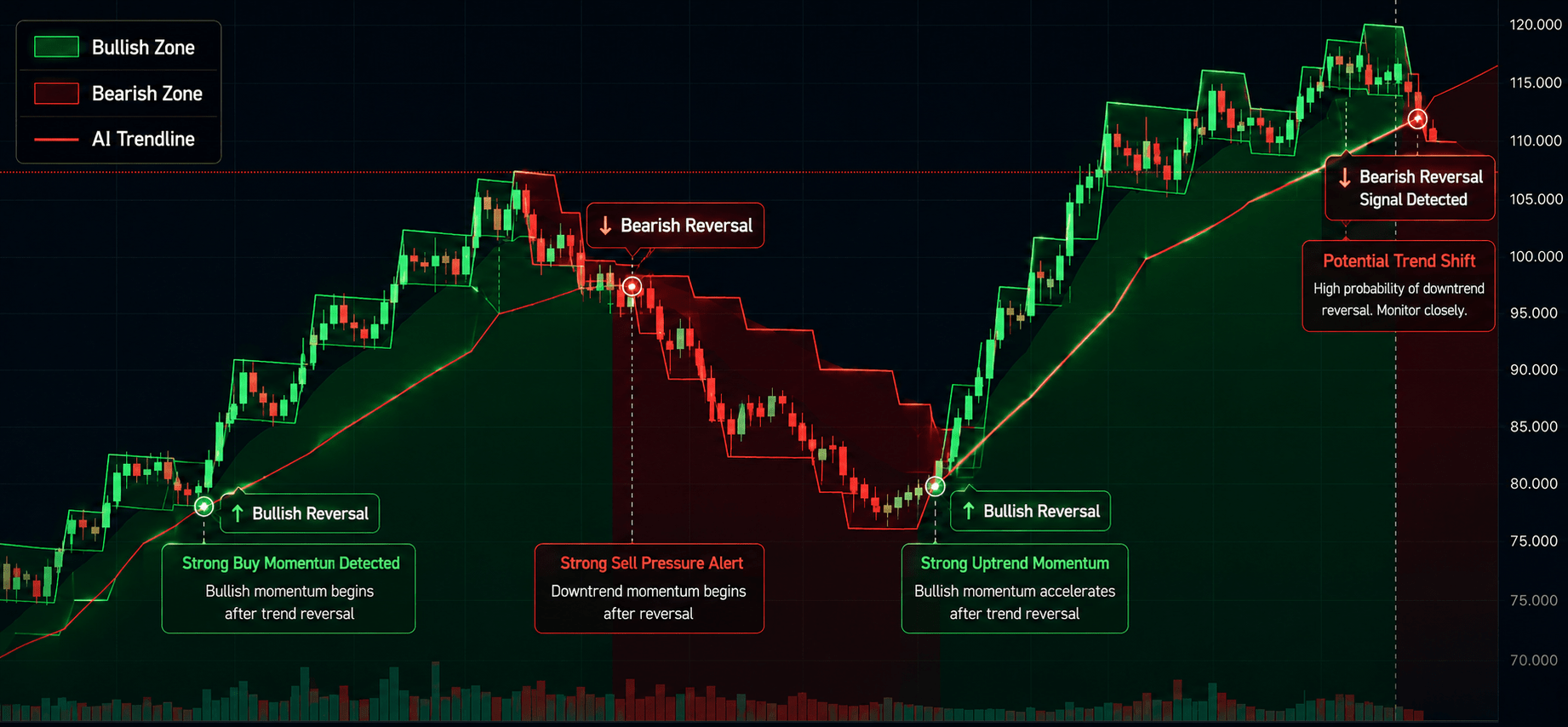
Winning Pattern Detection
Instantly surfaces the high-probability setups that repeat across the charts — a trusted edge for timing your entries and exits.
- Spot momentum building in real time
- Catch trend-reversal points before they break
- Built for active traders who need results, not theory
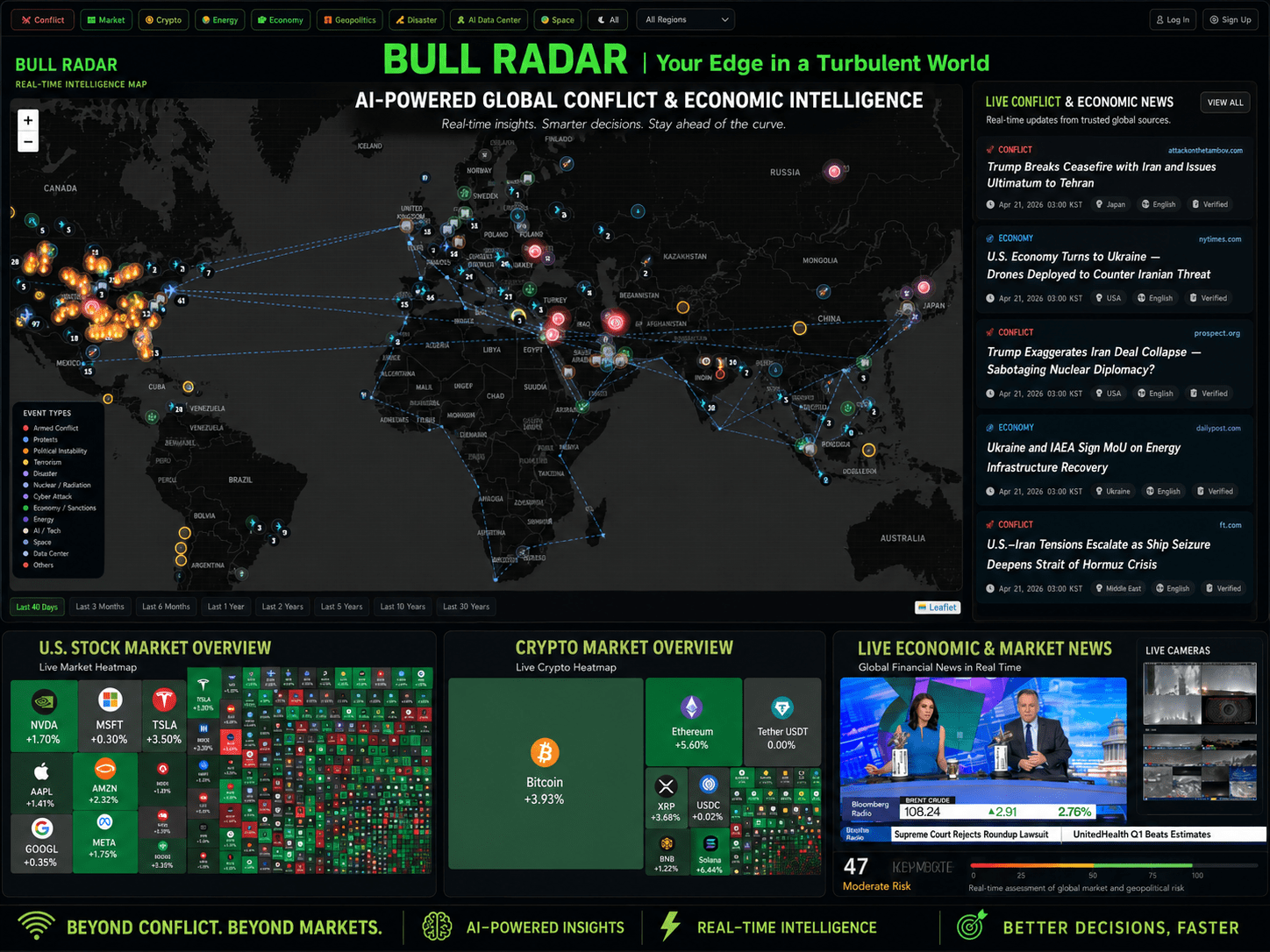
AI Live Economic Dashboard
AI analyzes real-time market data — turning complex, global investment flows into clear insight in seconds.
- Track global stock markets in real time
- See exactly which assets are strong — and which are fading
- Watch how geopolitical events move the markets
About the Author