Definition: A Shareholder Rights Plan
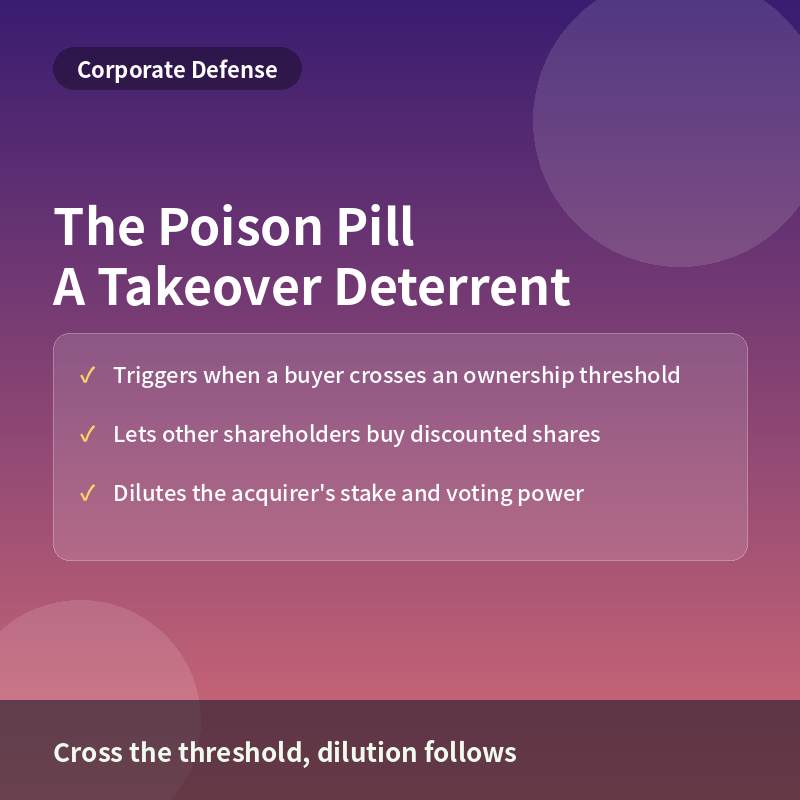
A poison pill, formally known as a shareholder rights plan, is a defensive measure a company’s board adopts to deter a hostile takeover by making the target company less attractive or more expensive to acquire without board approval.
How It Works: The Trigger and the Dilution
The plan typically grants existing shareholders (other than the acquirer) the right to buy additional shares at a steep discount once an outside party’s ownership crosses a specified threshold, commonly 10% to 20%. If exercised, this floods the market with new shares, diluting the acquirer’s percentage ownership and voting power, and making a full takeover far more expensive.
Example: A 15% Trigger
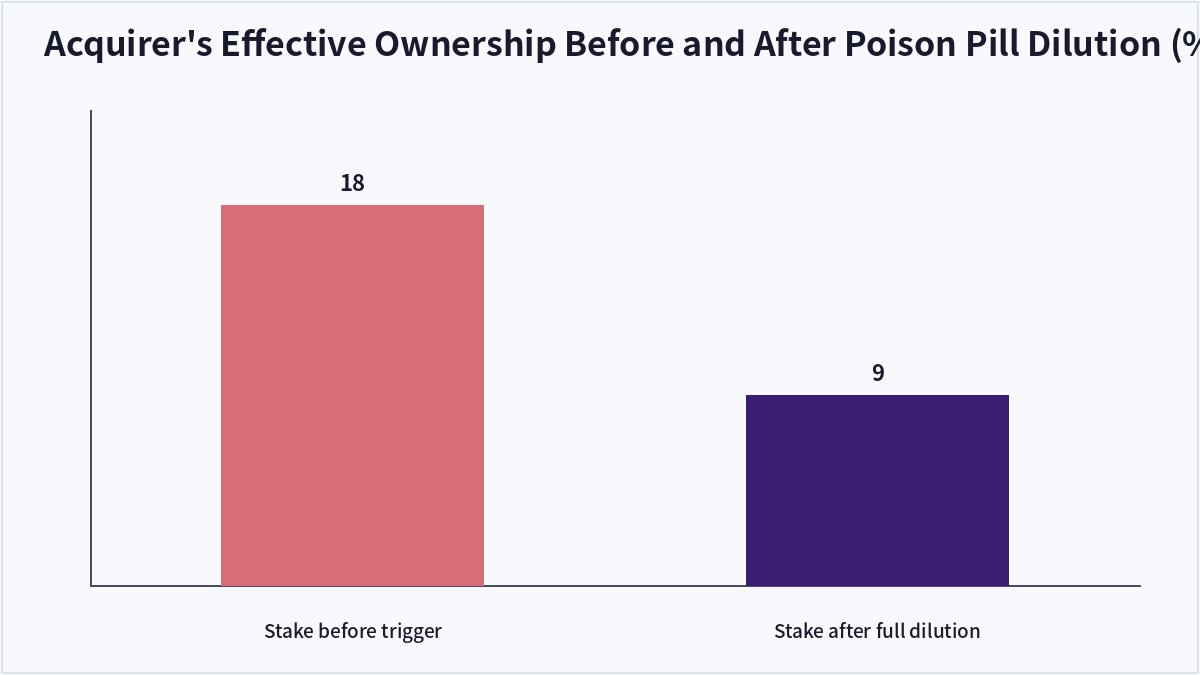
If a company sets its poison pill trigger at 15% and an activist investor’s stake crosses that level without board consent, all other shareholders could become entitled to buy new shares at half price, potentially doubling the share count and cutting the acquirer’s effective ownership roughly in half.
| Ownership Level | Poison Pill Status | Effect on Acquirer |
|---|---|---|
| Below trigger threshold (e.g., 15%) | Inactive | No dilution effect |
| At or above trigger threshold | Activated | Other shareholders can buy discounted shares |
| Post-dilution | Activated and exercised | Acquirer’s stake and voting power significantly reduced |
Frequently Asked Questions
Are poison pills legal everywhere?
Poison pills are widely used and generally upheld under U.S. corporate law (particularly under Delaware precedent), but their legality and prevalence vary by jurisdiction, with some countries imposing stricter limits on their use.
Can a poison pill be removed?
Yes, a board can redeem or terminate a poison pill, and shareholder pressure, proxy contests, or a change in board composition can lead to its removal even if it was previously adopted.
Does a poison pill stop all takeovers?
Not necessarily. It raises the cost and difficulty of an unsolicited takeover and gives the board leverage to negotiate better terms or seek alternative bidders, but a determined acquirer with board cooperation can still complete a deal.
How is a poison pill different from a golden parachute?
A poison pill deters the takeover itself by diluting the acquirer’s stake, while a golden parachute is a separate executive compensation clause that pays departing executives a large severance if the company is acquired, addressing a different part of takeover dynamics.
Key Takeaways
A poison pill deters hostile takeovers by giving existing shareholders the right to buy discounted shares once an acquirer crosses a set ownership threshold, diluting the acquirer’s stake and voting power. It can be redeemed by the board and does not guarantee a takeover will be blocked outright. This article is for informational purposes only and does not constitute investment advice.

QuantPro: AI Finds the Trade Before You Do
From AI-powered chart analysis to real-time market intelligence — everything a serious investor needs, in one platform.
- Automated AI chart analysis with precision trend timing
- Bull Radar: real-time visualization of geopolitical & economic shifts
- Live market-moving news and insights, curated for you
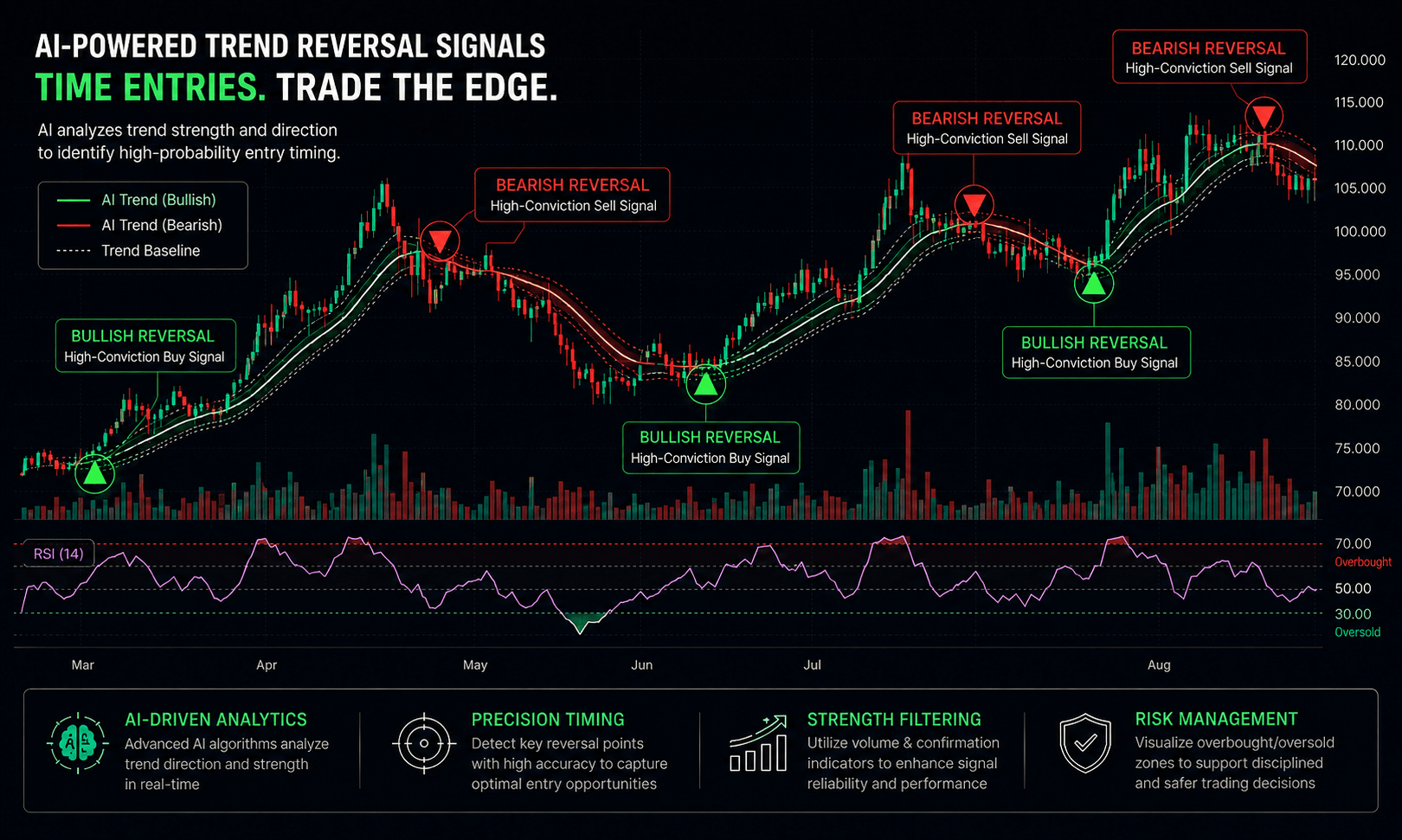
Bull Wave / Bear Wave Forecast Model
Engineered to help you read market direction and momentum faster than the crowd.
- Instantly separate bullish momentum from bearish pressure
- Pinpoint high-probability entry zones with confidence
- Chart signals clear enough for beginners, sharp enough for pros
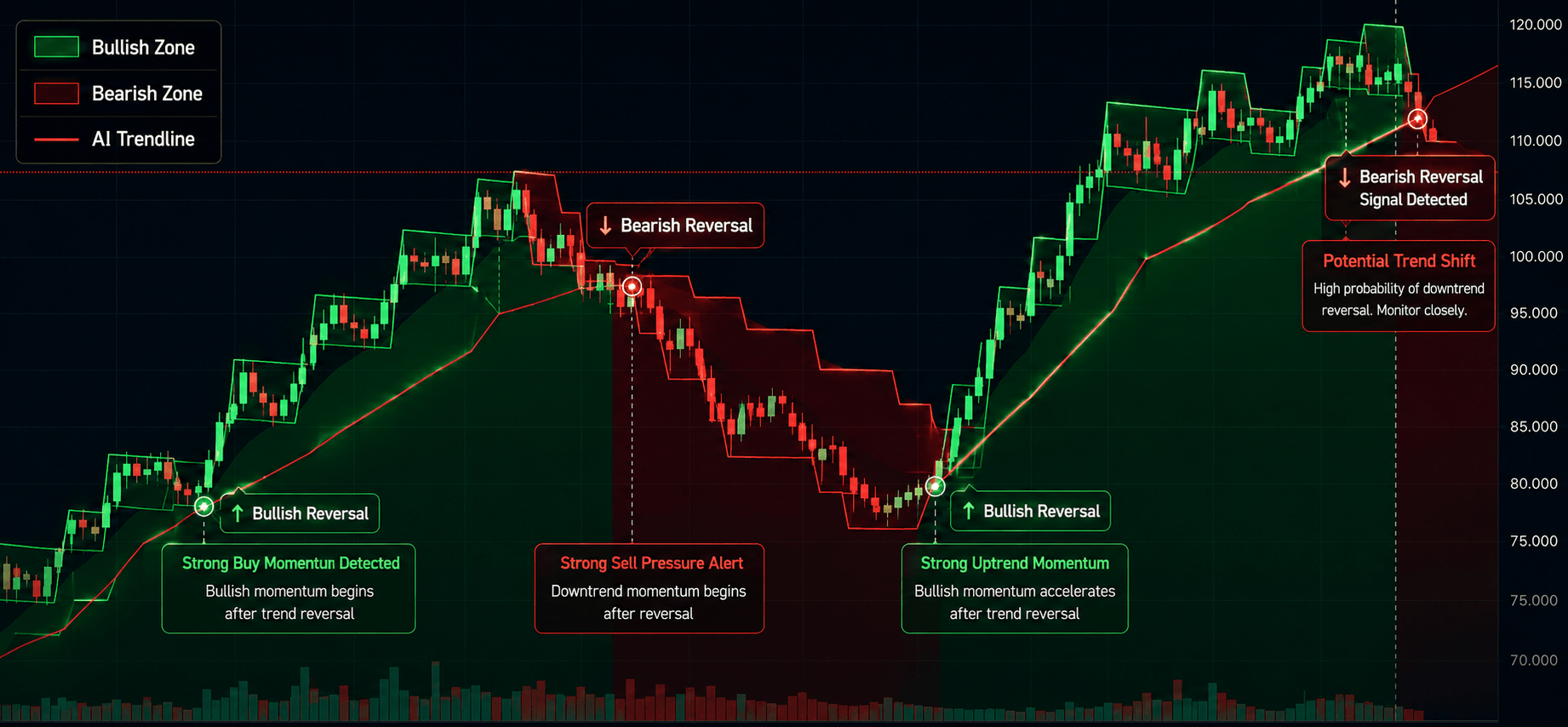
Winning Pattern Detection
Instantly surfaces the high-probability setups that repeat across the charts — a trusted edge for timing your entries and exits.
- Spot momentum building in real time
- Catch trend-reversal points before they break
- Built for active traders who need results, not theory

AI Live Economic Dashboard
AI analyzes real-time market data — turning complex, global investment flows into clear insight in seconds.
- Track global stock markets in real time
- See exactly which assets are strong — and which are fading
- Watch how geopolitical events move the markets
About the Author