What Is Free Cash Flow Yield
Free cash flow yield measures the free cash flow a company generates relative to its market capitalization, expressed as a percentage. The formula is: FCF Yield = Free Cash Flow ÷ Market Capitalization, where free cash flow is typically calculated as operating cash flow minus capital expenditures.
Similar to an earnings yield (the inverse of the P/E ratio), a higher free cash flow yield generally suggests a company is generating more cash relative to its price, which can indicate undervaluation — though the reasons behind a high yield should always be investigated.
Why It’s Often Preferred Over Earnings-Based Metrics
Cash is harder to manipulate than earnings
Reported net income can be influenced by non-cash accounting choices such as depreciation methods, revenue recognition timing, and one-time charges, while free cash flow reflects actual cash generated and spent, making it a metric that’s generally more difficult to distort.
Captures capital intensity
Because free cash flow subtracts capital expenditures, it accounts for how much a company must reinvest in its business to sustain operations — a capital-intensive company with high reported earnings but heavy ongoing capex needs may look far less attractive on an FCF yield basis than on a P/E basis.

What to Watch Out For
A very high free cash flow yield can sometimes signal genuine undervaluation, but it can also reflect a company underinvesting in future growth (artificially low capex), a temporary working capital benefit, or market concerns about declining future cash flows that aren’t yet reflected in reported figures.
Free Cash Flow Yield vs. P/E Ratio
| Aspect | Free Cash Flow Yield | P/E Ratio |
|---|---|---|
| Basis | Actual cash generated | Accounting net income |
| Sensitivity to accounting choices | Lower | Higher |
| Accounts for capex needs | Yes, directly | Not directly |
Frequently Asked Questions
What is considered a ‘good’ free cash flow yield?
This varies significantly by industry and market conditions, but yields meaningfully above the broader market average or above a company’s own historical range are often flagged for further research into whether the stock is undervalued or facing hidden risks.
Can free cash flow yield be negative?
Yes. Companies investing heavily in growth, or those experiencing operational difficulties, can have negative free cash flow, resulting in a negative yield, which doesn’t necessarily indicate a bad investment if the spending is funding future growth.
How is free cash flow different from net income?
Net income includes non-cash items like depreciation and amortization and can be affected by accounting judgment calls, while free cash flow reflects actual cash generated by operations after accounting for the capital spending needed to maintain or grow the business.
Is free cash flow yield useful for comparing companies across industries?
It can be, but capital intensity varies greatly by industry, so free cash flow yield is generally more meaningful when comparing companies within the same industry or against a company’s own historical trend.
Key Takeaways
Free cash flow yield measures a company’s free cash flow relative to its market capitalization, offering a cash-based alternative to earnings multiples like the P/E ratio that is generally harder to manipulate through accounting choices. As with any single metric, it should be evaluated alongside the underlying reasons for the yield level rather than in isolation. This article is for informational purposes only and does not constitute investment advice.

QuantPro: AI Finds the Trade Before You Do
From AI-powered chart analysis to real-time market intelligence — everything a serious investor needs, in one platform.
- Automated AI chart analysis with precision trend timing
- Bull Radar: real-time visualization of geopolitical & economic shifts
- Live market-moving news and insights, curated for you

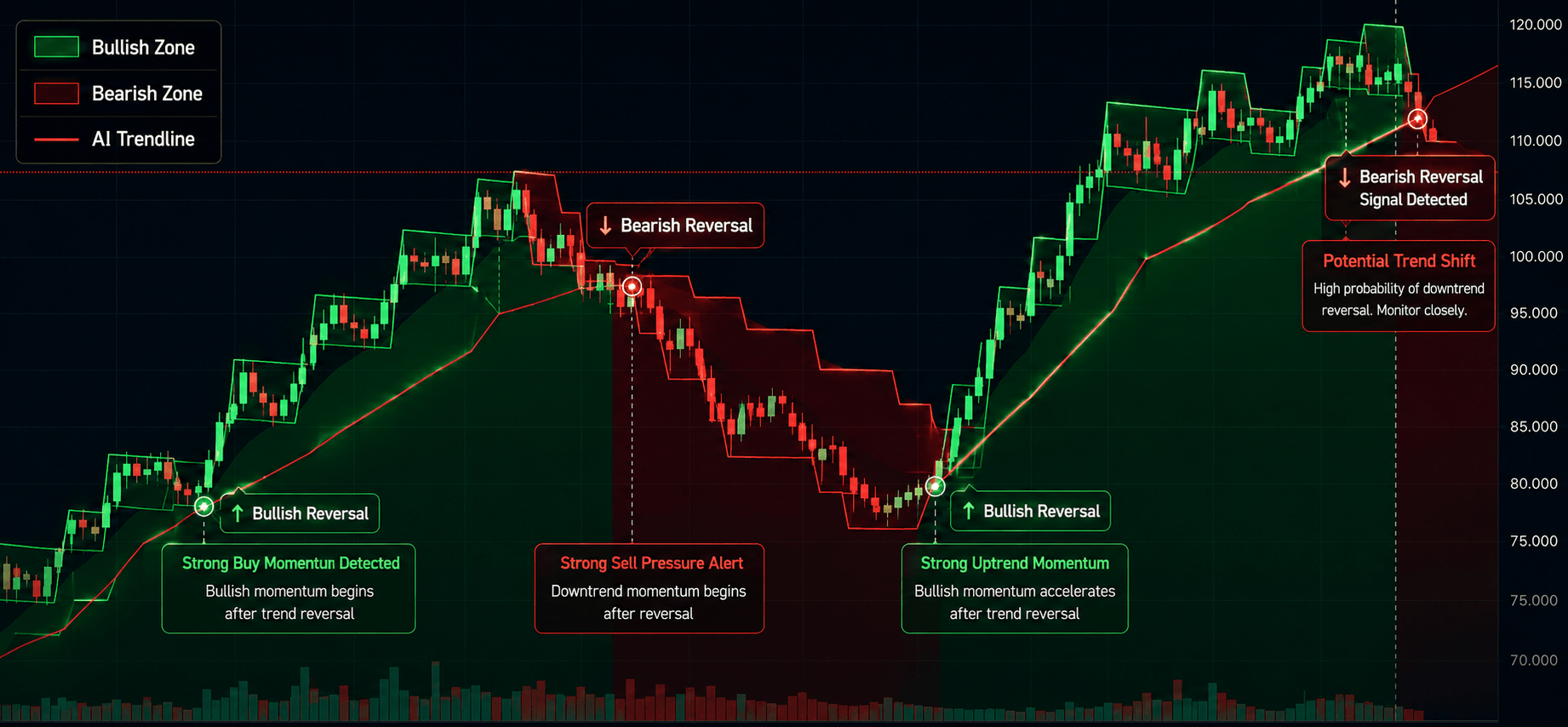
Bull Wave / Bear Wave Forecast Model
Engineered to help you read market direction and momentum faster than the crowd.
- Instantly separate bullish momentum from bearish pressure
- Pinpoint high-probability entry zones with confidence
- Chart signals clear enough for beginners, sharp enough for pros
Winning Pattern Detection
Instantly surfaces the high-probability setups that repeat across the charts — a trusted edge for timing your entries and exits.
- Spot momentum building in real time
- Catch trend-reversal points before they break
- Built for active traders who need results, not theory

AI Live Economic Dashboard
AI analyzes real-time market data — turning complex, global investment flows into clear insight in seconds.
- Track global stock markets in real time
- See exactly which assets are strong — and which are fading
- Watch how geopolitical events move the markets
About the Author