Defining Risk Parity
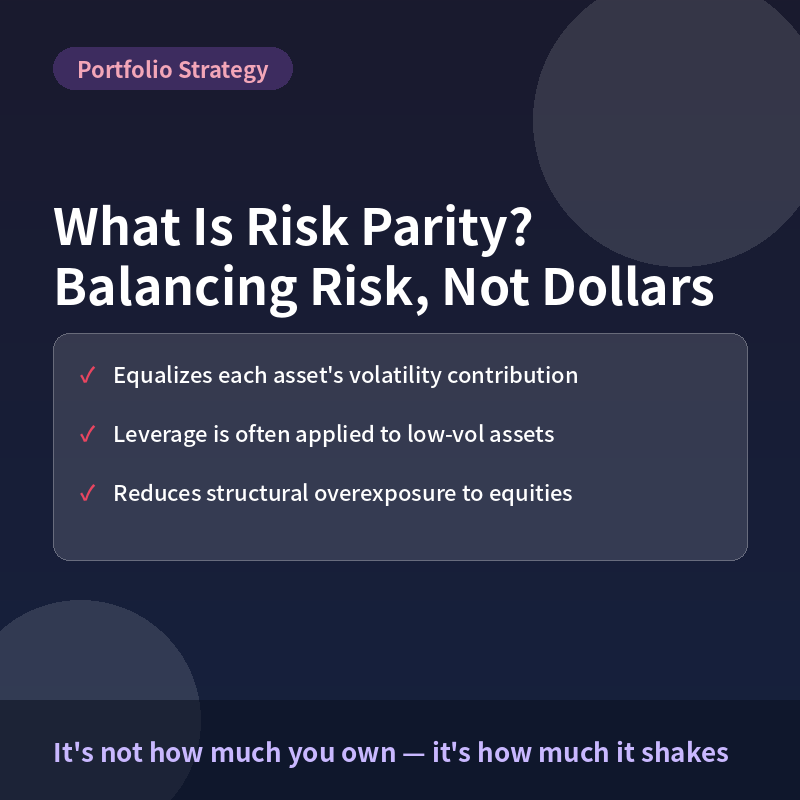
Risk parity is a portfolio construction approach that allocates capital so each asset class contributes roughly the same amount of volatility to the overall portfolio — rather than allocating by dollar amount. Assets with higher volatility get smaller dollar weights, and lower-volatility assets get larger weights, to balance out risk contribution.
The Problem With Traditional 60/40
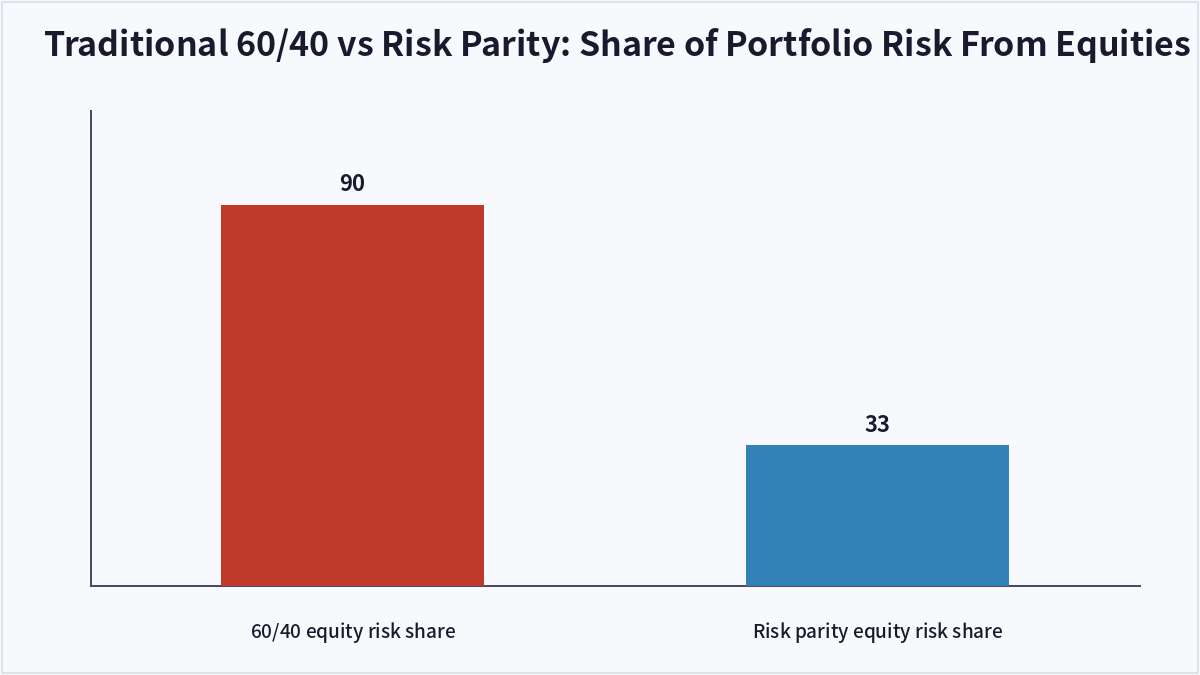
A classic 60% stocks / 40% bonds portfolio looks balanced by dollar amount, but because equities are far more volatile than bonds, the vast majority of the portfolio’s actual risk — often 80-90% — comes from the equity sleeve. Risk parity aims to correct this imbalance so no single asset class dominates the portfolio’s risk profile.
| Portfolio | Dollar Weight | Risk Contribution |
|---|---|---|
| 60/40 — Equities | 60% | ~90% |
| 60/40 — Bonds | 40% | ~10% |
| Risk Parity — Equities | ~20-25% | ~33% |
A Worked Example
Assume equities have an annualized volatility of 16%, government bonds 6%, and commodities 15%. To split risk into three roughly equal contributions, the allocation reduces the dollar weight of the higher-volatility equities and commodities while increasing the weight of lower-volatility bonds, so each asset’s volatility-times-weight is roughly equal.
Why Leverage Enters the Picture
Sizing bonds up to match equity risk contribution alone would leave the portfolio with a large bond allocation and a correspondingly low expected return. To address this, risk parity funds often apply leverage to the lower-volatility sleeve, boosting its notional exposure so the overall portfolio’s expected return can compete with a traditional equity-heavy allocation.
Risks and Limitations
Because the strategy relies on leverage, periods when stocks and bonds fall together — such as 2022’s rate-driven selloff — can hurt risk parity funds more than diversification alone would suggest, since correlations spike and the leveraged low-vol sleeve no longer provides the expected cushion.
Frequently Asked Questions
Can individual investors replicate risk parity?
A simplified, unleveraged version — weighting assets inversely to their volatility — is accessible to individual investors, though the leveraged institutional version requires more sophisticated financing and risk management.
Does risk parity always outperform a 60/40 portfolio?
Not necessarily — in strong, sustained equity bull markets, risk parity’s lower equity exposure can cause it to lag, while it tends to be more resilient when diversification benefits across asset classes are stronger.
What asset classes are typically included?
Common building blocks include equities, government bonds, corporate bonds, commodities, and sometimes inflation-linked bonds, often spanning four to five asset classes.
Is Ray Dalio’s All Weather portfolio the same as risk parity?
All Weather is one of the best-known practical implementations built on risk parity principles, so it can be seen as an applied example of the broader concept rather than a separate approach.
Key Takeaways
Risk parity allocates by volatility contribution rather than dollar amount, reducing structural overexposure to equities, but investors should understand its reliance on leverage and its vulnerability when asset correlations rise together. This article is for informational purposes only and does not constitute investment advice.

QuantPro: AI Finds the Trade Before You Do
From AI-powered chart analysis to real-time market intelligence — everything a serious investor needs, in one platform.
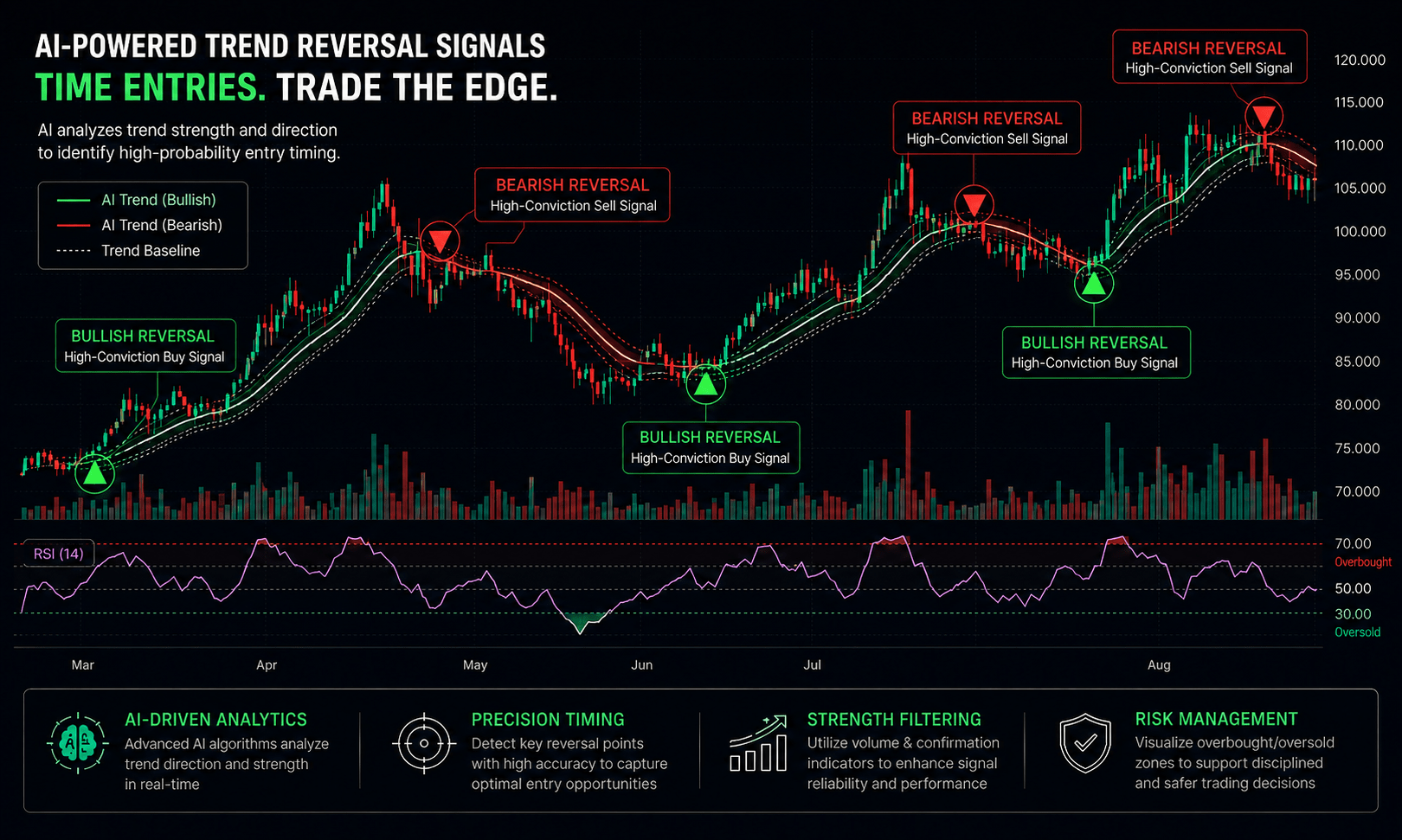
- Automated AI chart analysis with precision trend timing
- Bull Radar: real-time visualization of geopolitical & economic shifts
- Live market-moving news and insights, curated for you
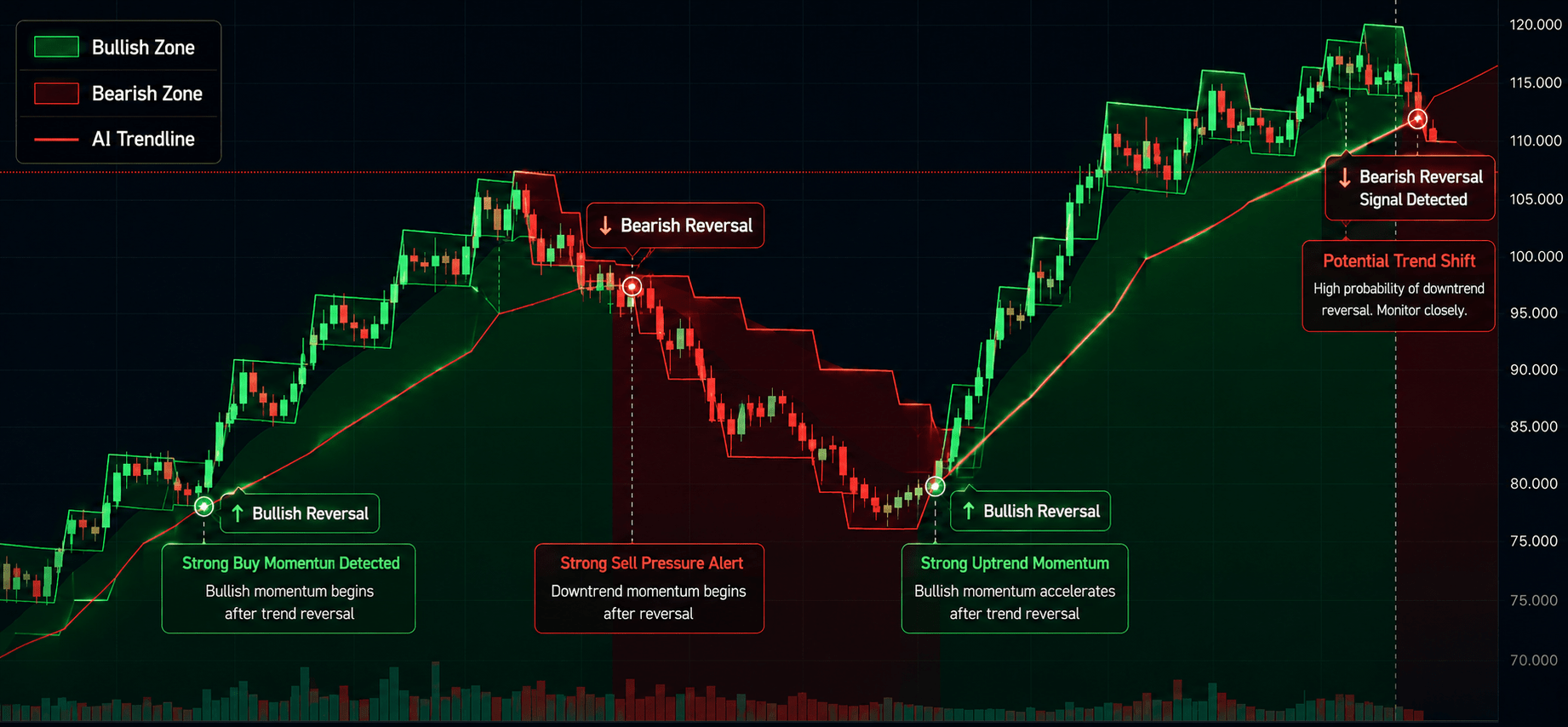
Bull Wave / Bear Wave Forecast Model
Engineered to help you read market direction and momentum faster than the crowd.
- Instantly separate bullish momentum from bearish pressure
- Pinpoint high-probability entry zones with confidence
- Chart signals clear enough for beginners, sharp enough for pros
Winning Pattern Detection
Instantly surfaces the high-probability setups that repeat across the charts — a trusted edge for timing your entries and exits.
- Spot momentum building in real time
- Catch trend-reversal points before they break
- Built for active traders who need results, not theory

AI Live Economic Dashboard
AI analyzes real-time market data — turning complex, global investment flows into clear insight in seconds.
- Track global stock markets in real time
- See exactly which assets are strong — and which are fading
- Watch how geopolitical events move the markets
About the Author