What the Kelly Criterion Is
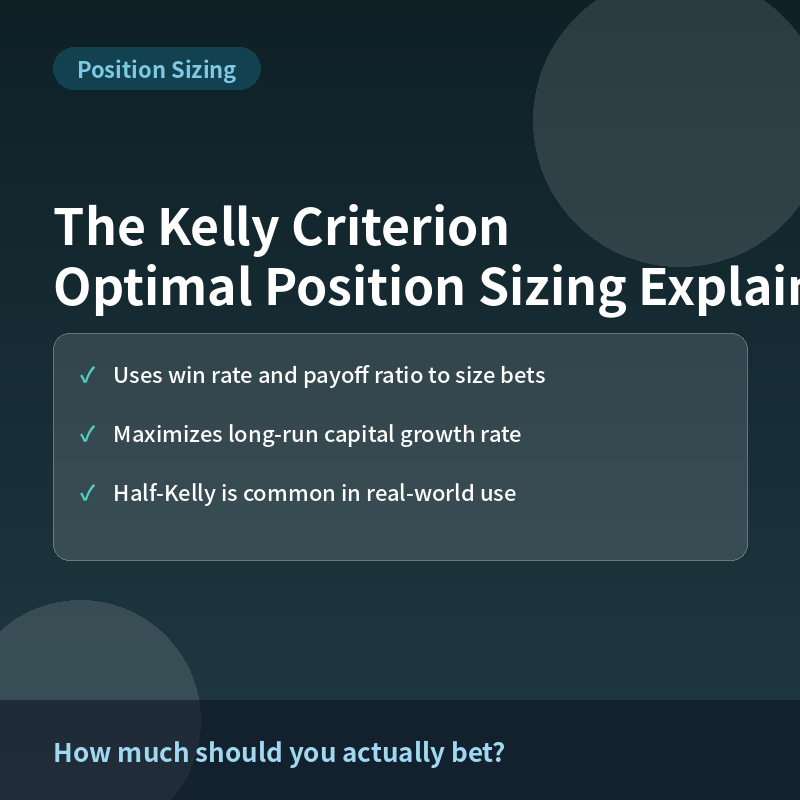
The Kelly Criterion is a formula developed by Bell Labs scientist John Kelly in 1956 to calculate the fraction of capital that maximizes the long-run growth rate of wealth, given a known win probability and payoff ratio. It has since become a foundational concept in position sizing for traders and gamblers alike.
The Formula
The Kelly fraction (f) is calculated as f = W – (1-W)/R, where W is the win probability and R is the payoff ratio (average win divided by average loss). For example, with a 50% win rate and a payoff ratio of 2 (winning twice your stake versus losing your stake), f = 0.5 – 0.5/2 = 0.25, meaning the theoretically optimal bet is 25% of capital.
| Variable | Meaning |
|---|---|
| W | Probability of winning |
| R | Payoff ratio (average gain ÷ average loss) |
| f | Fraction of capital to bet |
Sensitivity to Win Rate
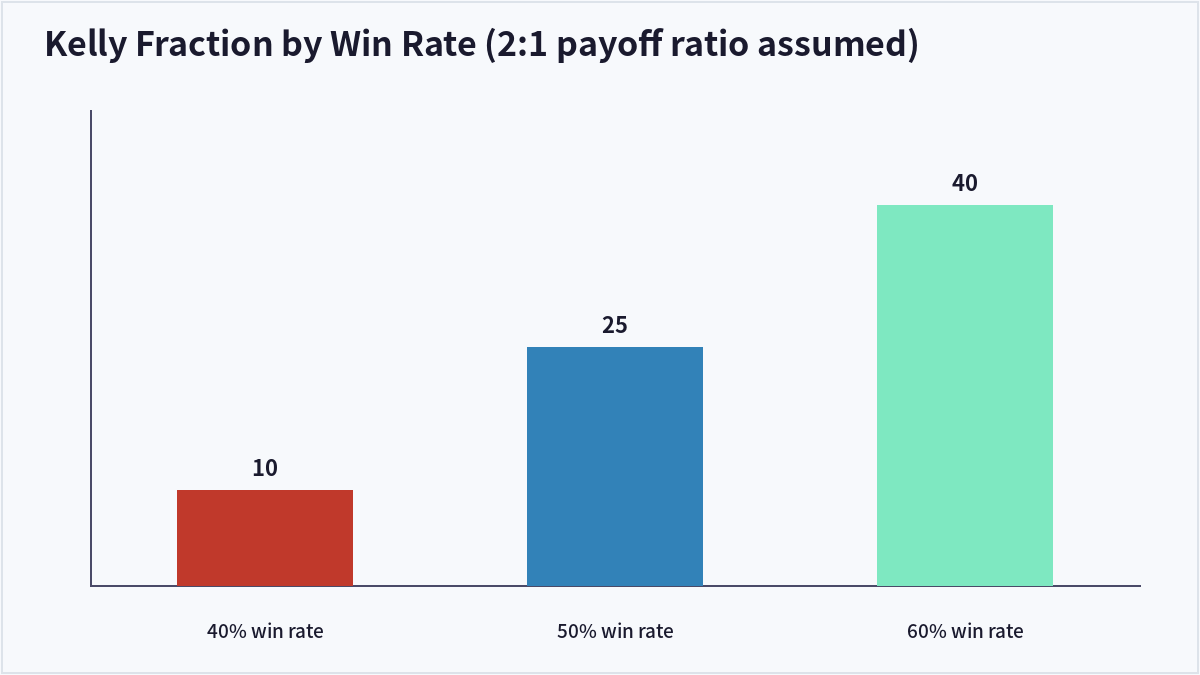
Even holding the payoff ratio fixed at 2:1, the Kelly fraction swings from 10% at a 40% win rate to 40% at a 60% win rate. This shows that small errors in estimating your true win rate can lead to very different — and potentially dangerous — position sizes.
Why Traders Use “Half-Kelly”
Betting the full Kelly fraction maximizes growth rate, but it also comes with severe volatility and drawdowns along the way. In practice, many professional traders bet half (or even a quarter) of the calculated Kelly fraction, accepting a lower expected growth rate in exchange for a much smoother equity curve.
Limitations for Real Investing
Unlike a casino game, real markets don’t offer a known, fixed win rate and payoff ratio — both must be estimated from historical data and are subject to change. Applying Kelly sizing to noisy, uncertain estimates risks overfitting, which is why conservative haircuts to the calculated fraction are standard practice.
Frequently Asked Questions
What does a negative Kelly fraction mean?
A negative result means the strategy has a negative expected value, and the mathematically optimal action is not to bet on it at all.
Can the Kelly Criterion be applied to a portfolio of assets?
Yes, multi-asset extensions of the Kelly formula exist, but they require estimating correlations between assets, which adds significant complexity and estimation error.
Why is full Kelly considered too risky?
Full Kelly betting can produce drawdowns exceeding 50% even when the underlying edge is real, which is psychologically very difficult to endure and highly sensitive to estimation error.
How do you estimate the payoff ratio (R)?
Traders typically calculate it from historical trade logs by dividing the average size of winning trades by the average size of losing trades, ideally using a large enough sample to be statistically meaningful.
Key Takeaways
The Kelly Criterion calculates a theoretically optimal bet size from win rate and payoff ratio, but its volatility means most practitioners scale it down using fractional Kelly approaches. This article is for informational purposes only and does not constitute investment advice.

QuantPro: AI Finds the Trade Before You Do
From AI-powered chart analysis to real-time market intelligence — everything a serious investor needs, in one platform.
- Automated AI chart analysis with precision trend timing
- Bull Radar: real-time visualization of geopolitical & economic shifts
- Live market-moving news and insights, curated for you
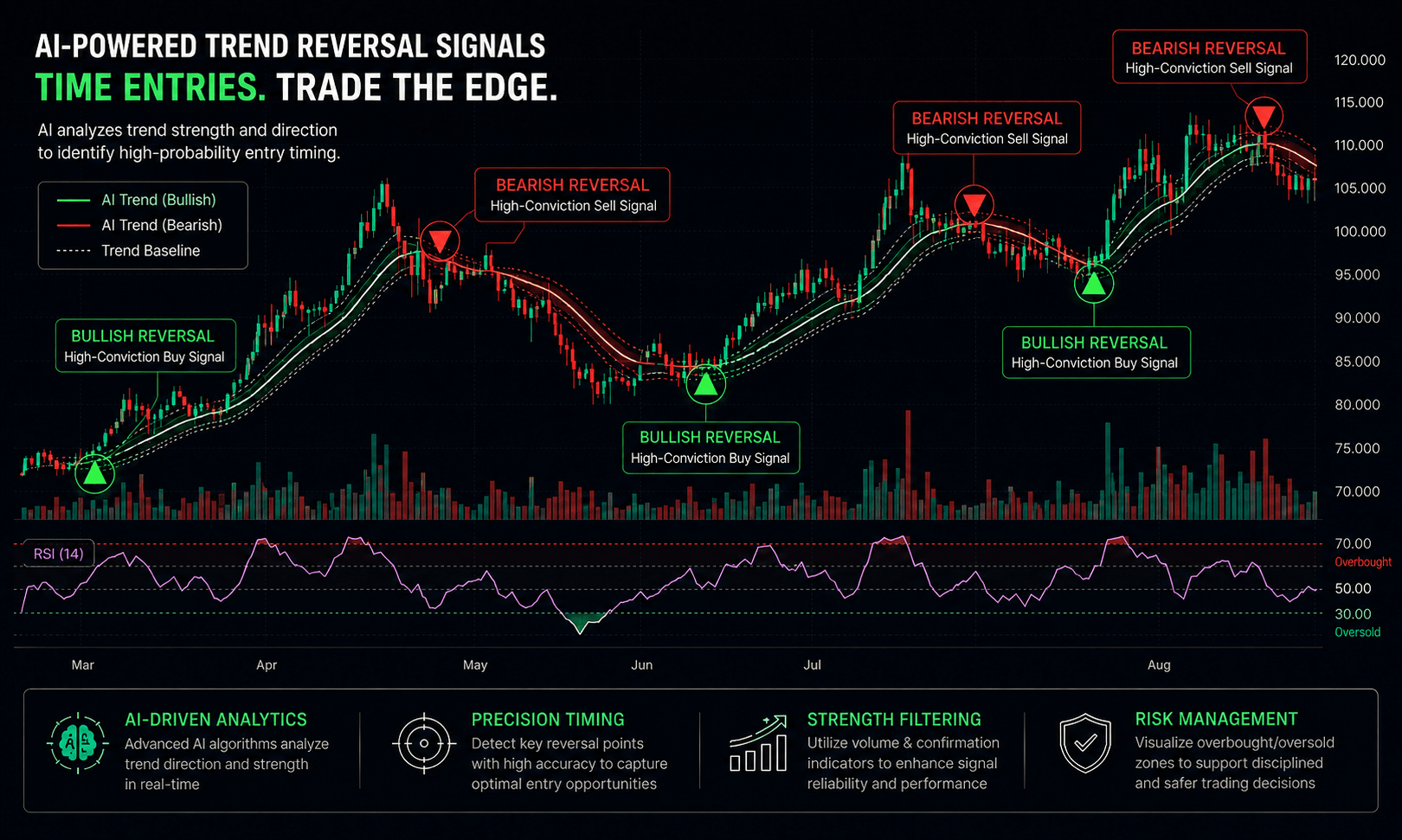
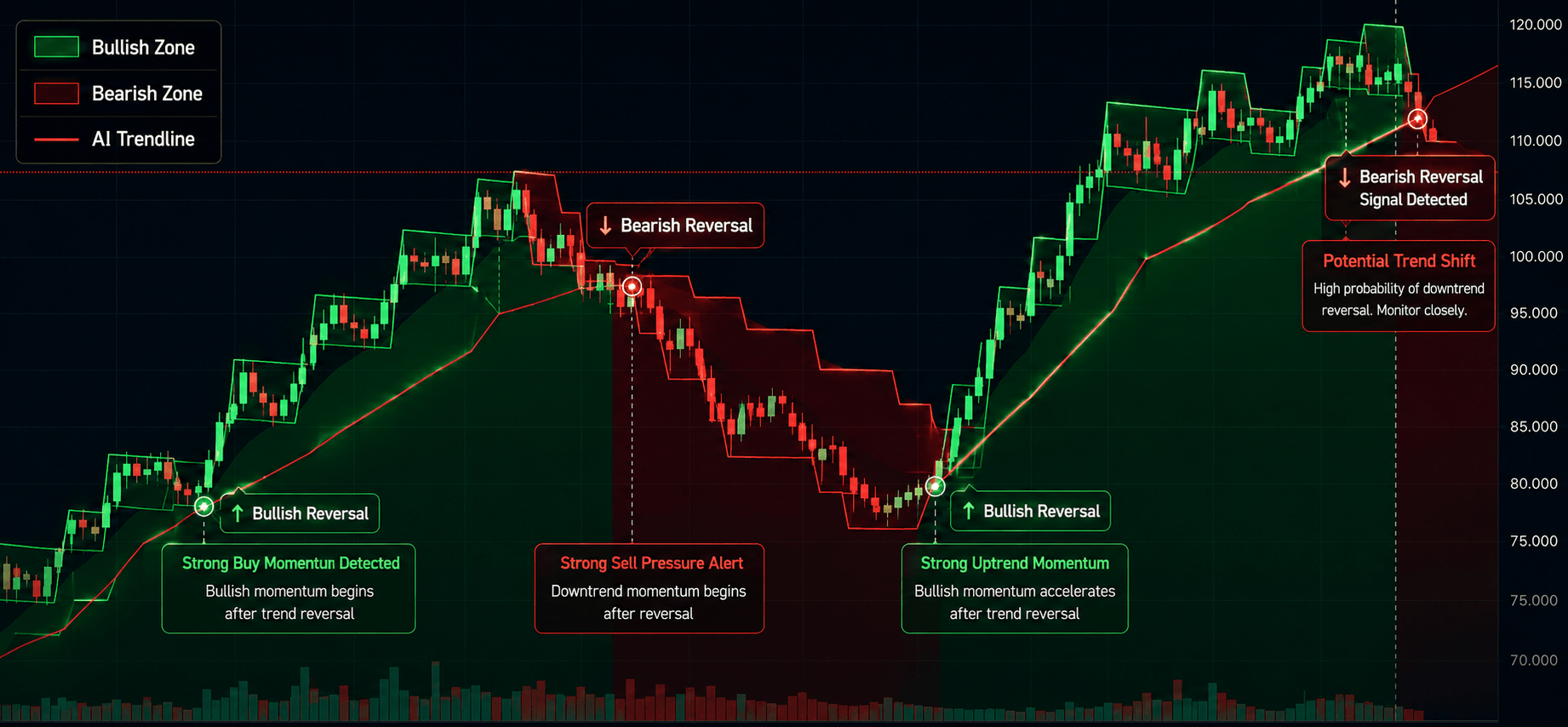
Bull Wave / Bear Wave Forecast Model
Engineered to help you read market direction and momentum faster than the crowd.
- Instantly separate bullish momentum from bearish pressure
- Pinpoint high-probability entry zones with confidence
- Chart signals clear enough for beginners, sharp enough for pros
Winning Pattern Detection
Instantly surfaces the high-probability setups that repeat across the charts — a trusted edge for timing your entries and exits.
- Spot momentum building in real time
- Catch trend-reversal points before they break
- Built for active traders who need results, not theory

AI Live Economic Dashboard
AI analyzes real-time market data — turning complex, global investment flows into clear insight in seconds.
- Track global stock markets in real time
- See exactly which assets are strong — and which are fading
- Watch how geopolitical events move the markets
About the Author