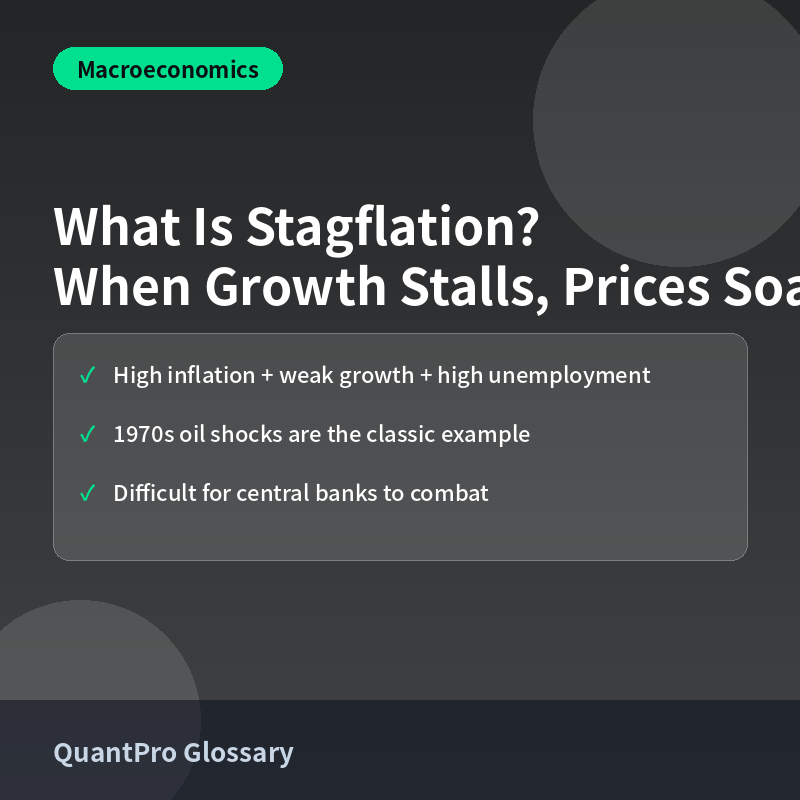
What Is Stagflation?
Stagflation is an unusual and challenging economic condition characterized by the simultaneous occurrence of high inflation, stagnant (or negative) economic growth, and elevated unemployment. This combination is considered unusual because inflation and unemployment have traditionally been thought to move in opposite directions — high inflation is normally associated with a strong, overheating economy, not a weak, stagnant one.
Why Stagflation Is So Difficult to Fight
Central banks typically have two main levers to manage the economy: raising interest rates to fight inflation, or lowering rates to stimulate growth and employment. In a stagflation scenario, these two problems require directly opposing solutions simultaneously — fighting inflation with higher rates risks worsening unemployment and stagnation further, while cutting rates to boost growth risks fueling even higher inflation.
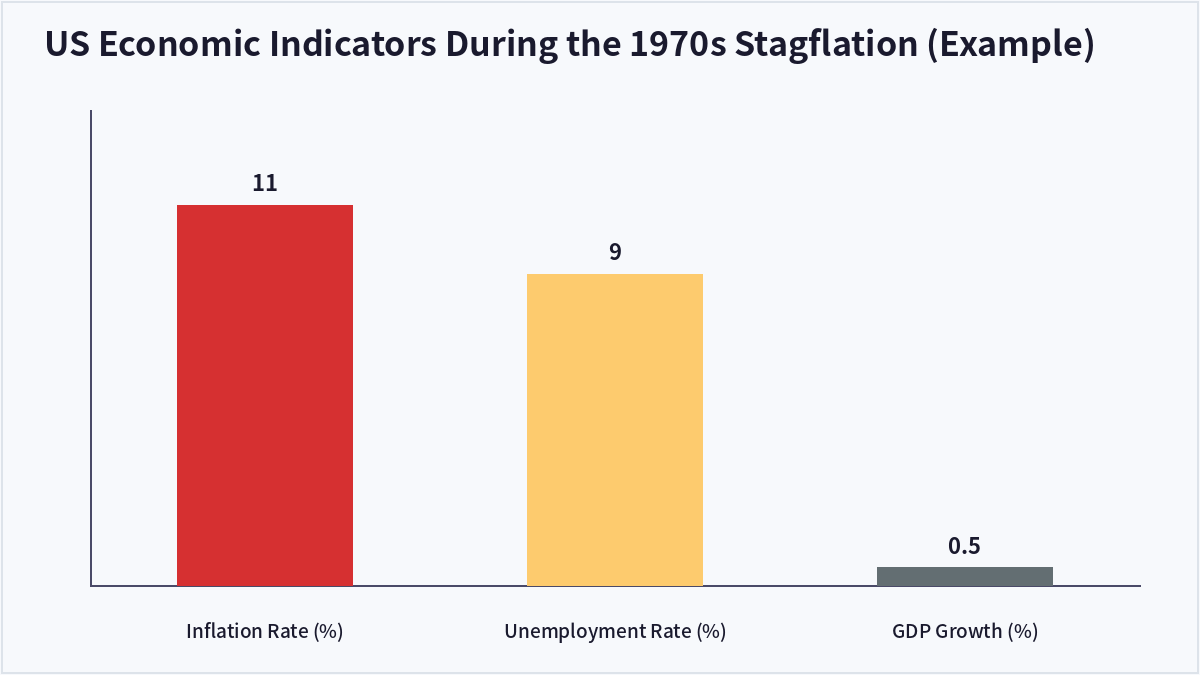
The Classic Example: 1970s Oil Shocks
Supply Shocks as the Primary Cause
The most well-known historical episode of stagflation occurred in the United States during the 1970s, triggered largely by sudden oil price shocks from OPEC embargoes. These supply-side shocks pushed production costs and prices sharply higher, while simultaneously choking off economic growth and increasing unemployment.
A Break From Traditional Economic Models
This episode challenged the prevailing Phillips Curve theory of the time, which held that inflation and unemployment had a stable, inverse relationship — the 1970s stagflation demonstrated that both could rise together under the right (or wrong) circumstances, particularly following major supply shocks.
| Condition | Normal Recession | Stagflation |
|---|---|---|
| Growth | Weak or negative | Weak or negative |
| Unemployment | Rising | Rising |
| Inflation | Typically falling | Simultaneously high |
Frequently Asked Questions
What typically causes stagflation?
Supply-side shocks — such as sudden spikes in energy or commodity prices — are the most commonly cited cause, as they simultaneously raise production costs (fueling inflation) while dampening overall economic activity.
How rare is stagflation historically?
It’s considered a relatively rare economic phenomenon, with the 1970s U.S. episode remaining the most widely studied and referenced example, though concerns about stagflation risk periodically resurface during other periods of high inflation combined with slowing growth.
What investments have historically performed well during stagflation?
Commodities and inflation-hedging assets like gold have historically shown relative resilience during stagflationary periods, while both traditional stocks and bonds have often struggled simultaneously, as neither benefits from the combination of weak growth and high inflation.
How did the stagflation of the 1970s eventually end?
It was ultimately resolved through a combination of aggressive interest rate hikes by the Federal Reserve under Chairman Paul Volcker in the early 1980s, which successfully broke the back of persistent inflation, though at the cost of triggering a sharp recession.
Key Takeaways
Stagflation combines high inflation with stagnant growth and high unemployment, a difficult condition that leaves central banks with no easy policy solution. The 1970s oil-shock episode remains the defining historical example of this challenging economic combination. This article is for informational purposes only and does not constitute investment advice.

QuantPro: AI Finds the Trade Before You Do
From AI-powered chart analysis to real-time market intelligence — everything a serious investor needs, in one platform.
- Automated AI chart analysis with precision trend timing
- Bull Radar: real-time visualization of geopolitical & economic shifts
- Live market-moving news and insights, curated for you
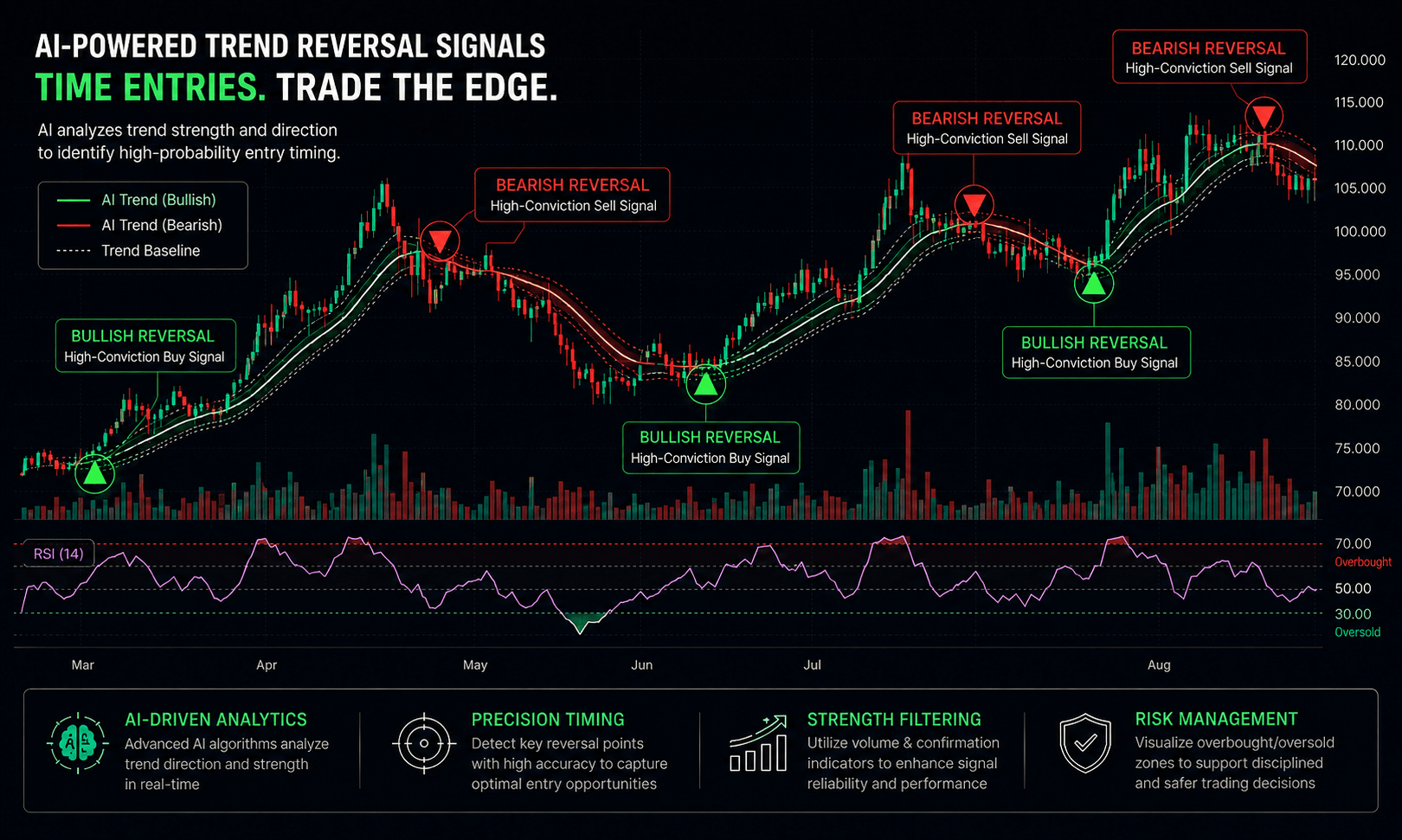
Bull Wave / Bear Wave Forecast Model
Engineered to help you read market direction and momentum faster than the crowd.
- Instantly separate bullish momentum from bearish pressure
- Pinpoint high-probability entry zones with confidence
- Chart signals clear enough for beginners, sharp enough for pros
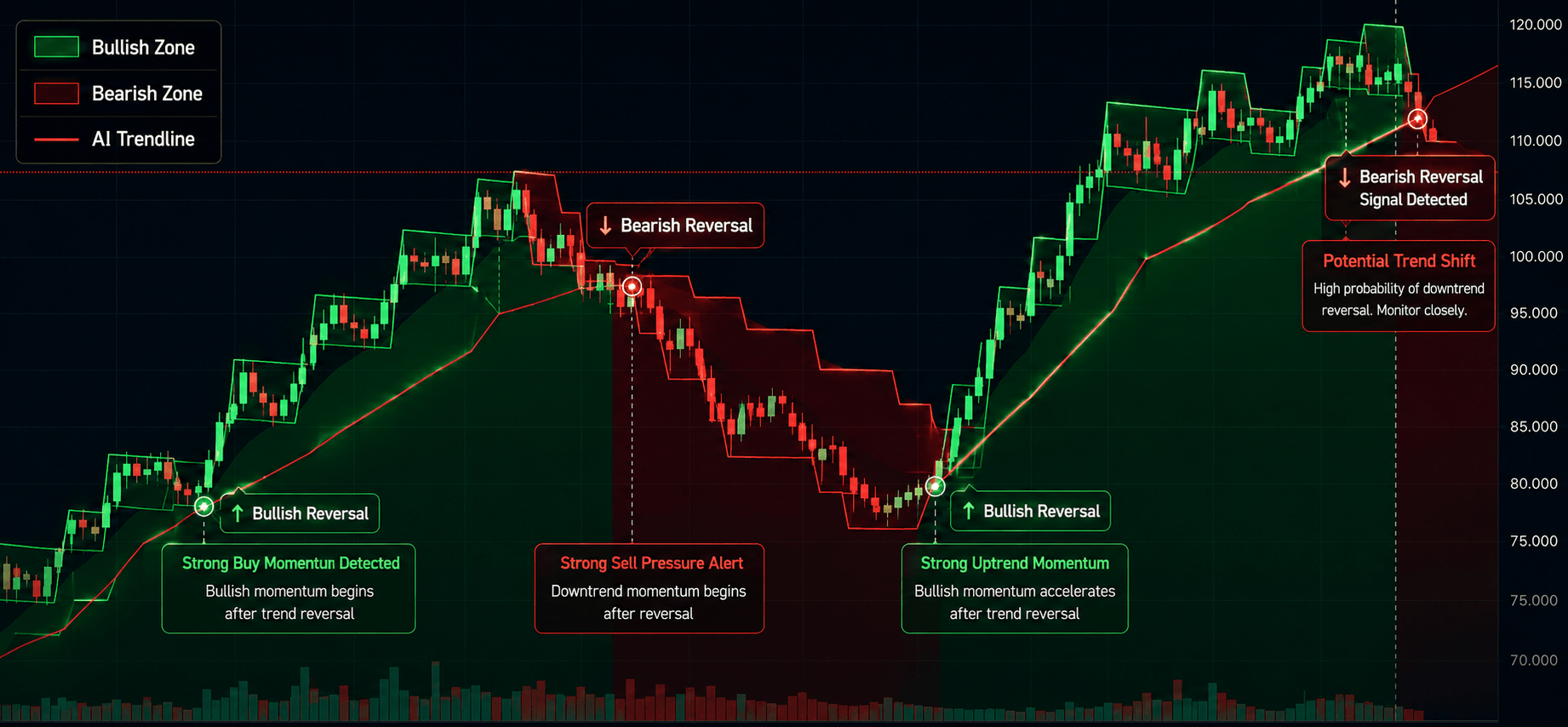
Winning Pattern Detection
Instantly surfaces the high-probability setups that repeat across the charts — a trusted edge for timing your entries and exits.
- Spot momentum building in real time
- Catch trend-reversal points before they break
- Built for active traders who need results, not theory
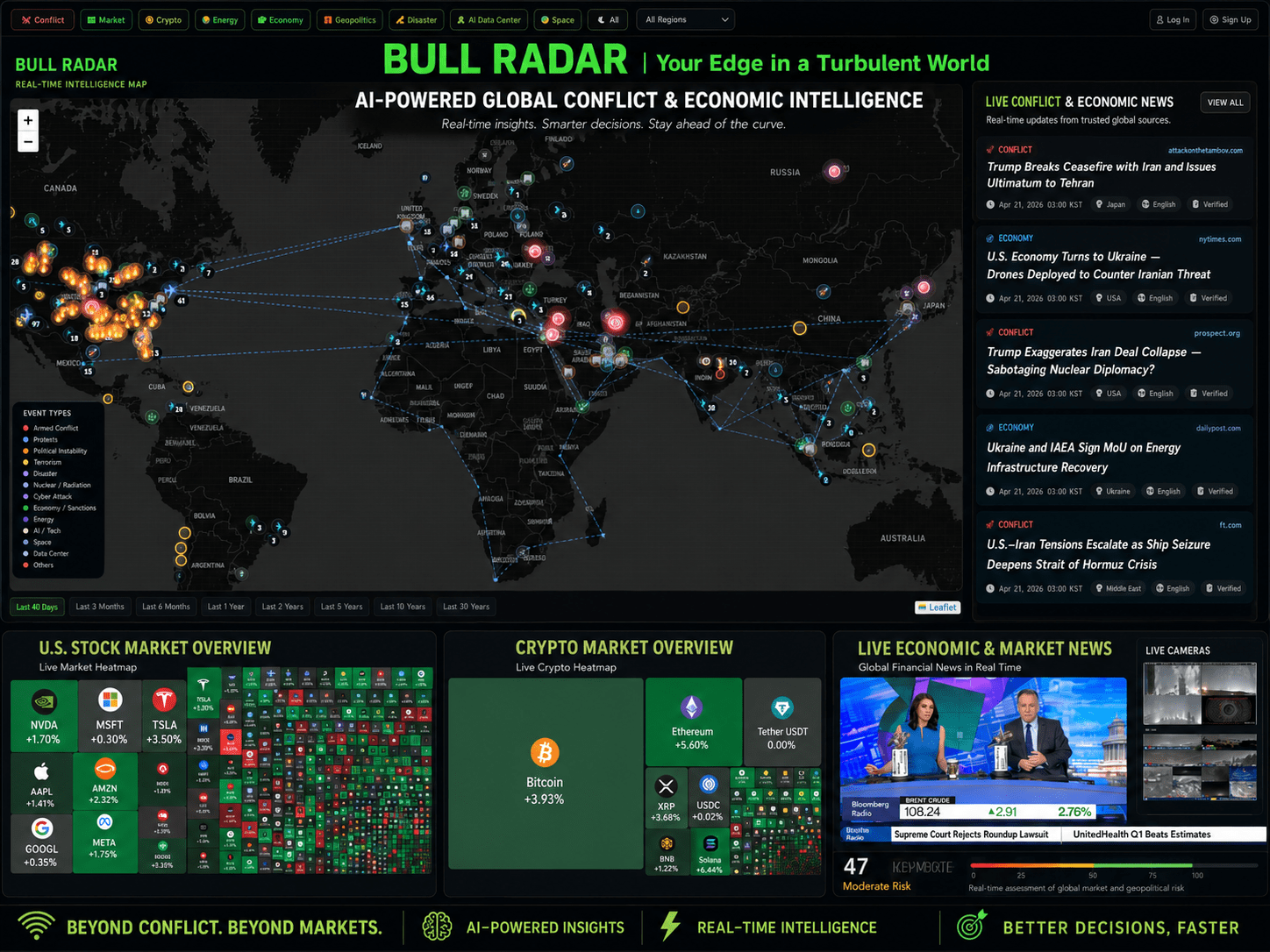
AI Live Economic Dashboard
AI analyzes real-time market data — turning complex, global investment flows into clear insight in seconds.
- Track global stock markets in real time
- See exactly which assets are strong — and which are fading
- Watch how geopolitical events move the markets
About the Author