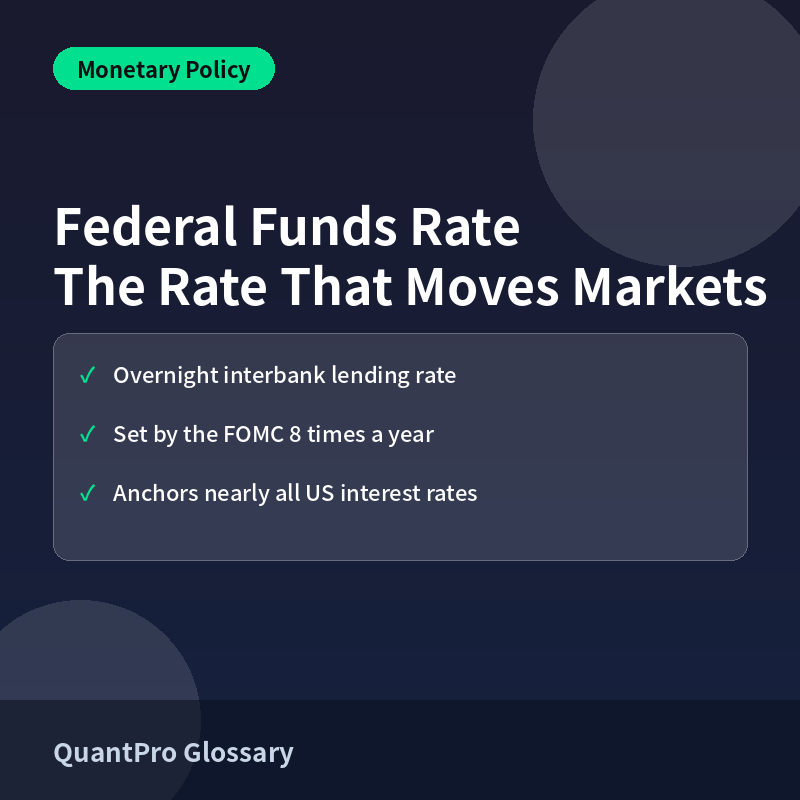
What Is the Federal Funds Rate?
The federal funds rate is the target interest rate range at which commercial banks lend their excess reserves to one another overnight to meet reserve requirements. Set by the Federal Reserve’s Federal Open Market Committee (FOMC), it serves as the primary benchmark for short-term interest rates throughout the U.S. financial system and has ripple effects across the entire global economy.
How the Fed Sets and Uses This Rate
The FOMC meets eight times a year to review economic conditions — including inflation, employment, and growth — and decides whether to raise, lower, or hold the target rate. The Fed primarily implements changes to this rate through open market operations, adjusting the supply of reserves in the banking system to guide the actual traded rate toward its target.
Why It Matters for Investors
It Anchors Nearly All Other Interest Rates
Mortgage rates, credit card rates, corporate borrowing costs, and savings account yields all tend to move in the same general direction as the federal funds rate, making it one of the most closely watched figures in all of finance.
Higher Rates Generally Pressure Stock Valuations
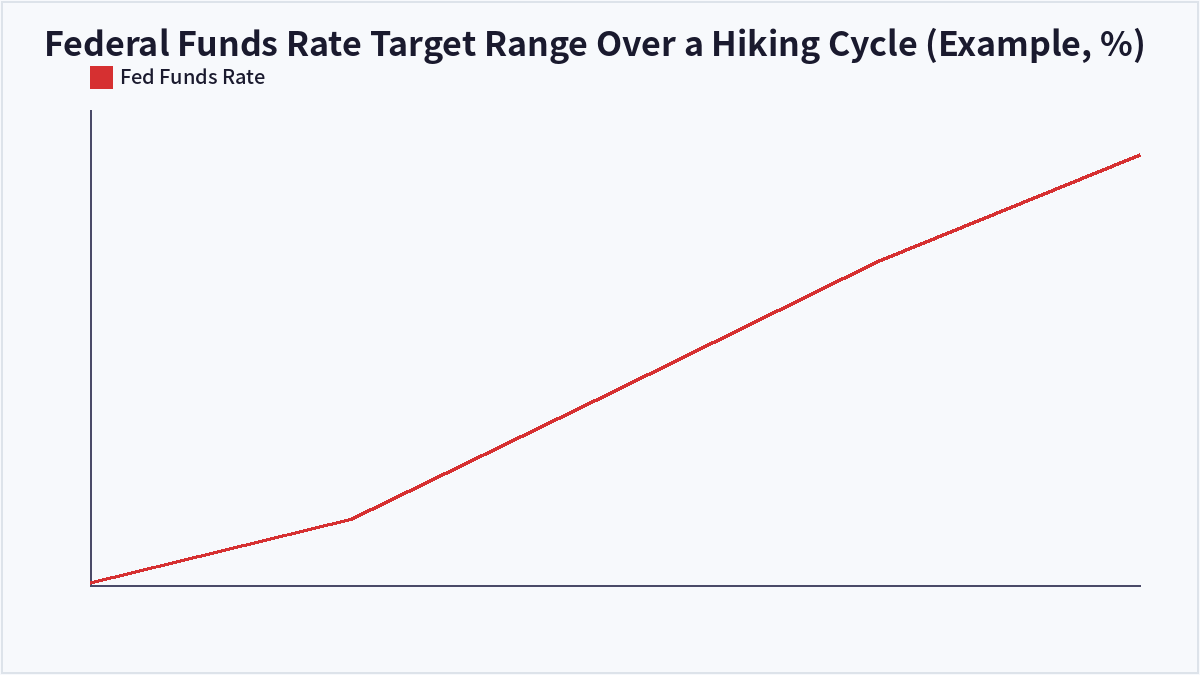
As rates rise, future corporate earnings are discounted more heavily in valuation models, and fixed-income alternatives become more attractive relative to stocks — both factors that have historically weighed on equity valuations during rate-hiking cycles.
| Rate Environment | Typical Fed Action | Common Market Reaction |
|---|---|---|
| High inflation | Raise rates | Bond yields rise, stock valuations pressured |
| Economic slowdown | Cut rates | Bond yields fall, stocks often supported |
| Stable conditions | Hold rates | Markets await forward guidance |
Frequently Asked Questions
How often does the Fed change the rate?
There’s no fixed schedule for changes — the Fed only adjusts the rate when economic conditions warrant it, though decisions are announced at one of the eight scheduled FOMC meetings each year.
What’s the difference between the federal funds rate and mortgage rates?
The federal funds rate is an overnight interbank rate, while mortgage rates are long-term rates influenced by many factors including the fed funds rate, but more directly tied to longer-term Treasury yields.
Why does the market react so strongly to rate decisions?
Because the rate affects borrowing costs across the entire economy and directly influences asset valuations, even small or unexpected changes can trigger significant repricing across stocks, bonds, and currencies.
Is a rate cut always good for stocks?
Not always — a rate cut made in response to a severe economic downturn can still coincide with falling stock prices if investors are more concerned about the underlying weakness than reassured by the lower rate.
Key Takeaways
The federal funds rate is the Fed’s primary policy tool, setting the benchmark for overnight interbank lending and influencing nearly every interest rate in the economy. Its direction has significant implications for both bond and equity markets. This article is for informational purposes only and does not constitute investment advice.

QuantPro: AI Finds the Trade Before You Do
From AI-powered chart analysis to real-time market intelligence — everything a serious investor needs, in one platform.
- Automated AI chart analysis with precision trend timing
- Bull Radar: real-time visualization of geopolitical & economic shifts
- Live market-moving news and insights, curated for you
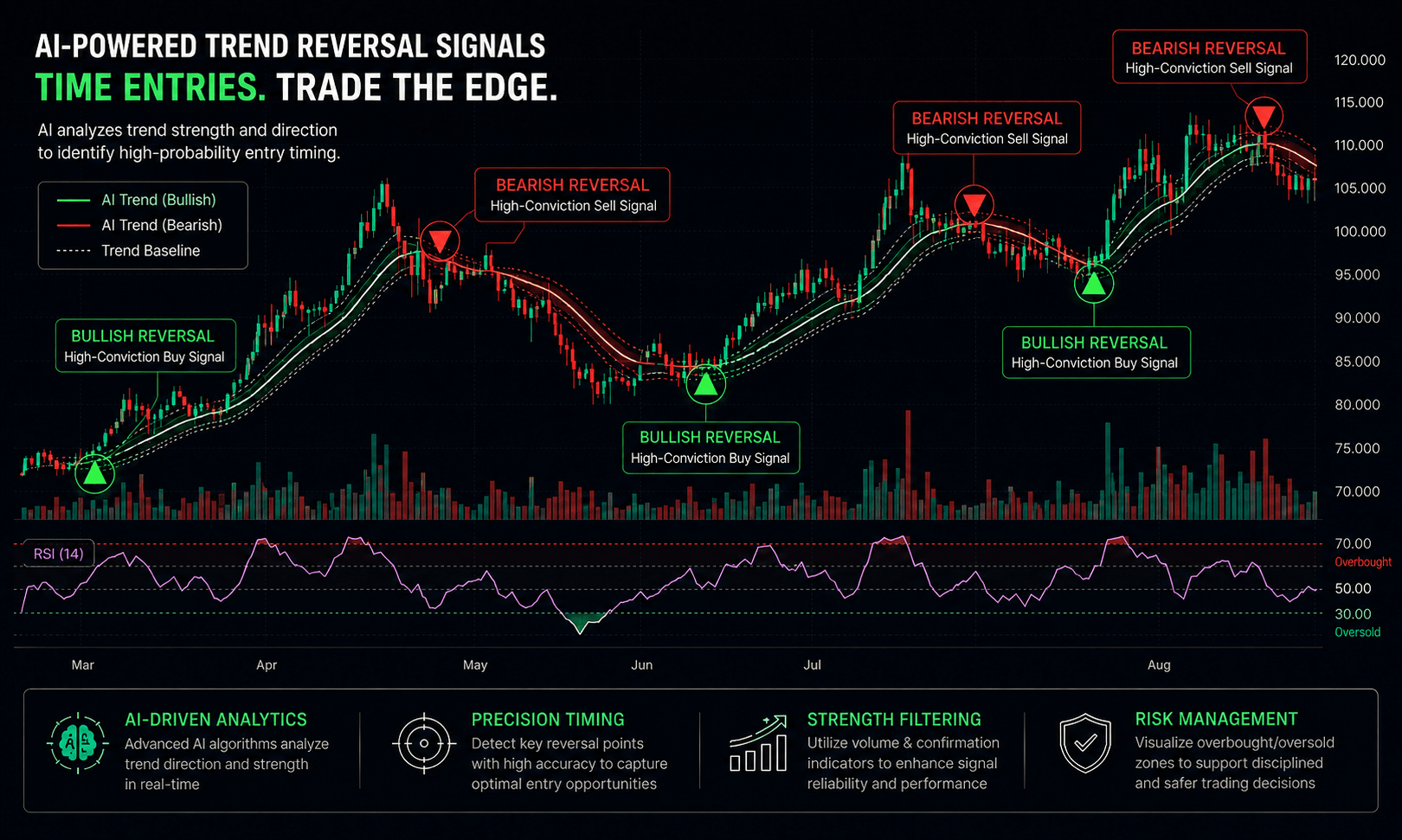
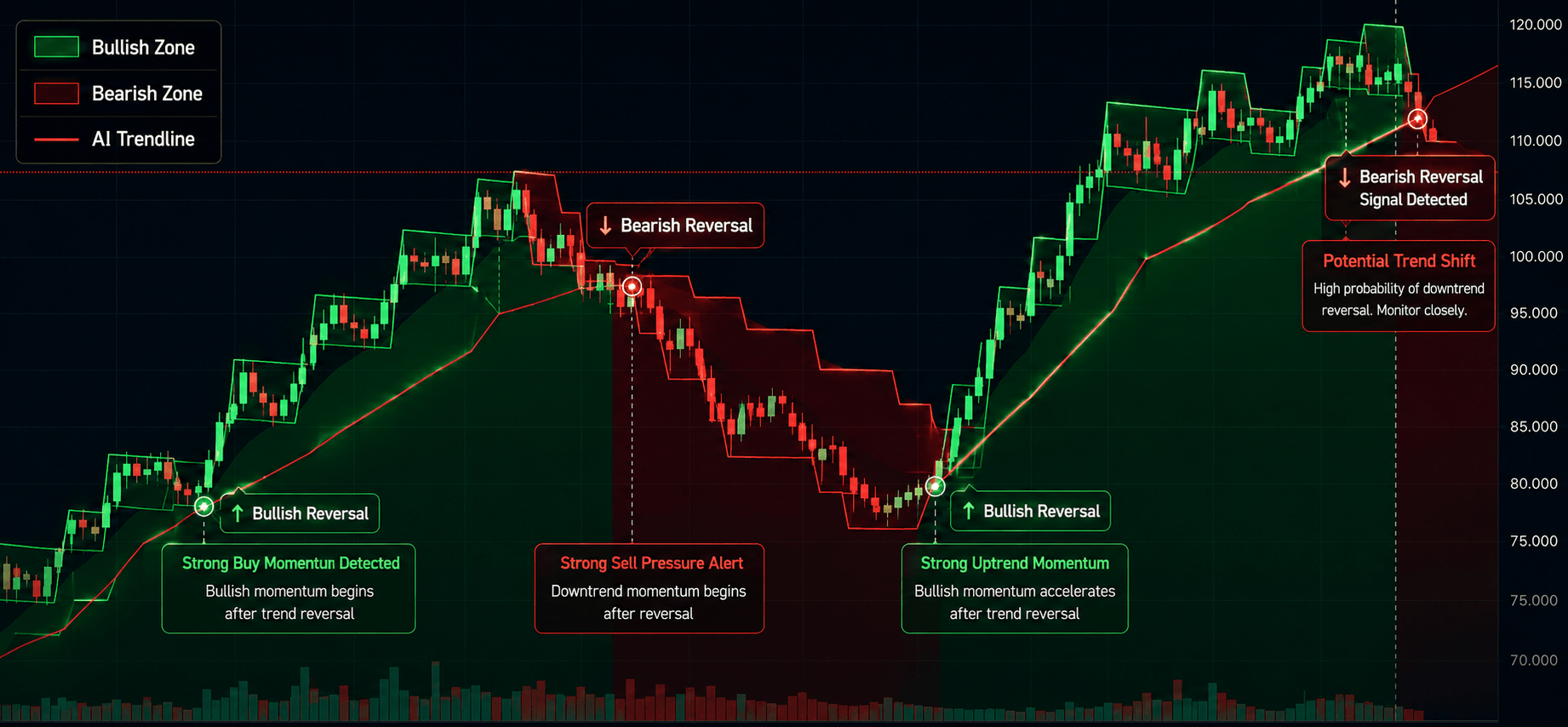
Bull Wave / Bear Wave Forecast Model
Engineered to help you read market direction and momentum faster than the crowd.
- Instantly separate bullish momentum from bearish pressure
- Pinpoint high-probability entry zones with confidence
- Chart signals clear enough for beginners, sharp enough for pros
Winning Pattern Detection
Instantly surfaces the high-probability setups that repeat across the charts — a trusted edge for timing your entries and exits.
- Spot momentum building in real time
- Catch trend-reversal points before they break
- Built for active traders who need results, not theory

AI Live Economic Dashboard
AI analyzes real-time market data — turning complex, global investment flows into clear insight in seconds.
- Track global stock markets in real time
- See exactly which assets are strong — and which are fading
- Watch how geopolitical events move the markets
About the Author