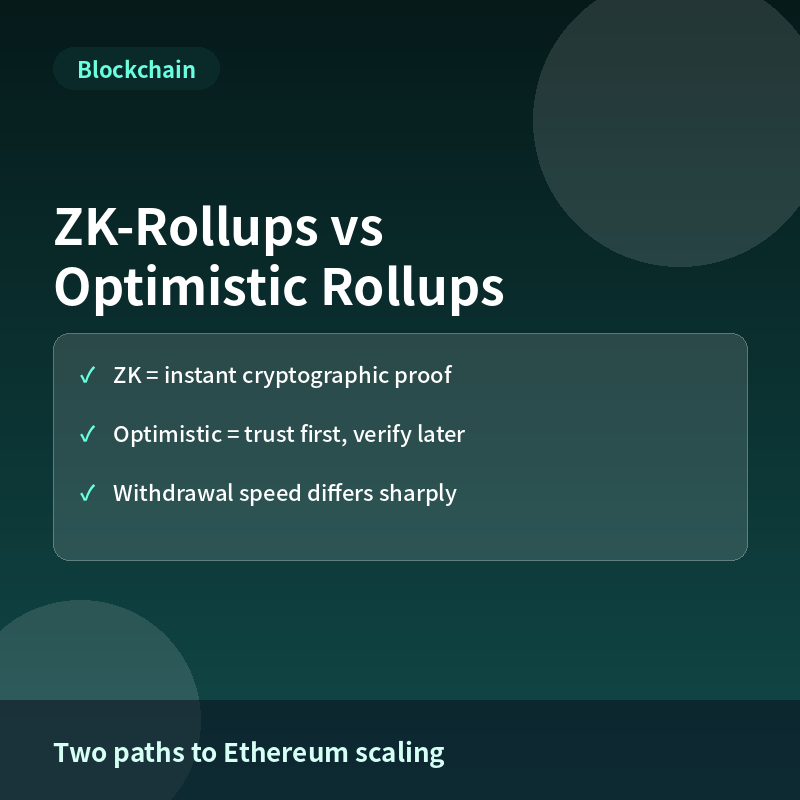
What ZK-Rollups and Optimistic Rollups Have in Common
Both are layer-2 scaling technologies that bundle many transactions off-chain and post only a compressed summary to the Ethereum mainnet (layer 1). Where they fundamentally differ is in how they prove that the bundled transactions were processed correctly.
The Core Difference in Verification
ZK-Rollups: Cryptographic Proof First
A ZK-Rollup generates a zero-knowledge proof, such as a ZK-SNARK, that mathematically demonstrates the batch of transactions was executed correctly, and submits that proof alongside the batch. Because the proof is verifiable instantly and with certainty, transactions can be finalized on layer 1 almost immediately.
Optimistic Rollups: Assume Correctness, Challenge Later
An Optimistic Rollup, true to its name, assumes submitted transaction batches are valid by default. It then opens a challenge window, typically about seven days, during which anyone can submit a fraud proof to dispute a transaction they believe was processed incorrectly.
Practical Impact: Withdrawal Speed and Cost
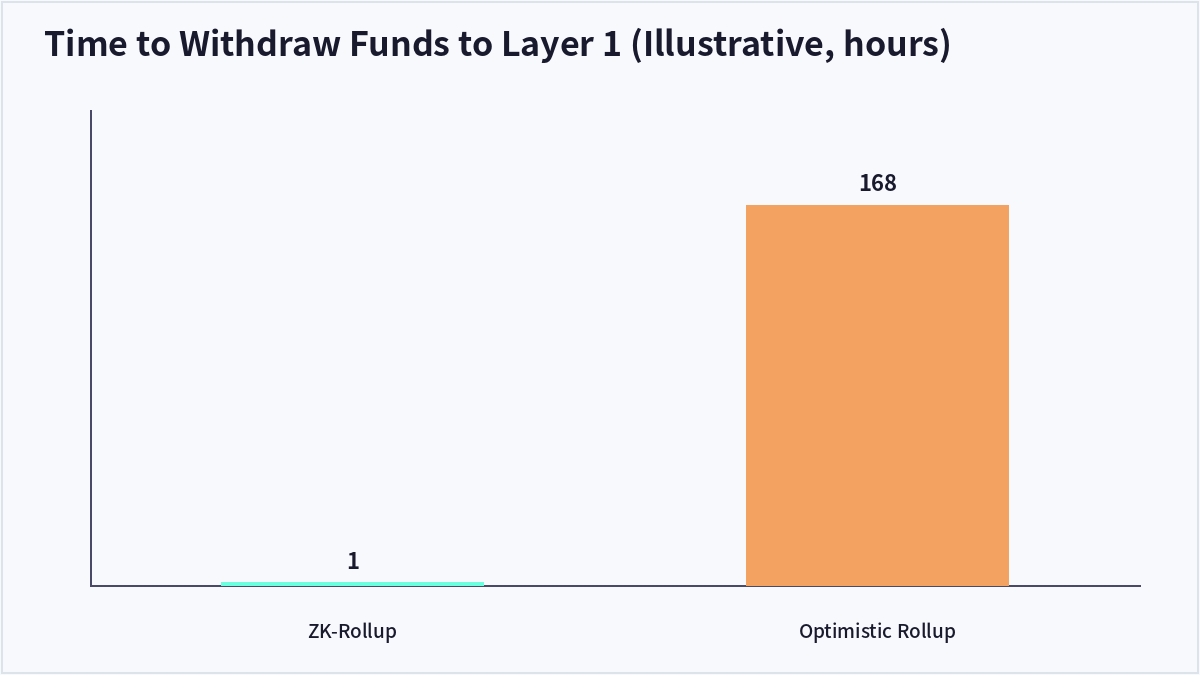
This difference means ZK-Rollups allow fast withdrawals back to layer 1 but require significant computational overhead to generate the cryptographic proofs, while Optimistic Rollups have lower computational costs but force users to wait out the challenge period before withdrawing funds.
| Feature | ZK-Rollup | Optimistic Rollup |
|---|---|---|
| Verification method | Cryptographic proof (ZK-SNARK, etc.), verified instantly | Assumed valid, disputed later via fraud proofs |
| Finality speed | Fast (as soon as proof is verified) | Slow (~7-day challenge period) |
| Computational cost | High (proof generation) | Relatively low |
| EVM compatibility | Historically harder (improving) | Relatively easier |
| Examples | zkSync, StarkNet, Polygon zkEVM | Optimism, Arbitrum |
Frequently Asked Questions
What’s the biggest difference users actually notice?
The most noticeable difference is withdrawal time: ZK-Rollups let users move funds back to layer 1 relatively quickly, while Optimistic Rollups require waiting out roughly a week-long challenge period.
Why do Optimistic Rollups use a 7-day challenge window?
It’s designed to give the network enough time for anyone to detect and submit a fraud proof against an invalid transaction batch. A shorter window would increase the risk of fraudulent transactions slipping through unchallenged.
Does that make ZK-Rollups strictly better?
Not necessarily. ZK-Rollups offer faster finality and stronger security guarantees, but historically faced greater complexity in achieving full smart-contract compatibility due to the computational demands of generating zero-knowledge proofs. Each design involves distinct trade-offs.
Is there a way to withdraw funds faster from an Optimistic Rollup?
Some services offer ‘fast bridge’ options where a liquidity provider fronts the withdrawal amount immediately and is later reimbursed once the challenge period ends, letting users skip the wait in exchange for a small fee.
Key Takeaways
ZK-Rollups and Optimistic Rollups both scale Ethereum by bundling transactions off-chain, but they verify those transactions in fundamentally different ways, cryptographic proof versus assumed validity with a dispute window, which drives a real difference in withdrawal speed and computational cost. Both remain actively evolving technologies with distinct trade-offs worth understanding before choosing where to transact. This article is for informational purposes only and does not constitute investment advice.

QuantPro: AI Finds the Trade Before You Do
From AI-powered chart analysis to real-time market intelligence — everything a serious investor needs, in one platform.
- Automated AI chart analysis with precision trend timing
- Bull Radar: real-time visualization of geopolitical & economic shifts
- Live market-moving news and insights, curated for you
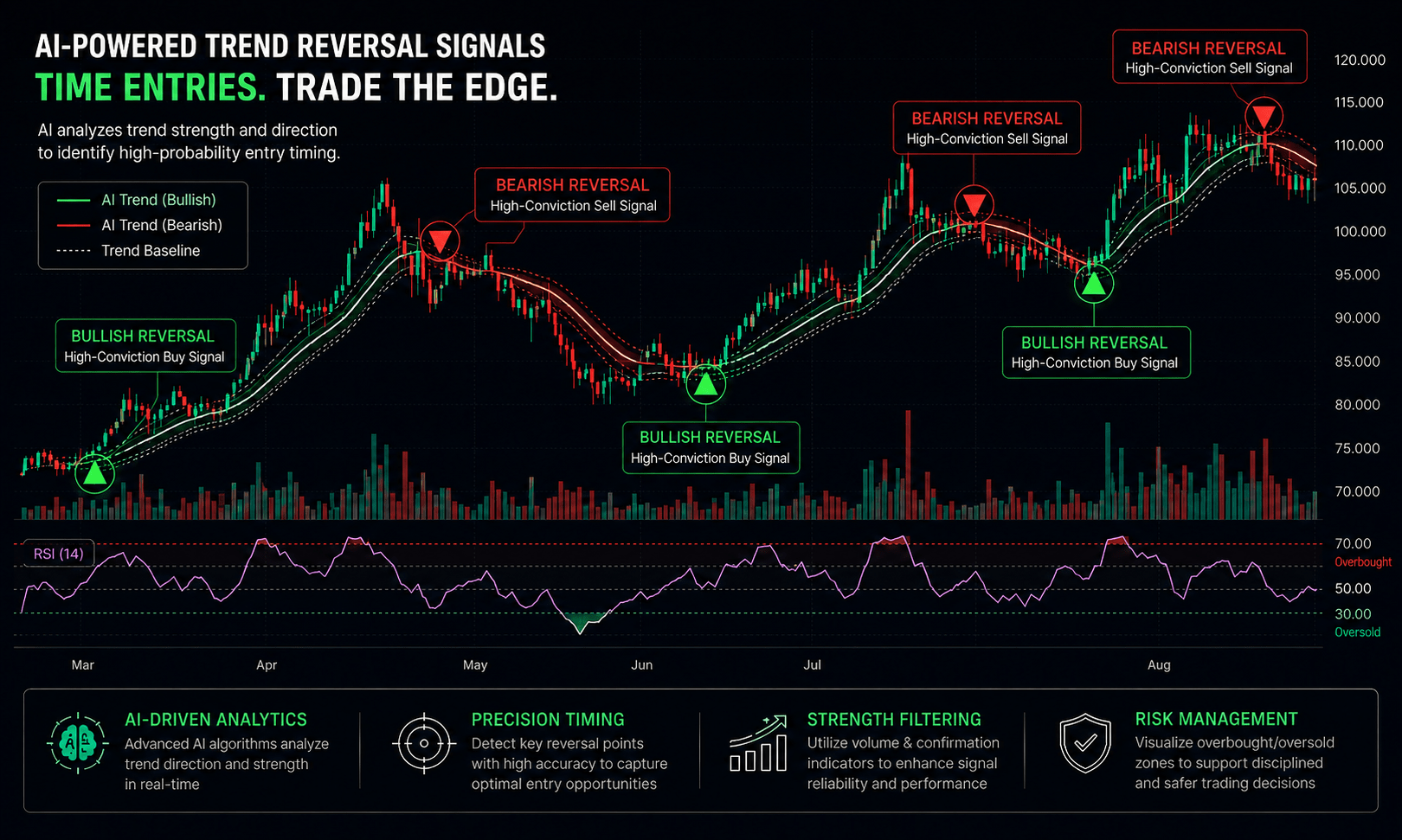
Bull Wave / Bear Wave Forecast Model
Engineered to help you read market direction and momentum faster than the crowd.
- Instantly separate bullish momentum from bearish pressure
- Pinpoint high-probability entry zones with confidence
- Chart signals clear enough for beginners, sharp enough for pros
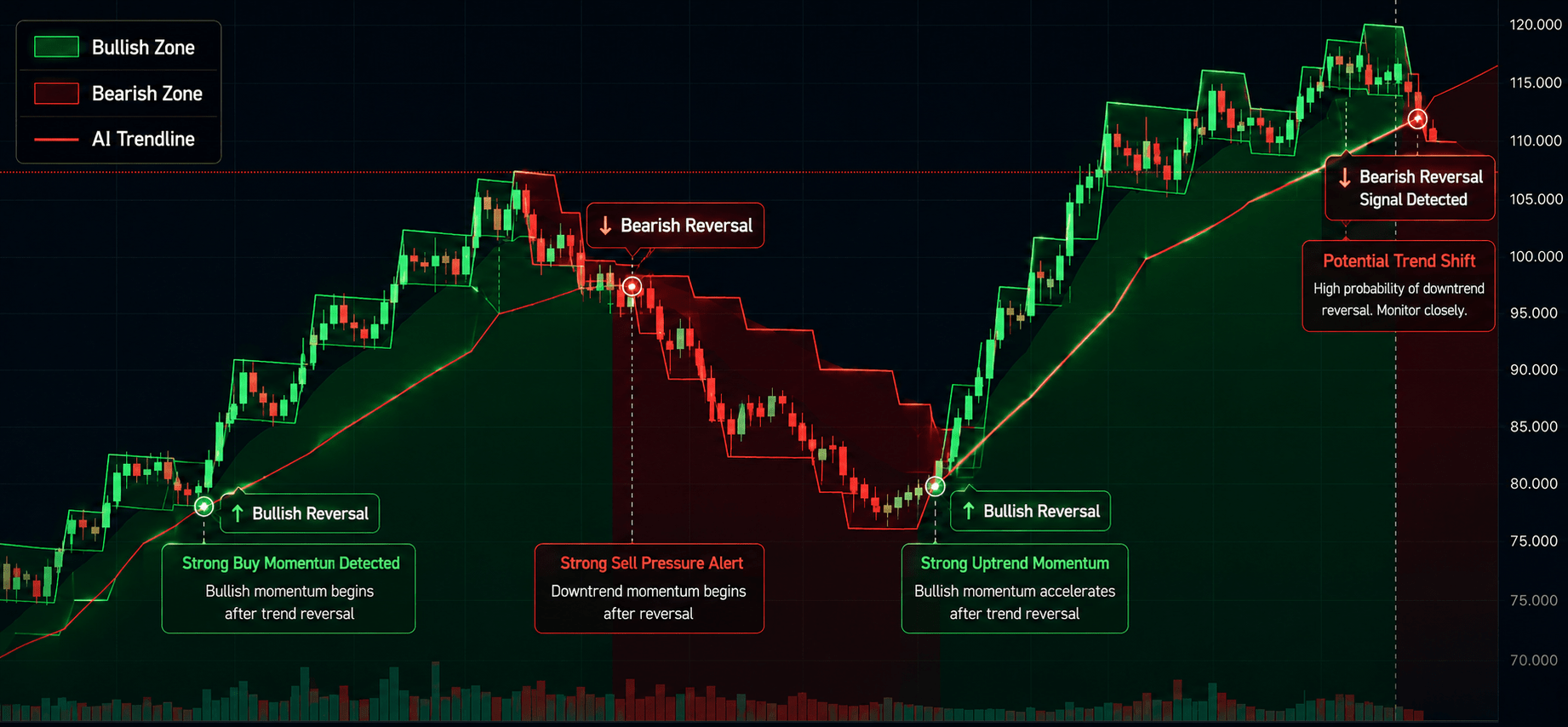
Winning Pattern Detection
Instantly surfaces the high-probability setups that repeat across the charts — a trusted edge for timing your entries and exits.
- Spot momentum building in real time
- Catch trend-reversal points before they break
- Built for active traders who need results, not theory

AI Live Economic Dashboard
AI analyzes real-time market data — turning complex, global investment flows into clear insight in seconds.
- Track global stock markets in real time
- See exactly which assets are strong — and which are fading
- Watch how geopolitical events move the markets
About the Author