Definitions
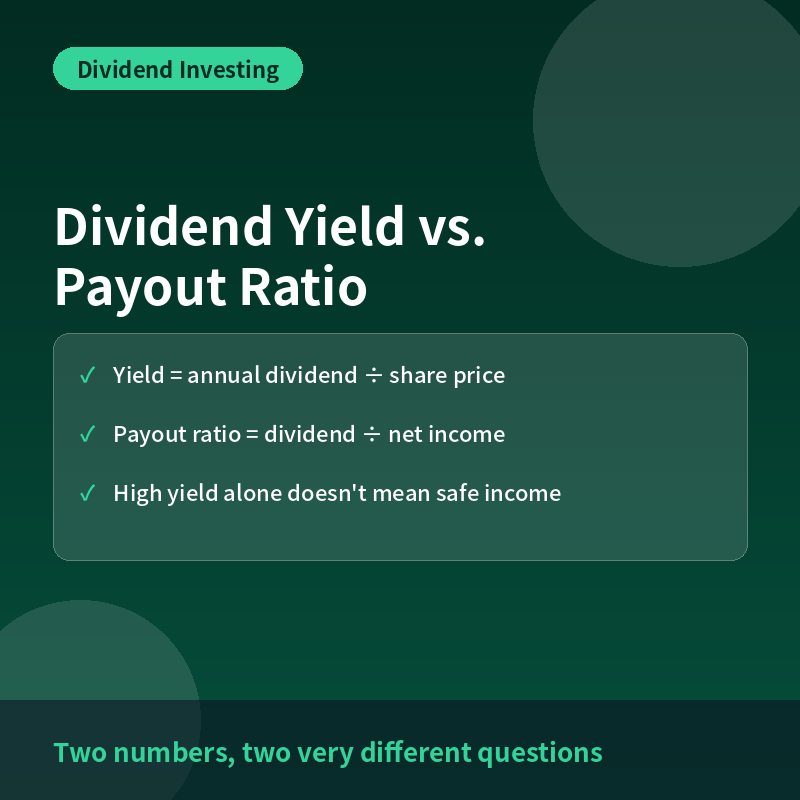
Dividend yield divides a company’s annual dividend per share by its current share price, showing the cash return an investor earns relative to the price paid for the stock.
Dividend payout ratio divides total dividends paid by net income, showing what portion of a company’s earnings is being distributed to shareholders rather than reinvested.
How They Interact
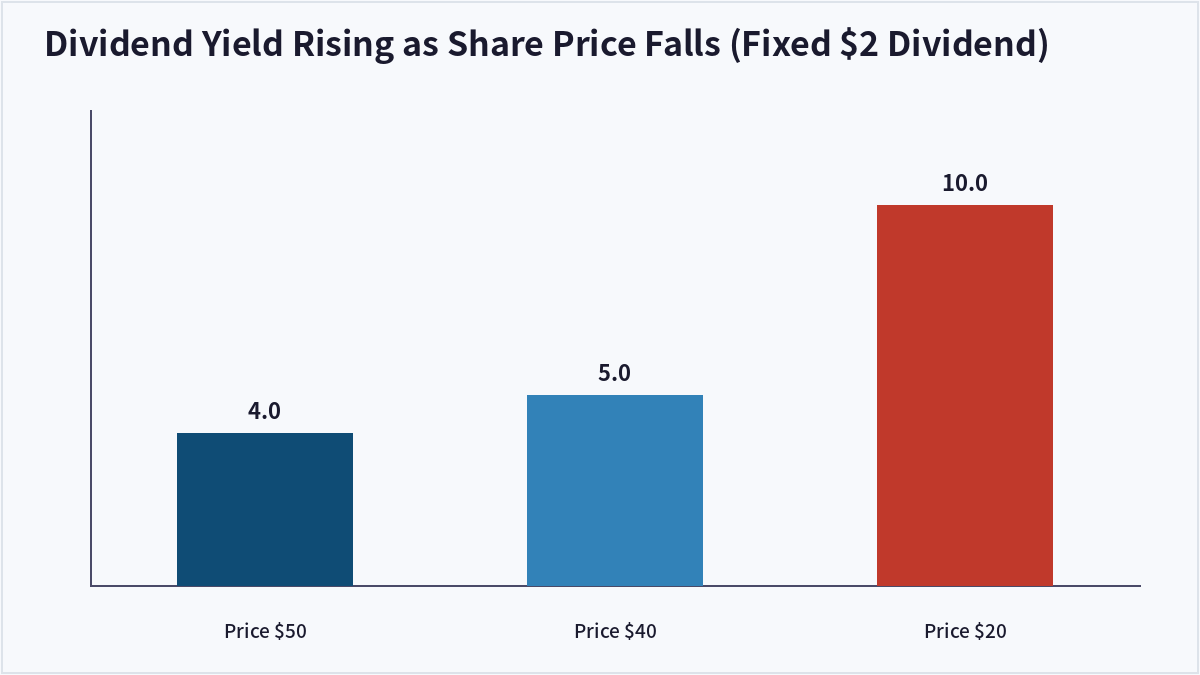
If a company’s dividend stays fixed while its share price falls, the dividend yield rises mechanically, even though the drop in price may actually reflect deteriorating business fundamentals.
That is why yield should always be read alongside the payout ratio and free cash flow coverage, which reveal whether the current dividend level is actually sustainable.
Why It Matters to Investors
Income-focused investors rely on dividend yield as a starting point, but an unusually high yield can be an early warning sign of an impending dividend cut or a deeper business problem rather than a genuine bargain.
Dividend Yield vs. Payout Ratio Compared
Each metric answers a distinct question about the sustainability and attractiveness of a dividend.
| Aspect | Dividend Yield | Dividend Payout Ratio |
|---|---|---|
| Formula | Annual dividend ÷ share price | Dividend ÷ net income |
| What it shows | Cash return relative to investment | Share of earnings paid out |
| Danger sign when very high | May reflect a falling, distressed price | May indicate an unsustainable payout |
| Useful companion metrics | Payout ratio, free cash flow | Earnings stability, debt levels |
Frequently Asked Questions
Is a 10% dividend yield always a great deal?
It’s often the opposite: markets may have pushed the price down sharply in anticipation of a dividend cut or earnings trouble, so the cause behind the yield needs to be checked first.
Can the payout ratio exceed 100%?
Yes, temporarily, if a company pays out more in dividends than it earned in net income, but this is often unsustainable over the long run.
Why do growth companies often have low dividend yields?
Growth-stage companies typically reinvest earnings into expansion rather than distributing them, so investors expect returns mainly through share price appreciation instead.
Are dividend yield and dividend growth rate the same thing?
No, yield reflects the current payout relative to price, while dividend growth rate measures how much the dividend itself has increased over time, and both provide different information.
Key Takeaways
Dividend yield is a useful starting point, but pairing it with the payout ratio and earnings quality is essential to judge whether a dividend is genuinely sustainable or a warning in disguise. This article is for informational purposes only and does not constitute investment advice.

QuantPro: AI Finds the Trade Before You Do
From AI-powered chart analysis to real-time market intelligence — everything a serious investor needs, in one platform.
- Automated AI chart analysis with precision trend timing
- Bull Radar: real-time visualization of geopolitical & economic shifts
- Live market-moving news and insights, curated for you
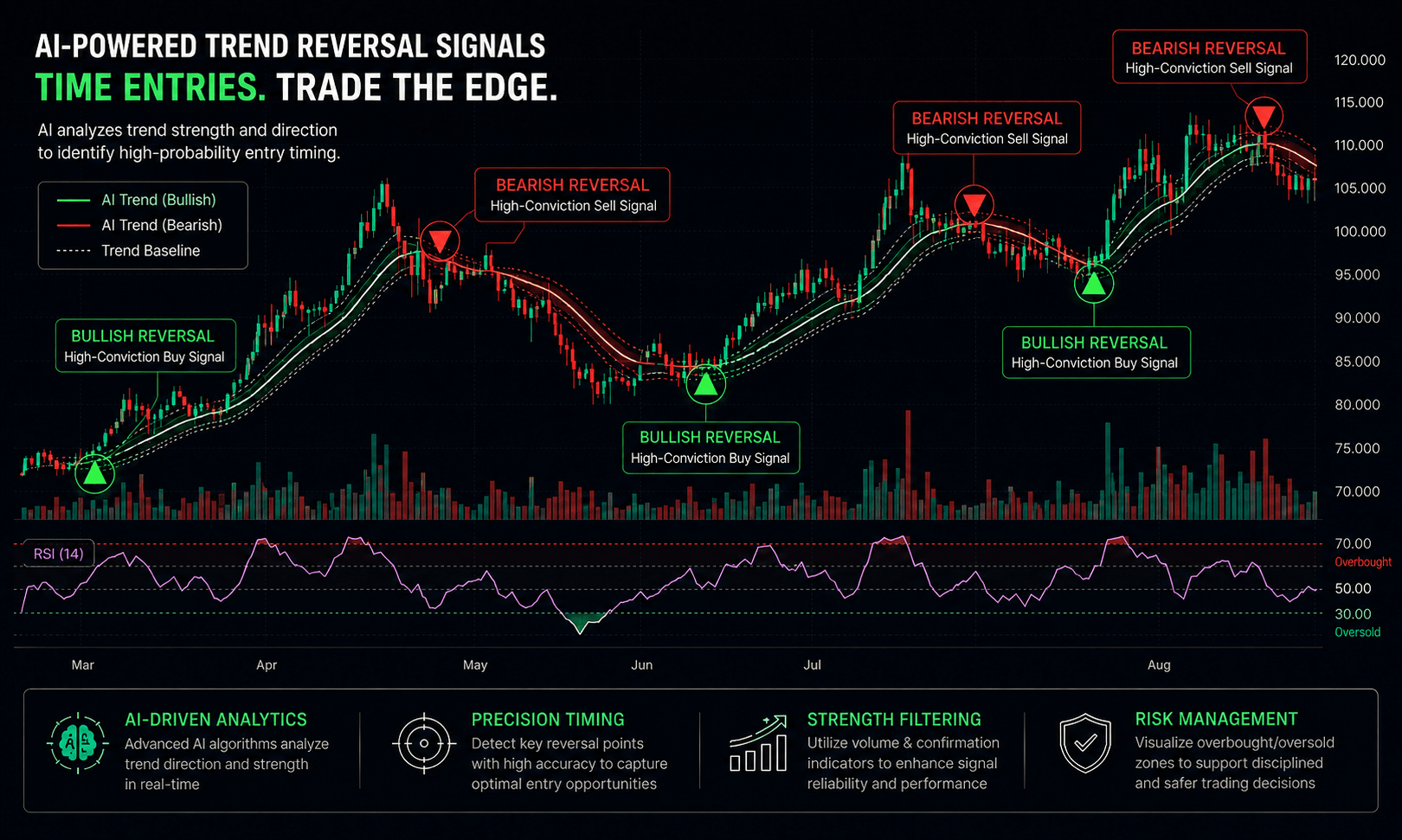
Bull Wave / Bear Wave Forecast Model
Engineered to help you read market direction and momentum faster than the crowd.
- Instantly separate bullish momentum from bearish pressure
- Pinpoint high-probability entry zones with confidence
- Chart signals clear enough for beginners, sharp enough for pros
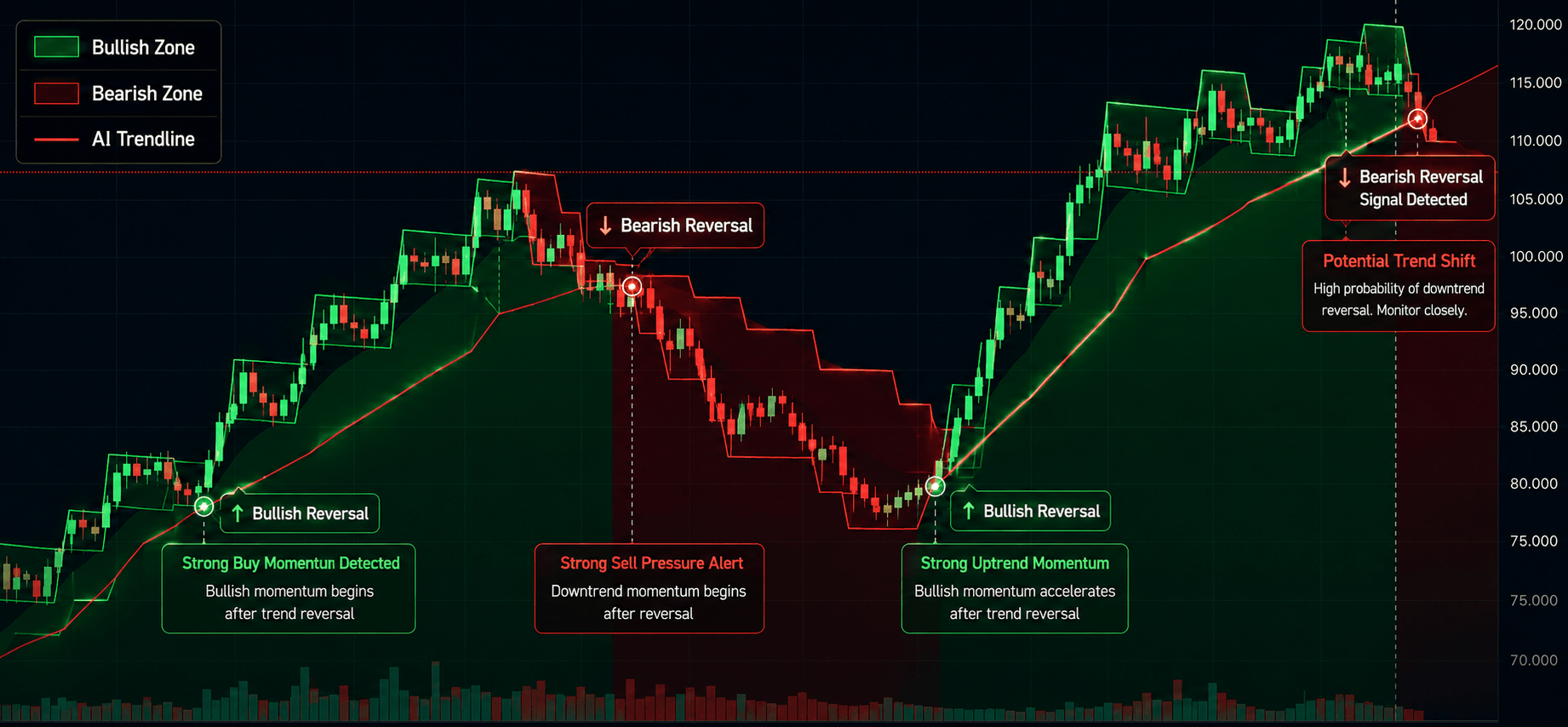
Winning Pattern Detection
Instantly surfaces the high-probability setups that repeat across the charts — a trusted edge for timing your entries and exits.
- Spot momentum building in real time
- Catch trend-reversal points before they break
- Built for active traders who need results, not theory

AI Live Economic Dashboard
AI analyzes real-time market data — turning complex, global investment flows into clear insight in seconds.
- Track global stock markets in real time
- See exactly which assets are strong — and which are fading
- Watch how geopolitical events move the markets
About the Author