Defining the Two Styles
Growth stocks trade at high valuation multiples relative to current earnings because investors expect substantial future earnings expansion. Value stocks trade at low multiples relative to current earnings or book value, often reflecting slower growth expectations or temporary market pessimism about the business. The classification isn’t permanent — a stock can migrate from one category to the other as its growth trajectory and valuation change.
Why Interest Rates Drive the Divide
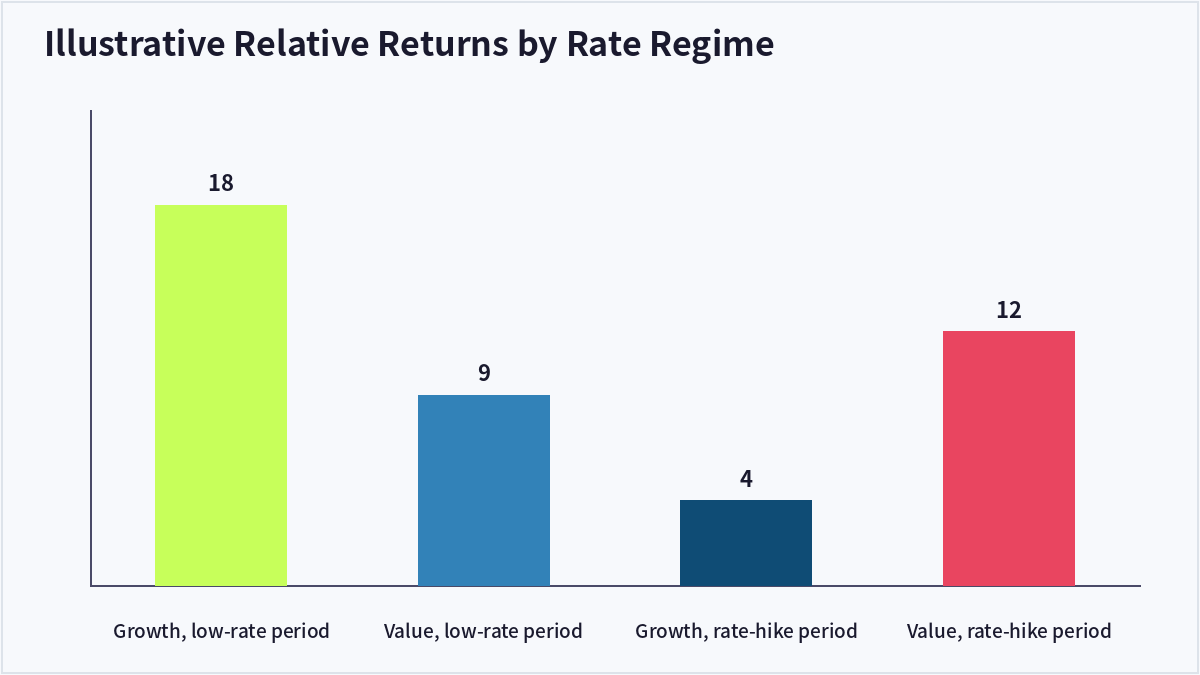
A large share of a growth company’s valuation comes from earnings expected many years in the future, discounted back to present value. When interest rates are low, that discount rate is small, so distant earnings retain most of their value — favorable for growth stocks. When rates rise, the discount rate increases, shrinking the present value of those distant earnings more than it shrinks the present value of a value stock’s already-realized current profits.
Why Value Holds Up Better When Rates Rise
Value stocks are already priced closer to their current earnings and book value, leaving less room for multiple compression when rates climb. Many traditional value sectors — banks, energy, and insurers — can also see a direct earnings benefit from higher rates through wider interest margins, adding a fundamental tailwind on top of the relative valuation resilience.
A Practical Blended Approach
Rather than betting entirely on one style, many investors hold both growth and value exposure and adjust the mix gradually as the rate cycle evolves — leaning more toward value as rate hikes begin and gradually shifting back toward growth once cuts become likely. Because style leadership can rotate faster than expected, a blended baseline with modest tilts tends to be more forgiving of mistimed calls than an all-or-nothing bet.
| Factor | Growth Stocks | Value Stocks |
|---|---|---|
| Valuation level | High P/E, high P/B | Low P/E, low P/B |
| Rate sensitivity | High — hurt by rising rates | Lower — relatively resilient |
| Representative sectors | Technology, biotech | Banks, energy, utilities |
Frequently Asked Questions
Which style has performed better historically?
Long-run academic research has generally found a value premium over many decades, but growth dominated for much of the 2010s during an extended low-rate period, showing that no single style wins in every era.
Can a stock be both growth and value at once?
Classification is a spectrum rather than a strict binary, and some stocks sit in a blended middle ground with moderate valuation multiples and moderate growth expectations, making a clean growth-or-value label somewhat arbitrary for those names.
How do I know which style is currently in favor?
Comparing the relative performance of growth-focused and value-focused index funds over recent months, alongside the direction of central bank policy and the shape of the yield curve, gives a rough read on which style currently has the wind at its back.
Is it reasonable to hold both growth and value ETFs?
Yes — many investors use this as a way to avoid having to correctly time style rotation, accepting a blended long-term return in exchange for reduced regret risk from betting entirely on the wrong style at the wrong time.
Key Takeaways
Growth stocks have tended to lead in low-rate environments because distant earnings are discounted less heavily, while value stocks have tended to hold up better as rates rise, which is why many investors maintain blended exposure and adjust the tilt gradually rather than betting entirely on one style. This article is for informational purposes only and does not constitute investment advice.

QuantPro: AI Finds the Trade Before You Do
From AI-powered chart analysis to real-time market intelligence — everything a serious investor needs, in one platform.
- Automated AI chart analysis with precision trend timing
- Bull Radar: real-time visualization of geopolitical & economic shifts
- Live market-moving news and insights, curated for you
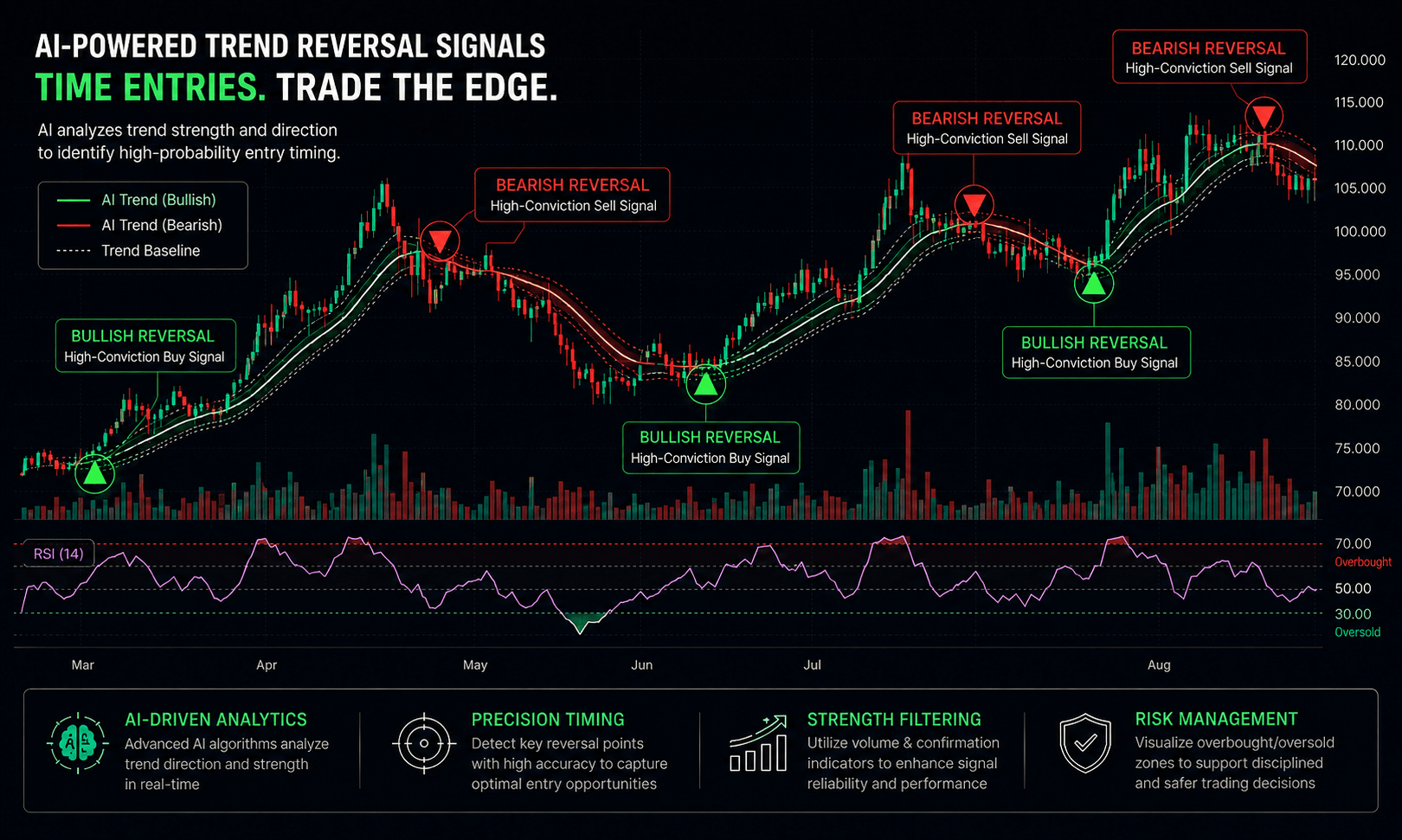
Bull Wave / Bear Wave Forecast Model
Engineered to help you read market direction and momentum faster than the crowd.
- Instantly separate bullish momentum from bearish pressure
- Pinpoint high-probability entry zones with confidence
- Chart signals clear enough for beginners, sharp enough for pros
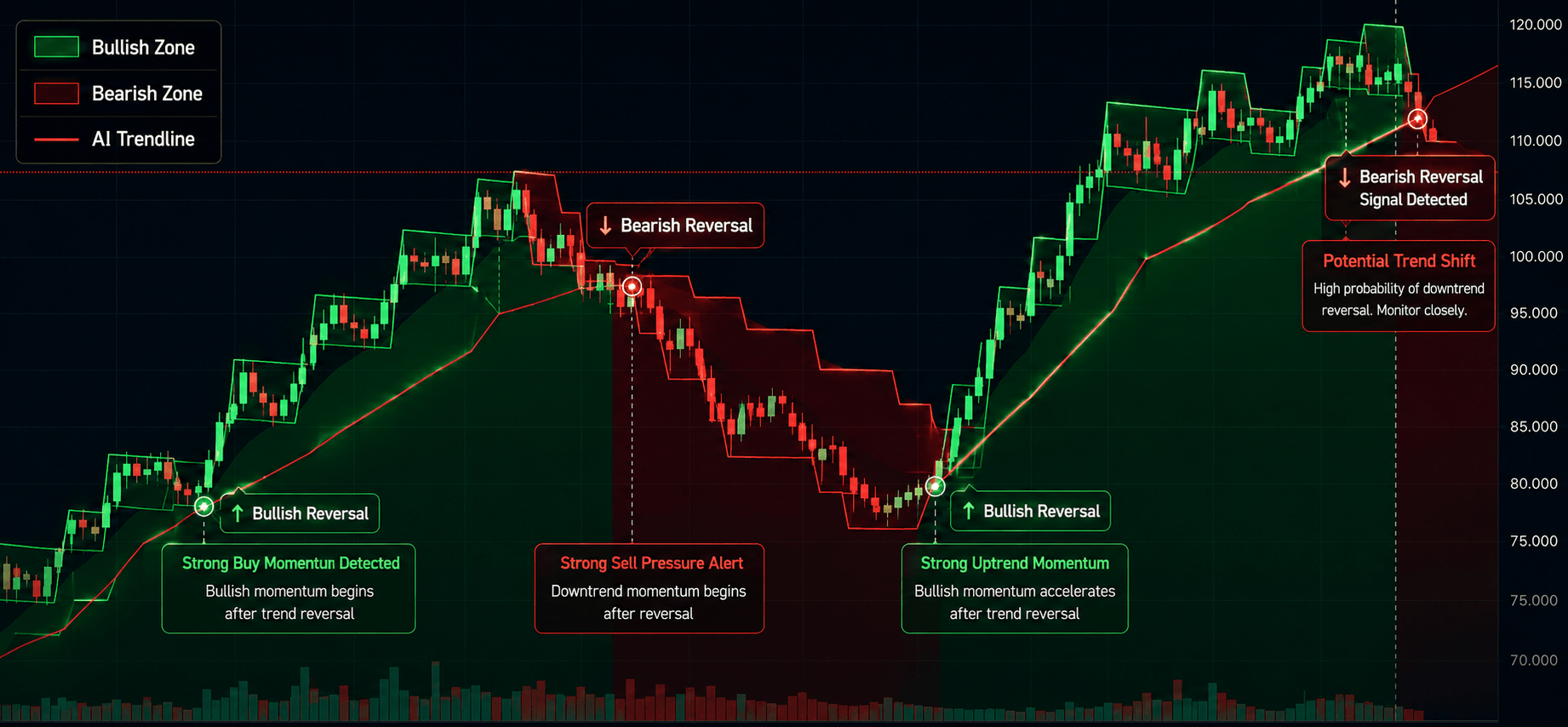
Winning Pattern Detection
Instantly surfaces the high-probability setups that repeat across the charts — a trusted edge for timing your entries and exits.
- Spot momentum building in real time
- Catch trend-reversal points before they break
- Built for active traders who need results, not theory

AI Live Economic Dashboard
AI analyzes real-time market data — turning complex, global investment flows into clear insight in seconds.
- Track global stock markets in real time
- See exactly which assets are strong — and which are fading
- Watch how geopolitical events move the markets
About the Author