What Is the Capital Asset Pricing Model (CAPM)?
The Capital Asset Pricing Model (CAPM) is a financial model that describes the relationship between the expected return of an investment and its systematic risk, measured by beta. Developed by William Sharpe and others in the 1960s, CAPM is widely used to estimate the required rate of return on an asset, which in turn serves as the discount rate in valuation models such as discounted cash flow analysis.
How to Calculate CAPM
The CAPM Formula
The CAPM formula is: Expected Return = Risk-Free Rate + Beta x (Market Return − Risk-Free Rate). The term (Market Return − Risk-Free Rate) is known as the equity risk premium, representing the extra return investors demand for taking on market risk instead of holding a risk-free asset.
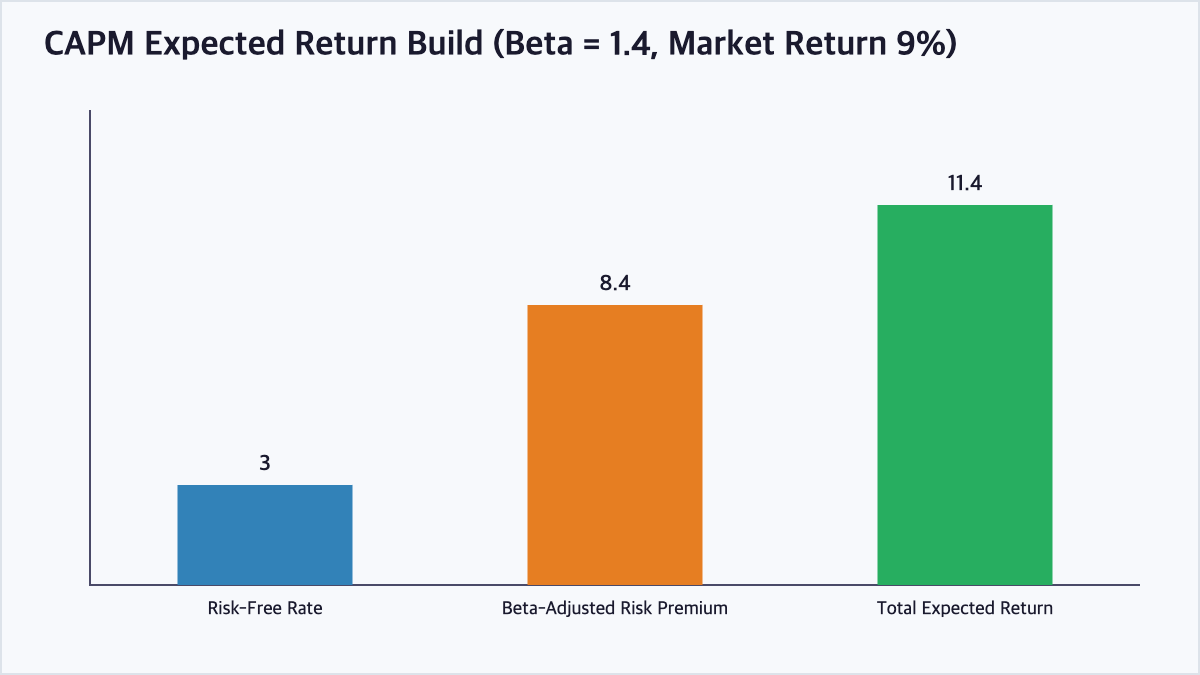
For example, suppose the risk-free rate is 3%, the expected market return is 9%, and a stock has a beta of 1.4. The equity risk premium is 9% − 3% = 6%. Applying the formula, the expected return is 3% + 1.4 x 6% = 3% + 8.4% = 11.4%. This means investors would require an 11.4% annual return to compensate for the stock’s above-average market risk.
Understanding Beta
Beta measures how sensitive a stock’s returns are to overall market movements. A beta of 1.0 means the stock tends to move in line with the market, a beta above 1.0 indicates higher volatility than the market, and a beta below 1.0 indicates lower volatility. A negative beta, though rare, would suggest the asset tends to move opposite to the market.
Why CAPM Matters
CAPM provides a systematic way to estimate the cost of equity, which is a critical input in corporate finance for capital budgeting decisions, valuation models, and performance benchmarking. By comparing a stock’s actual return to its CAPM-implied expected return, investors can also assess whether the stock has outperformed or underperformed relative to the risk it carries, a concept known as alpha.
CAPM vs. Other Asset Pricing Models
| Model | Key Factors | Complexity |
|---|---|---|
| CAPM | Single factor: market risk (beta) | Simple, widely used baseline |
| Fama-French Three-Factor Model | Market risk, size, value | Moderate, adds firm characteristics |
| Arbitrage Pricing Theory (APT) | Multiple macroeconomic factors | More complex, flexible factor selection |
Frequently Asked Questions
What are the main assumptions behind CAPM?
CAPM assumes investors are rational and risk-averse, markets are efficient with no transaction costs or taxes, and all investors have access to the same information and can borrow or lend at the risk-free rate. In practice, several of these assumptions do not hold perfectly, which is one of the main criticisms of the model.
Why is beta sometimes considered an unreliable measure of risk?
Beta is typically calculated using historical price data, which may not accurately predict future volatility, especially during periods of structural change in a company or the broader market. Critics also argue that beta captures only systematic (market) risk and ignores company-specific risks that may still matter to investors.
How is CAPM used in practice by companies?
Companies commonly use CAPM to estimate the cost of equity, which is then combined with the cost of debt to calculate the weighted average cost of capital (WACC). This WACC is used as the discount rate in valuation methods such as discounted cash flow (DCF) analysis.
What is the difference between CAPM’s expected return and actual return?
CAPM’s expected return is a theoretical estimate based on the asset’s beta and prevailing market conditions, while actual return reflects what an investor actually earned over a period. The difference between actual and CAPM-expected return is often referred to as alpha, representing risk-adjusted outperformance or underperformance.
Key Takeaways
The Capital Asset Pricing Model estimates an asset’s expected return by combining the risk-free rate with a beta-adjusted equity risk premium, making it a foundational tool for estimating the cost of equity and discount rates in valuation. While its assumptions are simplified and often criticized, CAPM remains a widely used starting point for risk-adjusted return analysis. This article is for informational purposes only and does not constitute investment advice.

QuantPro: AI Finds the Trade Before You Do
From AI-powered chart analysis to real-time market intelligence — everything a serious investor needs, in one platform.
- Automated AI chart analysis with precision trend timing
- Bull Radar: real-time visualization of geopolitical & economic shifts
- Live market-moving news and insights, curated for you
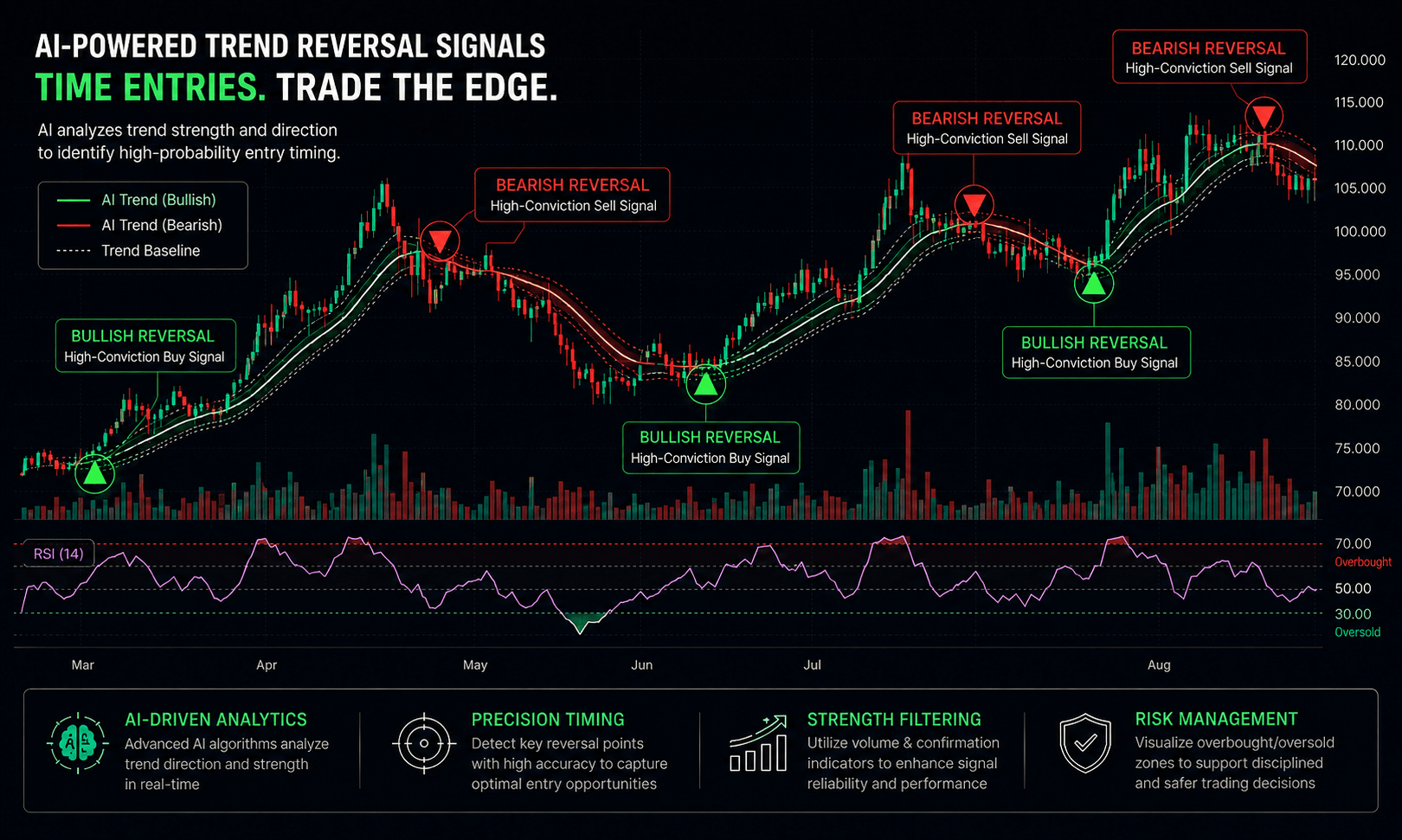
Bull Wave / Bear Wave Forecast Model
Engineered to help you read market direction and momentum faster than the crowd.
- Instantly separate bullish momentum from bearish pressure
- Pinpoint high-probability entry zones with confidence
- Chart signals clear enough for beginners, sharp enough for pros
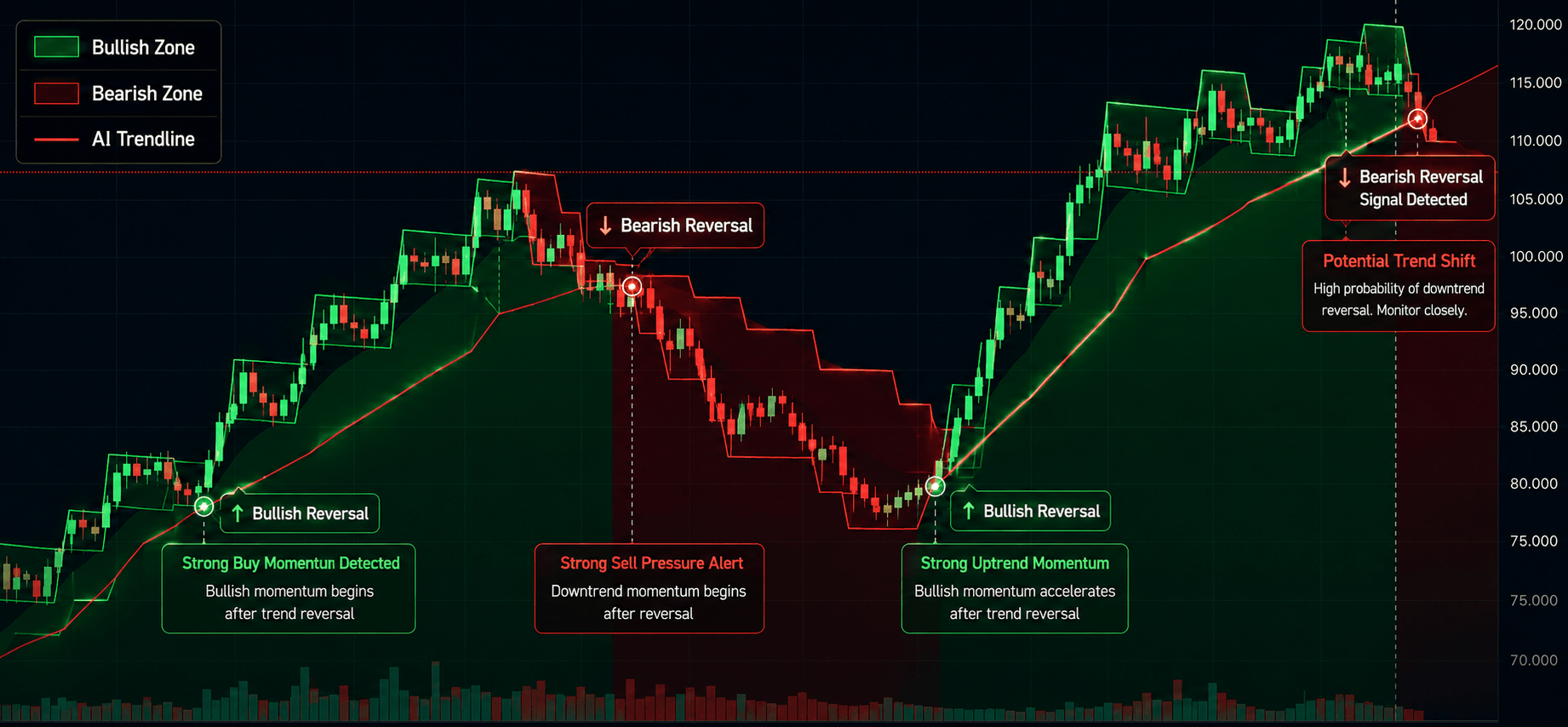
Winning Pattern Detection
Instantly surfaces the high-probability setups that repeat across the charts — a trusted edge for timing your entries and exits.
- Spot momentum building in real time
- Catch trend-reversal points before they break
- Built for active traders who need results, not theory

AI Live Economic Dashboard
AI analyzes real-time market data — turning complex, global investment flows into clear insight in seconds.
- Track global stock markets in real time
- See exactly which assets are strong — and which are fading
- Watch how geopolitical events move the markets
About the Author