What Is a Black Swan Event?
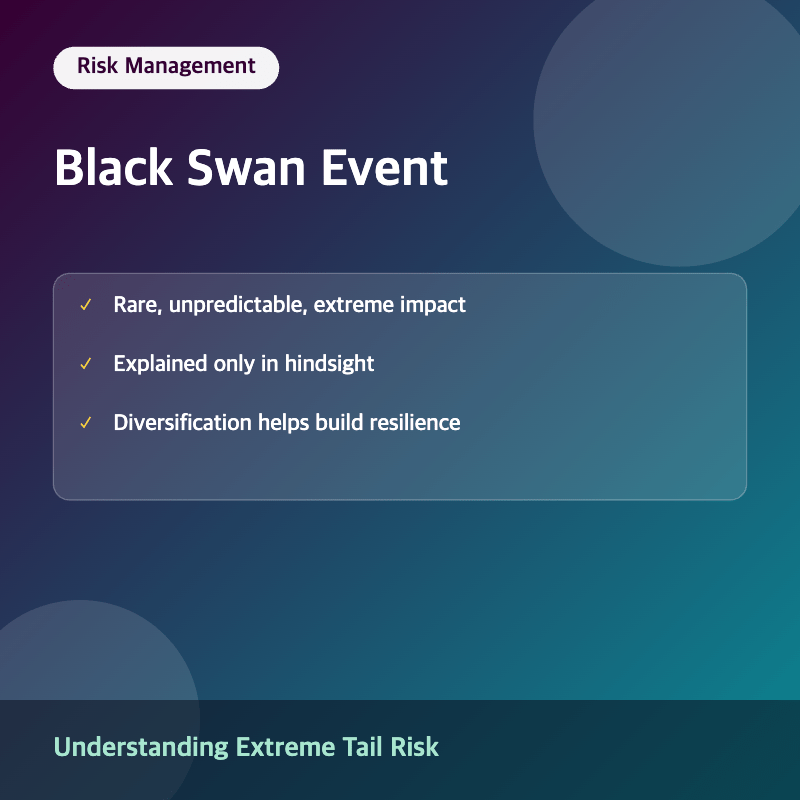
A black swan event is an extremely rare and unpredictable occurrence that has severe, widespread consequences and is only rationalized as explainable in hindsight. The term was popularized by former options trader and scholar Nassim Nicholas Taleb in his 2007 book “The Black Swan,” drawing on the historical belief in Europe that all swans were white until black swans were discovered in Australia.
The Three Defining Characteristics
Rarity and Unpredictability
A true black swan event lies outside the realm of normal expectations, meaning nothing in the past convincingly points to its possibility. This distinguishes black swans from ordinary market downturns or corrections, which, while unpleasant, are statistically expected to occur periodically.
Extreme Impact
Black swan events carry an extreme impact on markets, economies, or societies, often triggering cascading effects across interconnected systems. The scale of disruption is typically far larger than what standard risk models would predict.
Retrospective Predictability
After the fact, human nature tends to construct explanations that make the event appear to have been predictable, even though virtually no one anticipated it beforehand. This hindsight bias can create a false sense of security that similar events can be foreseen and avoided in the future.
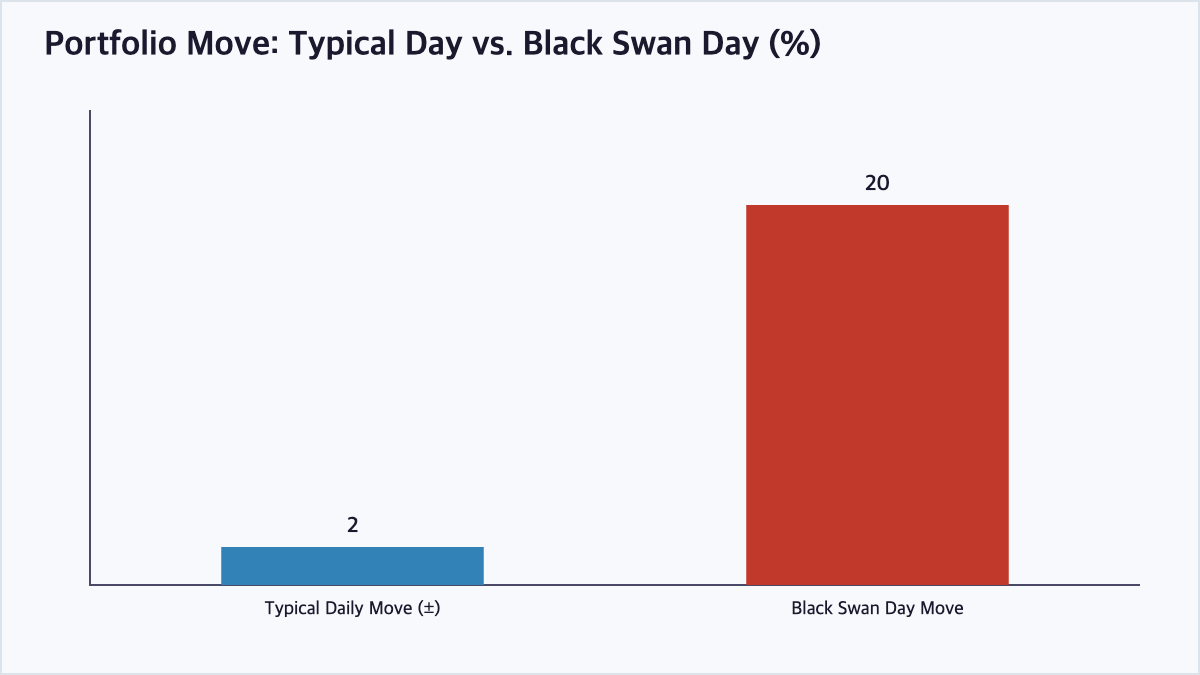
For example, consider a portfolio that historically experiences daily price swings within a normal range of plus or minus 2%, based on years of historical volatility data. A black swan event might cause that same portfolio to plunge 20% or more in a single trading day, an outcome so far outside the historical distribution that standard risk models would have assigned it a near-zero probability of occurring.
Historical Examples of Black Swan Events
Commonly cited examples include the 1987 stock market crash known as Black Monday, the 2008 global financial crisis triggered by the collapse of the subprime mortgage market, and the COVID-19 pandemic’s sudden and severe impact on global markets in early 2020. Each of these events caused rapid, severe market dislocations that few if any mainstream forecasters had predicted in advance.
How Investors Try to Manage Black Swan Risk
Because black swan events are by definition nearly impossible to predict, risk management approaches tend to focus on building resilience rather than forecasting the specific event. Common strategies include maintaining diversified portfolios across asset classes, holding some allocation to cash or safe-haven assets, and in some cases using tail-risk hedging strategies such as out-of-the-money put options that pay off during extreme market declines.
Black Swan Events vs. Ordinary Market Volatility
| Aspect | Ordinary Market Volatility | Black Swan Event |
|---|---|---|
| Frequency | Regular, statistically expected | Extremely rare |
| Predictability | Can be estimated using historical models | Essentially unpredictable in advance |
| Typical Impact | Moderate price fluctuations | Severe, often systemic disruption |
Frequently Asked Questions
Is every market crash a black swan event?
No. Many market crashes and corrections, while severe, occur with a frequency and pattern that can be reasonably anticipated using historical data and are therefore not true black swans. A genuine black swan is defined by its near-total unpredictability, not simply by the size of the market decline.
Can black swan events ever be predicted in advance?
By definition, true black swan events are extremely difficult to predict, since if they could be reliably forecasted using existing models and data, they would not qualify as black swans. Some analysts do warn about general categories of tail risk, but pinpointing the specific timing and trigger remains inherently elusive.
What is a “gray swan” event?
A gray swan is a term sometimes used to describe an event that is rare and has significant impact but is somewhat more foreseeable than a true black swan, since some warning signs or precedents may exist. This distinguishes it from a black swan, which strikes with almost no prior indication.
How much of a portfolio should be allocated to black swan hedging?
There is no universal answer, as the appropriate allocation depends on an investor’s risk tolerance, time horizon, and overall financial situation. Some tail-risk hedging strategies can be costly to maintain over time, so investors typically weigh the insurance-like benefits against the ongoing cost of the hedge.
Key Takeaways
A black swan event is a rare, high-impact occurrence that is almost impossible to predict in advance but is often rationalized as explainable after the fact. While specific black swan events cannot be forecasted, investors can build resilience through diversification, maintaining liquidity, and in some cases using tail-risk hedging strategies. This article is for informational purposes only and does not constitute investment advice.

QuantPro: AI Finds the Trade Before You Do
From AI-powered chart analysis to real-time market intelligence — everything a serious investor needs, in one platform.
- Automated AI chart analysis with precision trend timing
- Bull Radar: real-time visualization of geopolitical & economic shifts
- Live market-moving news and insights, curated for you
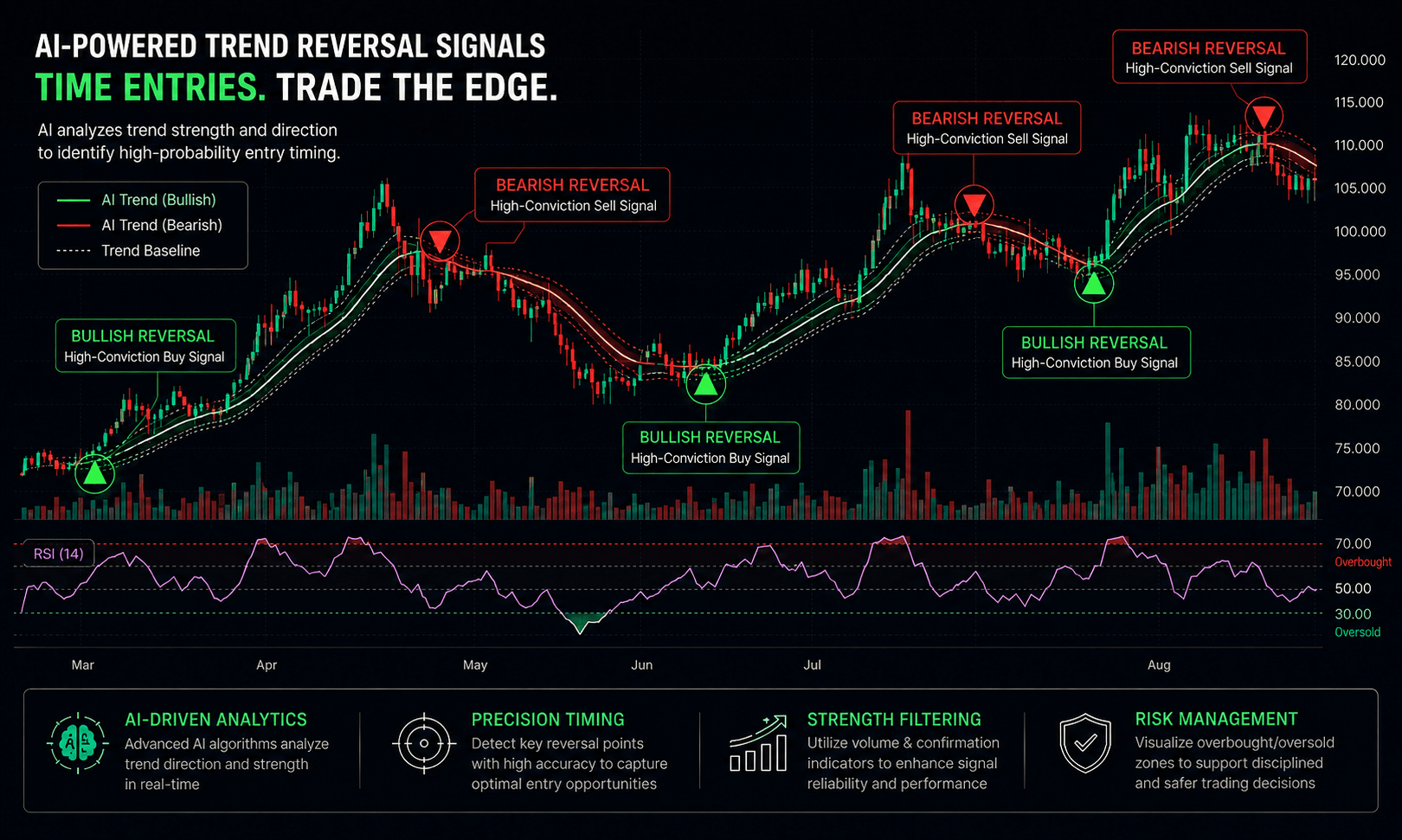
Bull Wave / Bear Wave Forecast Model
Engineered to help you read market direction and momentum faster than the crowd.
- Instantly separate bullish momentum from bearish pressure
- Pinpoint high-probability entry zones with confidence
- Chart signals clear enough for beginners, sharp enough for pros
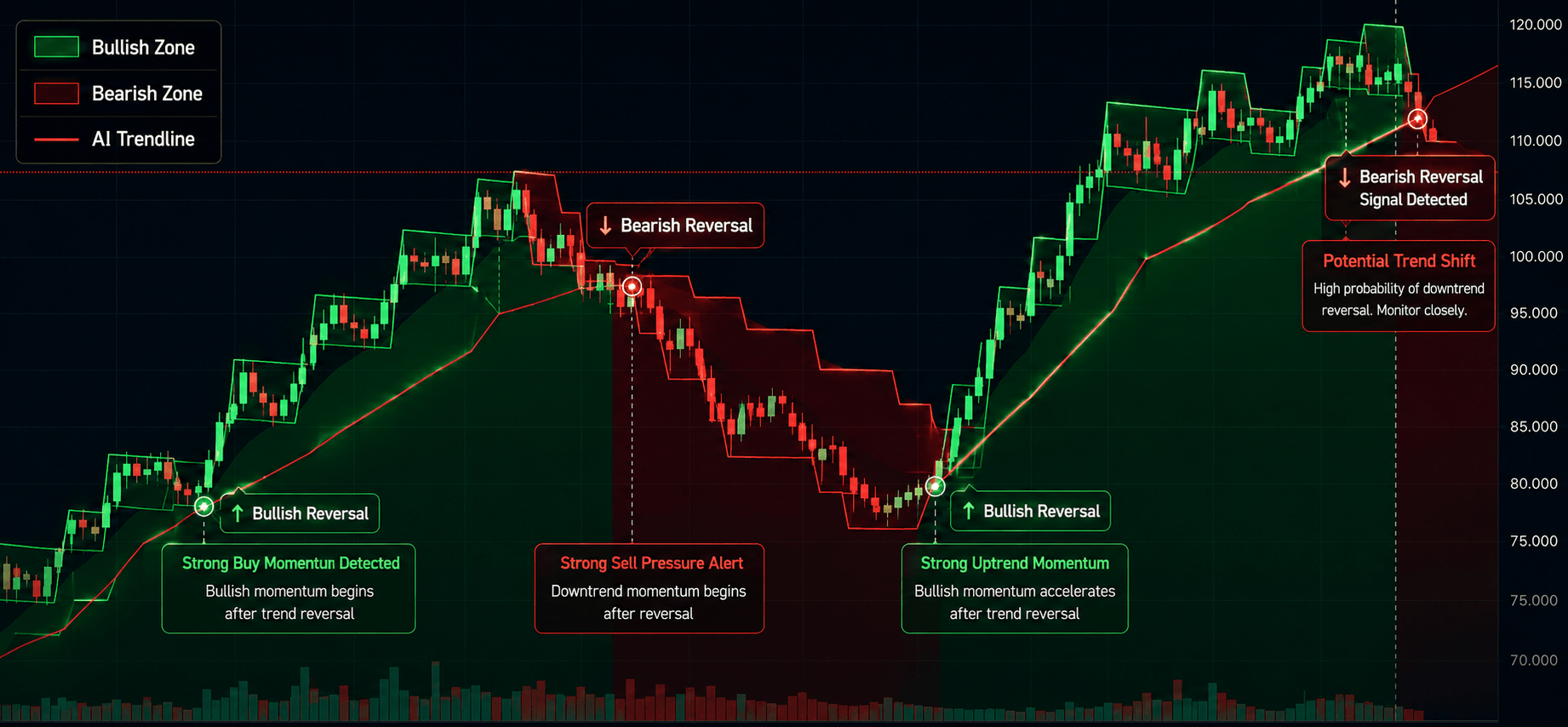
Winning Pattern Detection
Instantly surfaces the high-probability setups that repeat across the charts — a trusted edge for timing your entries and exits.
- Spot momentum building in real time
- Catch trend-reversal points before they break
- Built for active traders who need results, not theory
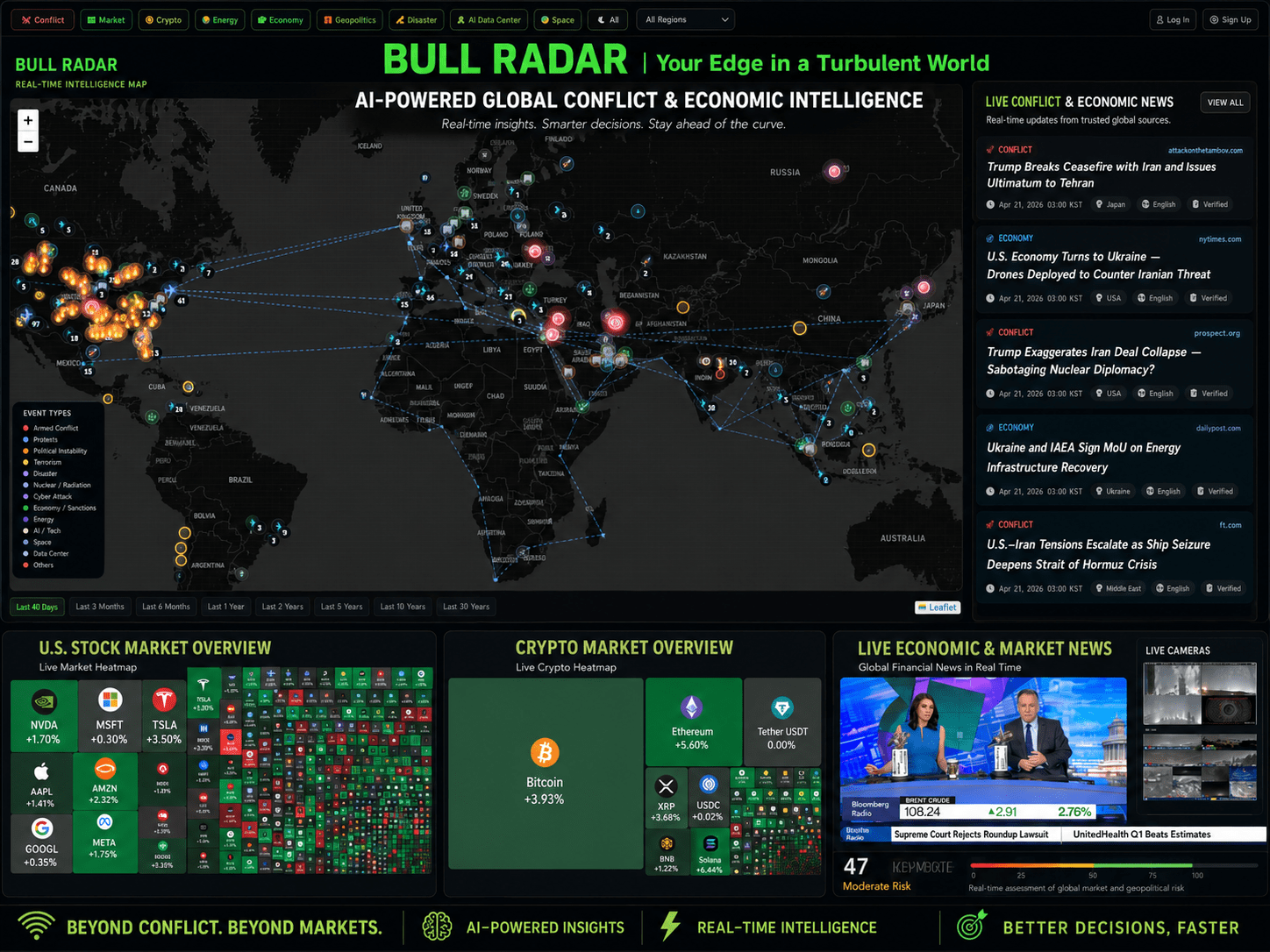
AI Live Economic Dashboard
AI analyzes real-time market data — turning complex, global investment flows into clear insight in seconds.
- Track global stock markets in real time
- See exactly which assets are strong — and which are fading
- Watch how geopolitical events move the markets
About the Author