What Is a Health Savings Account (HSA)?
A Health Savings Account (HSA) is a tax-advantaged savings account available to individuals enrolled in a qualified high-deductible health plan (HDHP), designed to help cover current and future medical expenses. Contributions can come from the account holder, an employer, or both, and the funds belong to the individual regardless of who contributed them.
The Triple Tax Advantage
How the Tax Benefits Work
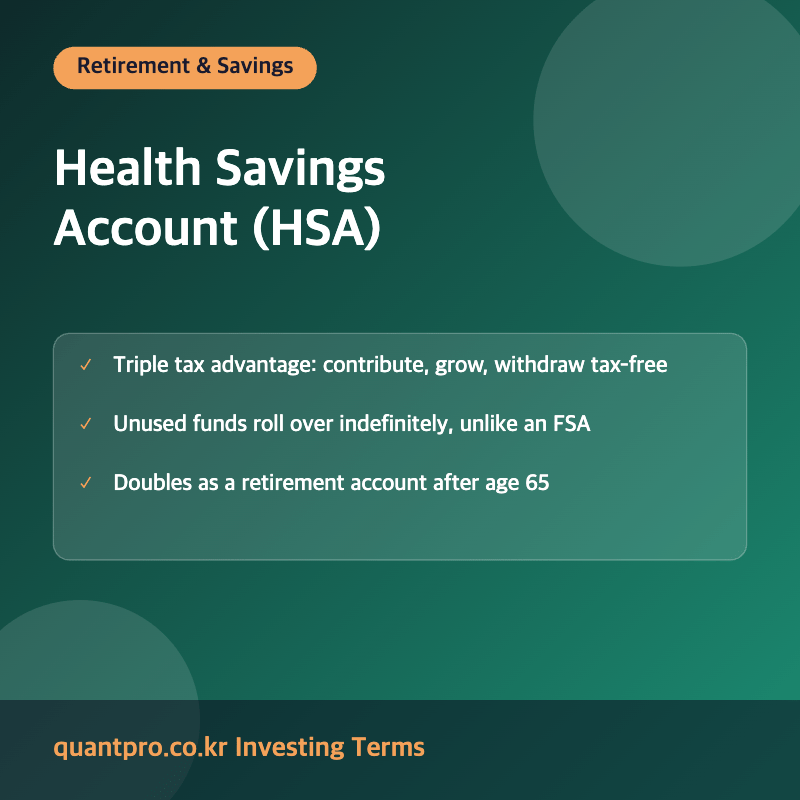
An HSA is often described as having a “triple tax advantage”: contributions reduce taxable income (or are made pre-tax through payroll deduction), the account balance grows tax-free while invested, and withdrawals used for qualified medical expenses are also completely tax-free.
A Worked Example
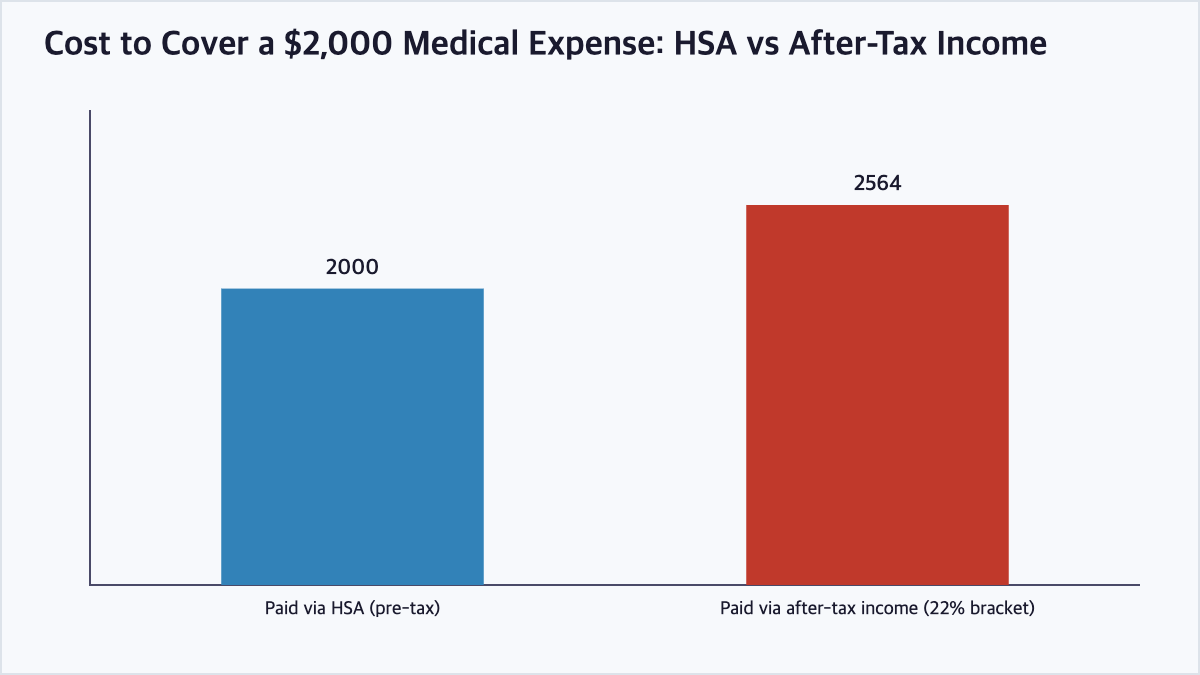
Suppose someone needs to cover a $2,000 medical expense. Paying for it directly from an HSA costs exactly $2,000 in pre-tax dollars. Paying the same expense with regular after-tax income in a 22% tax bracket would require earning $2,000÷(1−0.22)=$2,564 before taxes to have $2,000 left after tax — meaning the HSA effectively saves $564 on that expense.
HSA vs FSA
HSAs are often compared to Flexible Spending Accounts (FSAs), another tax-advantaged way to pay for medical costs, but the two have important structural differences.
| Feature | HSA | FSA |
|---|---|---|
| Eligibility | Requires a high-deductible health plan | Offered independent of plan type |
| Rollover | Unused funds roll over indefinitely | Often ‘use it or lose it’ each year |
| Ownership | Owned by the individual, portable | Owned by the employer plan |
| Investment option | Funds can typically be invested | Usually cannot be invested |
Using an HSA as a Retirement Tool
Because unused HSA funds roll over indefinitely and can be invested, many people treat their HSA as a supplemental retirement account. After age 65, funds can be withdrawn for any purpose without the usual penalty — non-medical withdrawals are simply taxed as ordinary income, much like a traditional IRA, while medical withdrawals remain entirely tax-free at any age.
Things to Keep in Mind
Annual contribution limits are set by tax authorities and adjusted periodically, and only those enrolled in a qualifying high-deductible health plan can contribute in a given year. Withdrawing funds for non-qualified expenses before age 65 typically triggers both income tax and an additional penalty, so it’s worth tracking eligible expenses carefully.
Frequently Asked Questions
Who is eligible to open an HSA?
Only individuals enrolled in a qualified high-deductible health plan (HDHP), and who are not enrolled in Medicare or claimed as a dependent on someone else’s tax return, are eligible to contribute to an HSA.
What is the “triple tax advantage” of an HSA?
Contributions are made pre-tax or are tax-deductible, the account balance grows tax-free, and withdrawals for qualified medical expenses are also tax-free, making the HSA one of the few accounts with tax benefits at all three stages.
What happens to unused HSA funds at the end of the year?
Unlike a Flexible Spending Account, HSA funds roll over year after year with no expiration, and the account stays with the individual even if they change jobs or health plans.
Can HSA funds be used for non-medical expenses?
Withdrawals for non-medical expenses before age 65 are subject to income tax plus a penalty, but after age 65, funds can be withdrawn for any purpose and are simply taxed as ordinary income, similar to a traditional retirement account.
Key Takeaways
A Health Savings Account offers a rare triple tax advantage — pre-tax contributions, tax-free growth, and tax-free withdrawals for qualified medical expenses — while unused funds roll over indefinitely and can even function as a supplemental retirement account after age 65. Eligibility requires enrollment in a high-deductible health plan, so it is not available to everyone. This article is for informational purposes only and does not constitute investment advice.

QuantPro: AI Finds the Trade Before You Do
From AI-powered chart analysis to real-time market intelligence — everything a serious investor needs, in one platform.
- Automated AI chart analysis with precision trend timing
- Bull Radar: real-time visualization of geopolitical & economic shifts
- Live market-moving news and insights, curated for you
Bull Wave / Bear Wave Forecast Model
Engineered to help you read market direction and momentum faster than the crowd.
- Instantly separate bullish momentum from bearish pressure
- Pinpoint high-probability entry zones with confidence
- Chart signals clear enough for beginners, sharp enough for pros
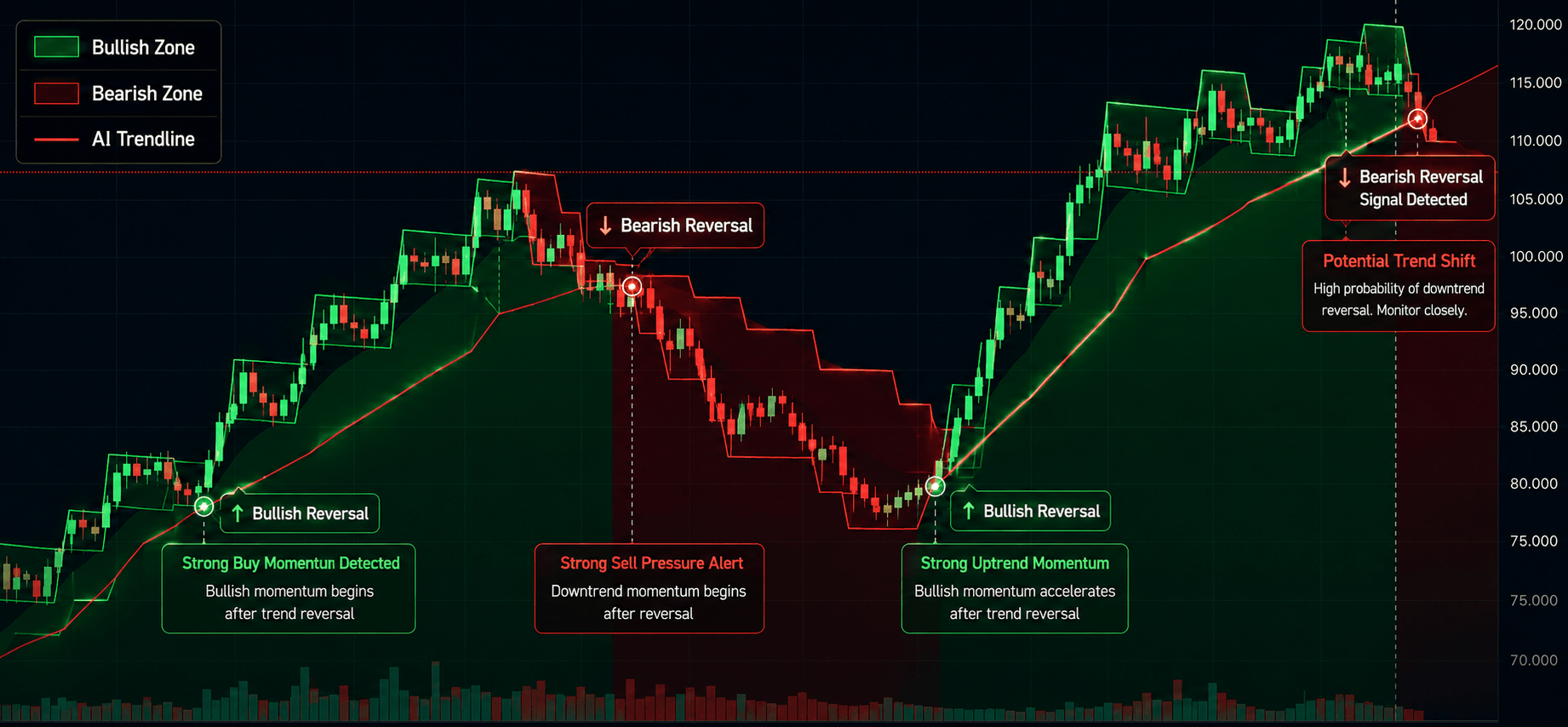
Winning Pattern Detection
Instantly surfaces the high-probability setups that repeat across the charts — a trusted edge for timing your entries and exits.
- Spot momentum building in real time
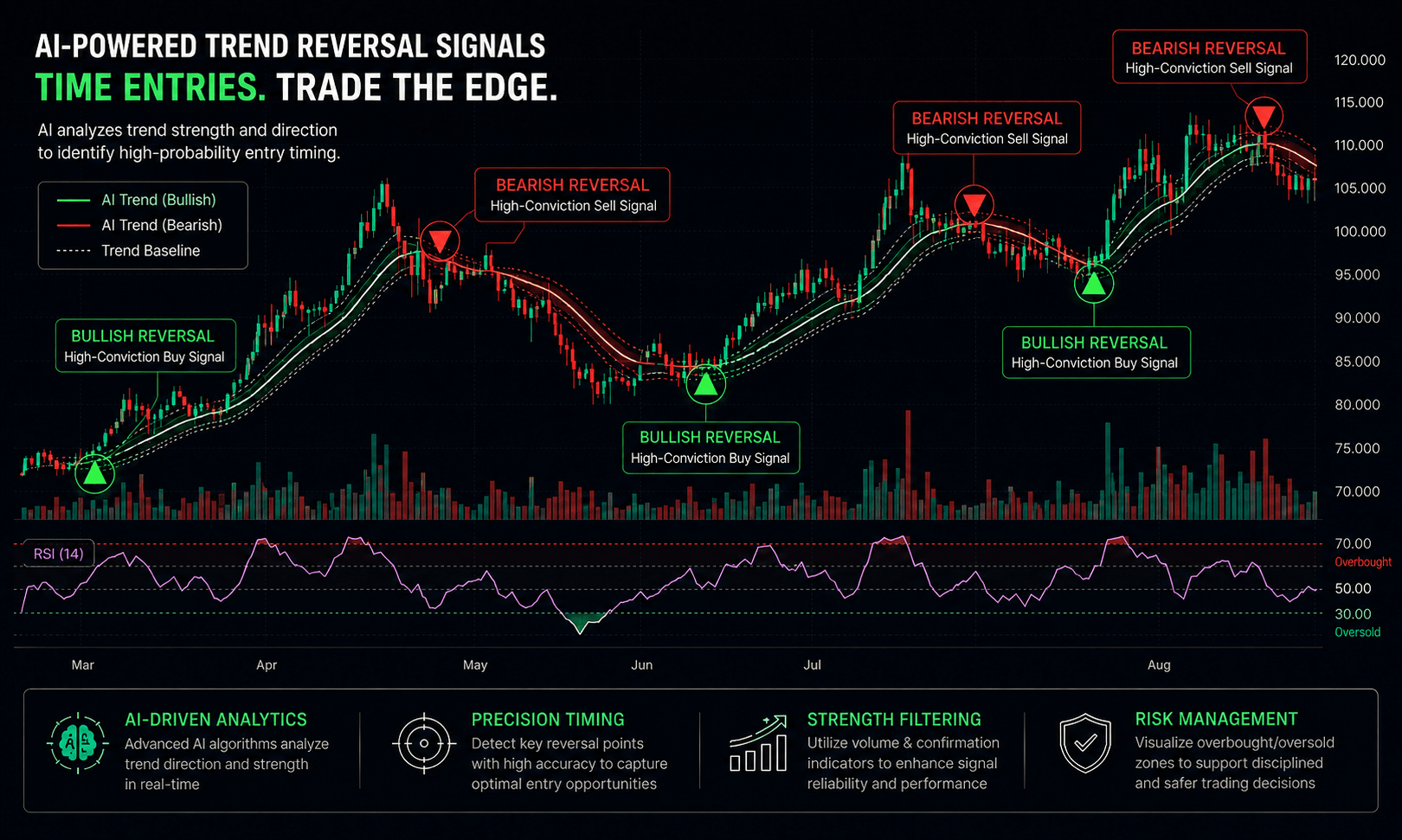
- Catch trend-reversal points before they break
- Built for active traders who need results, not theory

AI Live Economic Dashboard
AI analyzes real-time market data — turning complex, global investment flows into clear insight in seconds.
- Track global stock markets in real time
- See exactly which assets are strong — and which are fading
- Watch how geopolitical events move the markets
About the Author