Delta: Directional Sensitivity
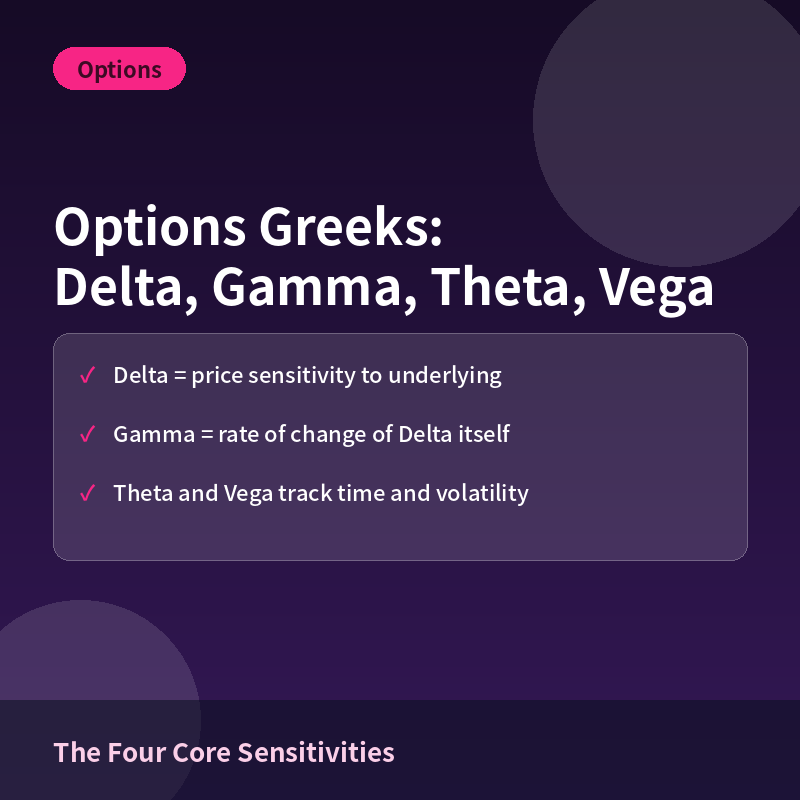
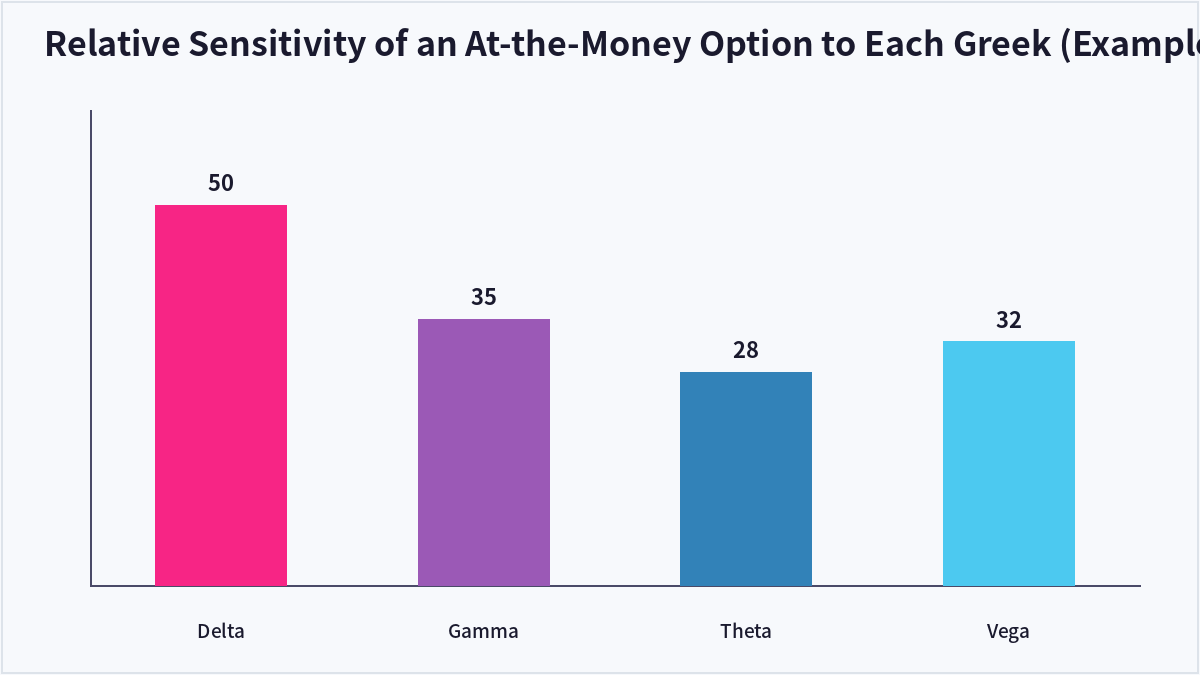
Delta measures how much an option’s price moves when the underlying asset moves by one unit. Call option deltas range from 0 to 1, and put option deltas range from -1 to 0. An at-the-money option typically has a delta near 0.5, since it has roughly even odds of expiring in or out of the money.
Gamma: How Fast Delta Itself Changes
Gamma measures the rate of change of delta as the underlying price moves. Gamma is highest for at-the-money options and grows sharply as expiration approaches, meaning a position’s directional exposure can shift quickly near expiry, requiring more frequent hedge adjustments.
Theta: The Cost or Benefit of Time
Theta captures how much an option loses in value each day, all else equal, as time value erodes. This decay is not linear, it accelerates as expiration nears, which is why option sellers often find the final weeks before expiry the most favorable for collecting time decay.
Vega: Sensitivity to Volatility
Vega measures how much an option’s price changes for a 1-point move in implied volatility. Options with longer time to expiration generally carry higher vega, meaning their prices react more to shifting volatility expectations, especially heading into known catalysts like earnings.
| Greek | Measures | Peaks When |
|---|---|---|
| Delta | Price sensitivity to underlying | Deep in-the-money (near 1) |
| Gamma | Rate of change of Delta | At-the-money, near expiration |
| Theta | Daily time value decay | Near expiration |
| Vega | Sensitivity to implied volatility | Longer-dated options |
Frequently Asked Questions
Which Greek matters most for a beginner?
Delta is usually the easiest starting point since it directly shows directional exposure, but understanding how all four interact is necessary before running any active options strategy.
Why does Gamma matter for hedgers?
Market makers who sell options must rehedge as delta shifts, and high gamma near expiration means those hedge adjustments can become large and frequent, sometimes amplifying price moves in the underlying.
Does Theta decay happen on weekends too?
Yes, since time passes regardless of whether markets are open, option time value continues eroding through weekends, often reflected in the gap between Friday’s close and Monday’s open.
Can Vega and Theta work against each other?
Yes, a seller collecting theta can still lose money if implied volatility spikes unexpectedly and inflates the option’s price through vega, which is why both must be monitored together.
Key Takeaways
Delta, Gamma, Theta and Vega together describe how an option’s price responds to changes in the underlying, time, and volatility. Managing an options position well means tracking all four Greeks together rather than focusing on any single one in isolation. This article is for informational purposes only and does not constitute investment advice.

QuantPro: AI Finds the Trade Before You Do
From AI-powered chart analysis to real-time market intelligence — everything a serious investor needs, in one platform.
- Automated AI chart analysis with precision trend timing
- Bull Radar: real-time visualization of geopolitical & economic shifts
- Live market-moving news and insights, curated for you
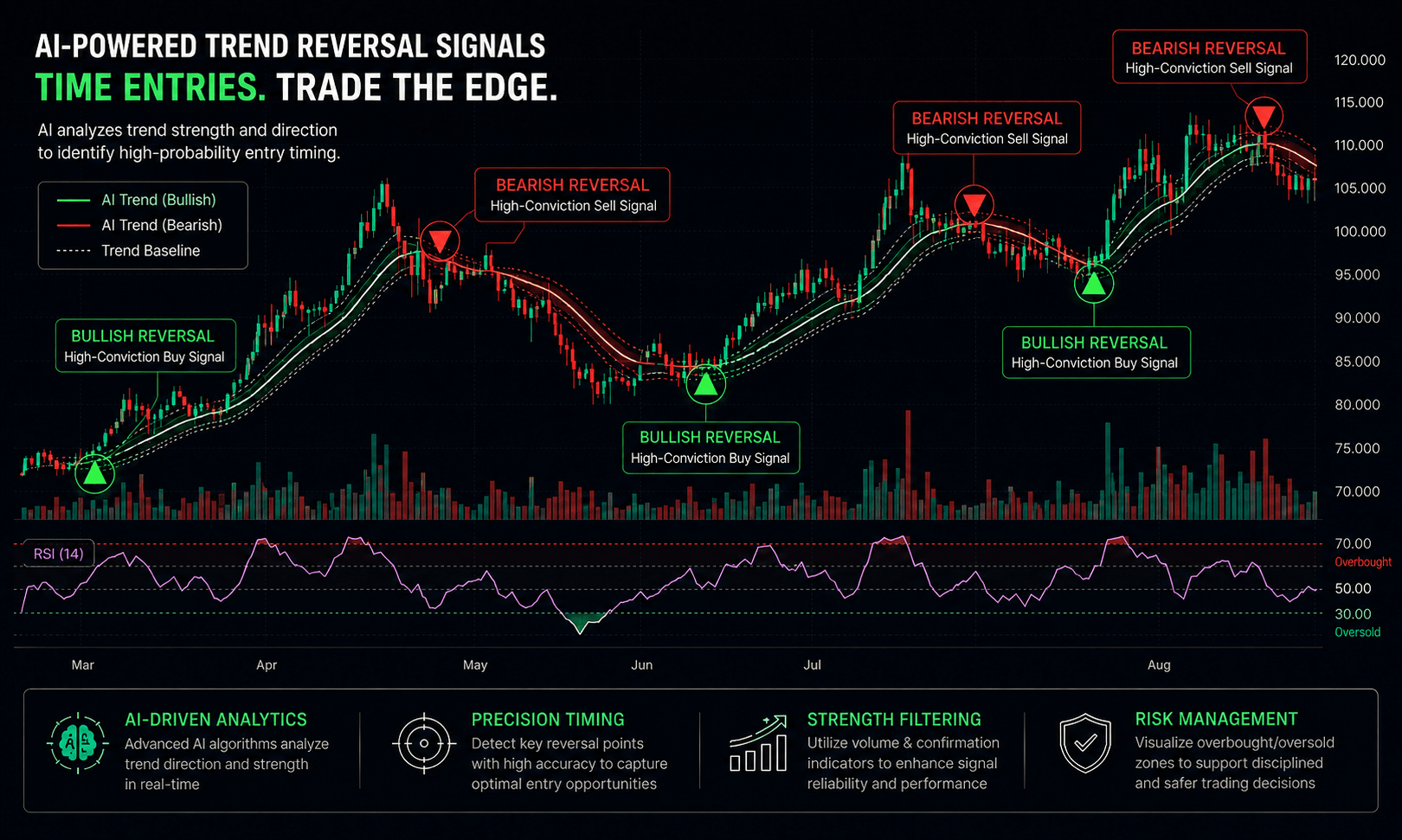
Bull Wave / Bear Wave Forecast Model
Engineered to help you read market direction and momentum faster than the crowd.
- Instantly separate bullish momentum from bearish pressure
- Pinpoint high-probability entry zones with confidence
- Chart signals clear enough for beginners, sharp enough for pros
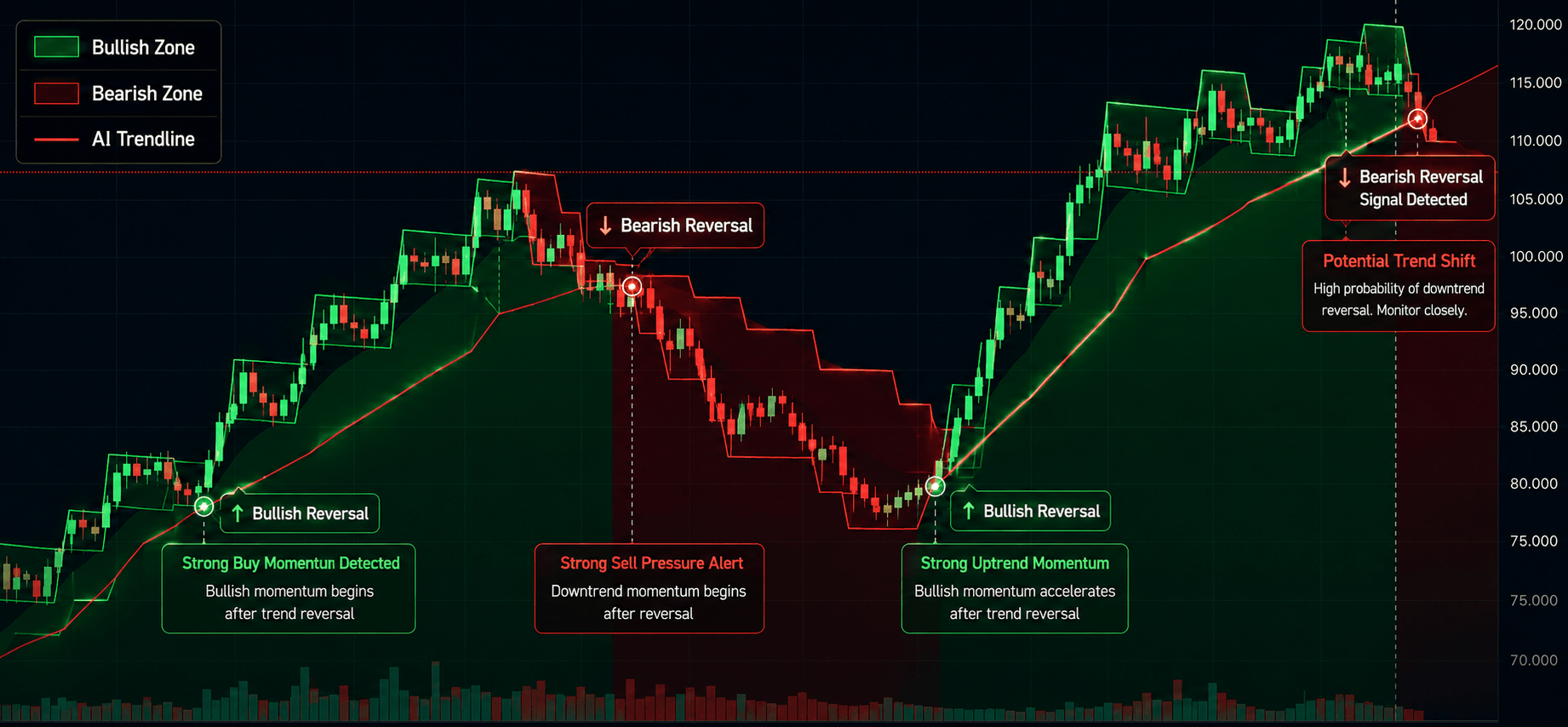
Winning Pattern Detection
Instantly surfaces the high-probability setups that repeat across the charts — a trusted edge for timing your entries and exits.
- Spot momentum building in real time
- Catch trend-reversal points before they break
- Built for active traders who need results, not theory
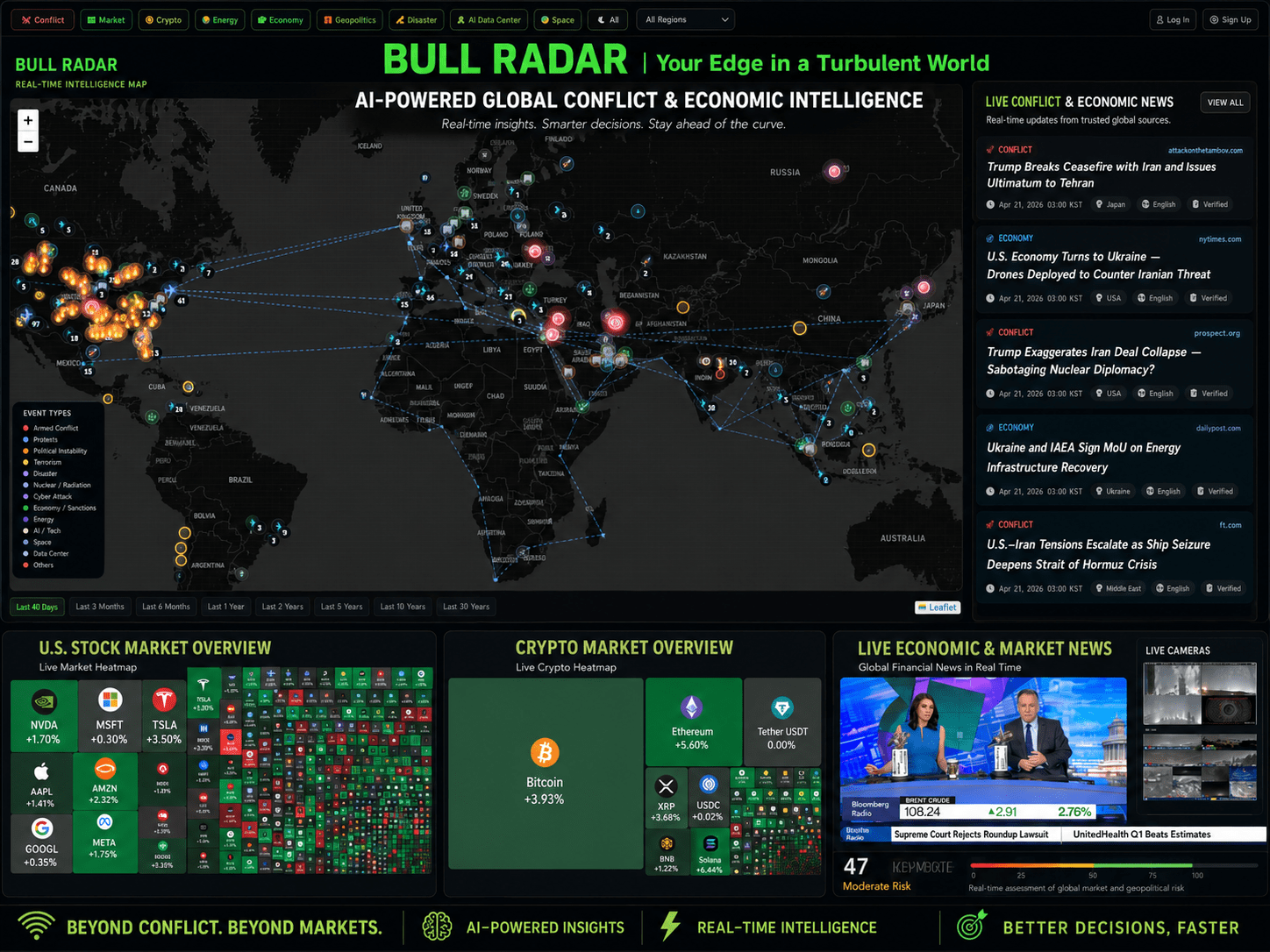
AI Live Economic Dashboard
AI analyzes real-time market data — turning complex, global investment flows into clear insight in seconds.
- Track global stock markets in real time
- See exactly which assets are strong — and which are fading
- Watch how geopolitical events move the markets
About the Author