What Are REITs?
A REIT (Real Estate Investment Trust) is a company that owns, operates, or finances income-producing real estate, allowing investors to gain exposure to real estate assets like office buildings, shopping malls, and apartments without buying property directly. Most REITs trade on major stock exchanges, offering the liquidity of stocks with real estate as the underlying asset.
How REITs Are Structured
REITs pool capital from many investors to purchase and manage a portfolio of real estate assets, distributing the rental income and capital gains generated back to shareholders. By law, REITs must distribute at least 90% of their taxable income to shareholders as dividends, which is a defining feature of the structure.
Types of REITs
Equity REITs own and operate income-producing real estate directly, while mortgage REITs (mREITs) invest in real estate debt and mortgage-backed securities rather than physical property. REITs are further categorized by property type, including office, retail, industrial, residential, healthcare, and data center REITs.
REITs vs Direct Property Ownership vs Real Estate Funds
| Feature | Publicly Traded REIT | Direct Property Ownership | Private Real Estate Fund |
|---|---|---|---|
| Minimum investment | Price of one share | Substantial capital required | Often high minimums |
| Liquidity | High (traded like stocks) | Low (sale takes time) | Low (redemption limits) |
| Income distribution | Regular dividends (quarterly) | Direct rental income | Periodic distributions |
| Management responsibility | None (professionally managed) | High (hands-on) | None (professionally managed) |
| Price volatility | Tied to stock market swings | Relatively stable | Moderate |
Advantages and Risks of REIT Investing
Key Advantages
REITs offer access to diversified, professionally managed real estate portfolios with small amounts of capital, along with relatively high dividend yields resulting from the mandatory 90% payout requirement and strong liquidity compared to owning physical property directly.
Key Risks
Publicly traded REITs can be sensitive to interest rate changes, since rising rates increase borrowing costs and can make REIT dividend yields relatively less attractive compared to bonds, often pressuring REIT share prices downward during rate hike cycles.
How to Invest in REITs
Buying Publicly Traded REITs
Investors can purchase shares of publicly traded REITs through any standard brokerage account, just like buying stocks, and can also gain diversified exposure through REIT-focused index funds or ETFs that hold a basket of different REITs.
Understanding REIT Taxation
REIT dividends are often taxed as ordinary income rather than at the lower qualified dividend tax rate, since REITs themselves generally do not pay corporate income tax as long as they meet distribution requirements, shifting the tax burden to shareholders.
Frequently Asked Questions
Are REITs a good hedge against inflation?
REITs are often considered a partial inflation hedge since rental income and property values can rise with inflation, though rising interest rates that typically accompany inflation can offset some of these benefits by increasing REITs’ borrowing costs.
What is a typical REIT dividend yield?
REIT dividend yields vary by sector and market conditions but have historically often ranged between roughly 3% and 7%, generally higher than the average dividend yield of the broader stock market due to the mandatory payout requirement.
Can REITs lose value like stocks?
Yes. Publicly traded REITs are subject to stock market price fluctuations and can decline in value due to rising interest rates, weakening property fundamentals, or broader market downturns, despite being backed by real estate assets.
What is the difference between a public and private REIT?
Publicly traded REITs are listed on stock exchanges and offer daily liquidity, while private (non-traded) REITs are not listed, typically have lower liquidity, higher fees, and longer holding period expectations, making them less accessible to everyday investors.
Key Takeaways
REITs allow investors to gain diversified, income-generating exposure to real estate through the stock market, benefiting from mandatory high dividend payouts and strong liquidity compared to direct property ownership. However, interest rate sensitivity and stock market volatility mean investors should weigh REITs alongside their broader portfolio strategy and risk tolerance. This article is for informational purposes only and does not constitute investment advice.

QuantPro: AI Finds the Trade Before You Do
From AI-powered chart analysis to real-time market intelligence — everything a serious investor needs, in one platform.
- Automated AI chart analysis with precision trend timing
- Bull Radar: real-time visualization of geopolitical & economic shifts
- Live market-moving news and insights, curated for you

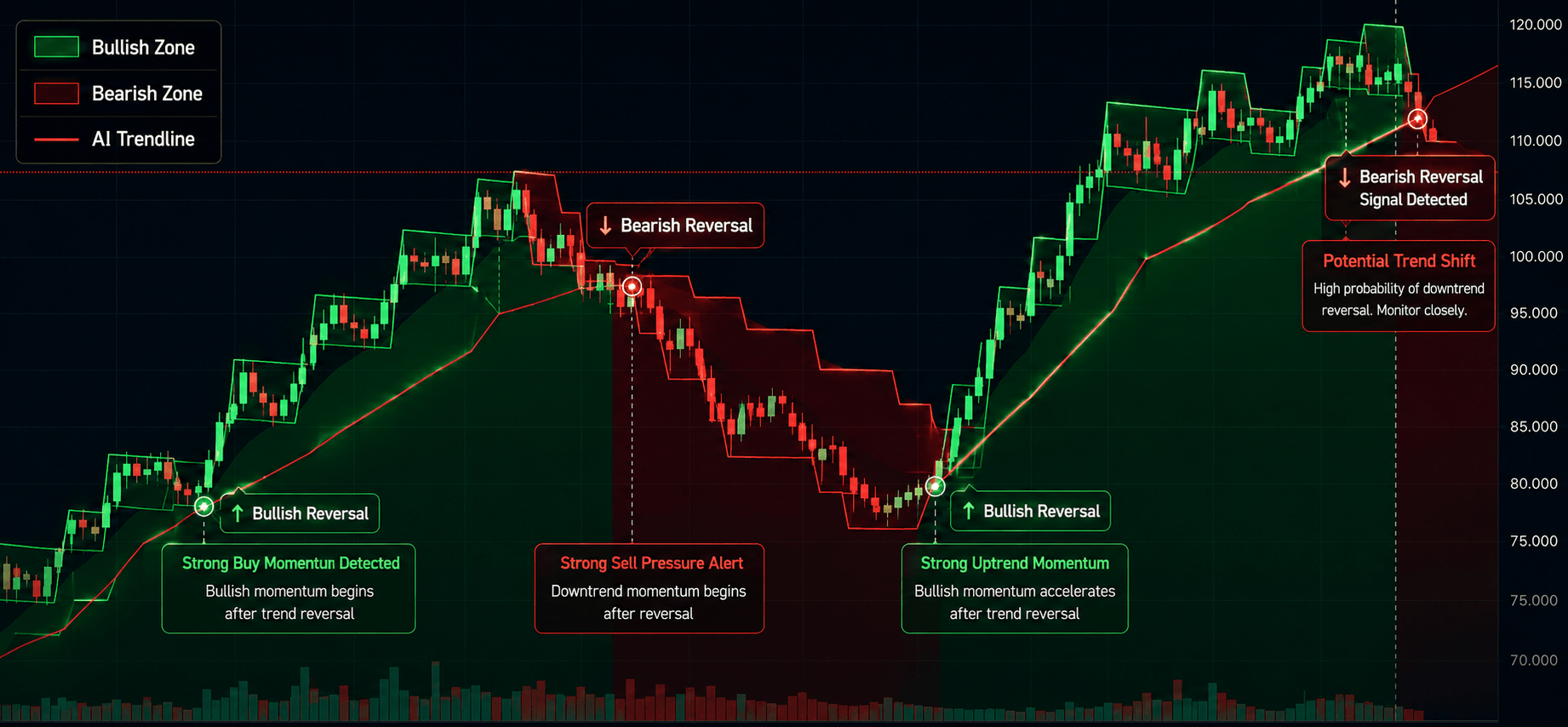
Bull Wave / Bear Wave Forecast Model
Engineered to help you read market direction and momentum faster than the crowd.
- Instantly separate bullish momentum from bearish pressure
- Pinpoint high-probability entry zones with confidence
- Chart signals clear enough for beginners, sharp enough for pros
Winning Pattern Detection
Instantly surfaces the high-probability setups that repeat across the charts — a trusted edge for timing your entries and exits.
- Spot momentum building in real time
- Catch trend-reversal points before they break
- Built for active traders who need results, not theory

AI Live Economic Dashboard
AI analyzes real-time market data — turning complex, global investment flows into clear insight in seconds.
- Track global stock markets in real time
- See exactly which assets are strong — and which are fading
- Watch how geopolitical events move the markets
About the Author