What Is the Difference Between Simple and Compound Interest?
Simple interest and compound interest are two methods of calculating how interest accrues on a principal amount, and understanding their difference is fundamental to evaluating savings, loans, and investments. Simple interest is calculated only on the original principal, while compound interest is calculated on the principal plus any previously accumulated interest.
How Simple Interest Works
Simple interest uses the formula: Interest = Principal × Rate × Time. For example, $10,000 invested at a 5% simple annual interest rate for 3 years earns $500 each year, for a total of $1,500 in interest, bringing the final balance to $11,500.
How Compound Interest Works
Compound interest adds each period’s earned interest back to the principal, so future interest is calculated on a growing balance. The same $10,000 at 5% compound annual interest grows to $10,500 after year one, $11,025 after year two, and approximately $11,576 after year three — about $76 more than simple interest over the same period.
Simple vs Compound Interest Comparison Table
| Feature | Simple Interest | Compound Interest |
|---|---|---|
| Calculation basis | Original principal only | Principal plus accumulated interest |
| Formula | Principal × Rate × Time | Principal × (1 + Rate)^Time |
| Growth pattern | Linear | Exponential |
| $10,000 at 5% after 10 years | $15,000 | Approximately $16,289 |
| Better for long-term growth | No | Yes |
Understanding the Power of Compounding
The Rule of 72
The Rule of 72 is a quick way to estimate how long it takes for an investment to double under compound interest, using the formula: 72 ÷ Annual Interest Rate (%) = Years to Double. At 8% annual compound interest, an investment would double in roughly 9 years (72 ÷ 8), providing a useful mental shortcut for investors.
Why Compounding Frequency Matters
The more frequently interest compounds — annually, monthly, or daily — the greater the final balance, even at the same stated annual rate, because interest is calculated and added to the principal more often. Monthly compounding will produce a slightly higher effective yield than annual compounding at the same nominal rate.
Real-World Applications
Compounding in Savings and Investments
Most savings accounts, certificates of deposit, and investment returns compound over time, which is why starting to invest early is repeatedly emphasized — the longer money remains invested, the more pronounced the compounding effect becomes on total returns.
Compounding in Debt
Compound interest also works against borrowers on products like credit card balances, where unpaid interest gets added to the principal, causing debt to grow rapidly if not paid down, which is why understanding compounding is equally important for managing liabilities.
Frequently Asked Questions
Which is better for savers, simple or compound interest?
Compound interest is generally more advantageous for savers and investors since it generates additional returns on previously earned interest, resulting in faster balance growth over time compared to simple interest at the same rate.
What is the difference between monthly and annual compounding?
Monthly compounding adds interest to the principal every month, while annual compounding does so once a year. At an identical stated rate, monthly compounding produces a higher effective annual yield because interest is calculated more frequently.
Is the Rule of 72 perfectly accurate?
The Rule of 72 is an approximation rather than a precise formula, and its accuracy decreases at very high or very low interest rates, so it is best used for a quick estimate rather than exact financial planning calculations.
How can I maximize the benefits of compound interest?
Starting to invest as early as possible, reinvesting earnings rather than withdrawing them, and choosing accounts or investments with more frequent compounding periods are widely cited strategies for maximizing the long-term benefits of compounding.
Key Takeaways
Simple interest grows linearly based only on the original principal, while compound interest grows exponentially because it is calculated on both principal and accumulated interest, making it significantly more powerful for long-term wealth building. Using tools like the Rule of 72 and starting to save or invest early can help maximize the benefits of compounding over time. This article is for informational purposes only and does not constitute investment advice.

QuantPro: AI Finds the Trade Before You Do
From AI-powered chart analysis to real-time market intelligence — everything a serious investor needs, in one platform.
- Automated AI chart analysis with precision trend timing
- Bull Radar: real-time visualization of geopolitical & economic shifts
- Live market-moving news and insights, curated for you

Bull Wave / Bear Wave Forecast Model
Engineered to help you read market direction and momentum faster than the crowd.
- Instantly separate bullish momentum from bearish pressure
- Pinpoint high-probability entry zones with confidence
- Chart signals clear enough for beginners, sharp enough for pros
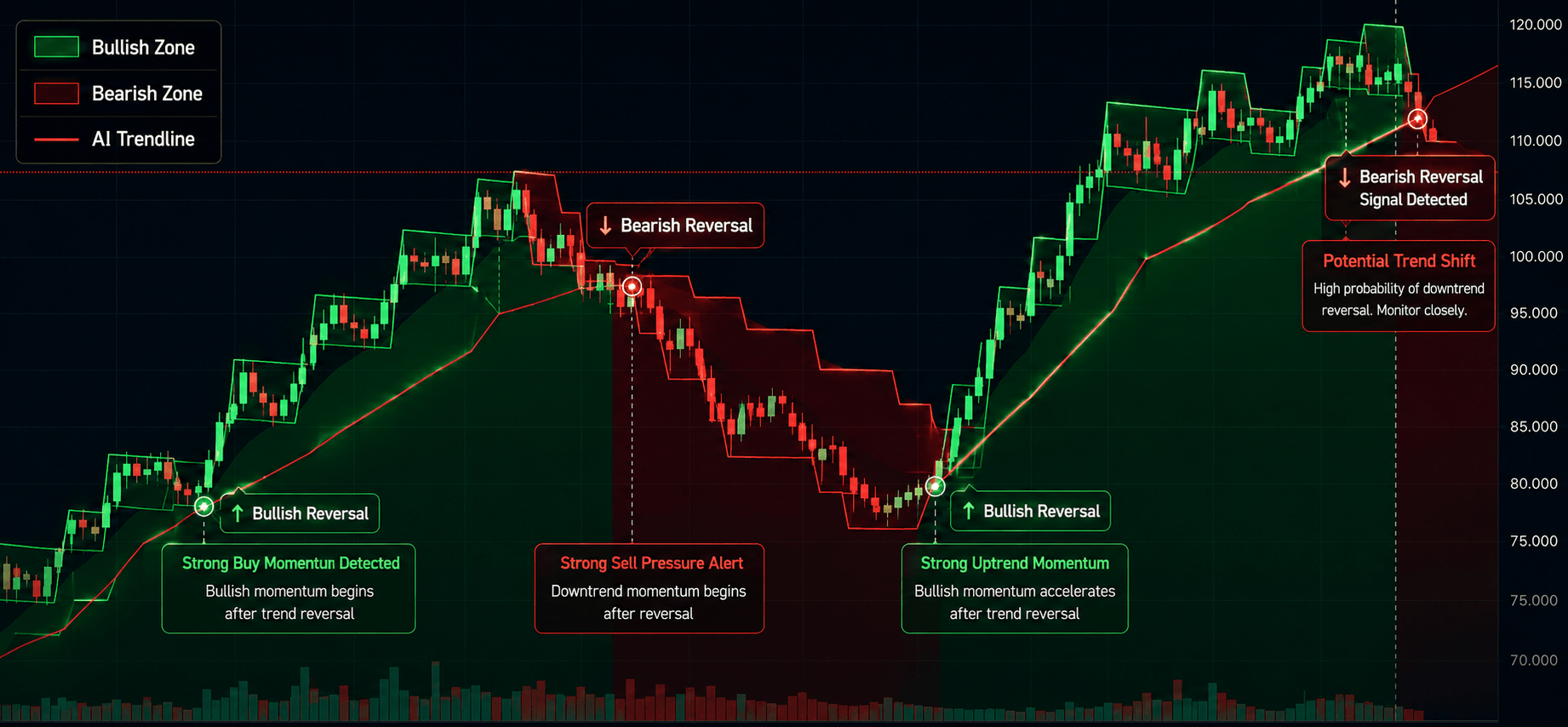
Winning Pattern Detection
Instantly surfaces the high-probability setups that repeat across the charts — a trusted edge for timing your entries and exits.
- Spot momentum building in real time
- Catch trend-reversal points before they break
- Built for active traders who need results, not theory

AI Live Economic Dashboard
AI analyzes real-time market data — turning complex, global investment flows into clear insight in seconds.
- Track global stock markets in real time
- See exactly which assets are strong — and which are fading
- Watch how geopolitical events move the markets
About the Author