What Is Yield to Maturity (YTM)?
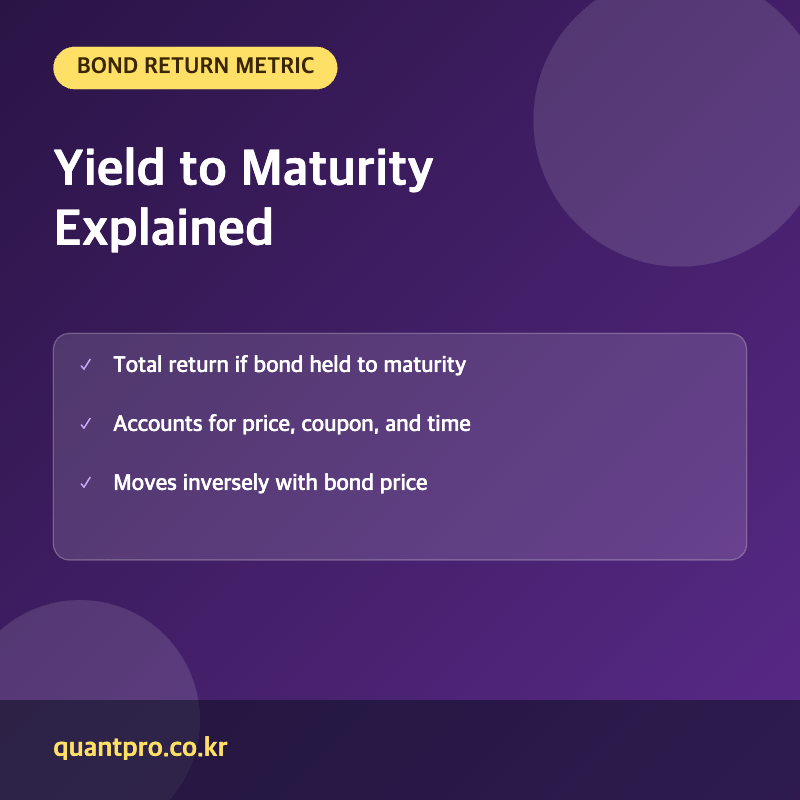
Yield to Maturity (YTM) is the total annualized return an investor can expect to earn on a bond if it is held until it matures, assuming all coupon payments are reinvested at the same rate. YTM accounts for the bond’s current market price, its coupon rate, its face (par) value, and the time remaining until maturity, making it a more complete measure of return than the coupon rate alone.
Because YTM incorporates the bond’s current price relative to its face value, it captures the effect of buying a bond at a discount or premium to par, in addition to its regular coupon payments.
YTM vs. Coupon Rate
The coupon rate is fixed at issuance and represents only the stated annual interest payment as a percentage of face value, while YTM reflects the bond’s actual current market price and can differ significantly from the coupon rate. When a bond trades below its face value (at a discount), its YTM is higher than its coupon rate; when it trades above face value (at a premium), YTM is lower than the coupon rate.
Why Bond Prices and YTM Move Inversely
As market interest rates rise, existing bonds with lower fixed coupon rates become less attractive, causing their prices to fall so that their YTM rises to match prevailing rates. Conversely, when market rates fall, existing bonds with higher fixed coupons become more attractive, pushing their prices up and their YTM down.
| Bond Price vs. Face Value | Relationship to Coupon Rate | YTM vs. Coupon Rate |
|---|---|---|
| Trading at a discount (below face value) | Market rates likely higher than coupon rate | YTM is higher than coupon rate |
| Trading at par (equal to face value) | Market rates close to coupon rate | YTM approximately equals coupon rate |
| Trading at a premium (above face value) | Market rates likely lower than coupon rate | YTM is lower than coupon rate |
Frequently Asked Questions
Is YTM guaranteed if I hold the bond to maturity?
Not entirely — YTM assumes all coupon payments are reinvested at the same rate as the YTM itself, which may not be realistic in practice, and it also assumes the issuer does not default on any payments.
What causes bond prices to fall when interest rates rise?
When new bonds are issued at higher prevailing interest rates, existing bonds with lower fixed coupons become relatively less attractive, so their market prices must fall to offer a competitive yield to new buyers.
How does YTM differ from current yield?
Current yield only measures a bond’s annual coupon payment relative to its current market price, ignoring the impact of time to maturity and any gain or loss from buying at a discount or premium, making YTM a more comprehensive return measure.
Why is YTM important for bond investors?
YTM allows investors to compare bonds with different coupon rates, prices, and maturities on a standardized, apples-to-apples basis, making it one of the most widely used metrics for evaluating fixed-income investments.
Key Takeaways
Yield to Maturity represents the total annualized return a bond investor can expect if held to maturity, incorporating price, coupon, and time, and it moves inversely with bond prices as interest rates fluctuate in the broader market. This article is for informational purposes only and does not constitute investment advice.

QuantPro: AI Finds the Trade Before You Do
From AI-powered chart analysis to real-time market intelligence — everything a serious investor needs, in one platform.
- Automated AI chart analysis with precision trend timing
- Bull Radar: real-time visualization of geopolitical & economic shifts
- Live market-moving news and insights, curated for you
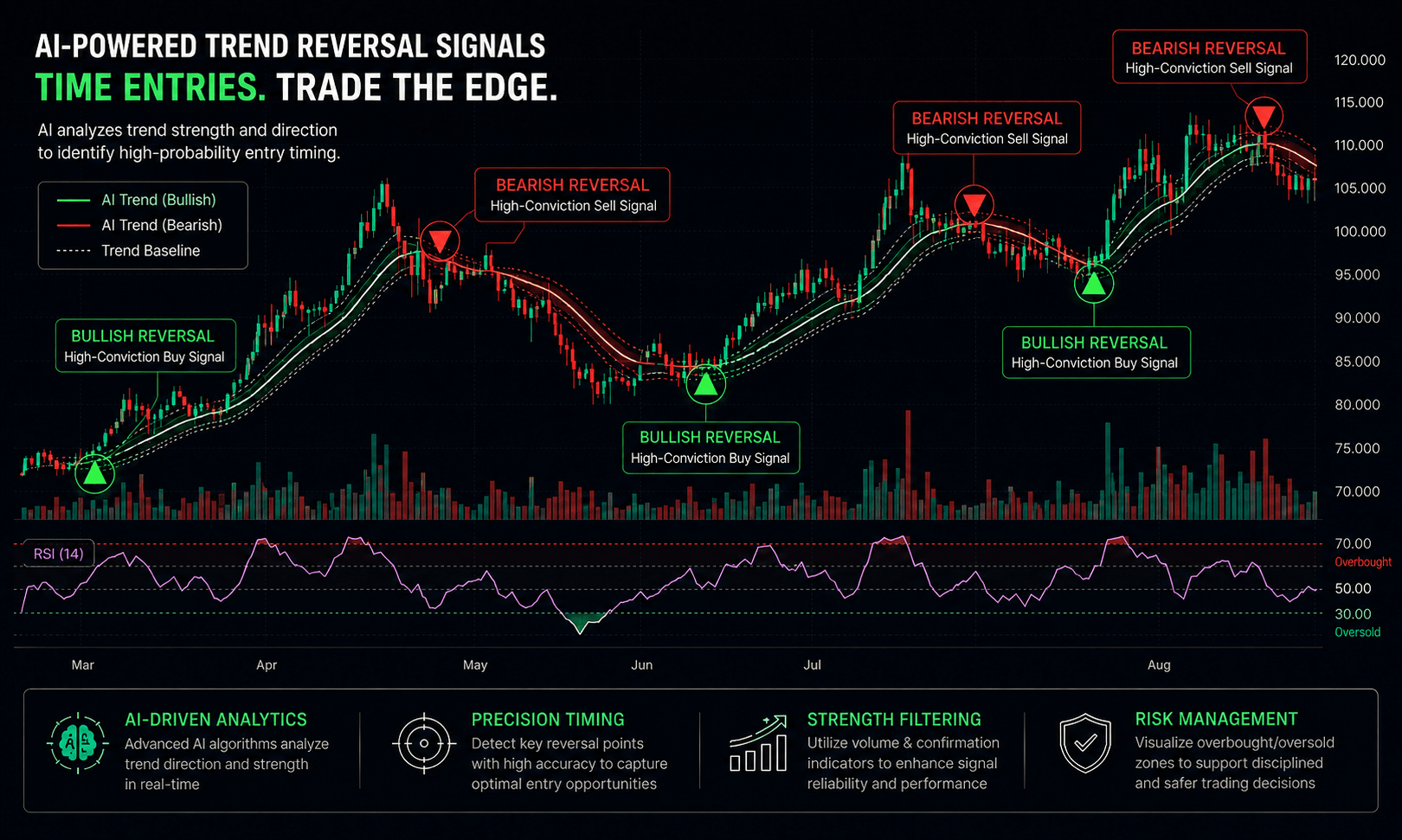
Bull Wave / Bear Wave Forecast Model
Engineered to help you read market direction and momentum faster than the crowd.
- Instantly separate bullish momentum from bearish pressure
- Pinpoint high-probability entry zones with confidence
- Chart signals clear enough for beginners, sharp enough for pros
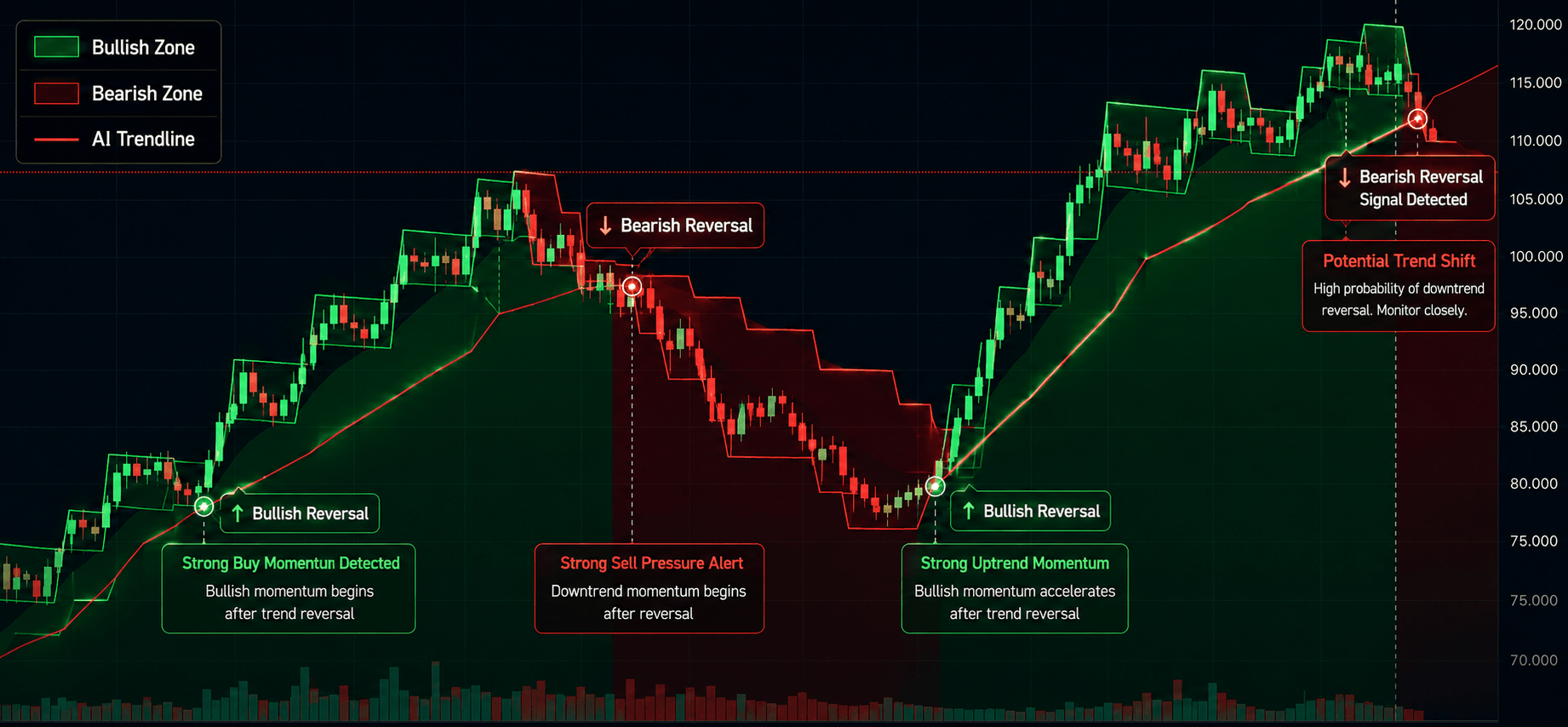
Winning Pattern Detection
Instantly surfaces the high-probability setups that repeat across the charts — a trusted edge for timing your entries and exits.
- Spot momentum building in real time
- Catch trend-reversal points before they break
- Built for active traders who need results, not theory

AI Live Economic Dashboard
AI analyzes real-time market data — turning complex, global investment flows into clear insight in seconds.
- Track global stock markets in real time
- See exactly which assets are strong — and which are fading
- Watch how geopolitical events move the markets
About the Author