What Is Market Capitalization?
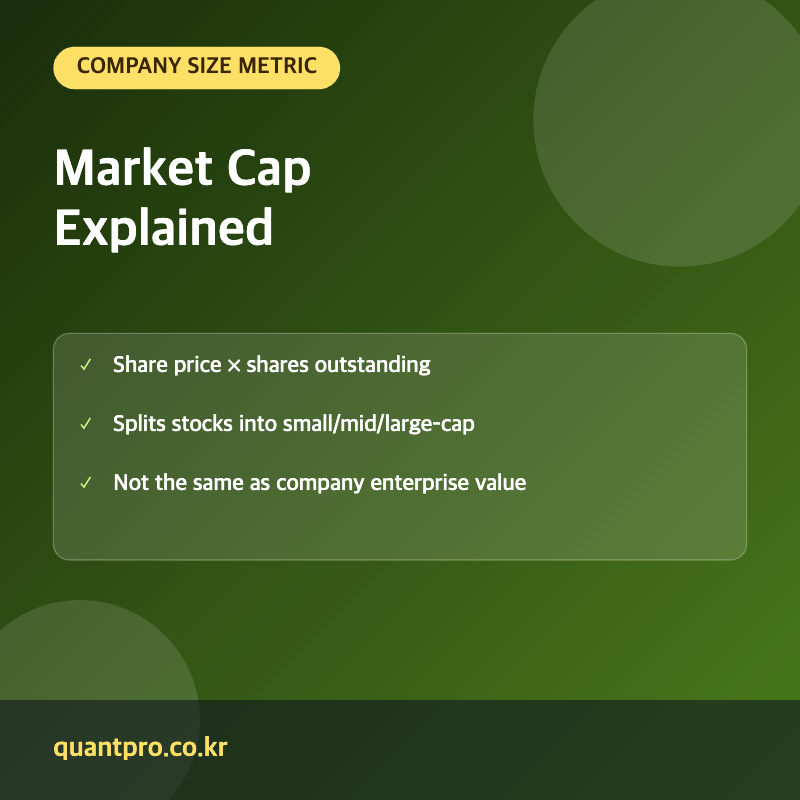
Market capitalization (market cap) represents the total market value of a publicly traded company’s outstanding shares. The formula is Current Share Price × Total Shares Outstanding, and it provides a quick, widely used measure of a company’s overall size as valued by the stock market at a given moment.
Market cap changes continuously as the stock price fluctuates throughout the trading day, and it can also change when a company issues new shares, buys back existing shares, or splits its stock, even if the underlying business fundamentals remain unchanged.
Market Cap Categories
Investors commonly group stocks into categories based on market cap size — large-cap, mid-cap, and small-cap — each associated with different risk, growth, and volatility characteristics. Large-cap companies tend to be more established and stable, while small-cap companies often carry higher growth potential alongside higher volatility and risk.
Market Cap vs. Enterprise Value
Market cap only reflects the value of a company’s equity and does not account for debt or cash on the balance sheet. Enterprise value, by contrast, adds net debt to market cap, providing a more complete picture of a company’s total value — which is why valuation multiples like EV/EBITDA use enterprise value rather than market cap alone.
| Market Cap Category | General Range | Typical Characteristics |
|---|---|---|
| Large-Cap | Roughly $10 billion or more | More established, generally lower volatility |
| Mid-Cap | Roughly $2 billion to $10 billion | Balance of growth potential and stability |
| Small-Cap | Roughly under $2 billion | Higher growth potential, generally higher volatility |
Frequently Asked Questions
Does a higher market cap mean a better investment?
Not necessarily — market cap reflects company size, not valuation attractiveness or growth potential, so a large-cap company can be overvalued while a small-cap company can be undervalued, or vice versa.
Why does market cap change even when the business hasn’t changed?
Market cap moves with the stock price throughout each trading day, reflecting shifting investor sentiment and market conditions, even when the company’s actual operations and fundamentals remain unchanged in the short term.
How does a stock buyback affect market cap?
A stock buyback reduces the number of shares outstanding, which can affect market cap depending on how the stock price responds — if the price stays flat while share count falls, market cap declines proportionally.
Is market cap the same as a company’s actual worth?
No, market cap only reflects the market’s current valuation of a company’s equity, which can differ significantly from book value, intrinsic value, or the price a private buyer might pay to acquire the entire company.
Key Takeaways
Market capitalization measures the total market value of a company’s outstanding shares, offering a quick way to gauge company size and categorize stocks, though it should be distinguished from enterprise value and does not by itself indicate valuation attractiveness. This article is for informational purposes only and does not constitute investment advice.

QuantPro: AI Finds the Trade Before You Do
From AI-powered chart analysis to real-time market intelligence — everything a serious investor needs, in one platform.
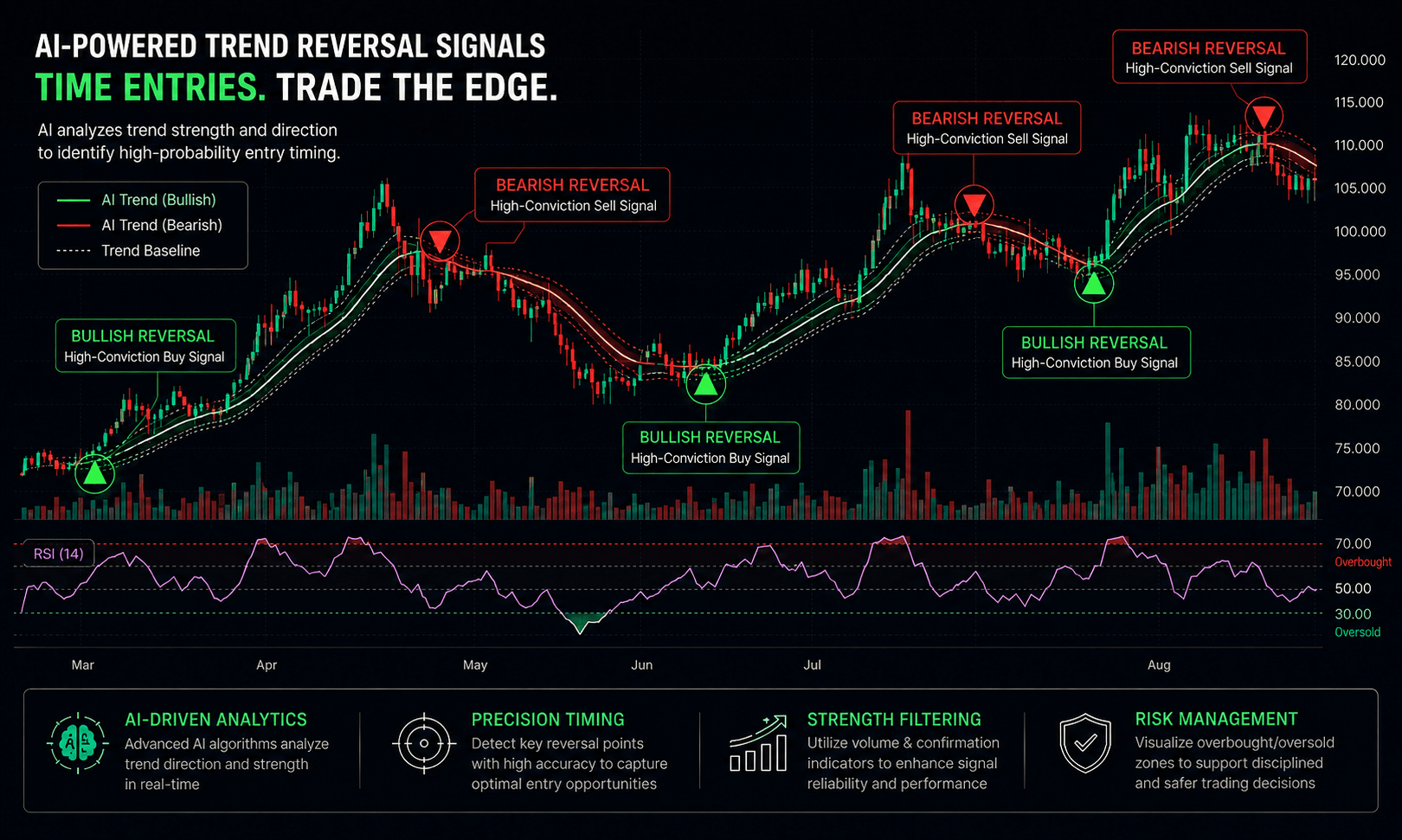
- Automated AI chart analysis with precision trend timing
- Bull Radar: real-time visualization of geopolitical & economic shifts
- Live market-moving news and insights, curated for you
Bull Wave / Bear Wave Forecast Model
Engineered to help you read market direction and momentum faster than the crowd.
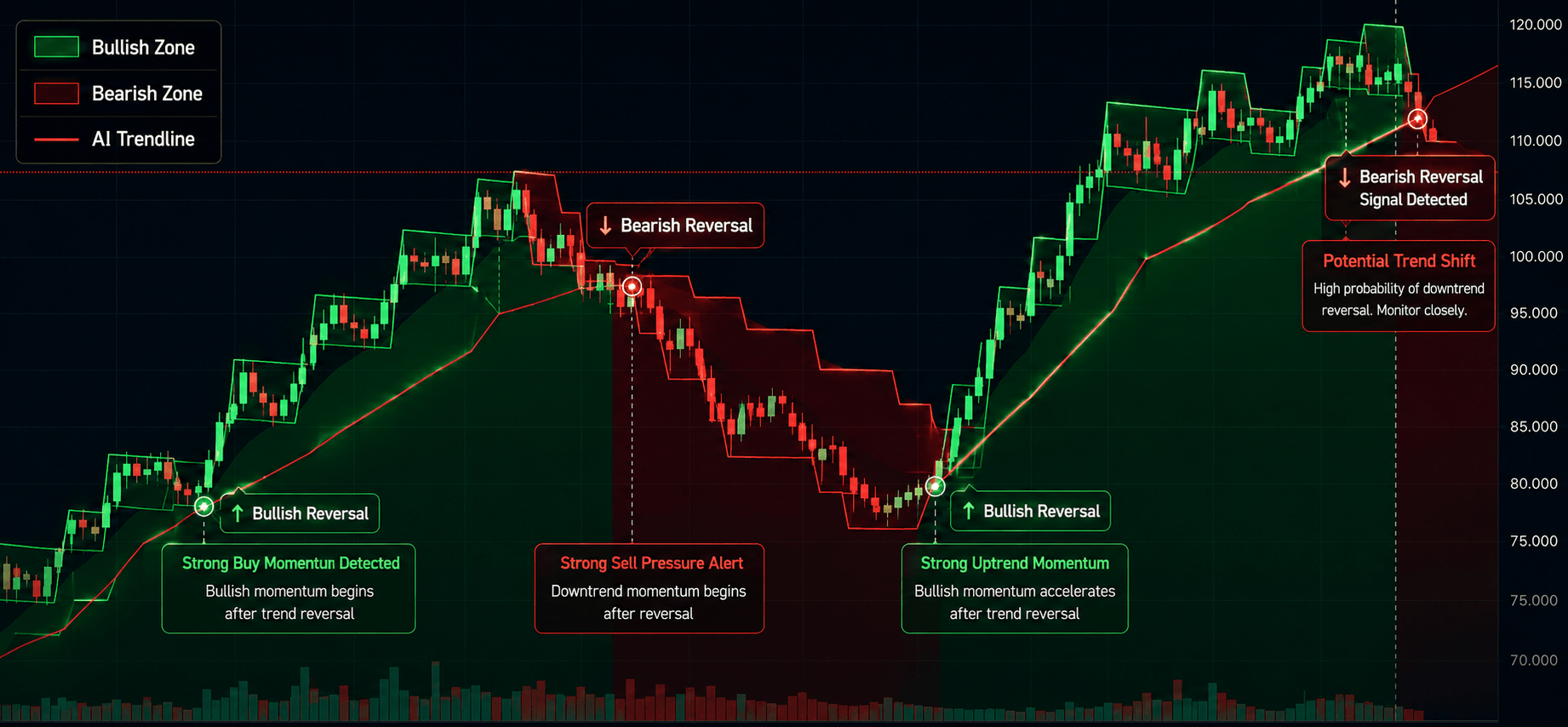
- Instantly separate bullish momentum from bearish pressure
- Pinpoint high-probability entry zones with confidence
- Chart signals clear enough for beginners, sharp enough for pros
Winning Pattern Detection
Instantly surfaces the high-probability setups that repeat across the charts — a trusted edge for timing your entries and exits.
- Spot momentum building in real time
- Catch trend-reversal points before they break
- Built for active traders who need results, not theory

AI Live Economic Dashboard
AI analyzes real-time market data — turning complex, global investment flows into clear insight in seconds.
- Track global stock markets in real time
- See exactly which assets are strong — and which are fading
- Watch how geopolitical events move the markets
About the Author