What Is Beta?
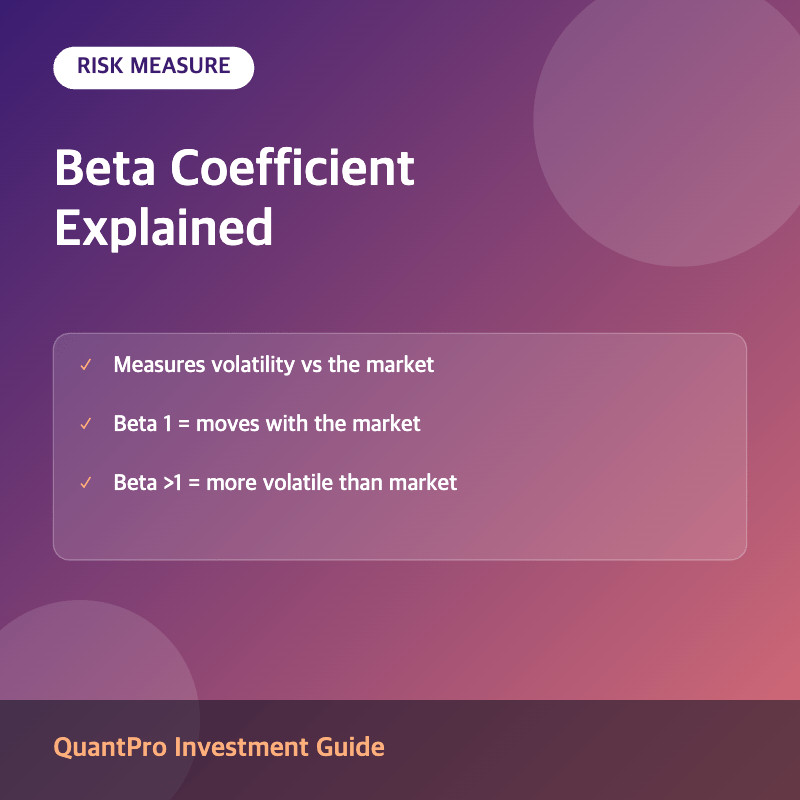
Beta is a statistical measure of a stock’s volatility relative to the overall market, typically represented by an index like the S&P 500. A beta of 1.0 means the stock tends to move in line with the market, while values above or below 1.0 indicate greater or lesser volatility.
How Beta Is Calculated
Beta is calculated by dividing the covariance of a stock’s returns with the market’s returns by the variance of the market’s returns over a given period, typically using historical price data over three to five years.
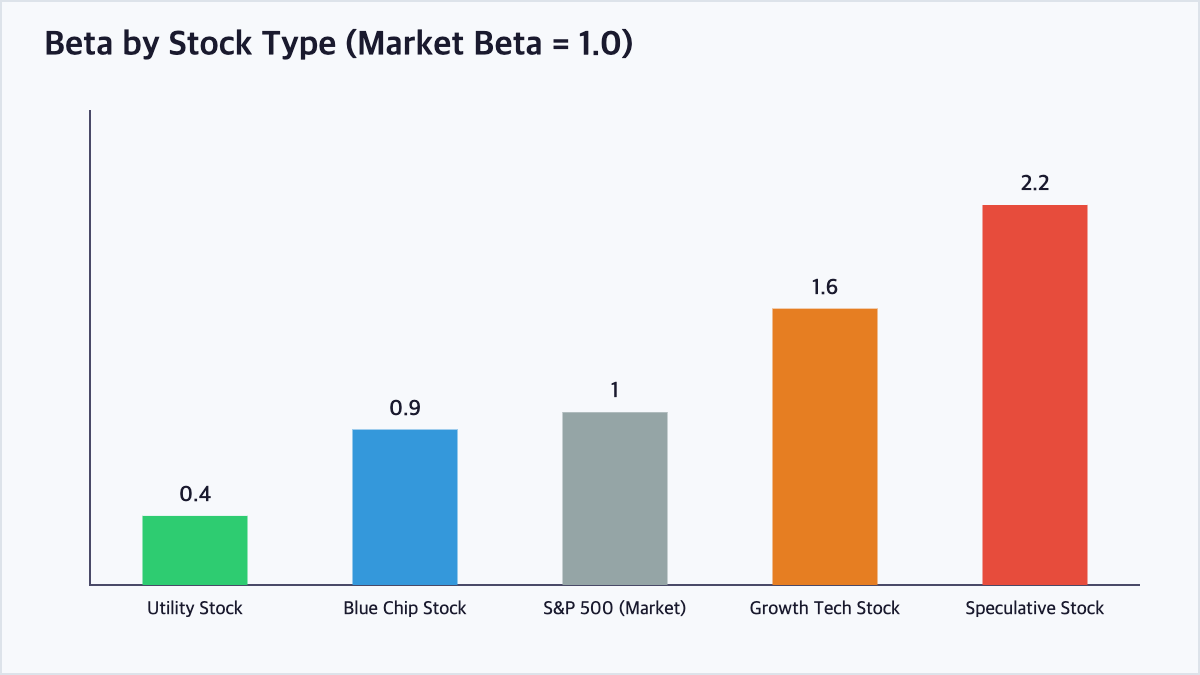
Beta Values Across Stock Types
Interpreting Beta Values
A beta greater than 1.0 suggests a stock is more volatile than the market and could see larger price swings in both directions. A beta less than 1.0 suggests lower volatility than the market, common in defensive sectors like utilities and consumer staples. A negative beta, though rare, indicates a stock tends to move opposite to the market.
Beta Ranges and What They Suggest
| Beta Range | Volatility Level | Typical Sectors |
|---|---|---|
| Below 0 | Moves opposite the market | Rare, some hedging assets |
| 0 – 0.8 | Lower volatility than market | Utilities, consumer staples |
| 0.8 – 1.2 | Similar to market volatility | Large-cap diversified companies |
| 1.2 – 2.0 | Higher volatility than market | Technology, growth stocks |
| Above 2.0 | Significantly more volatile | Small-cap, speculative stocks |
Beta and the Capital Asset Pricing Model
Beta plays a central role in the Capital Asset Pricing Model (CAPM), which uses beta to estimate a stock’s expected return based on its systematic risk relative to the broader market, factoring in the risk-free rate and expected market return.
Frequently Asked Questions
What does a beta of 1.5 mean?
A beta of 1.5 means a stock is theoretically 50% more volatile than the market; if the market moves up or down 10%, the stock might be expected to move approximately 15% in the same direction.
Is a high beta stock always riskier?
High beta indicates greater price volatility relative to the market, which is often associated with higher risk, but it can also mean greater potential for higher returns, so it depends on an investor’s risk tolerance and goals.
Can beta change over time?
Yes, beta is not static and can change as a company’s business, capital structure, and market conditions evolve, which is why it is typically recalculated periodically using rolling historical data.
Where can I find a stock’s beta value?
Beta values are commonly published on financial data platforms and brokerage research pages alongside other key statistics like market capitalization and P/E ratio.
Key Takeaways
Beta measures how volatile a stock is relative to the overall market, with a value of 1.0 indicating market-level volatility. Higher beta stocks tend to see larger price swings, while lower beta stocks tend to be more stable, making beta a useful tool for assessing risk and constructing a portfolio aligned with an investor’s risk tolerance. This article is for informational purposes only and does not constitute investment advice.

QuantPro: AI Finds the Trade Before You Do
From AI-powered chart analysis to real-time market intelligence — everything a serious investor needs, in one platform.
- Automated AI chart analysis with precision trend timing
- Bull Radar: real-time visualization of geopolitical & economic shifts
- Live market-moving news and insights, curated for you
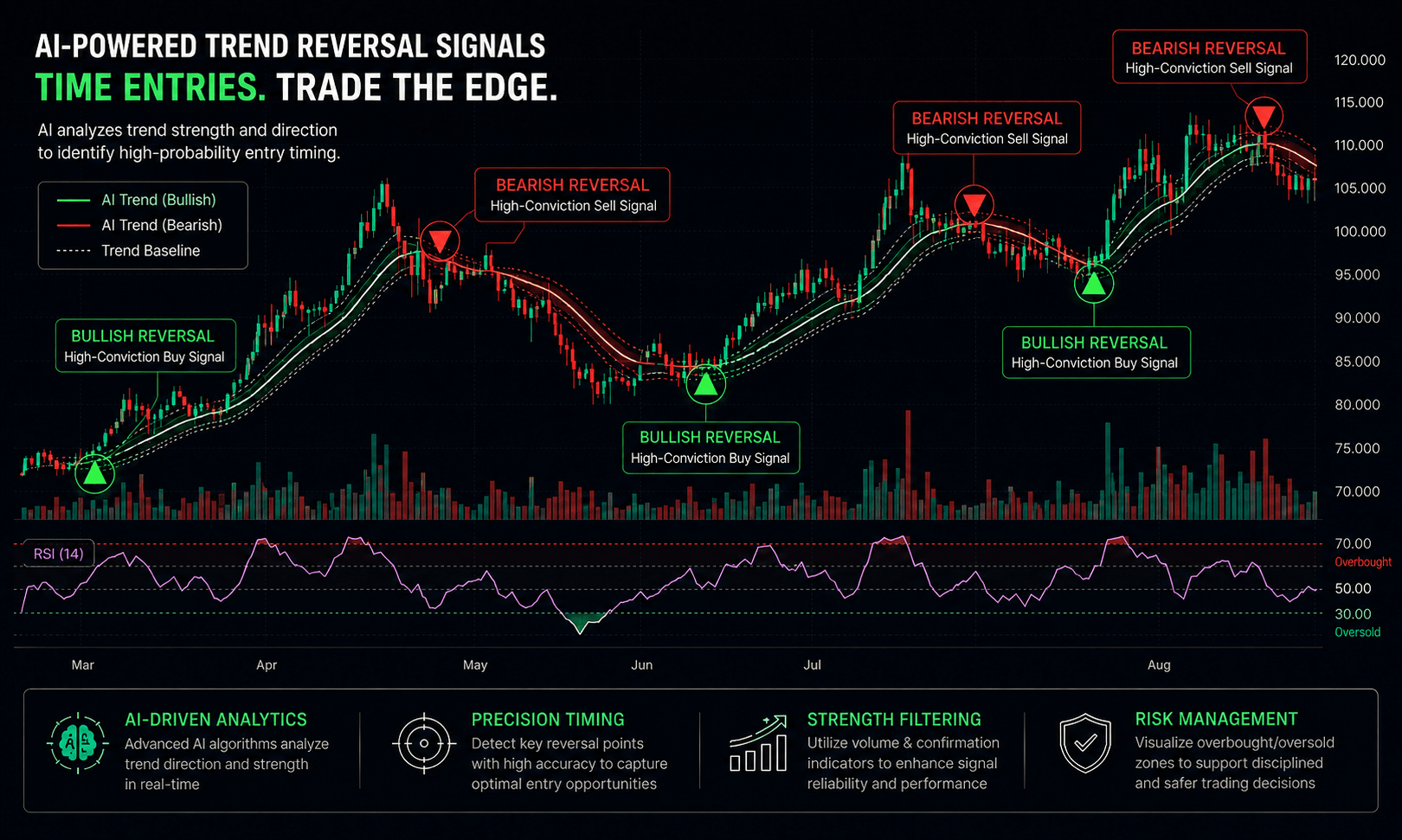
Bull Wave / Bear Wave Forecast Model
Engineered to help you read market direction and momentum faster than the crowd.
- Instantly separate bullish momentum from bearish pressure
- Pinpoint high-probability entry zones with confidence
- Chart signals clear enough for beginners, sharp enough for pros
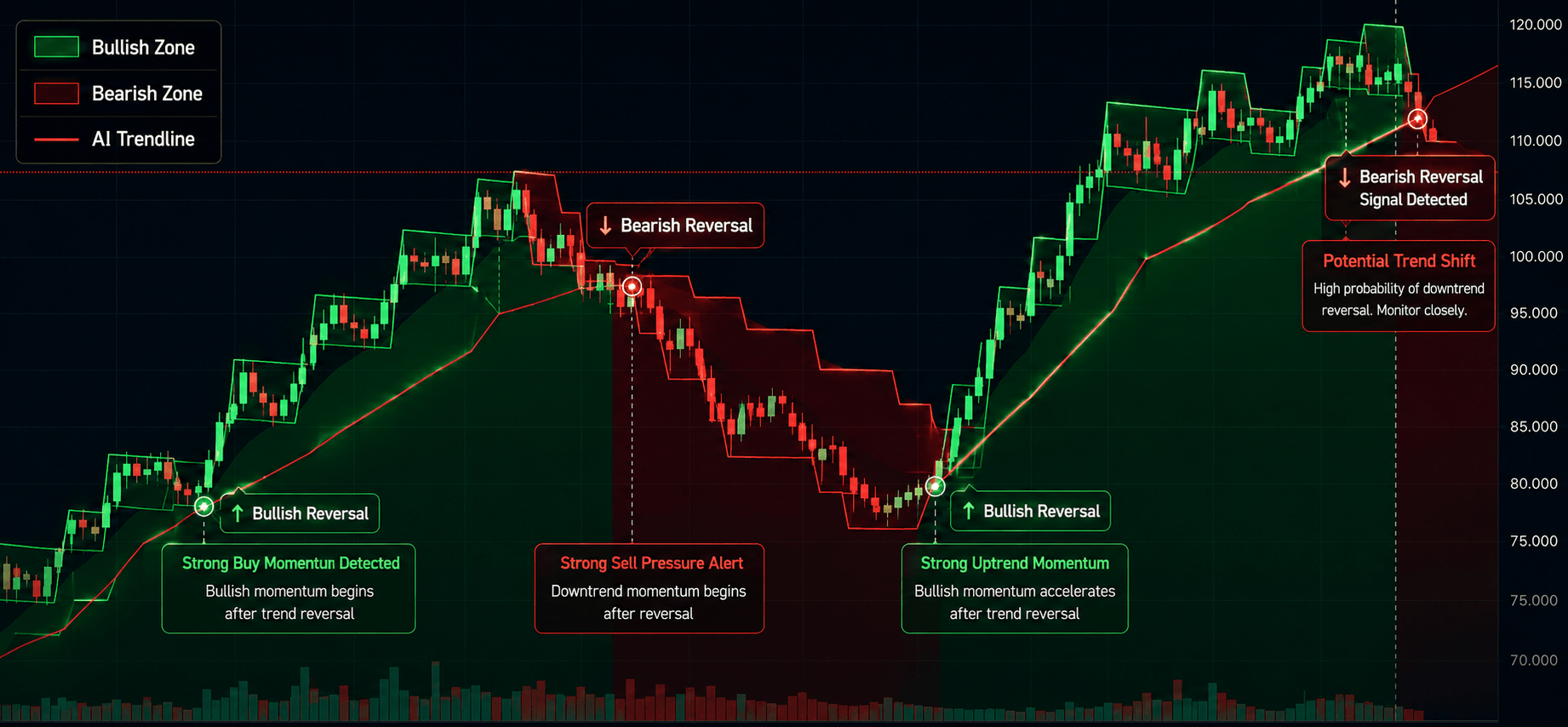
Winning Pattern Detection
Instantly surfaces the high-probability setups that repeat across the charts — a trusted edge for timing your entries and exits.
- Spot momentum building in real time
- Catch trend-reversal points before they break
- Built for active traders who need results, not theory

AI Live Economic Dashboard
AI analyzes real-time market data — turning complex, global investment flows into clear insight in seconds.
- Track global stock markets in real time
- See exactly which assets are strong — and which are fading
- Watch how geopolitical events move the markets
About the Author