What Is a Carry Trade
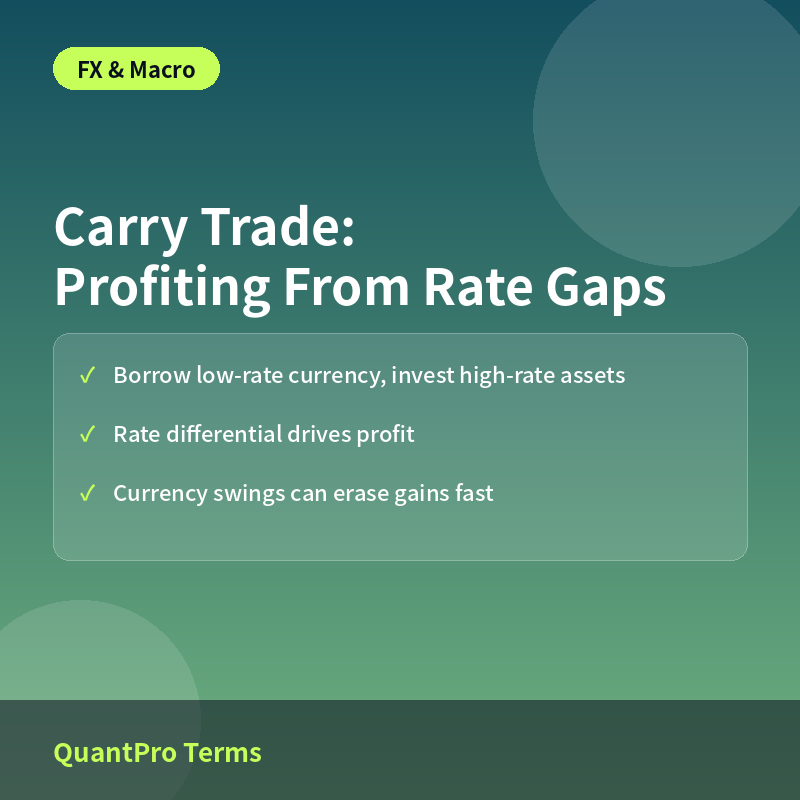
A carry trade involves borrowing money in a currency with a low interest rate, converting it into a currency or asset with a higher interest rate, and pocketing the rate differential — known as the ‘carry’ — as profit. The bigger the rate gap and the more stable the exchange rate, the more profitable the trade tends to be.
The classic example is the ‘yen carry trade.’ Because Japan has kept interest rates near zero for years, investors have long borrowed cheap yen to invest in higher-yielding U.S. Treasuries or emerging-market assets.
How Carry Trades Generate Returns
If Japan’s policy rate is 0.5% and the U.S. rate is 4.5%, the simple rate gap is 4.0 percentage points. Borrowing yen and investing in dollar assets at that spread could, assuming stable exchange rates, generate roughly a 4-point excess return annually.
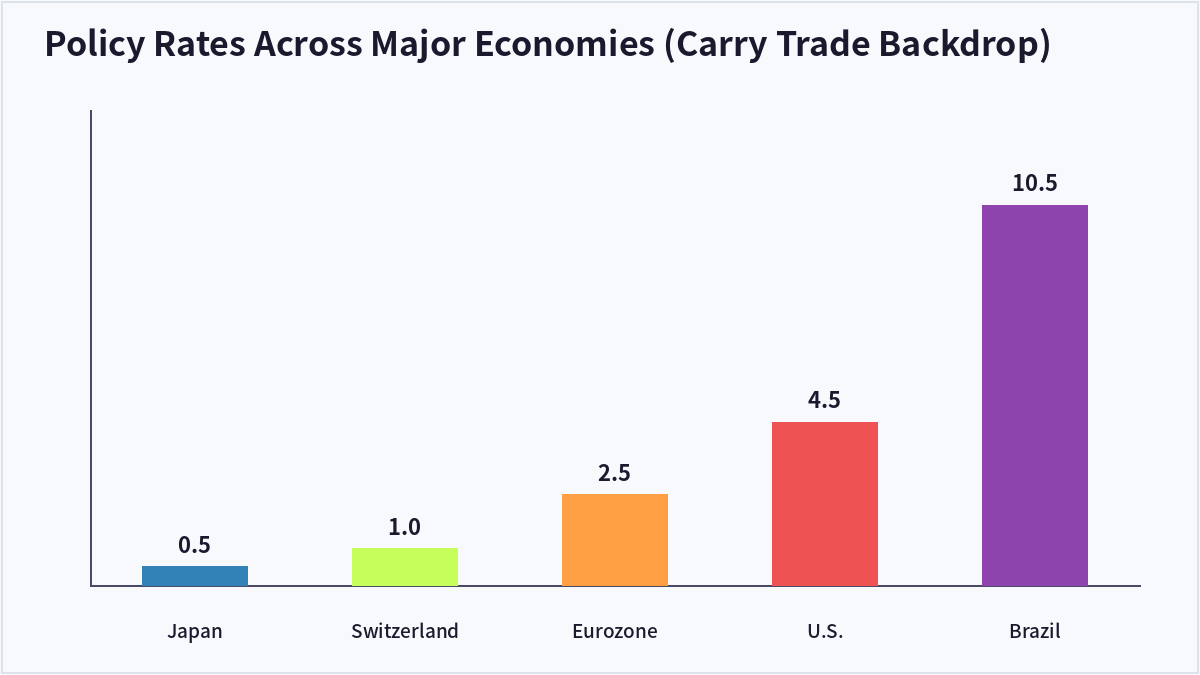
Comparing policy rates across major economies shows the scale of these gaps: Japan at 0.5%, Switzerland at 1.0%, the eurozone at 2.5%, the U.S. at 4.5%, and Brazil at 10.5%. These differentials are the primary driver of global carry trade flows.
The Risks of Carry Trades
The biggest risk is currency movement. No matter how large the rate gap, if the funding currency (like the yen) sharply appreciates, currency losses can outweigh the interest rate gains entirely. In August 2024, when the Bank of Japan raised rates faster than expected, the yen surged and triggered a rapid unwinding of yen carry trades that briefly rattled global equity markets.
Carry trades combine a relatively stable income stream from the rate differential with an unpredictable currency risk. Returns tend to be steady during calm periods but losses can arrive suddenly when volatility spikes.
| Trade Type | Funding Currency | Target Asset | Key Risk |
|---|---|---|---|
| Yen carry trade | Japanese yen | U.S. Treasuries/equities | Sharp yen appreciation |
| Franc carry | Swiss franc | Emerging-market bonds | Franc strengthening |
| EM carry | Low-rate developed currency | Brazilian/Turkish high-yield assets | EM currency volatility |
Frequently Asked Questions
Can retail investors do carry trades?
It’s possible indirectly through forex margin trading, certain ETFs, or currency-linked derivatives, but the leverage and currency risk involved make it a high-risk strategy that requires solid understanding before use.
What is a carry trade unwind?
When the funding currency strengthens sharply or volatility spikes, investors holding carry positions rush to close them to limit losses — often accelerating the funding currency’s rise and pressuring the target assets in a chain reaction.
Is a bigger rate gap always better?
A larger rate gap means higher potential profit, but it also tends to attract more attention and capital, which can increase currency volatility. Rate gap and volatility need to be weighed together.
Why is the yen carry trade mentioned so often?
Japan has held some of the lowest interest rates in the world for decades, making the yen a long-standing and popular cheap funding currency for carry trades globally.
Key Takeaways
A carry trade profits from borrowing in a low-rate currency to invest in higher-yielding assets, combining a relatively stable rate-differential income with unpredictable currency risk. Understanding both the rate gap and exchange rate volatility is essential to grasping this strategy. This article is for informational purposes only and does not constitute investment advice.

QuantPro: AI Finds the Trade Before You Do
From AI-powered chart analysis to real-time market intelligence — everything a serious investor needs, in one platform.
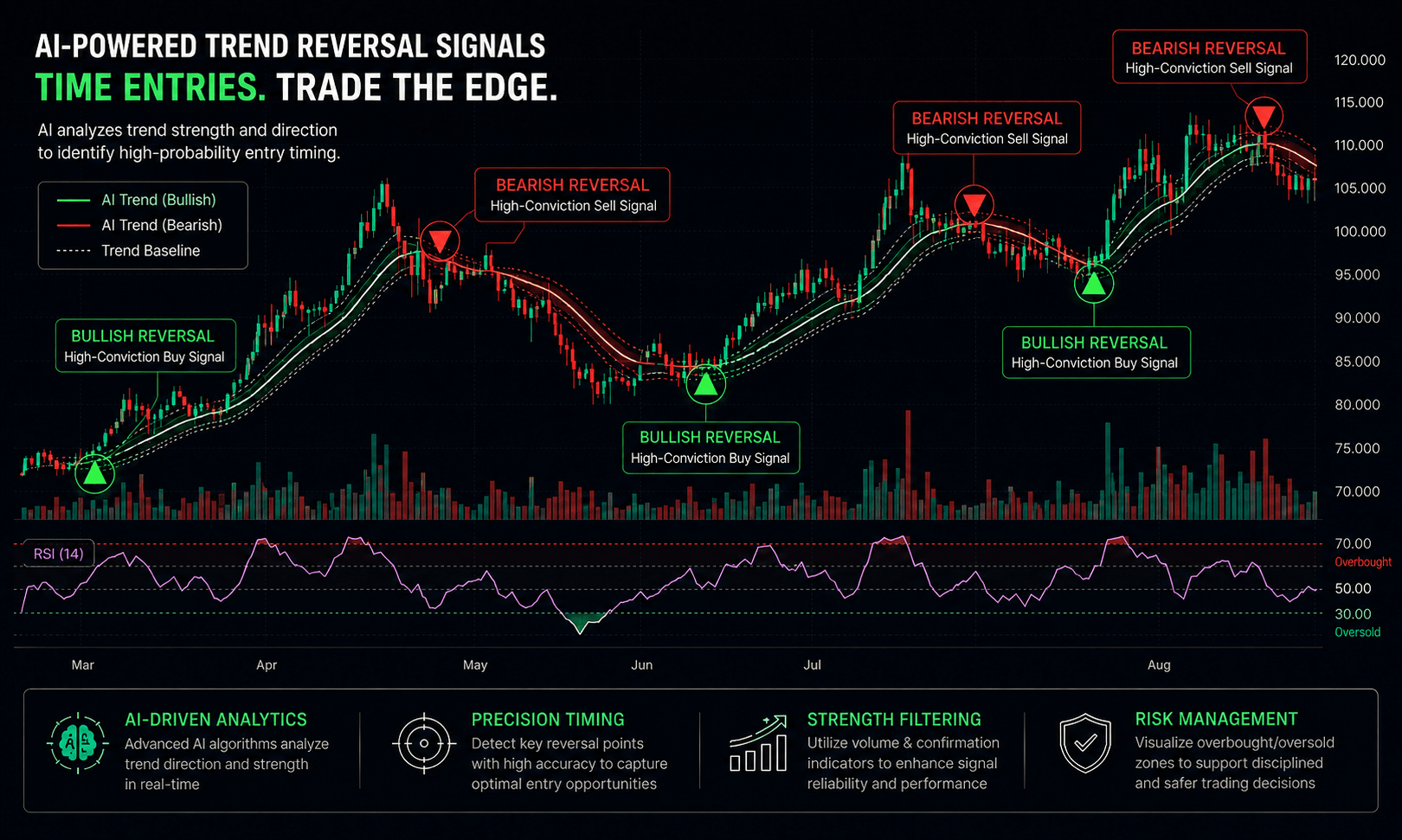
- Automated AI chart analysis with precision trend timing
- Bull Radar: real-time visualization of geopolitical & economic shifts
- Live market-moving news and insights, curated for you
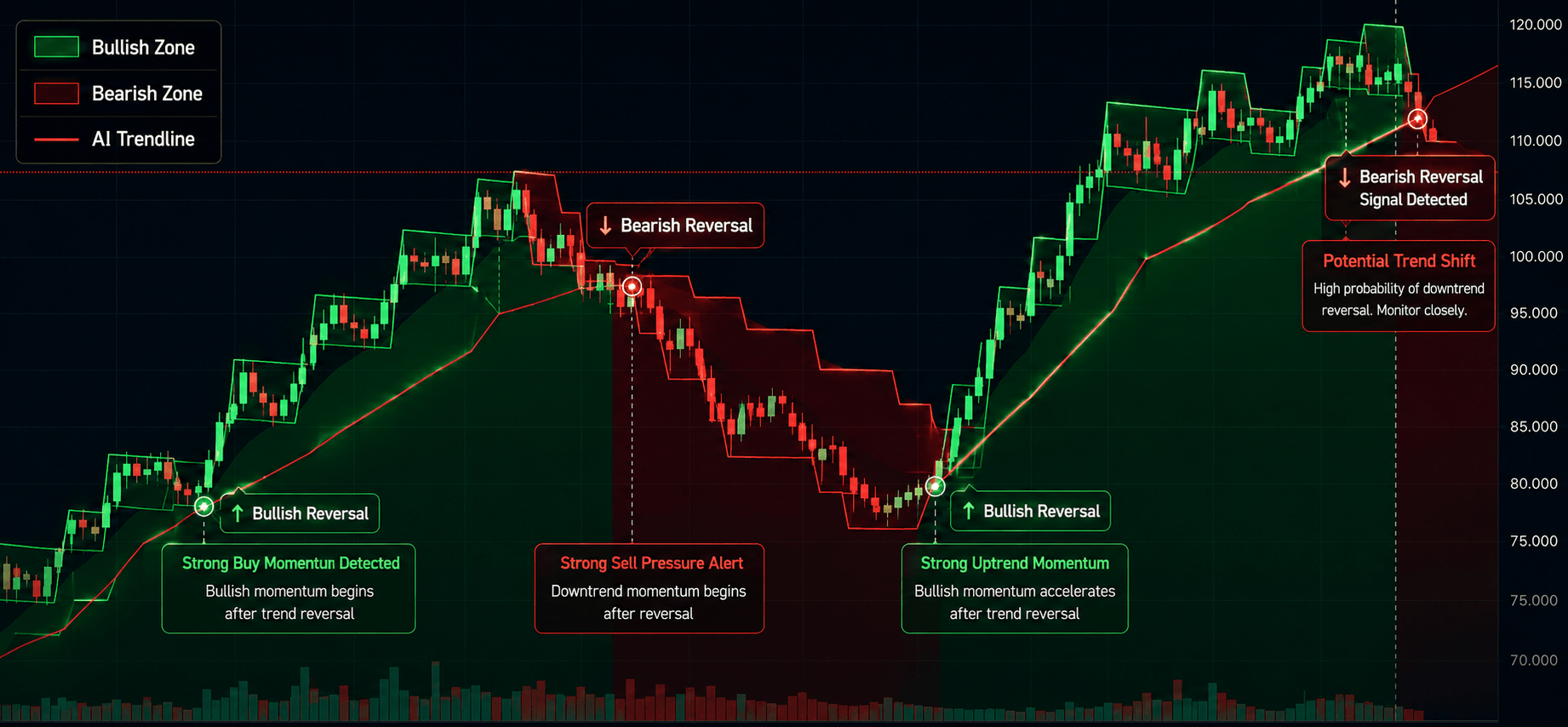
Bull Wave / Bear Wave Forecast Model
Engineered to help you read market direction and momentum faster than the crowd.
- Instantly separate bullish momentum from bearish pressure
- Pinpoint high-probability entry zones with confidence
- Chart signals clear enough for beginners, sharp enough for pros
Winning Pattern Detection
Instantly surfaces the high-probability setups that repeat across the charts — a trusted edge for timing your entries and exits.
- Spot momentum building in real time
- Catch trend-reversal points before they break
- Built for active traders who need results, not theory

AI Live Economic Dashboard
AI analyzes real-time market data — turning complex, global investment flows into clear insight in seconds.
- Track global stock markets in real time
- See exactly which assets are strong — and which are fading
- Watch how geopolitical events move the markets
About the Author