What Is a Convertible Bond?
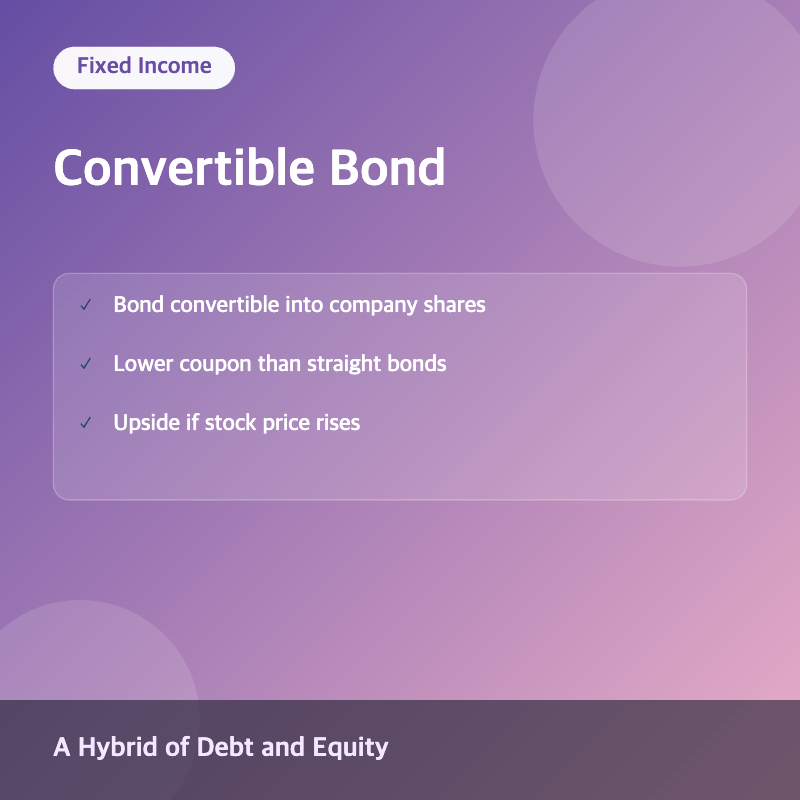
A convertible bond is a hybrid debt security that gives the bondholder the right, but not the obligation, to convert the bond into a predetermined number of shares of the issuing company’s common stock, typically at any time before maturity. Because of this equity upside potential, convertible bonds generally offer a lower coupon interest rate than comparable straight (non-convertible) bonds issued by the same company.
How Convertible Bond Conversion Works
The Conversion Ratio and Conversion Price
The conversion ratio specifies how many shares of stock the bondholder receives for each bond converted, while the conversion price is the effective price per share paid when converting, calculated as the bond’s face value divided by the conversion ratio.
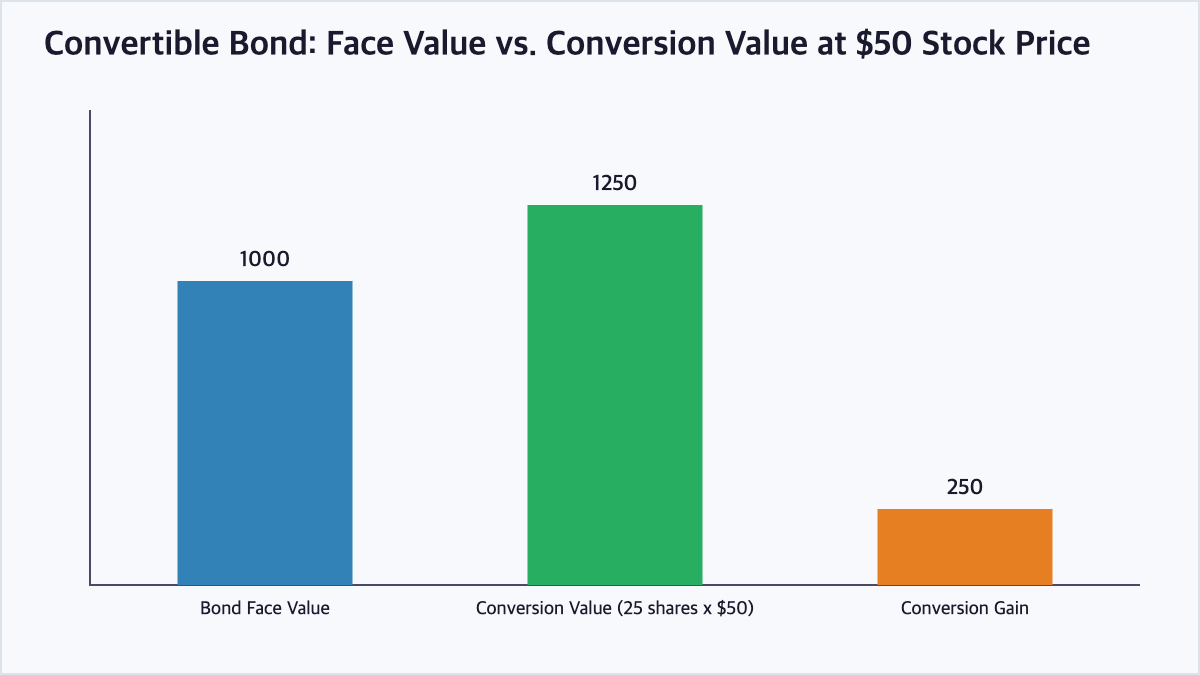
For example, suppose a convertible bond has a face value of $1,000 and a conversion ratio of 25, meaning each bond can be converted into 25 shares of common stock. The conversion price would be $1,000 ÷ 25 = $40 per share. If the company’s stock is currently trading at $50 per share, the bond’s conversion value would be 25 shares x $50 = $1,250, meaning it would be economically attractive for the bondholder to convert, since the resulting shares are worth more than the bond’s $1,000 face value.
When Bondholders Choose to Convert
Bondholders generally choose to convert when the conversion value (the value of the shares received) exceeds the bond’s value if held as straight debt, which typically occurs when the underlying stock price rises well above the conversion price. If the stock price stays below the conversion price, the bondholder can simply hold the bond to maturity and continue receiving coupon payments and eventual repayment of face value like a regular bond.
Why Companies Issue Convertible Bonds
Companies often issue convertible bonds to lower their borrowing costs, since investors accept a lower coupon rate in exchange for the potential upside of converting to equity. Convertible bonds can also appeal to companies that want to raise capital without immediately diluting existing shareholders, since dilution only occurs if and when bondholders choose to convert.
Convertible Bonds vs. Straight Bonds
| Aspect | Convertible Bond | Straight Bond |
|---|---|---|
| Coupon Rate | Generally lower | Generally higher |
| Upside Potential | Can benefit from stock price appreciation | No equity upside |
| Dilution Risk to Shareholders | Possible if bonds are converted | None |
Frequently Asked Questions
What happens to a convertible bond if the stock price never rises above the conversion price?
If the stock price remains below the conversion price through maturity, the bondholder would generally choose not to convert and instead receive scheduled coupon payments along with the face value at maturity, similar to how a straight bond would perform.
Can a company force conversion of a convertible bond?
Some convertible bonds include a call provision that allows the issuing company to redeem the bonds early under certain conditions, which can effectively force bondholders to either convert to shares or accept early redemption, depending on the bond’s specific terms.
How does a convertible bond’s price behave compared to the underlying stock?
A convertible bond’s price tends to track the underlying stock more closely as the stock price rises well above the conversion price (since conversion becomes more attractive), while it behaves more like a straight bond, influenced primarily by interest rates and credit risk, when the stock price is well below the conversion price.
Are convertible bonds riskier than straight bonds?
Convertible bonds carry many of the same credit and interest rate risks as straight bonds, but their value is also influenced by the underlying stock’s volatility and performance, adding a layer of equity-related risk and potential reward not present in straight bonds.
Key Takeaways
A convertible bond combines features of debt and equity, allowing bondholders to convert into a set number of shares if the stock price rises enough to make conversion attractive, typically in exchange for accepting a lower coupon rate than a straight bond. This hybrid structure benefits issuers through lower borrowing costs and offers investors potential equity upside while retaining bond-like downside protection if conversion is not exercised. This article is for informational purposes only and does not constitute investment advice.

QuantPro: AI Finds the Trade Before You Do
From AI-powered chart analysis to real-time market intelligence — everything a serious investor needs, in one platform.
- Automated AI chart analysis with precision trend timing
- Bull Radar: real-time visualization of geopolitical & economic shifts
- Live market-moving news and insights, curated for you
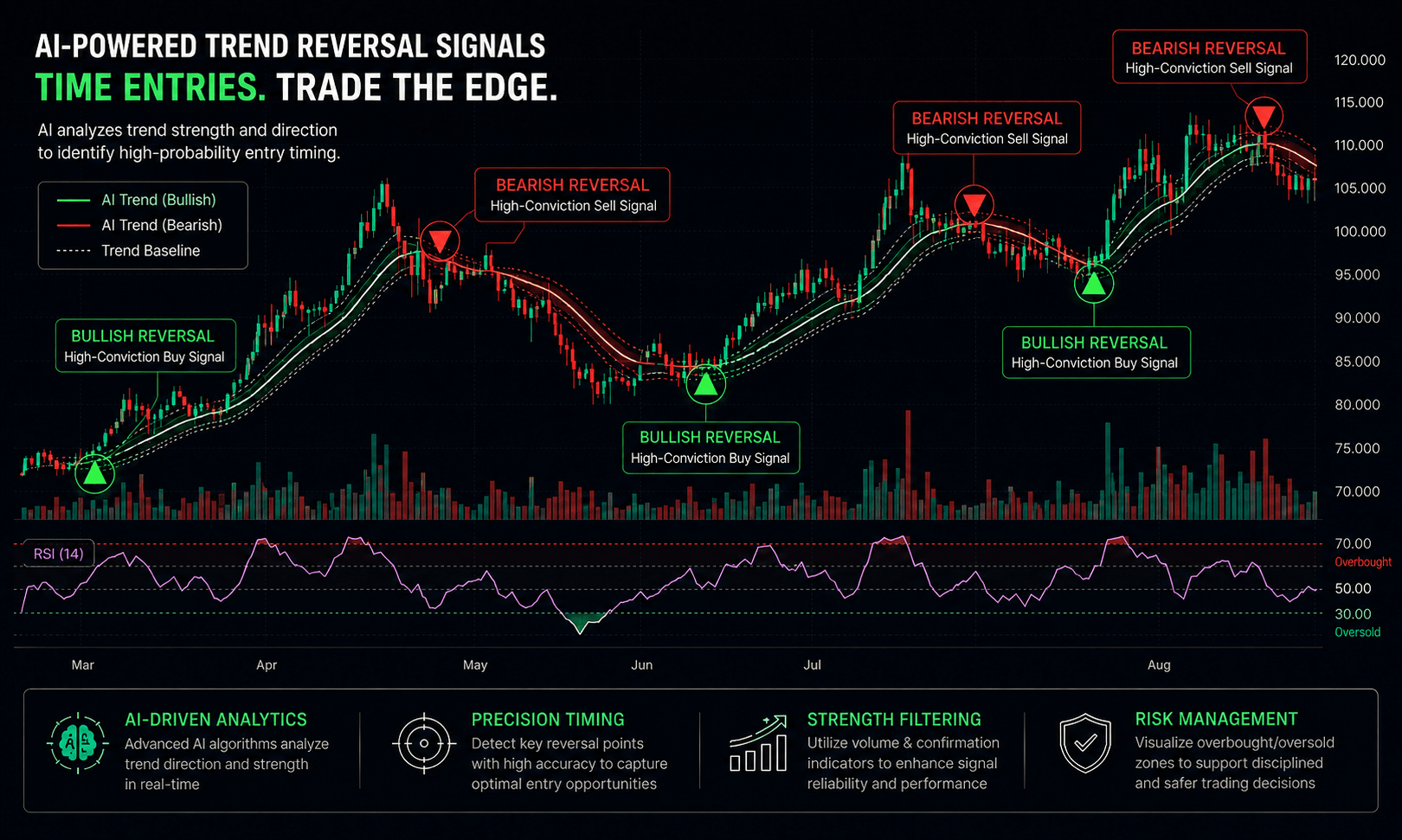
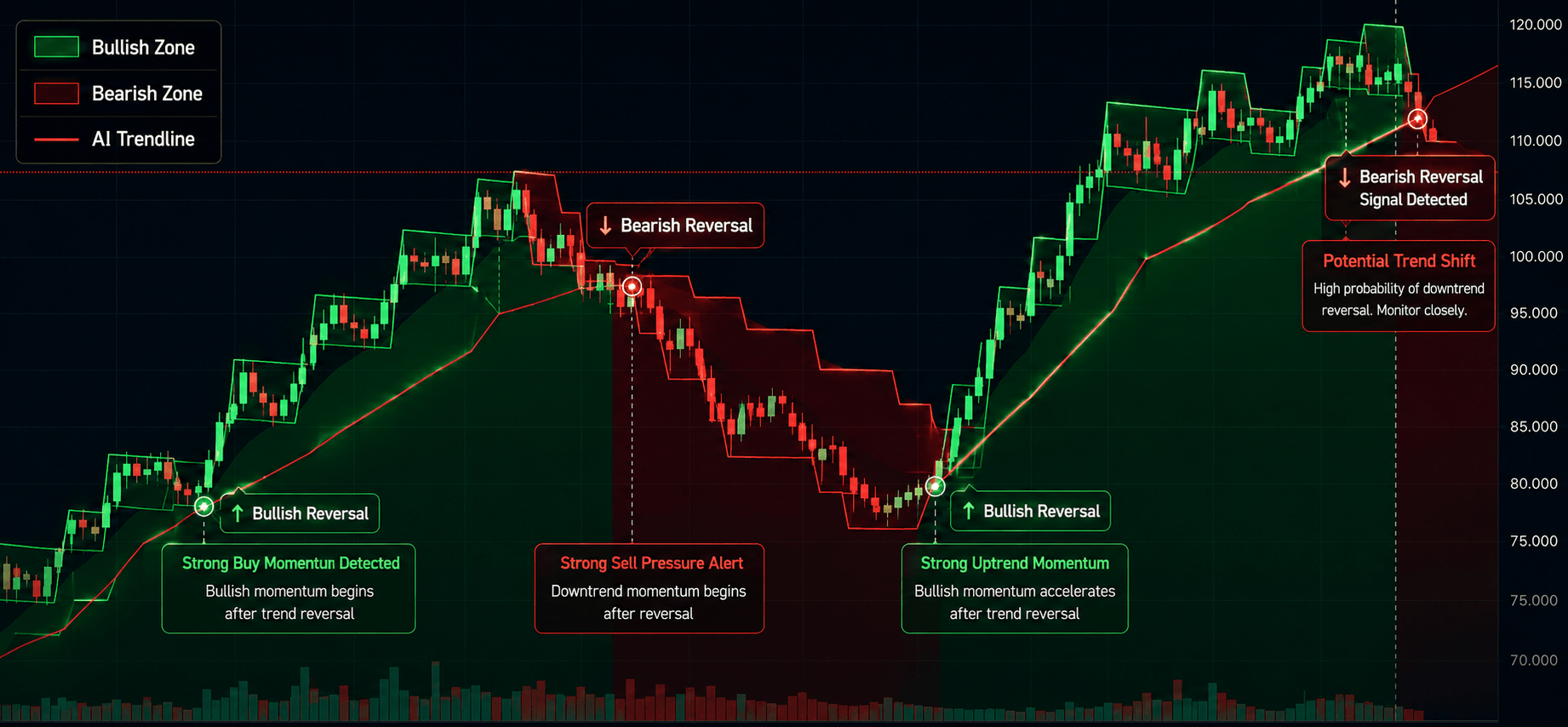
Bull Wave / Bear Wave Forecast Model
Engineered to help you read market direction and momentum faster than the crowd.
- Instantly separate bullish momentum from bearish pressure
- Pinpoint high-probability entry zones with confidence
- Chart signals clear enough for beginners, sharp enough for pros
Winning Pattern Detection
Instantly surfaces the high-probability setups that repeat across the charts — a trusted edge for timing your entries and exits.
- Spot momentum building in real time
- Catch trend-reversal points before they break
- Built for active traders who need results, not theory

AI Live Economic Dashboard
AI analyzes real-time market data — turning complex, global investment flows into clear insight in seconds.
- Track global stock markets in real time
- See exactly which assets are strong — and which are fading
- Watch how geopolitical events move the markets
About the Author