What Is a Circuit Breaker?
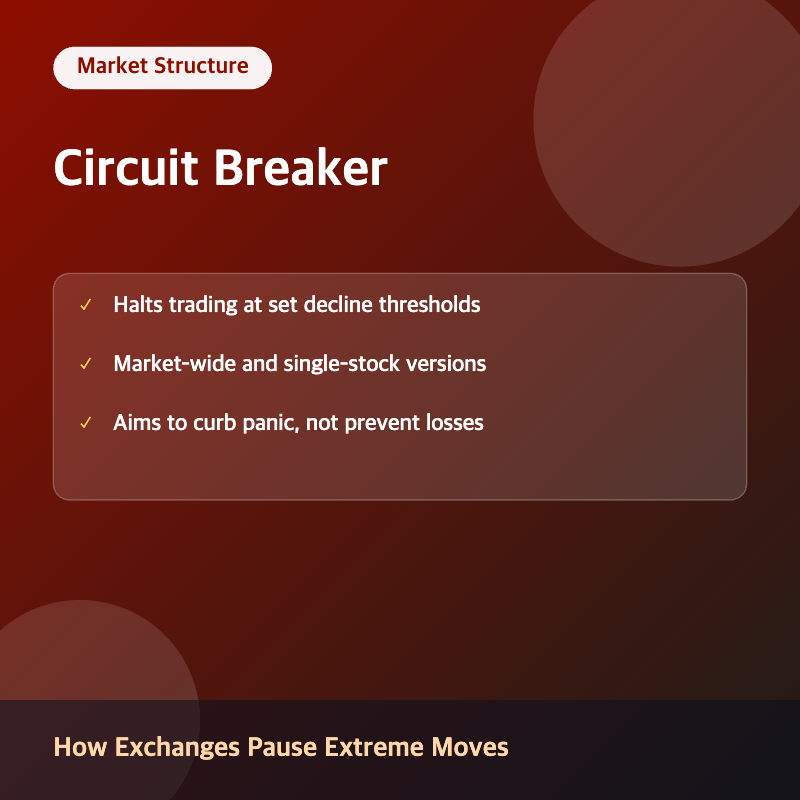
A circuit breaker, in the context of financial markets, is a regulatory mechanism that automatically halts trading on an exchange for a set period when prices fall (or in some cases rise) by a predetermined percentage within a short timeframe. Circuit breakers are designed to curb panic-driven selling, give investors a cooling-off period to absorb new information, and prevent disorderly, self-reinforcing market crashes.
How Market-Wide Circuit Breakers Work
Threshold Levels
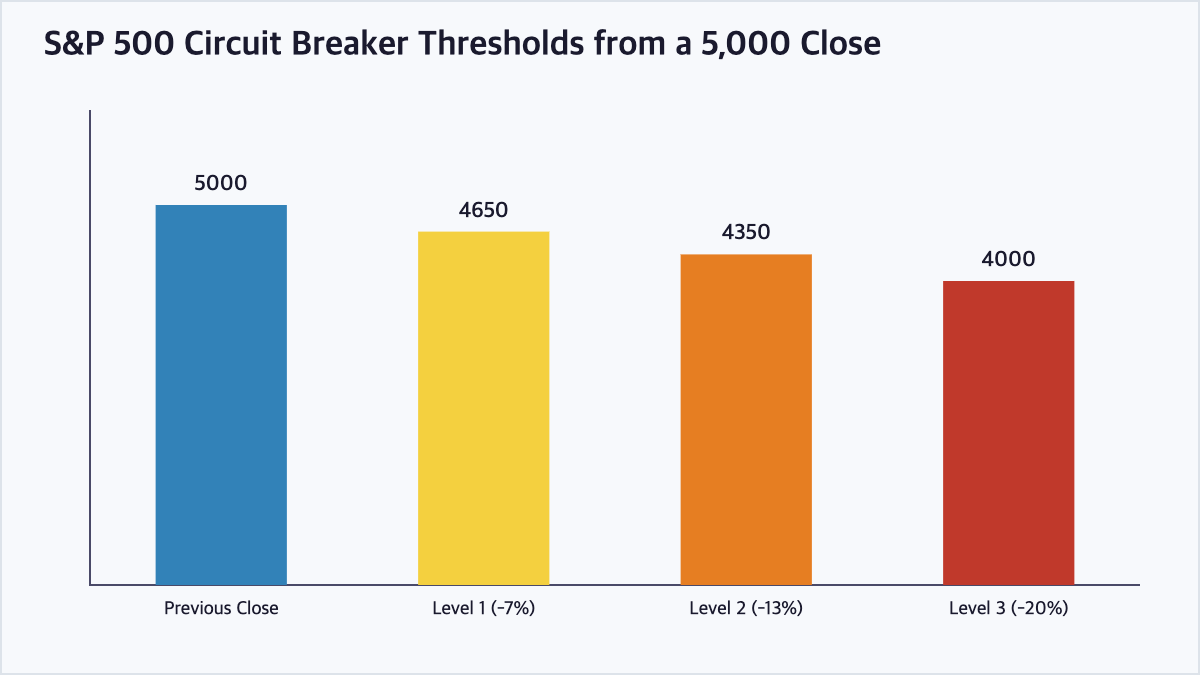
In many major markets, including the U.S. equity markets, market-wide circuit breakers are typically structured around three threshold levels based on a decline in a broad market index, such as 7%, 13%, and 20% from the previous day’s closing price. Each level triggers a different response, ranging from a temporary trading halt to a full closure of trading for the remainder of the day.
For example, suppose the S&P 500 index closes at 5,000 points the previous day. A Level 1 circuit breaker would be triggered if the index falls 7% intraday to 4,650 points, resulting in a 15-minute trading halt (if triggered before a specified cutoff time). If the decline deepens to a 13% drop, reaching 4,350 points, a Level 2 halt would trigger. A 20% decline, to 4,000 points, would trigger a Level 3 halt, closing trading for the remainder of the trading day.
Single-Stock Circuit Breakers (Limit Up-Limit Down)
In addition to market-wide mechanisms, individual stocks are also subject to circuit breakers, often called “Limit Up-Limit Down” (LULD) rules in the U.S., which pause trading in a specific security if its price moves outside a defined percentage band relative to its recent average price. These stock-specific halts help prevent erroneous trades or sudden liquidity gaps from causing extreme, disorderly price swings in a single security.
Why Circuit Breakers Exist
Circuit breakers were introduced in various forms after major market disruptions, including the 1987 stock market crash (Black Monday), as a tool to reduce volatility and prevent cascading, panic-driven sell-offs. By pausing trading, circuit breakers aim to give market participants time to assess new information rationally rather than reacting purely on momentum or algorithmic triggers.
Market-Wide vs. Single-Stock Circuit Breakers
| Aspect | Market-Wide Circuit Breaker | Single-Stock Circuit Breaker (LULD) |
|---|---|---|
| Trigger | Broad index decline (e.g., 7%, 13%, 20%) | Individual stock price moving outside a defined band |
| Scope of Halt | Entire exchange or market | Only the affected security |
| Typical Duration | 15 minutes to full-day closure depending on level | Brief pause, often around 5 minutes |
Frequently Asked Questions
Do circuit breakers only apply to price declines?
While market-wide circuit breakers in most systems are triggered by declines, some single-stock mechanisms like Limit Up-Limit Down bands can also pause trading when a stock’s price rises too rapidly outside its defined band, not just when it falls.
How often are market-wide circuit breakers triggered?
Market-wide circuit breaker triggers, particularly the higher-level halts, are relatively rare events that tend to occur only during periods of extreme market stress, such as major financial crises or unprecedented shocks to investor confidence.
Do circuit breakers prevent losses?
No, circuit breakers do not prevent losses; they only pause trading temporarily to reduce the risk of disorderly, panic-driven price action and give market participants a chance to reassess conditions. Prices can and often do continue falling once trading resumes after a halt.
Are circuit breaker rules the same in every country?
No, circuit breaker thresholds, mechanisms, and durations vary by exchange and country, with each market regulator setting its own specific rules based on local market structure and historical experience with volatility events.
Key Takeaways
Circuit breakers are automatic trading halts triggered when prices move beyond predetermined thresholds, designed to curb panic selling and give markets time to stabilize during periods of extreme volatility. Both market-wide and single-stock circuit breaker mechanisms exist, pausing trading temporarily rather than preventing losses altogether. This article is for informational purposes only and does not constitute investment advice.

QuantPro: AI Finds the Trade Before You Do
From AI-powered chart analysis to real-time market intelligence — everything a serious investor needs, in one platform.
- Automated AI chart analysis with precision trend timing
- Bull Radar: real-time visualization of geopolitical & economic shifts
- Live market-moving news and insights, curated for you
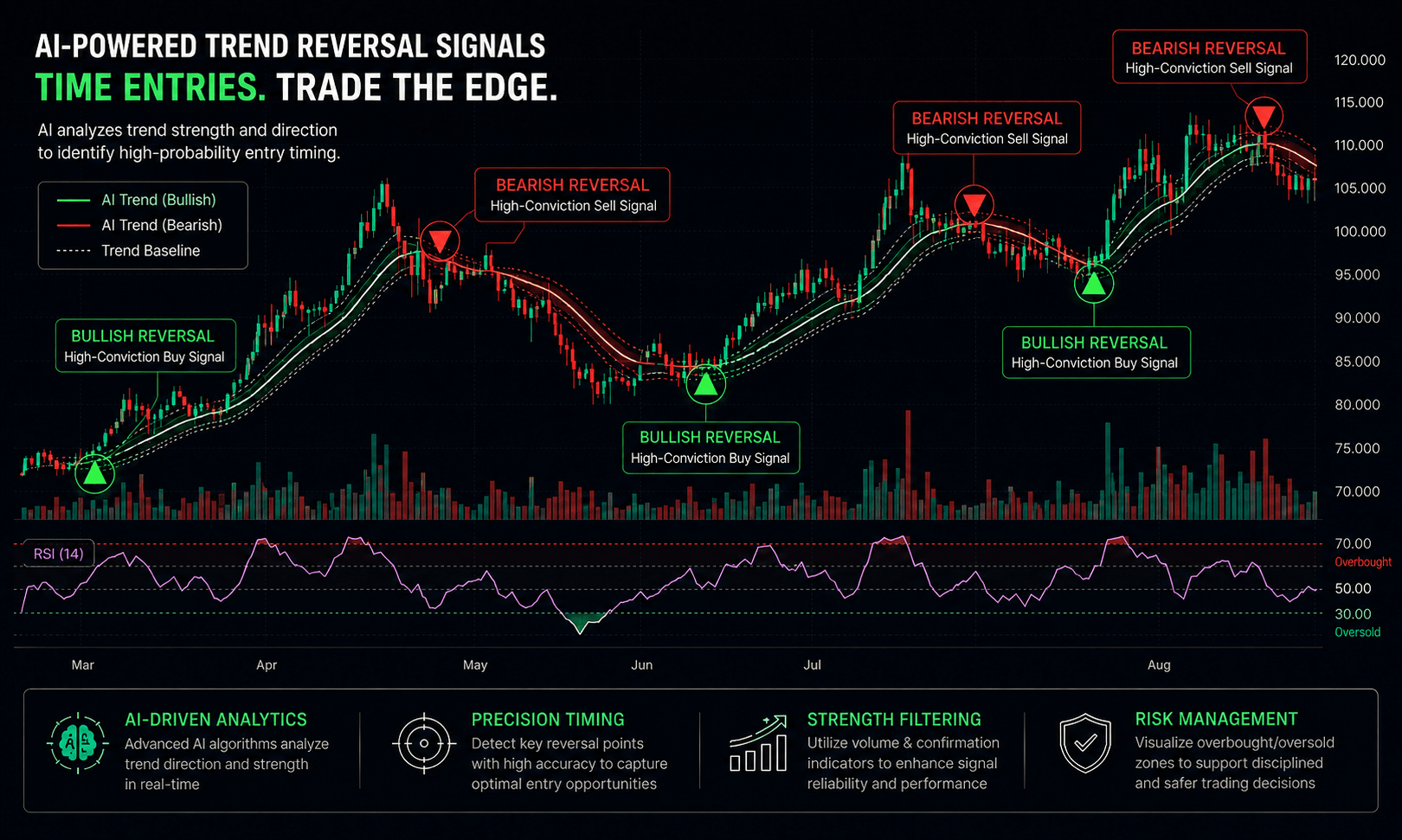
Bull Wave / Bear Wave Forecast Model
Engineered to help you read market direction and momentum faster than the crowd.
- Instantly separate bullish momentum from bearish pressure
- Pinpoint high-probability entry zones with confidence
- Chart signals clear enough for beginners, sharp enough for pros
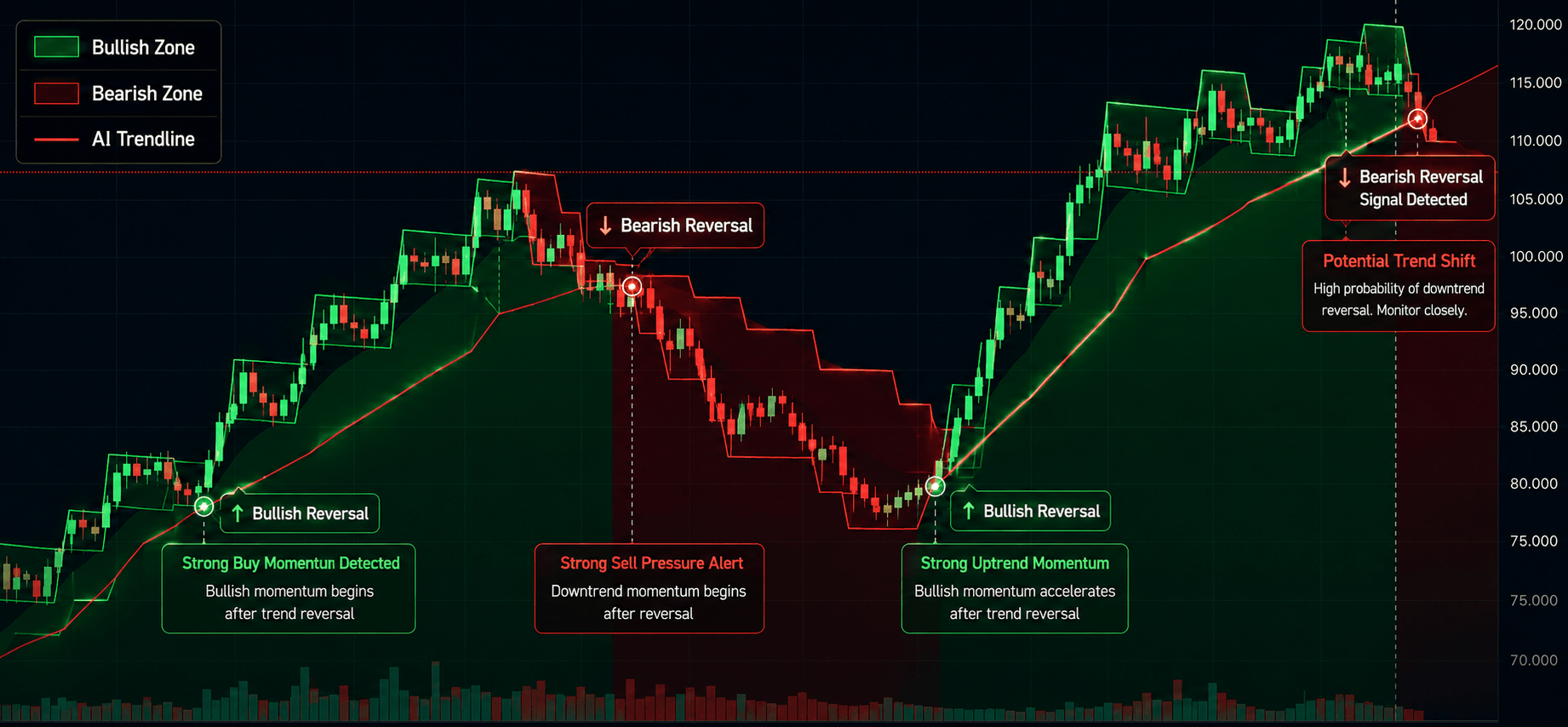
Winning Pattern Detection
Instantly surfaces the high-probability setups that repeat across the charts — a trusted edge for timing your entries and exits.
- Spot momentum building in real time
- Catch trend-reversal points before they break
- Built for active traders who need results, not theory

AI Live Economic Dashboard
AI analyzes real-time market data — turning complex, global investment flows into clear insight in seconds.
- Track global stock markets in real time
- See exactly which assets are strong — and which are fading
- Watch how geopolitical events move the markets
About the Author