What Is a Rights Offering?
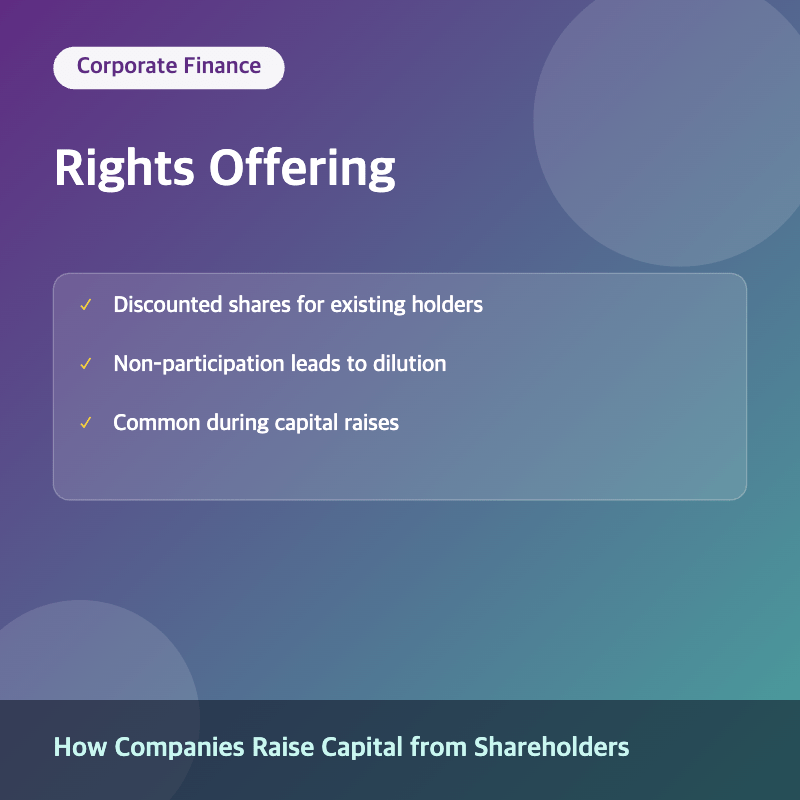
A rights offering is a method companies use to raise additional capital by giving existing shareholders the right, but not the obligation, to purchase new shares of stock at a discounted price, typically in proportion to their current ownership stake. This approach allows companies to raise funds while giving existing shareholders the first opportunity to maintain their proportional ownership in the company.
How a Rights Offering Works
Subscription Price and Discount
In a rights offering, the company sets a subscription price that is typically below the stock’s current market price, often by a meaningful margin, to incentivize shareholders to participate. Shareholders receive rights based on a specified ratio, such as one new share for every certain number of shares already held.
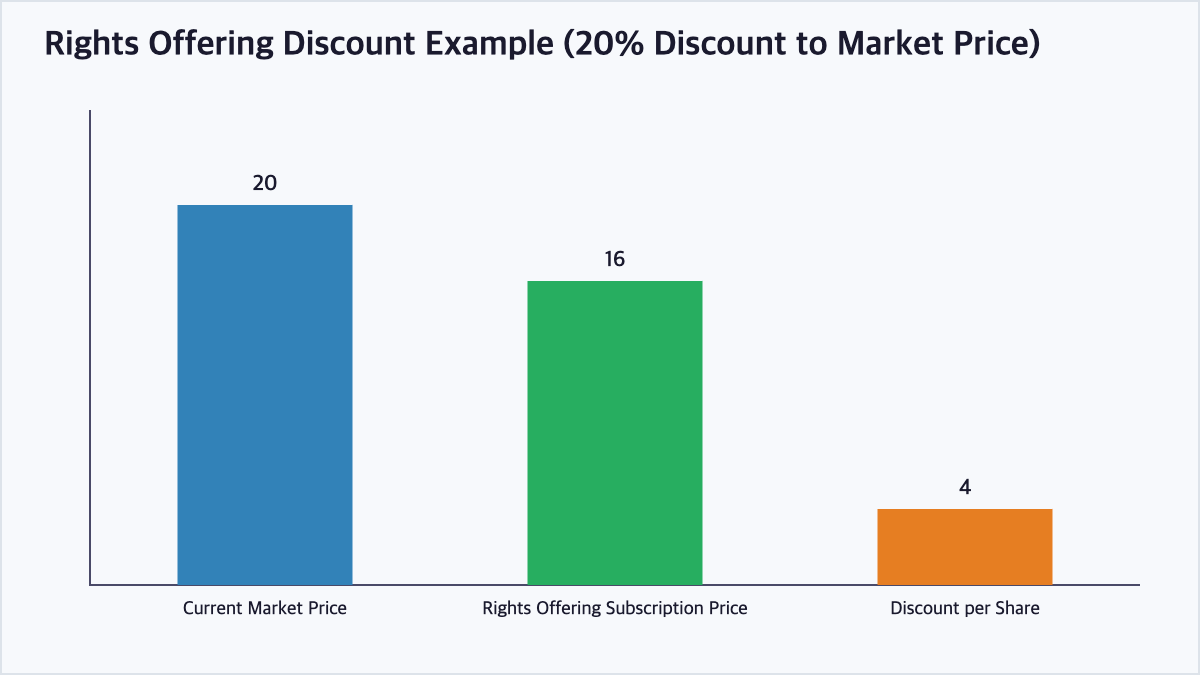
For example, suppose a company’s stock is currently trading at $20 per share, and the company announces a rights offering with a subscription price of $16 per share, representing a 20% discount to the market price. If the offering ratio is 1-for-5 (one new share for every five shares held), a shareholder holding 500 shares would be entitled to purchase 100 new shares at $16 each, for a total investment of $1,600, compared to what those shares would cost at the current market price of $20 (which would be $2,000).
What Happens If Shareholders Don’t Participate
Shareholders who choose not to exercise their rights typically experience dilution of their ownership percentage, since the total number of shares outstanding increases while their own holdings remain unchanged. In some markets, unexercised rights can be sold to other investors, allowing shareholders who do not wish to invest additional capital to at least partially offset the dilutive effect.
Why Companies Conduct Rights Offerings
Companies typically use rights offerings to raise capital for purposes such as reducing debt, funding acquisitions, or shoring up balance sheets during periods of financial stress, often when other forms of financing may be more difficult or expensive to obtain. Because existing shareholders are given priority, rights offerings are sometimes viewed more favorably by current investors compared to offerings that primarily target new outside investors.
Rights Offering vs. Traditional Secondary Offering
| Aspect | Rights Offering | Traditional Secondary Offering |
|---|---|---|
| Who Can Participate | Existing shareholders (proportionally) | New and existing investors broadly |
| Pricing | Typically offered at a discount to market price | Priced closer to prevailing market price |
| Dilution Impact | Reduced for shareholders who participate fully | Affects all existing shareholders similarly |
Frequently Asked Questions
Do shareholders have to participate in a rights offering?
No, participation in a rights offering is optional, and shareholders can choose not to exercise their rights, though doing so typically results in some dilution of their ownership percentage in the company.
Can rights be sold instead of exercised?
In many rights offerings, especially those structured as “transferable rights,” shareholders who do not wish to purchase additional shares can sell their rights to other investors in the market, potentially recovering some value rather than letting the rights expire worthless.
Why is a rights offering sometimes seen as a negative signal by the market?
Because companies sometimes conduct rights offerings when they need to raise capital urgently, such as during financial distress, the announcement can occasionally be interpreted by the market as a signal of underlying financial weakness, though this is not always the case.
How does a rights offering affect a company’s share price?
A rights offering typically leads to some downward pressure on the share price around the announcement and issuance, partly due to the dilutive effect of additional shares being issued and partly due to market perception of the reasons behind the capital raise.
Key Takeaways
A rights offering allows existing shareholders to purchase new shares at a discount to the market price, typically in proportion to their current holdings, giving companies a way to raise capital while prioritizing current investors. Shareholders who do not participate generally experience dilution, making the decision to exercise, sell, or let rights expire an important one for existing investors to consider. This article is for informational purposes only and does not constitute investment advice.

QuantPro: AI Finds the Trade Before You Do
From AI-powered chart analysis to real-time market intelligence — everything a serious investor needs, in one platform.
- Automated AI chart analysis with precision trend timing
- Bull Radar: real-time visualization of geopolitical & economic shifts
- Live market-moving news and insights, curated for you

Bull Wave / Bear Wave Forecast Model
Engineered to help you read market direction and momentum faster than the crowd.
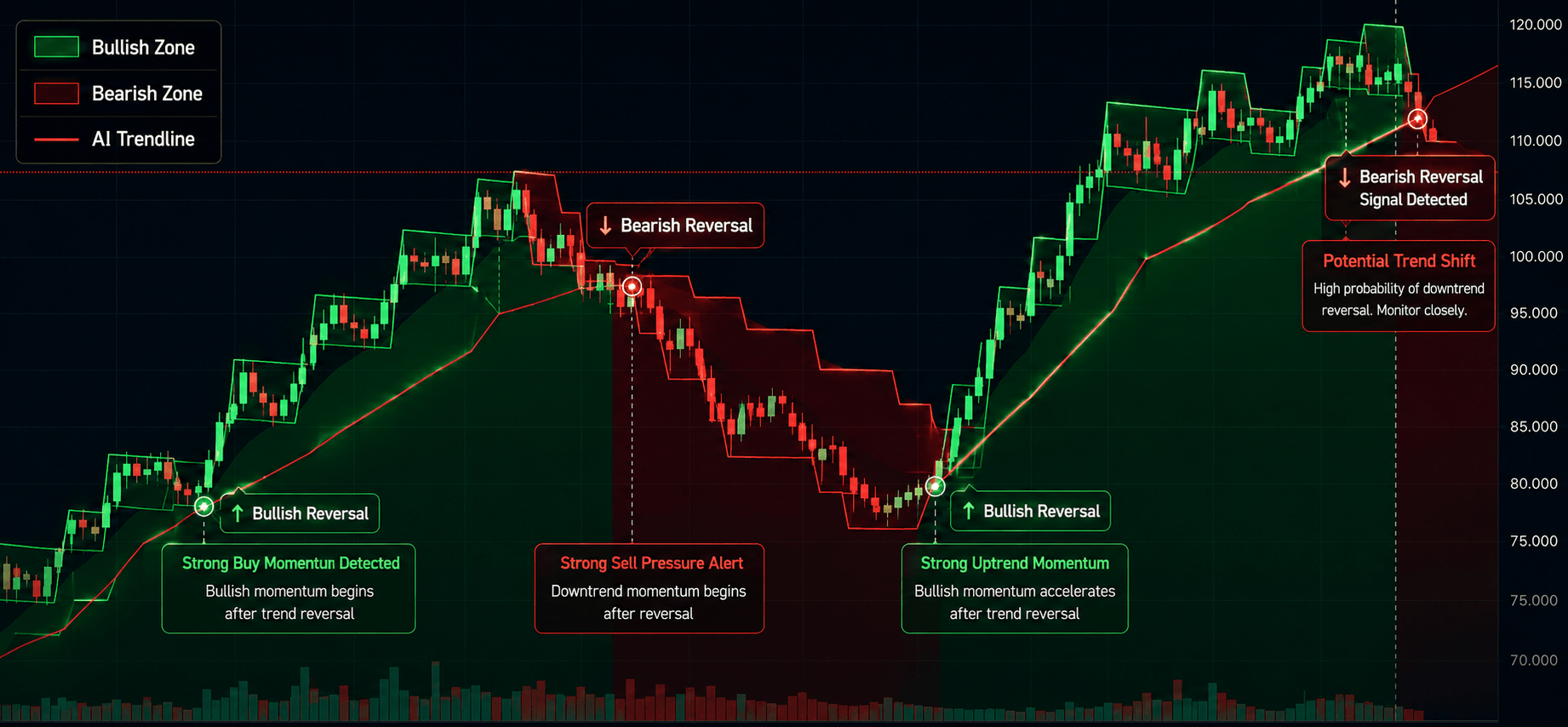
- Instantly separate bullish momentum from bearish pressure
- Pinpoint high-probability entry zones with confidence
- Chart signals clear enough for beginners, sharp enough for pros
Winning Pattern Detection
Instantly surfaces the high-probability setups that repeat across the charts — a trusted edge for timing your entries and exits.
- Spot momentum building in real time
- Catch trend-reversal points before they break
- Built for active traders who need results, not theory

AI Live Economic Dashboard
AI analyzes real-time market data — turning complex, global investment flows into clear insight in seconds.
- Track global stock markets in real time
- See exactly which assets are strong — and which are fading
- Watch how geopolitical events move the markets
About the Author