What Is Terminal Value?
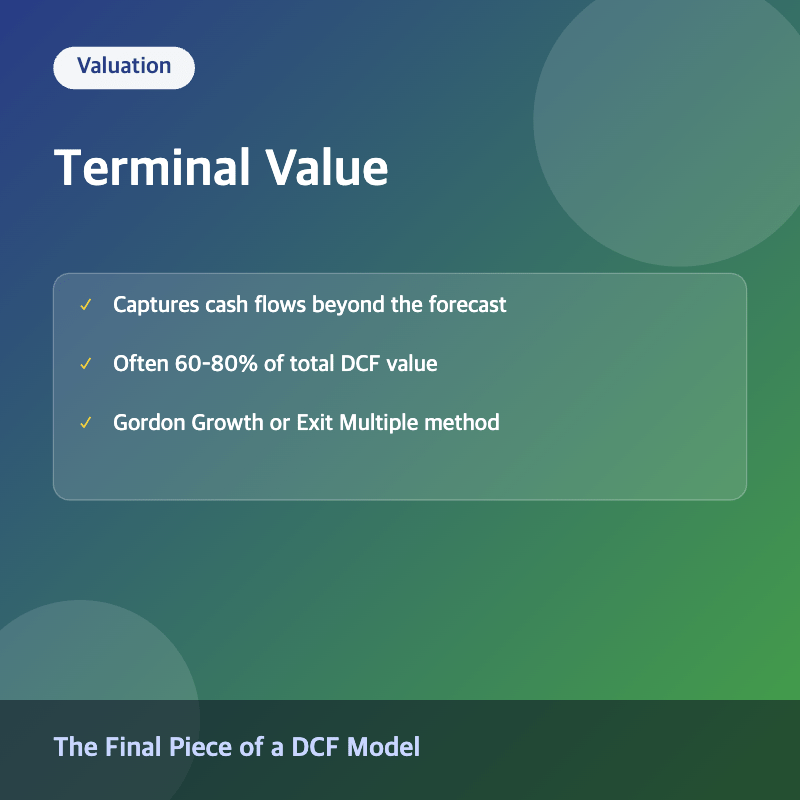
Terminal value is the estimated value of a business or asset at the end of an explicit forecast period in a discounted cash flow (DCF) valuation model, representing all cash flows expected to occur beyond that forecast horizon. Because it is often impractical to forecast cash flows indefinitely into the future, analysts typically project detailed cash flows for a set number of years (commonly 5 to 10) and then estimate a single terminal value to capture everything afterward.
How to Calculate Terminal Value
The Gordon Growth Method
The most common approach, the Gordon Growth (perpetuity growth) Method, calculates terminal value as: Terminal Value = Final Year Cash Flow x (1 + Perpetual Growth Rate) ÷ (Discount Rate − Perpetual Growth Rate). This formula assumes the business will grow at a constant, sustainable rate forever after the forecast period ends.
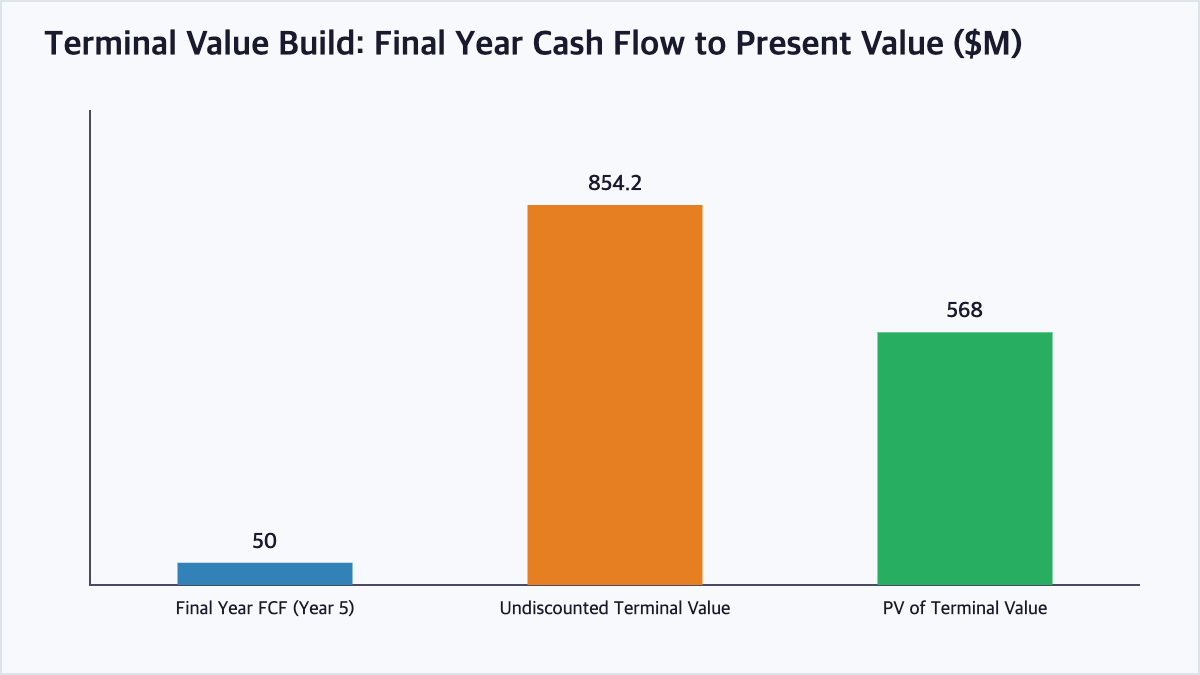
For example, suppose a company’s projected free cash flow in the final forecast year (Year 5) is $50 million, the assumed perpetual growth rate is 2.5%, and the discount rate (weighted average cost of capital) is 8.5%. Terminal Value = $50 million x (1.025) ÷ (0.085 − 0.025) = $51.25 million ÷ 0.06 ≈ $854.2 million. This terminal value must then be discounted back to present value at the same discount rate before being added to the sum of the explicit forecast period’s discounted cash flows.
Why Terminal Value Often Dominates DCF Valuations
In many DCF models, the present value of the terminal value can represent 60% to 80% or more of the total estimated enterprise value, since it captures the entire stream of cash flows beyond the explicit forecast period. This makes the assumptions underlying terminal value, particularly the perpetual growth rate and discount rate, disproportionately influential on the final valuation output.
The Exit Multiple Method (Alternative Approach)
An alternative to the Gordon Growth Method is the exit multiple method, which estimates terminal value by applying a valuation multiple (such as EV/EBITDA) observed for comparable companies to the business’s projected final-year financial metric. This approach anchors the terminal value to observable market pricing rather than relying solely on a long-term growth assumption.
Gordon Growth Method vs. Exit Multiple Method
| Aspect | Gordon Growth Method | Exit Multiple Method |
|---|---|---|
| Basis | Perpetual growth rate and discount rate | Comparable company trading multiples |
| Key Sensitivity | Small changes in growth or discount rate | Choice and reliability of comparable companies |
| Best Suited For | Stable, mature businesses with predictable long-term growth | Businesses with clear public market comparables |
Frequently Asked Questions
Why is the perpetual growth rate usually kept low?
The perpetual growth rate is typically set at or below the long-term expected growth rate of the overall economy (often around 2% to 3%), since assuming a company can grow faster than the broader economy forever is generally considered unrealistic and would produce an inflated terminal value.
What happens if the discount rate is close to the growth rate?
If the discount rate is very close to the perpetual growth rate, the denominator in the Gordon Growth formula becomes very small, causing the terminal value to become extremely large and highly sensitive to small changes in either assumption, which can make the resulting valuation unreliable.
Should terminal value calculations use free cash flow or net income?
Most DCF models use free cash flow (cash available to all capital providers after operating expenses and capital expenditures) rather than net income, since free cash flow more accurately reflects the cash actually available for distribution to investors.
Can both the Gordon Growth Method and exit multiple method be used together?
Yes, many analysts calculate terminal value using both methods and compare the resulting valuations as a sanity check, since significant divergence between the two approaches can signal that one or more underlying assumptions may need to be reconsidered.
Key Takeaways
Terminal value captures the estimated worth of all cash flows beyond a DCF model’s explicit forecast period, most commonly calculated using the Gordon Growth Method or the exit multiple method. Because terminal value often represents the majority of a DCF’s total valuation, small changes in its underlying growth rate or discount rate assumptions can have an outsized impact on the final result. This article is for informational purposes only and does not constitute investment advice.

QuantPro: AI Finds the Trade Before You Do
From AI-powered chart analysis to real-time market intelligence — everything a serious investor needs, in one platform.
- Automated AI chart analysis with precision trend timing
- Bull Radar: real-time visualization of geopolitical & economic shifts
- Live market-moving news and insights, curated for you
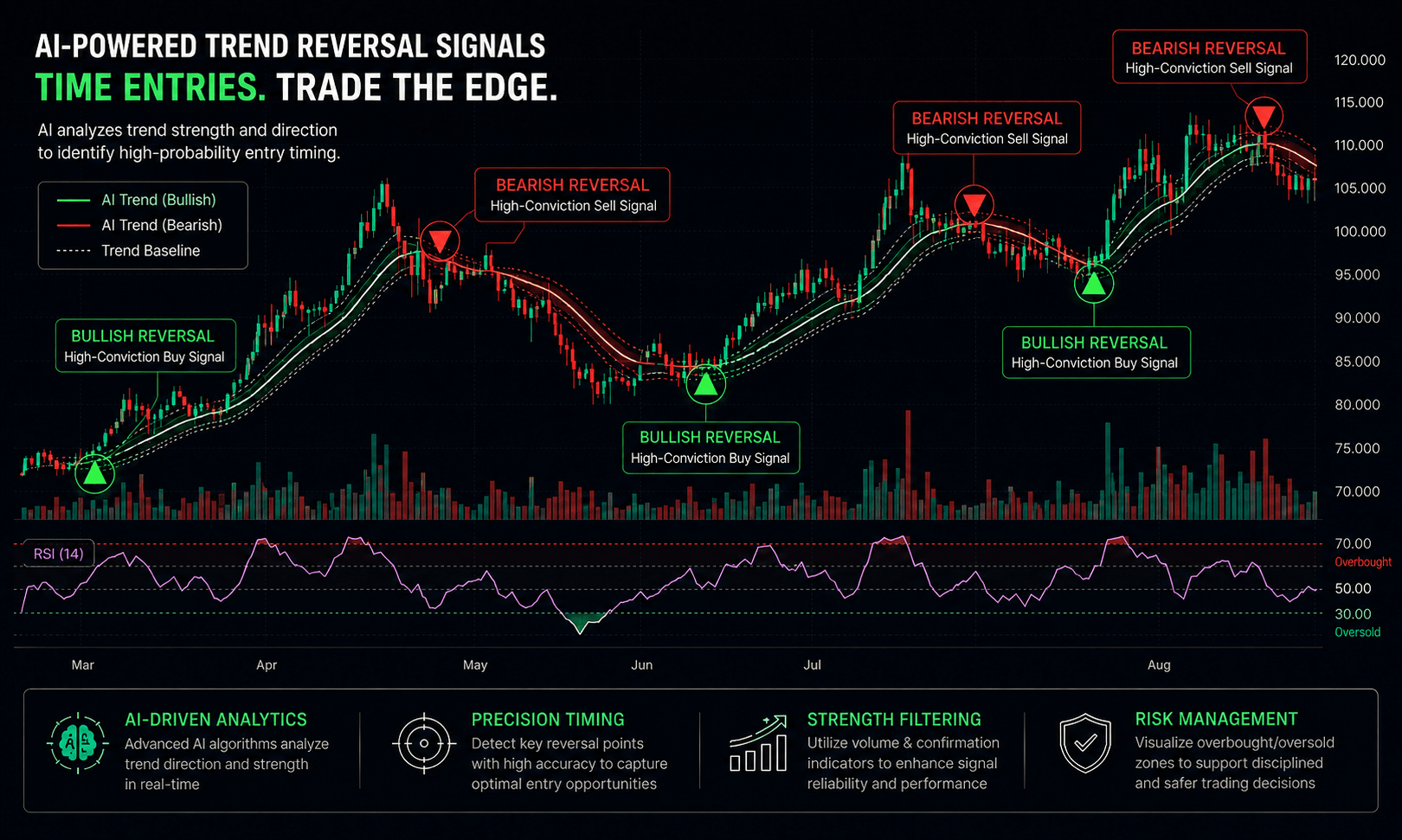
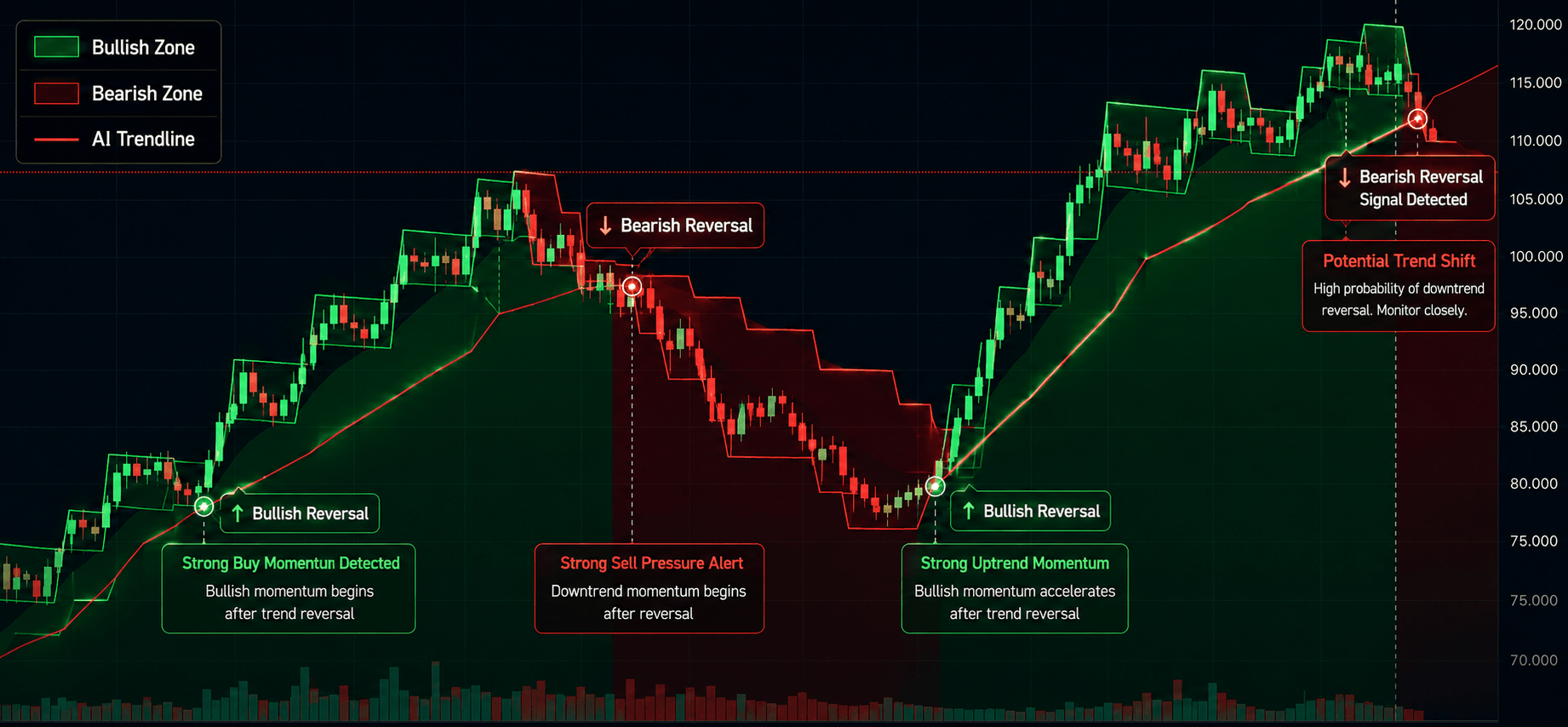
Bull Wave / Bear Wave Forecast Model
Engineered to help you read market direction and momentum faster than the crowd.
- Instantly separate bullish momentum from bearish pressure
- Pinpoint high-probability entry zones with confidence
- Chart signals clear enough for beginners, sharp enough for pros
Winning Pattern Detection
Instantly surfaces the high-probability setups that repeat across the charts — a trusted edge for timing your entries and exits.
- Spot momentum building in real time
- Catch trend-reversal points before they break
- Built for active traders who need results, not theory

AI Live Economic Dashboard
AI analyzes real-time market data — turning complex, global investment flows into clear insight in seconds.
- Track global stock markets in real time
- See exactly which assets are strong — and which are fading
- Watch how geopolitical events move the markets
About the Author