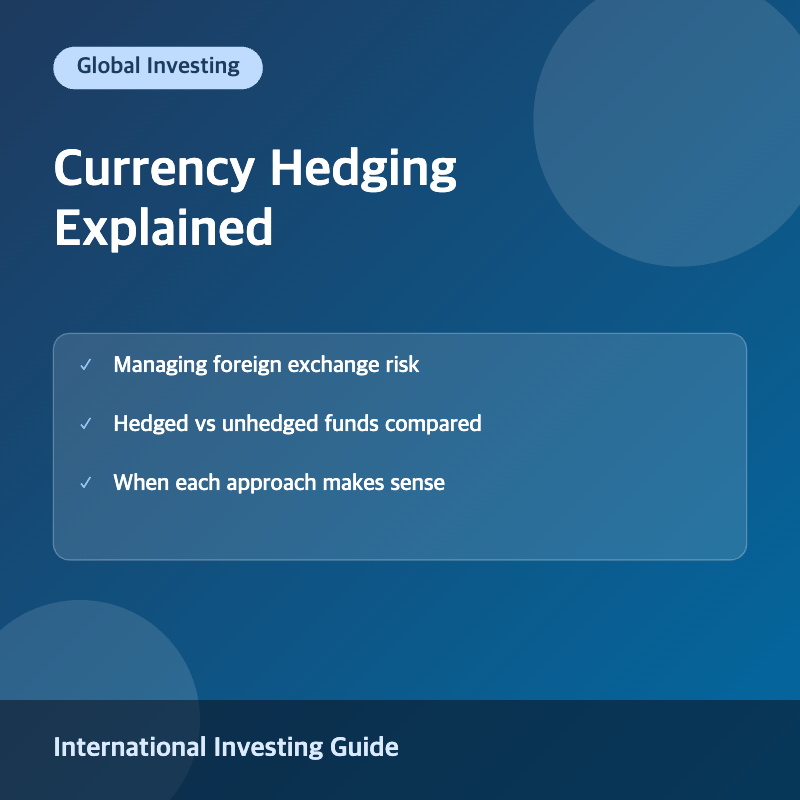
What Is Currency Hedging?
When investing in foreign assets, investors face currency (exchange rate) risk in addition to the performance of the underlying investment itself. Currency hedging is the practice of using financial instruments to offset this exchange rate risk, while an unhedged investment leaves that currency exposure in place.
Unhedged International Investing
An unhedged investment leaves currency movements fully embedded in returns — if the foreign currency strengthens against the investor’s home currency, returns get an added boost; if it weakens, returns are reduced, regardless of how the underlying asset itself performed.
Hedged International Investing
A currency-hedged investment uses forward contracts or similar derivatives to neutralize exchange rate fluctuations, so returns track the performance of the underlying foreign asset itself rather than being affected by currency movements. Currency-hedged ETFs are often labeled with “Hedged” or “(H)” in their name.
Hedged vs Unhedged Comparison Table
| Feature | Currency-Hedged | Unhedged |
|---|---|---|
| Currency impact on returns | Removed (tracks underlying asset only) | Directly reflected in returns |
| If home currency weakens | No added benefit | Additional gain possible |
| If home currency strengthens | No added loss | Additional loss possible |
| Costs | Hedging costs (swap points, etc.) | No additional cost |
| Best suited for | Isolating asset performance | Diversifying via currency exposure |
When to Choose Each Approach
When Hedging May Be Preferable
Investors who want returns to reflect only the performance of the underlying foreign asset, or who anticipate their home currency strengthening, may prefer a hedged approach to avoid currency headwinds — though ongoing hedging costs need to be factored in.
When Staying Unhedged May Be Preferable
If an investor expects their home currency to weaken, or wants currency movements to serve as an additional diversification factor within their portfolio, remaining unhedged can be the more favorable choice, and has historically outperformed during periods of home currency weakness.
The Real Cost of Currency Hedging
Understanding Hedging Costs (Swap Points)
Currency hedging incurs costs driven by interest rate differentials between countries, and when domestic interest rates are lower than the foreign country’s rates, hedging costs can become a meaningful drag on the returns of hedged products.
A Long-Term Perspective on Currency Exposure
Over long time horizons, currency movements often tend to mean-revert, leading some long-term investors to stay unhedged and treat currency exposure as a source of diversification, or to split holdings between hedged and unhedged versions of the same investment.
Frequently Asked Questions
Is a hedged fund always safer than an unhedged one?
Not necessarily. Hedging only removes currency risk — the underlying asset’s own price risk remains, and hedging costs can reduce returns, so a hedged fund isn’t automatically safer or more advantageous overall.
How do I know if a fund is currency-hedged?
Currency-hedged ETFs and funds typically include “Hedged” or “(H)” in their name, while the absence of such a label usually indicates the fund is unhedged, though checking the fund’s prospectus confirms this definitively.
How much does currency hedging typically cost?
Hedging costs fluctuate based on interest rate differentials and market volatility, and can amount to a meaningful annual percentage — reviewing a fund’s recent hedging cost trends before investing is a worthwhile step.
Can I hold both hedged and unhedged versions of the same investment?
Yes. Splitting an allocation between hedged and unhedged versions of the same underlying investment is a common approach for investors who are uncertain about currency direction and want to diversify that exposure.
Key Takeaways
Currency hedging removes foreign exchange risk so returns track only the underlying asset’s performance, while staying unhedged leaves currency movements embedded in returns as an additional factor. Choosing between the two depends on currency outlook, hedging costs, and whether an investor wants currency exposure to serve as portfolio diversification. This article is for informational purposes only and does not constitute investment advice.

QuantPro: AI Finds the Trade Before You Do
From AI-powered chart analysis to real-time market intelligence — everything a serious investor needs, in one platform.
- Automated AI chart analysis with precision trend timing
- Bull Radar: real-time visualization of geopolitical & economic shifts
- Live market-moving news and insights, curated for you
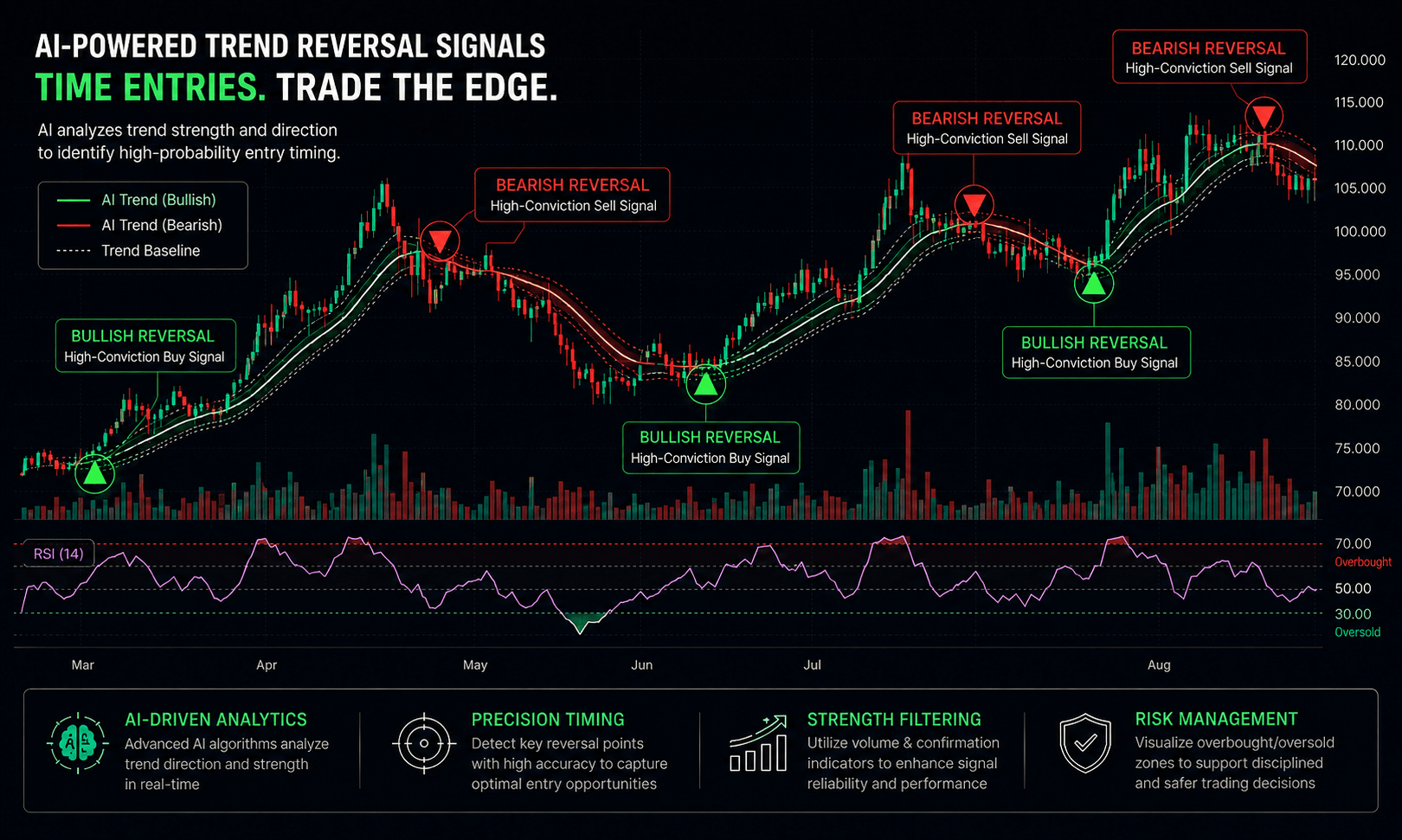
Bull Wave / Bear Wave Forecast Model
Engineered to help you read market direction and momentum faster than the crowd.
- Instantly separate bullish momentum from bearish pressure
- Pinpoint high-probability entry zones with confidence
- Chart signals clear enough for beginners, sharp enough for pros
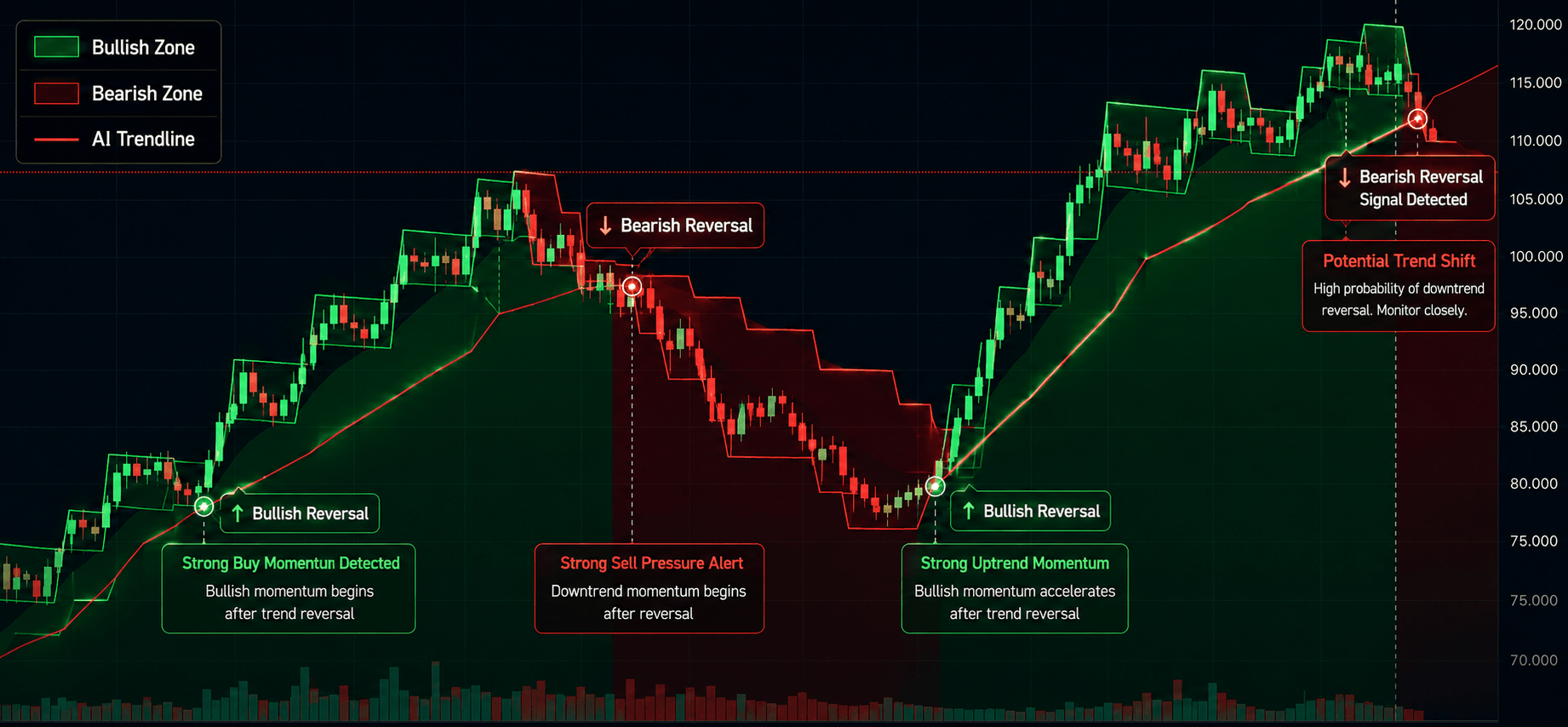
Winning Pattern Detection
Instantly surfaces the high-probability setups that repeat across the charts — a trusted edge for timing your entries and exits.
- Spot momentum building in real time
- Catch trend-reversal points before they break
- Built for active traders who need results, not theory
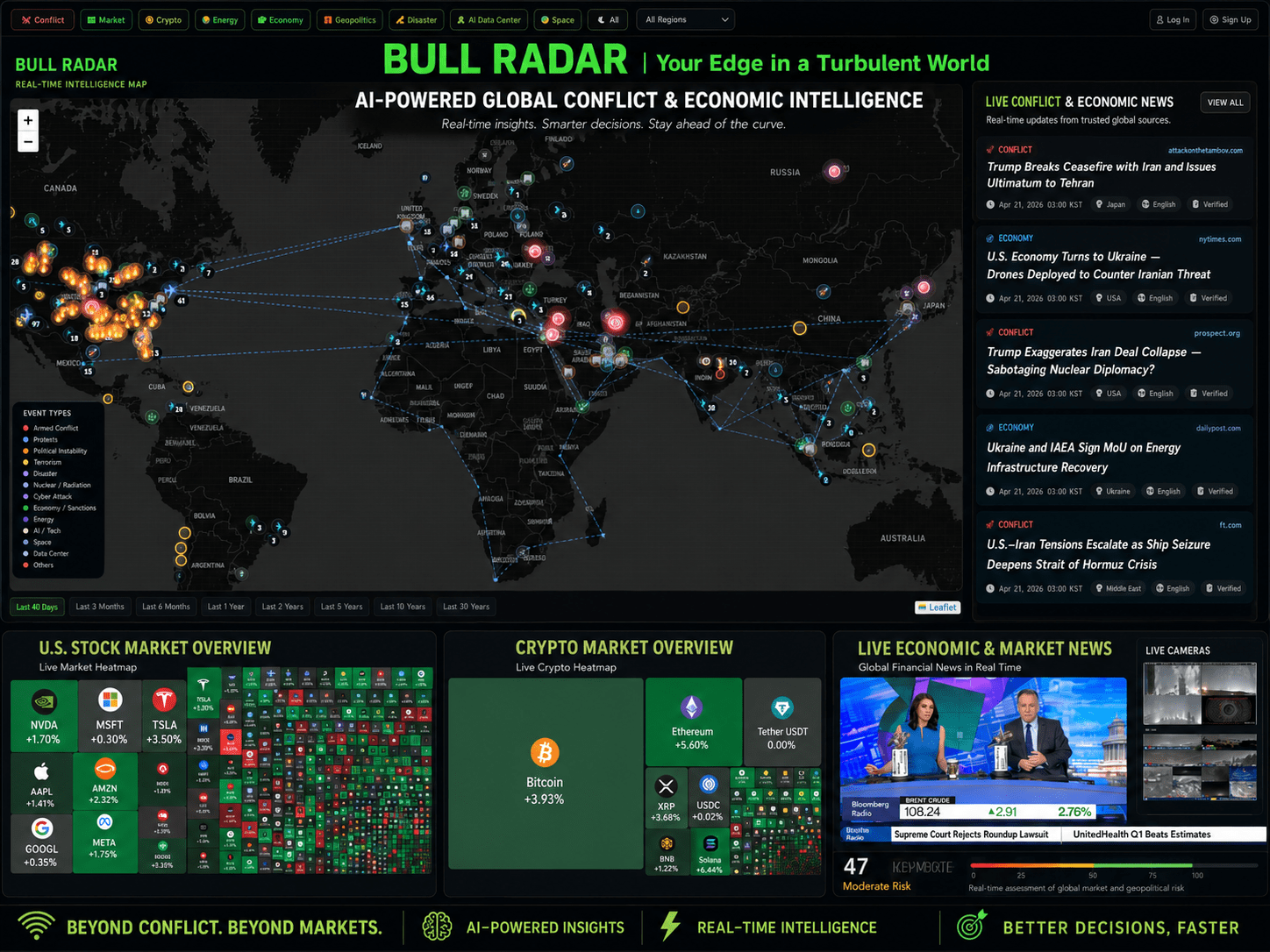
AI Live Economic Dashboard
AI analyzes real-time market data — turning complex, global investment flows into clear insight in seconds.
- Track global stock markets in real time
- See exactly which assets are strong — and which are fading
- Watch how geopolitical events move the markets
About the Author