What Is the Price-to-Sales (P/S) Ratio?
The price-to-sales ratio (P/S or PSR) compares a company’s market capitalization to its total revenue, or equivalently, its share price to revenue per share. Because it uses revenue rather than net income, the P/S ratio can be calculated even for unprofitable companies, making it especially useful for evaluating early-stage growth businesses.
How to Calculate the P/S Ratio
The formula is: P/S Ratio = Market Capitalization ÷ Annual Revenue. For example, a company with a $1 billion market cap and $200 million in annual revenue has a P/S ratio of 5 ($1B ÷ $200M), meaning the market is valuing the company at five times its yearly sales.
When the P/S Ratio Is Especially Useful
Early-stage growth companies, biotech firms, and platform businesses often report net losses for extended periods, making the P/E ratio undefined or misleading — in these cases, the revenue-based P/S ratio provides a more meaningful relative valuation measure.
P/S Ratio vs P/E Ratio vs P/B Ratio
| Metric | P/S Ratio | P/E Ratio | P/B Ratio |
|---|---|---|---|
| Based on | Revenue | Net income | Book value (net assets) |
| Works for unprofitable companies | Yes | No (undefined with negative earnings) | Yes |
| Impacted by accounting adjustments | Relatively less | More (one-time items included) | Moderate |
| Best suited for | Growth stocks, unprofitable companies | Companies with stable earnings | Asset-heavy businesses, financials |
| Key limitation | Ignores profitability | Sensitive to earnings volatility | Doesn’t reflect asset revaluations |
Interpreting the P/S Ratio Correctly
A Low P/S Doesn’t Always Mean Undervalued
A low P/S ratio isn’t automatically a sign of undervaluation — companies with large revenue but very thin or negative profit margins can show a deceptively low P/S ratio that actually reflects deeper structural business challenges rather than a bargain.
Appropriate P/S Levels Vary by Industry
Software and platform companies with high gross margins can often justify a higher P/S ratio, while retail or manufacturing companies with thinner margins typically trade at lower P/S levels — comparisons are most meaningful within the same industry.
Using P/S Ratio in Practice
Pairing P/S with Revenue Growth
A somewhat elevated P/S ratio may be justified for a company with very rapid revenue growth, since the valuation burden could ease as the business scales toward profitability — P/S should always be analyzed alongside the revenue growth trajectory.
Watching for Margin Improvement Potential
A company with currently low operating margins but a credible path to margin expansion through scale or operational improvements may not be fairly assessed by its current P/S ratio alone.
Frequently Asked Questions
Does a low P/S ratio always mean a stock is undervalued?
No. A company with large revenue but weak profitability or a challenging business outlook can also show a low P/S ratio, so it’s important to also check operating margins and revenue growth before concluding a stock is undervalued.
Which is more accurate, P/S or P/E?
Neither is universally more accurate — they serve different purposes. P/E reflects profitability-based valuation, while P/S reflects revenue-based valuation, so the appropriate choice depends on the company’s growth stage and profitability profile.
Should P/S be used alone to evaluate unprofitable companies?
P/S is a useful supplementary metric but shouldn’t be used in isolation — it works best alongside other indicators like free cash flow, debt levels, and gross margin trends for a fuller financial picture.
Where can I find a company’s P/S ratio?
Most brokerage platforms and financial data websites display the P/S ratio directly for publicly traded companies, or it can be calculated by dividing market capitalization by trailing twelve-month revenue.
Key Takeaways
The price-to-sales ratio offers a useful revenue-based valuation measure that fills a gap left by the P/E ratio, particularly for evaluating unprofitable, early-stage growth companies. Because it doesn’t directly reflect profitability, P/S is most useful when paired with revenue growth rates and margin trends rather than analyzed in isolation. This article is for informational purposes only and does not constitute investment advice.

QuantPro: AI Finds the Trade Before You Do
From AI-powered chart analysis to real-time market intelligence — everything a serious investor needs, in one platform.
- Automated AI chart analysis with precision trend timing
- Bull Radar: real-time visualization of geopolitical & economic shifts
- Live market-moving news and insights, curated for you
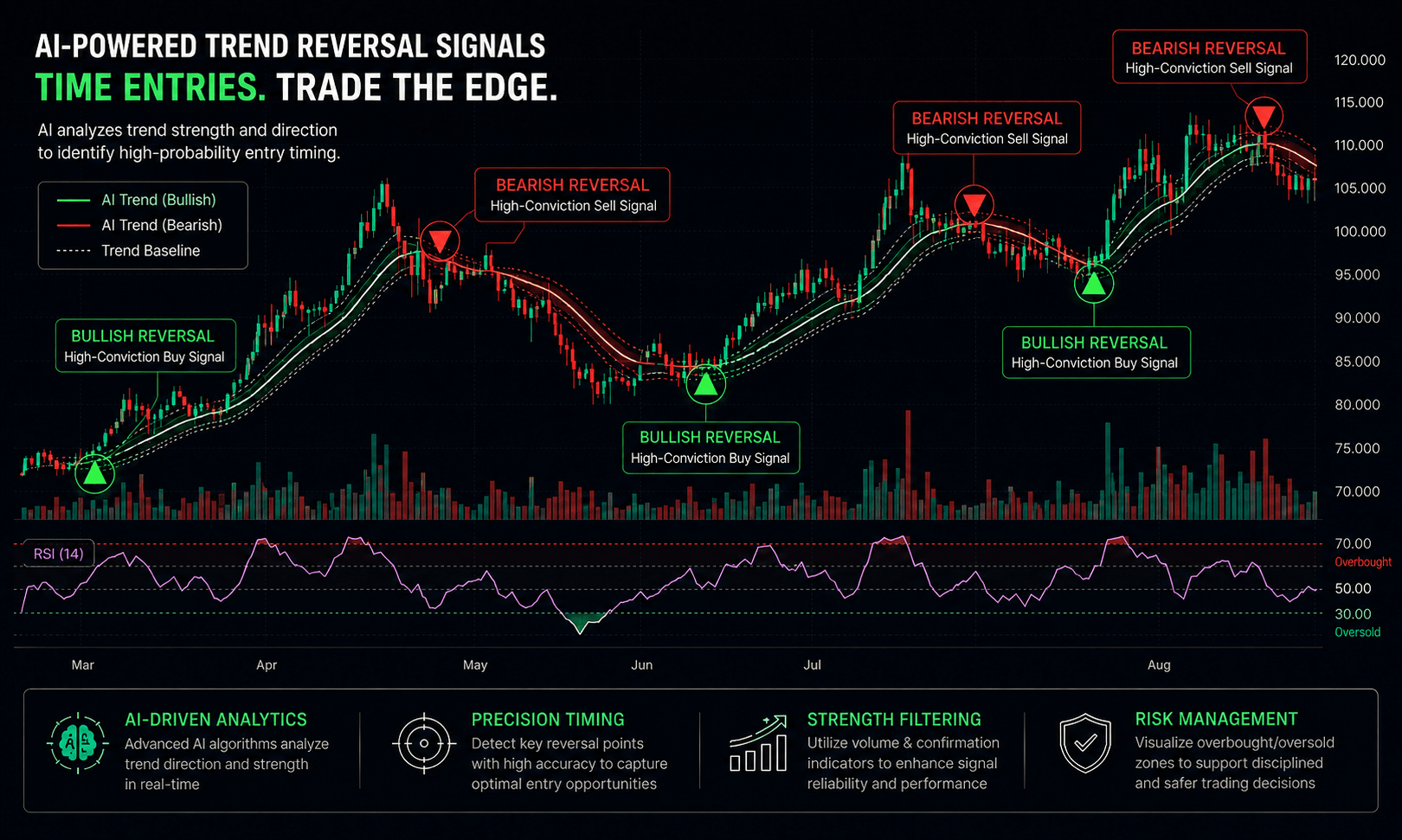
Bull Wave / Bear Wave Forecast Model
Engineered to help you read market direction and momentum faster than the crowd.
- Instantly separate bullish momentum from bearish pressure
- Pinpoint high-probability entry zones with confidence
- Chart signals clear enough for beginners, sharp enough for pros
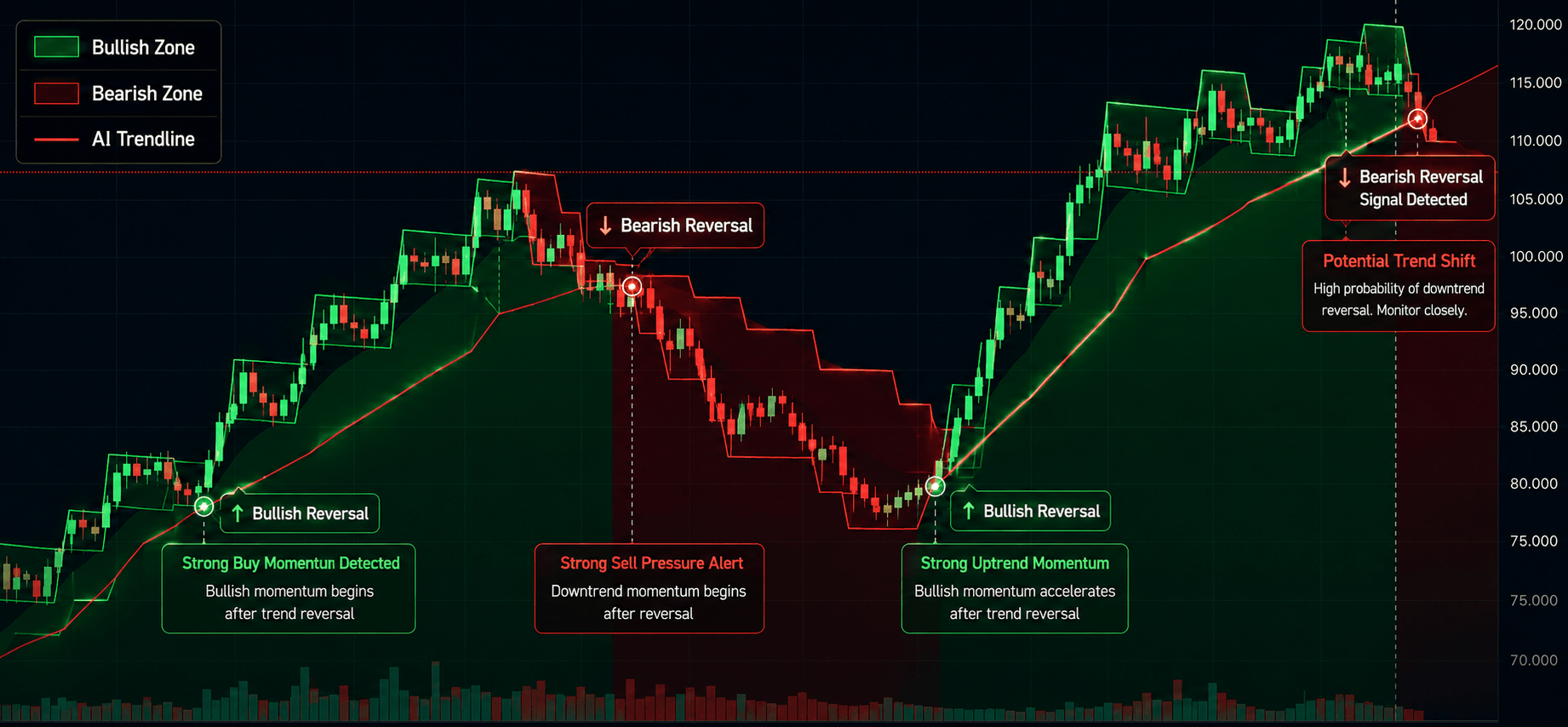
Winning Pattern Detection
Instantly surfaces the high-probability setups that repeat across the charts — a trusted edge for timing your entries and exits.
- Spot momentum building in real time
- Catch trend-reversal points before they break
- Built for active traders who need results, not theory

AI Live Economic Dashboard
AI analyzes real-time market data — turning complex, global investment flows into clear insight in seconds.
- Track global stock markets in real time
- See exactly which assets are strong — and which are fading
- Watch how geopolitical events move the markets
About the Author