
What Is the Current Ratio?
The current ratio measures how much of a company’s current assets — those expected to convert to cash within a year — it has relative to its current liabilities, the obligations due within that same year. It’s one of the most basic and widely used measures of a company’s short-term liquidity, or its ability to cover near-term debts.
Current Ratio Formula and Example
The Formula
Current Ratio = Current Assets ÷ Current Liabilities. Unlike some financial ratios, it’s typically expressed as a straightforward multiple rather than a percentage.
Worked Example
If a company holds $3 million in current assets and has $1.5 million in current liabilities, its current ratio is $3M ÷ $1.5M = 2.0. That means the company has twice as many liquid or soon-to-be-liquid assets as it has short-term obligations coming due, a level traditionally considered financially healthy.
Why the Current Ratio Matters
A current ratio that’s too low can signal a company may struggle to meet its short-term obligations, potentially leading to credit downgrades or higher borrowing costs. But a ratio that’s unusually high isn’t automatically a good sign either — it can suggest the company is sitting on excess cash or inventory rather than deploying capital efficiently, so higher isn’t always better.
Current Ratio vs Quick Ratio
A more conservative liquidity measure, the quick ratio, strips out inventory since it’s typically the slowest current asset to convert to cash.
| Aspect | Current Ratio | Quick Ratio |
|---|---|---|
| Numerator | All current assets | Current assets minus inventory |
| Conservatism | Less conservative | More conservative |
| Inventory effect | Can inflate the ratio | Removes inventory distortion |
| Best suited for | Low-inventory businesses | Checking inventory-heavy businesses |
Frequently Asked Questions
Is a higher current ratio always better?
Not necessarily. An unusually high current ratio can indicate that a company isn’t deploying its cash or inventory efficiently, so it’s worth checking asset utilization alongside the ratio itself, not just treating higher as automatically better.
Is 2.0 a hard rule for a healthy current ratio?
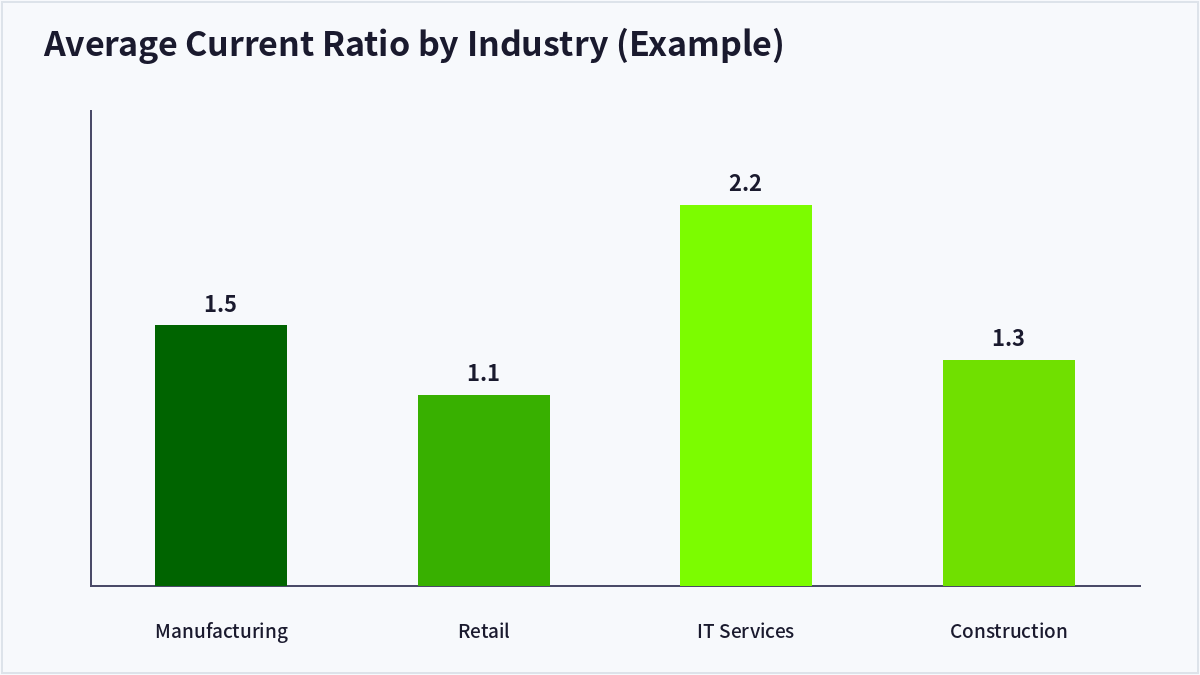
It’s a commonly cited rule of thumb rather than a strict standard, since what counts as a healthy current ratio varies significantly by industry, making comparison to direct peers more reliable than a fixed number.
How does the current ratio differ from the debt-to-equity ratio?
The current ratio focuses specifically on a company’s ability to meet obligations due within one year, while the debt-to-equity ratio looks at overall leverage across both short- and long-term debt relative to shareholders’ equity.
Why does inventory matter when interpreting the current ratio?
Inventory can take time to sell and carries the risk of not selling at all, so companies with large inventory balances are often evaluated using the quick ratio alongside the current ratio to get a clearer liquidity picture.
Key Takeaways
The current ratio compares current assets to current liabilities to gauge short-term liquidity, and while 2.0 is a commonly cited healthy benchmark, industry norms and asset efficiency should factor into how the number is interpreted. This article is for informational purposes only and does not constitute investment advice.

QuantPro: AI Finds the Trade Before You Do
From AI-powered chart analysis to real-time market intelligence — everything a serious investor needs, in one platform.
- Automated AI chart analysis with precision trend timing
- Bull Radar: real-time visualization of geopolitical & economic shifts
- Live market-moving news and insights, curated for you
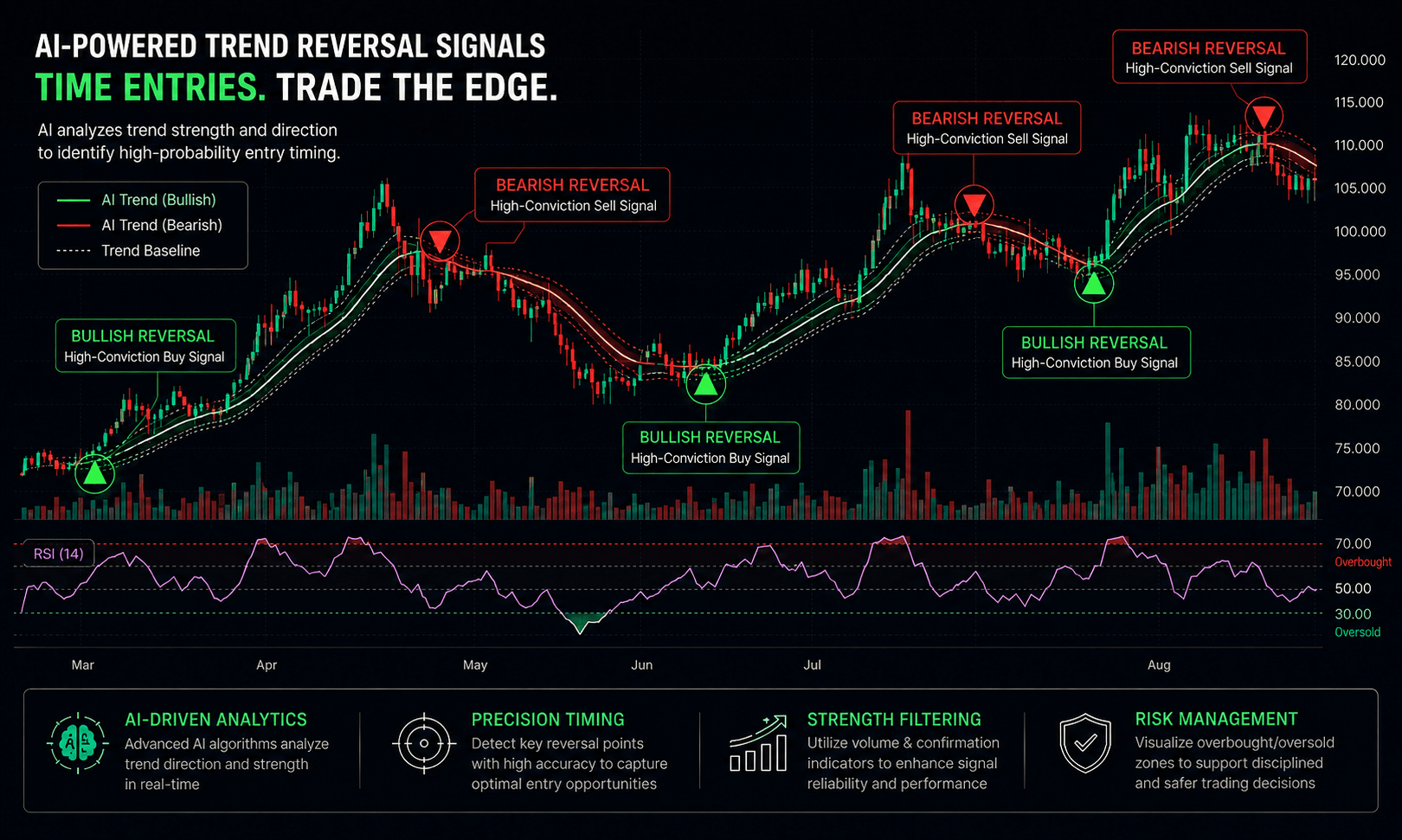
Bull Wave / Bear Wave Forecast Model
Engineered to help you read market direction and momentum faster than the crowd.
- Instantly separate bullish momentum from bearish pressure
- Pinpoint high-probability entry zones with confidence
- Chart signals clear enough for beginners, sharp enough for pros
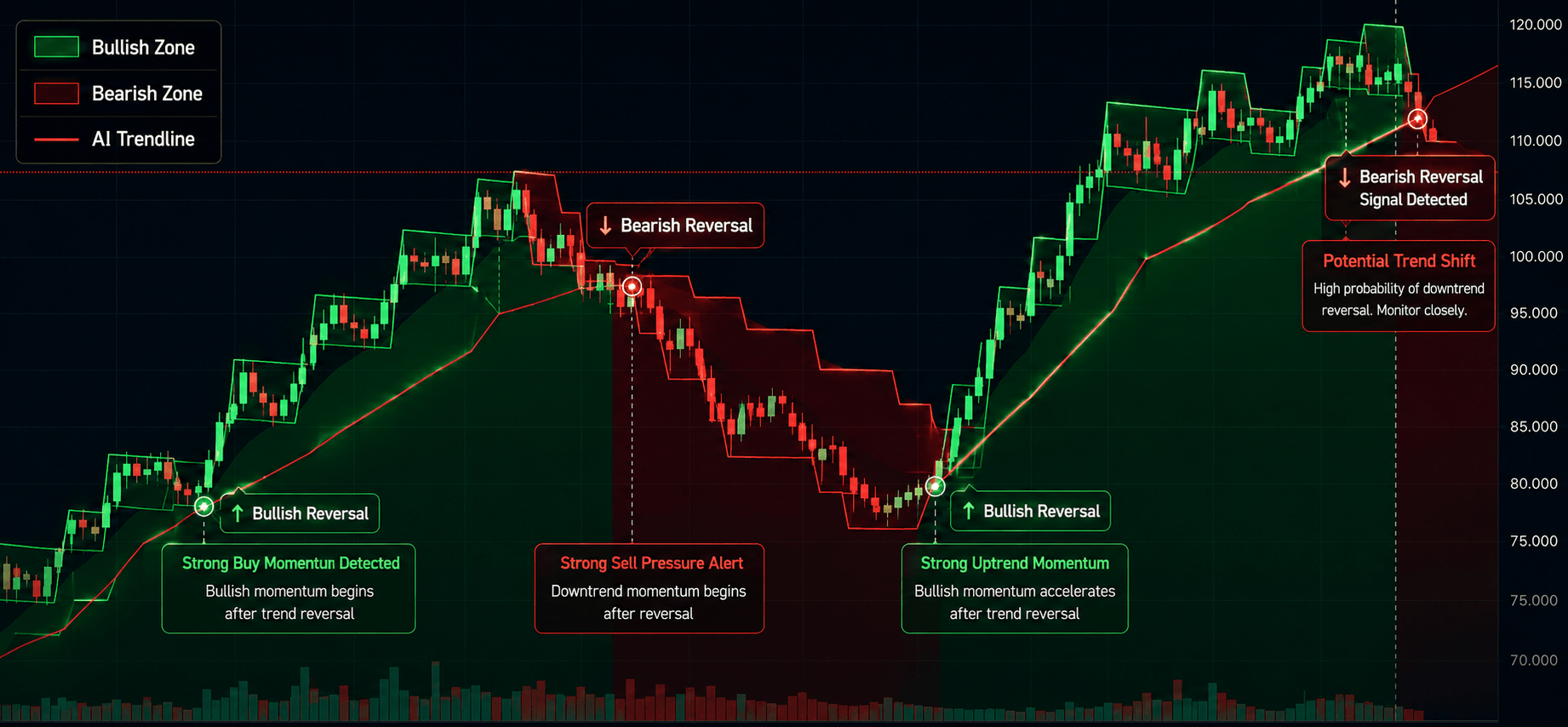
Winning Pattern Detection
Instantly surfaces the high-probability setups that repeat across the charts — a trusted edge for timing your entries and exits.
- Spot momentum building in real time
- Catch trend-reversal points before they break
- Built for active traders who need results, not theory

AI Live Economic Dashboard
AI analyzes real-time market data — turning complex, global investment flows into clear insight in seconds.
- Track global stock markets in real time
- See exactly which assets are strong — and which are fading
- Watch how geopolitical events move the markets
About the Author