What Is the Dividend Payout Ratio?
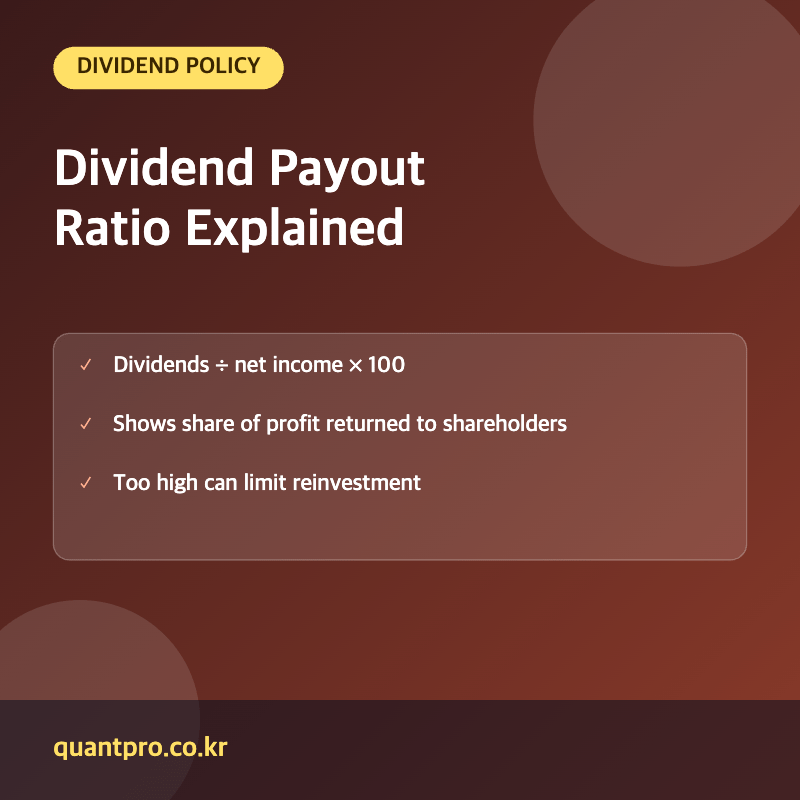
The dividend payout ratio measures the percentage of a company’s net income that is distributed to shareholders as dividends. The formula is Total Dividends Paid ÷ Net Income × 100, with the remainder retained by the company for reinvestment, debt repayment, or other capital allocation purposes.
For example, a payout ratio of 40% means the company distributes 40% of its net income as dividends while retaining the remaining 60% internally, reflecting both its growth stage and capital allocation strategy.
What the Payout Ratio Reveals
Mature companies with fewer attractive reinvestment opportunities tend to maintain higher payout ratios, prioritizing shareholder returns, while early-stage growth companies typically keep payout ratios low or pay no dividend at all to fund reinvestment.
Dividend Payout Ratio vs. Dividend Yield
Dividend yield measures dividends relative to share price, while the payout ratio measures dividends relative to net income. A high dividend yield combined with an excessively high payout ratio can signal financial strain if earnings decline, since dividend sustainability becomes a bigger concern.
| Payout Ratio Range | General Interpretation | Investor Consideration |
|---|---|---|
| 0–20% | Reinvestment-focused, growth-stage company | Expect capital gains over dividend income |
| 20–60% | Balanced dividend policy | Trade-off between stability and growth |
| 60%+ | Shareholder-return focused, mature company | Check for dividend-cut risk if earnings fall |
Frequently Asked Questions
Can the dividend payout ratio exceed 100%?
Yes, when a company pays out more in dividends than its net income for the period, or when net income temporarily drops, the payout ratio can exceed 100% — a signal worth monitoring for sustainability.
Is a high payout ratio always a good sign?
Not necessarily. An excessively high payout ratio can mean the company has limited capacity to reinvest in future growth, so it should be assessed alongside the company’s growth stage and industry.
Does a low payout ratio mean a company is stingy with dividends?
A low payout ratio can instead signal that a company is aggressively reinvesting for growth, aiming to reward shareholders through long-term share price appreciation rather than current income.
Does the payout ratio stay the same every year?
Many companies aim for a stable dividend policy, but the payout ratio can vary year to year based on earnings fluctuations or specific investment plans, so reviewing the multi-year trend is useful.
Key Takeaways
The dividend payout ratio shows what portion of net income a company returns to shareholders as dividends, reflecting its growth stage and capital allocation strategy, and is best interpreted alongside dividend yield. This article is for informational purposes only and does not constitute investment advice.

QuantPro: AI Finds the Trade Before You Do
From AI-powered chart analysis to real-time market intelligence — everything a serious investor needs, in one platform.
- Automated AI chart analysis with precision trend timing
- Bull Radar: real-time visualization of geopolitical & economic shifts
- Live market-moving news and insights, curated for you
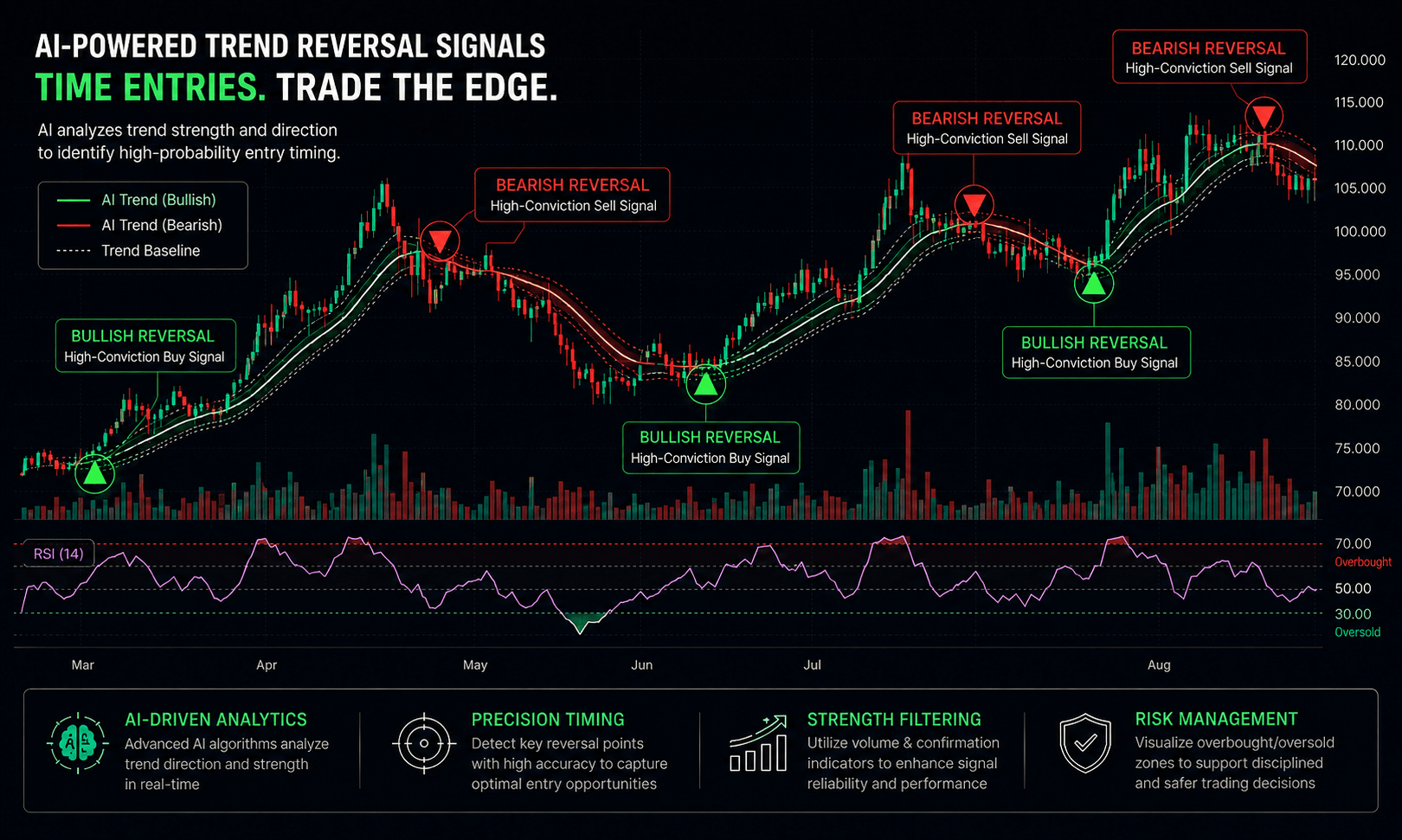
Bull Wave / Bear Wave Forecast Model
Engineered to help you read market direction and momentum faster than the crowd.
- Instantly separate bullish momentum from bearish pressure
- Pinpoint high-probability entry zones with confidence
- Chart signals clear enough for beginners, sharp enough for pros
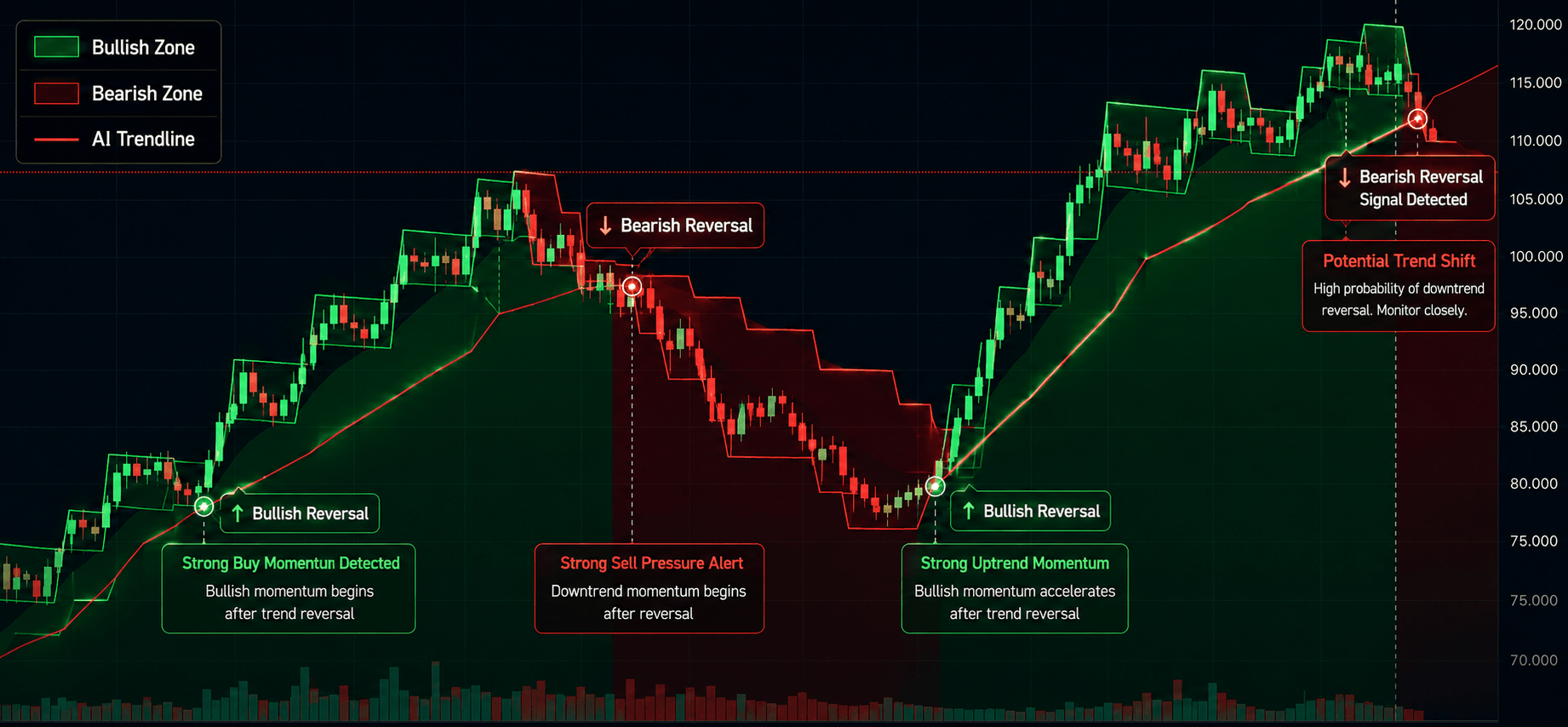
Winning Pattern Detection
Instantly surfaces the high-probability setups that repeat across the charts — a trusted edge for timing your entries and exits.
- Spot momentum building in real time
- Catch trend-reversal points before they break
- Built for active traders who need results, not theory

AI Live Economic Dashboard
AI analyzes real-time market data — turning complex, global investment flows into clear insight in seconds.
- Track global stock markets in real time
- See exactly which assets are strong — and which are fading
- Watch how geopolitical events move the markets
About the Author