What Is the EV/EBITDA Multiple?
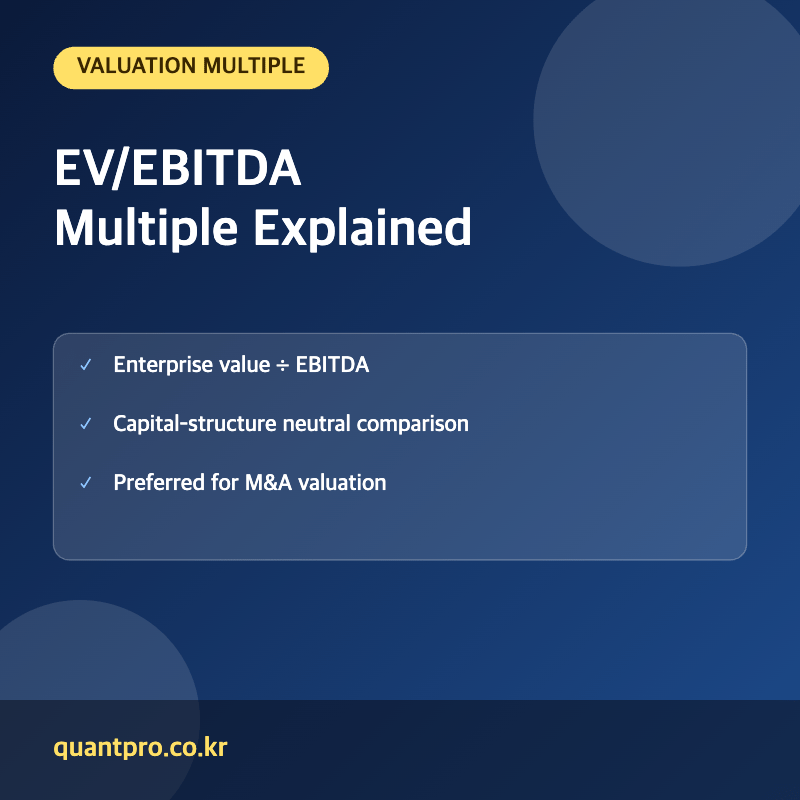
The EV/EBITDA multiple divides a company’s enterprise value (EV) by its earnings before interest, taxes, depreciation, and amortization (EBITDA). Enterprise value is calculated as market capitalization plus net debt (total debt minus cash and cash equivalents), representing the total value of the business including both equity and debt.
Because EBITDA is measured before depreciation, interest, and taxes are deducted, it is less affected by differences in accounting methods, capital structure, or tax rates, making EV/EBITDA a useful metric for comparing companies across different countries or capital structures.
EV/EBITDA vs. P/E Ratio
The price-to-earnings (P/E) ratio divides market capitalization by net income, which fully reflects a company’s debt level, interest expense, and depreciation method. EV/EBITDA, by contrast, is based on enterprise value (which includes debt) and excludes depreciation effects, offering a fairer comparison between companies with different amounts of leverage.
When EV/EBITDA Is Most Useful
EV/EBITDA is widely used for capital-intensive sectors like telecom, manufacturing, and infrastructure where depreciation is significant, as well as in mergers and acquisitions (M&A) valuation. Because an acquirer takes on both the equity and the debt of a target company, EV-based valuation more accurately reflects the real cost of an acquisition.
| Metric | Numerator Basis | Common Use Case |
|---|---|---|
| P/E Ratio | Market cap (equity value) only | General stock valuation comparison |
| EV/EBITDA | Market cap + net debt (whole-business value) | M&A, comparing companies with different leverage |
| P/B Ratio | Market cap relative to book value | Asset-value-focused valuation |
Frequently Asked Questions
Does a low EV/EBITDA mean a stock is undervalued?
A lower EV/EBITDA relative to industry peers can suggest undervaluation, but it can also reflect weaker growth prospects or structural risks, so it should be checked alongside other metrics.
How does EBITDA differ from operating income?
EBITDA adds back depreciation and amortization to operating income, which tends to better reflect the real cash-generating capacity of companies with heavy capital expenditures.
Is EV/EBITDA suitable for every industry?
It is less suitable for financial institutions, where debt is a core part of the business model rather than a financing choice — metrics like P/B or ROE are typically more appropriate there.
How is enterprise value calculated?
Enterprise value is calculated as market capitalization plus total debt minus cash and cash equivalents, providing an approximation of the total cost required to acquire the entire company.
Key Takeaways
The EV/EBITDA multiple values a whole business — including its debt — against earnings before depreciation, interest, and taxes, making it less sensitive to capital structure differences and useful for M&A and cross-border comparisons, though it should always be interpreted alongside other metrics. This article is for informational purposes only and does not constitute investment advice.

QuantPro: AI Finds the Trade Before You Do
From AI-powered chart analysis to real-time market intelligence — everything a serious investor needs, in one platform.
- Automated AI chart analysis with precision trend timing
- Bull Radar: real-time visualization of geopolitical & economic shifts
- Live market-moving news and insights, curated for you
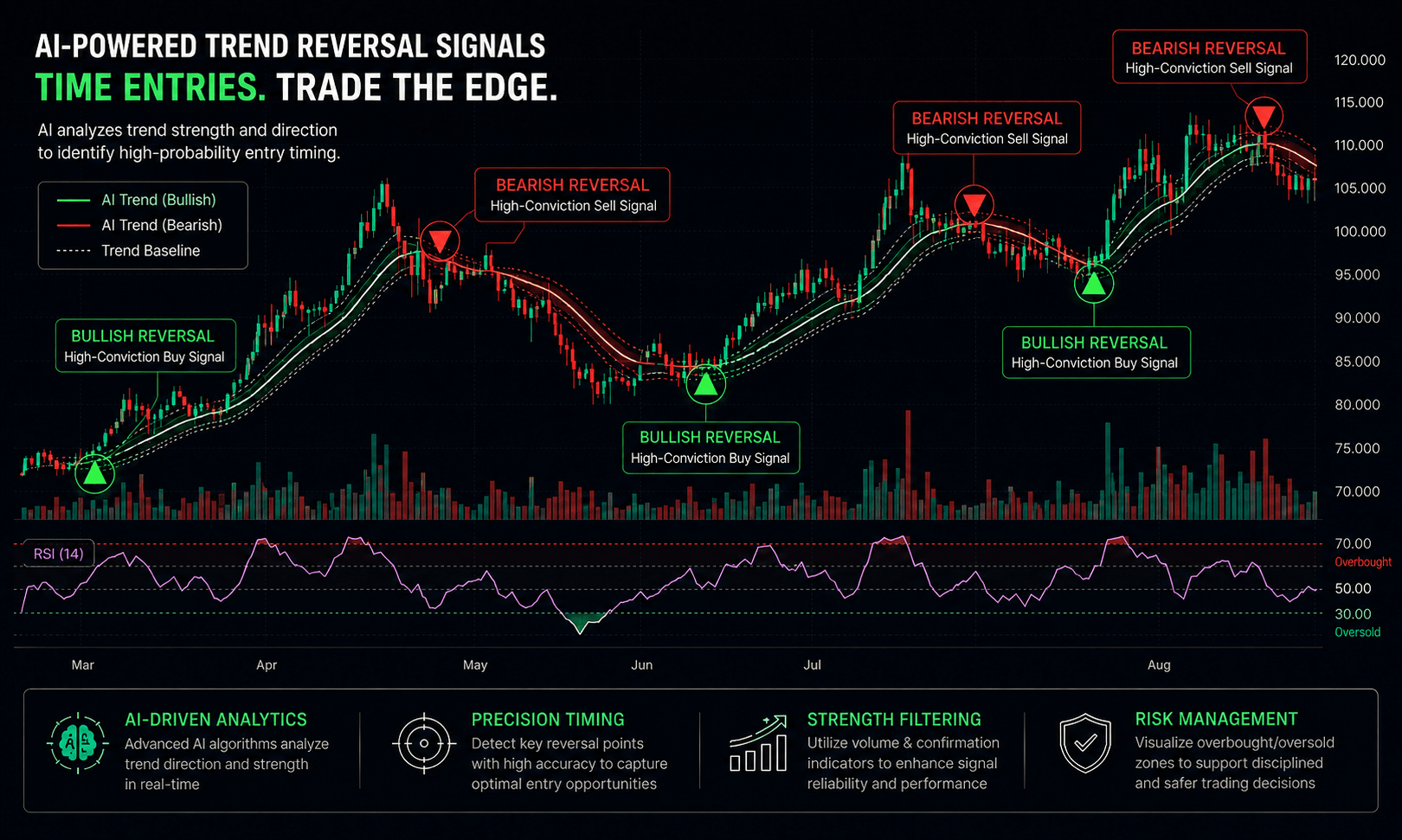
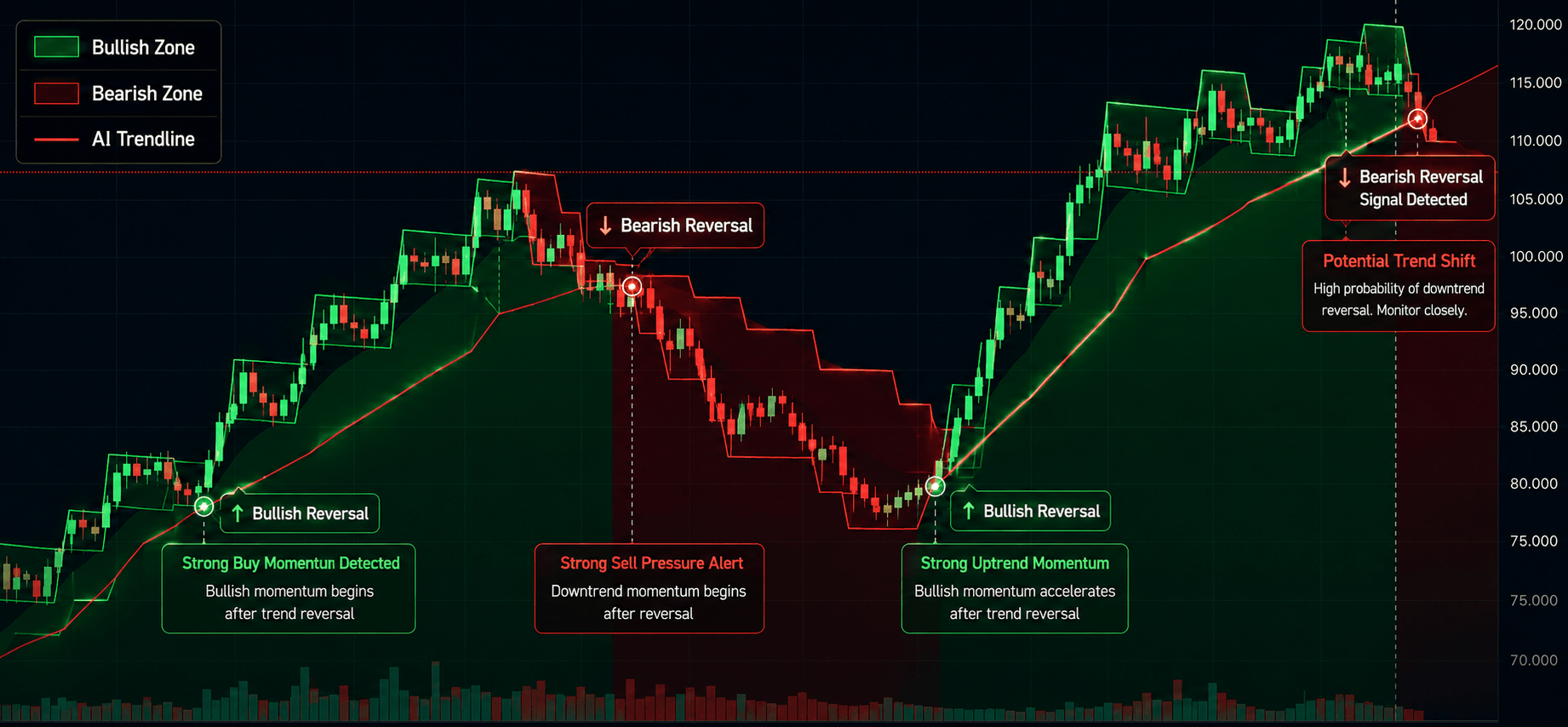
Bull Wave / Bear Wave Forecast Model
Engineered to help you read market direction and momentum faster than the crowd.
- Instantly separate bullish momentum from bearish pressure
- Pinpoint high-probability entry zones with confidence
- Chart signals clear enough for beginners, sharp enough for pros
Winning Pattern Detection
Instantly surfaces the high-probability setups that repeat across the charts — a trusted edge for timing your entries and exits.
- Spot momentum building in real time
- Catch trend-reversal points before they break
- Built for active traders who need results, not theory

AI Live Economic Dashboard
AI analyzes real-time market data — turning complex, global investment flows into clear insight in seconds.
- Track global stock markets in real time
- See exactly which assets are strong — and which are fading
- Watch how geopolitical events move the markets
About the Author