What Is Free Cash Flow?
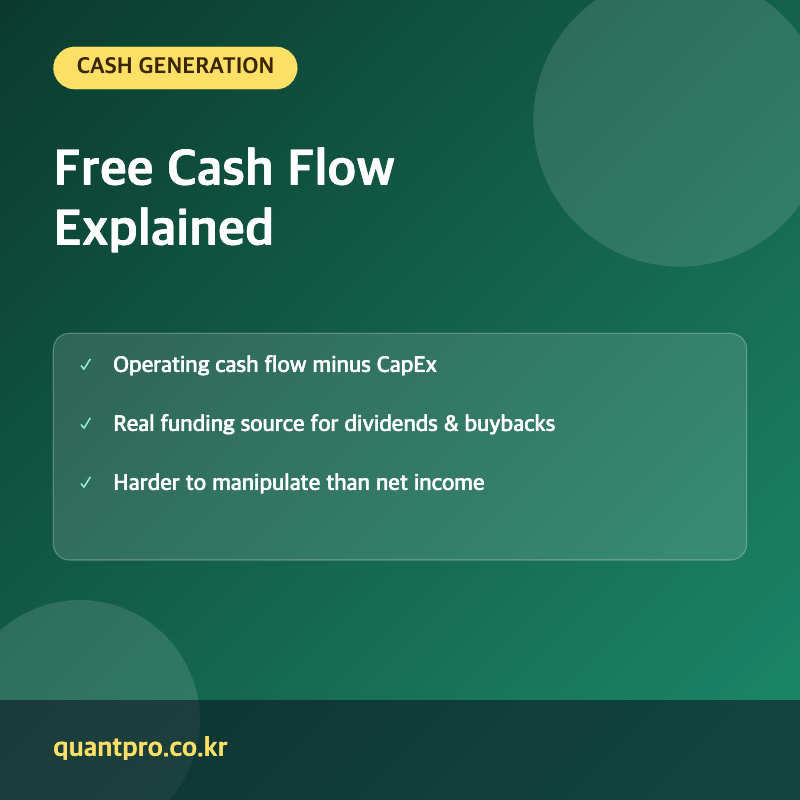
Free cash flow (FCF) is the cash a company generates from operations after subtracting capital expenditures (CapEx) needed to maintain or expand its asset base. The formula is Operating Cash Flow − Capital Expenditures, and it shows how much cash is truly available for discretionary use after essential reinvestment.
Because free cash flow can fund dividends, share buybacks, debt repayment, and new investments, it is widely regarded as a more reliable indicator of a company’s real financial flexibility than accounting-based net income.
Net Income vs. Free Cash Flow
Net income includes non-cash accounting items such as depreciation and changes in receivables or inventory, while free cash flow reflects only actual cash inflows and outflows. This means a company can report positive net income while generating negative free cash flow, often due to heavy capital spending or a rapid buildup of receivables.
Why Free Cash Flow Matters
Because free cash flow is less influenced by depreciation estimates and other accounting judgment calls, it is considered harder to manipulate than net income. Investors often view companies that consistently generate positive free cash flow as more financially stable and resilient.
| Metric | Basis | Key Feature |
|---|---|---|
| Net Income | Accrual accounting | Includes non-cash items like depreciation |
| Operating Cash Flow | Actual cash from operations | Reflects working capital changes |
| Free Cash Flow | Operating cash flow minus CapEx | Real funding source for dividends and buybacks |
Frequently Asked Questions
Is negative free cash flow always a bad sign?
Not necessarily. Early-stage growth companies undergoing heavy capital investment may show temporarily negative free cash flow, which can reflect spending on future growth rather than financial distress.
Where can I find free cash flow data?
Free cash flow can be calculated directly from a company’s cash flow statement using operating cash flow and capital expenditures under investing activities, or it is often provided directly by financial research platforms.
How does free cash flow relate to dividends?
A company whose free cash flow consistently exceeds its dividend payments is generally seen as having a sustainable dividend, whereas paying dividends despite insufficient free cash flow may indicate reliance on debt or asset sales.
What is free cash flow yield?
Free cash flow yield divides free cash flow by market capitalization, functioning similarly to the P/E ratio for valuation purposes but based on actual cash generation rather than accounting earnings.
Key Takeaways
Free cash flow represents the real cash left over after a company covers its operating needs and capital expenditures, serving as the true funding source for dividends and buybacks and a more reliable gauge of financial health than accounting-based earnings. This article is for informational purposes only and does not constitute investment advice.

QuantPro: AI Finds the Trade Before You Do
From AI-powered chart analysis to real-time market intelligence — everything a serious investor needs, in one platform.
- Automated AI chart analysis with precision trend timing
- Bull Radar: real-time visualization of geopolitical & economic shifts
- Live market-moving news and insights, curated for you
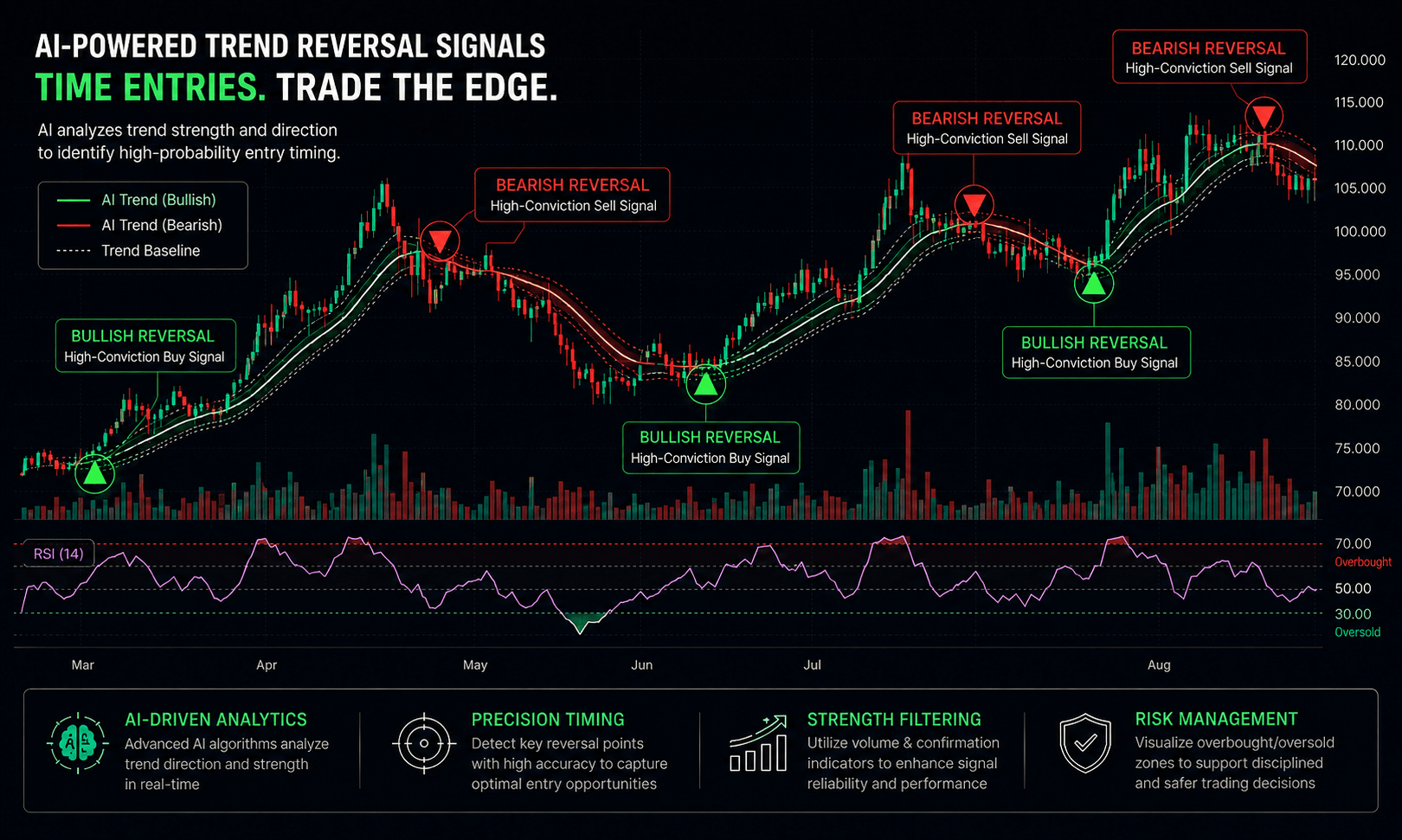
Bull Wave / Bear Wave Forecast Model
Engineered to help you read market direction and momentum faster than the crowd.
- Instantly separate bullish momentum from bearish pressure
- Pinpoint high-probability entry zones with confidence
- Chart signals clear enough for beginners, sharp enough for pros
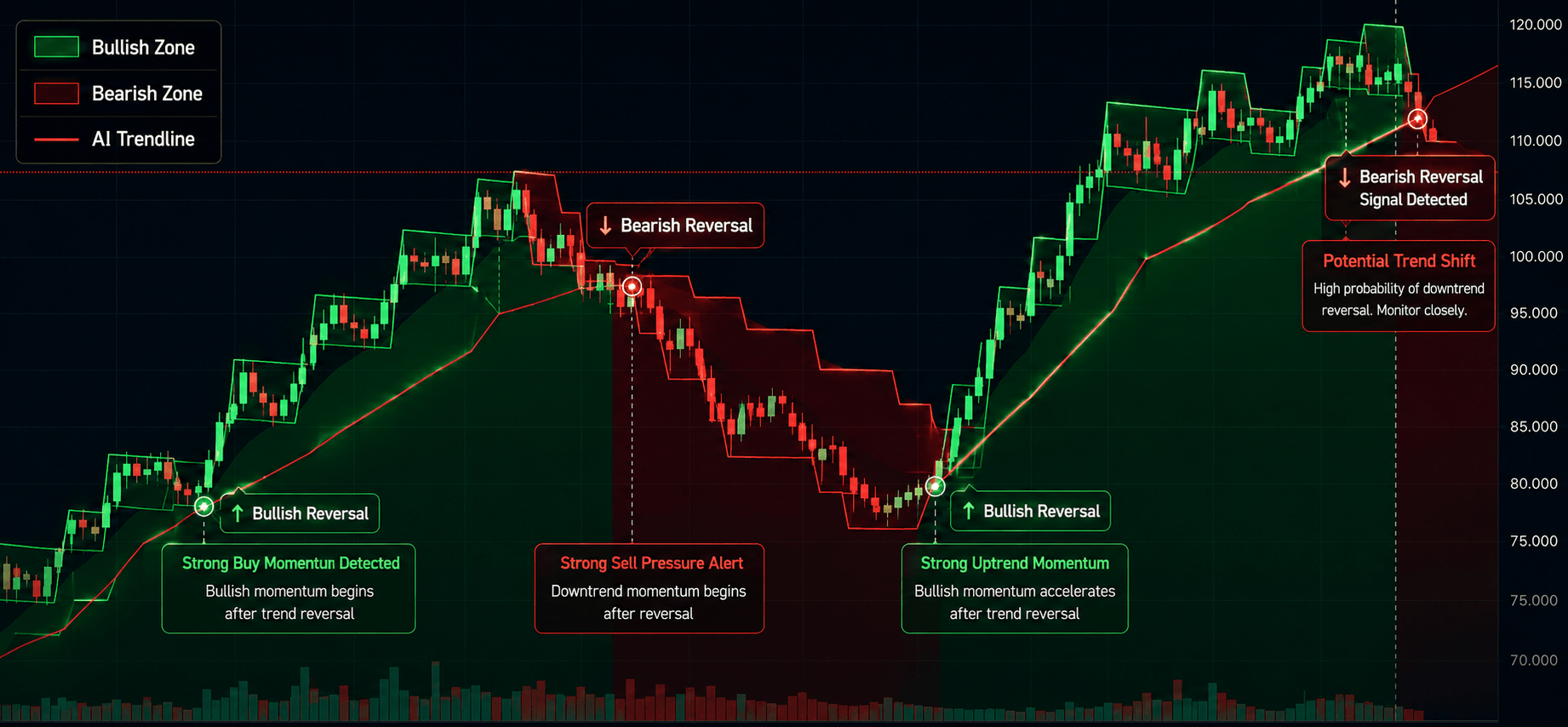
Winning Pattern Detection
Instantly surfaces the high-probability setups that repeat across the charts — a trusted edge for timing your entries and exits.
- Spot momentum building in real time
- Catch trend-reversal points before they break
- Built for active traders who need results, not theory

AI Live Economic Dashboard
AI analyzes real-time market data — turning complex, global investment flows into clear insight in seconds.
- Track global stock markets in real time
- See exactly which assets are strong — and which are fading
- Watch how geopolitical events move the markets
About the Author