What Is Free Cash Flow (FCF)?
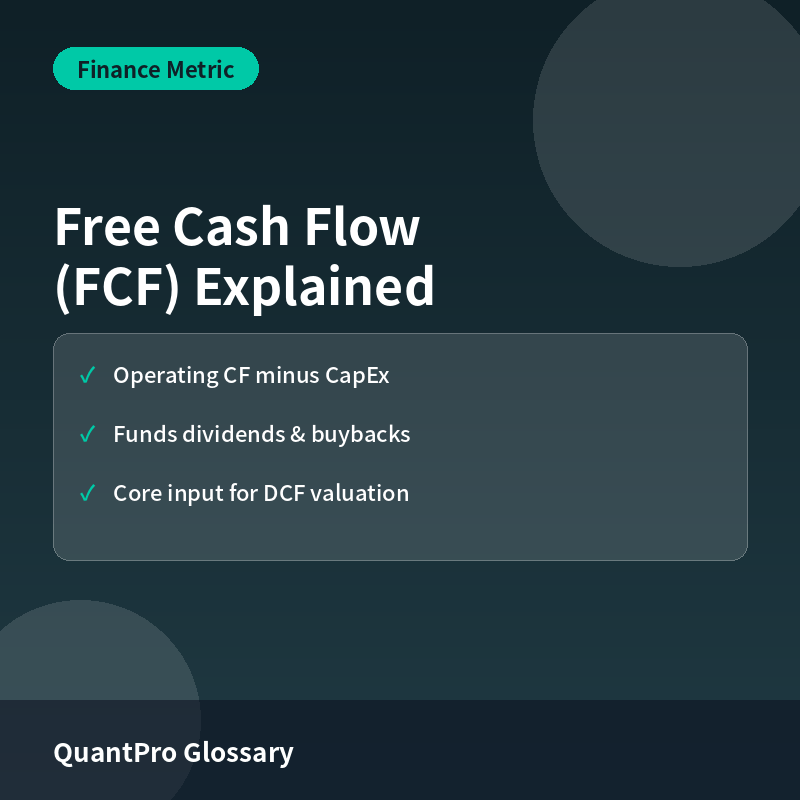
Free Cash Flow (FCF) is the cash a company generates from its operations after subtracting the capital expenditures (CapEx) needed to maintain or expand its asset base. Because it strips out non-cash accounting items, FCF is widely viewed as a cleaner measure of a company’s real cash-generating power than net income, and it directly represents the cash available for debt repayment, dividends, buybacks, or new investment.
The FCF Formula
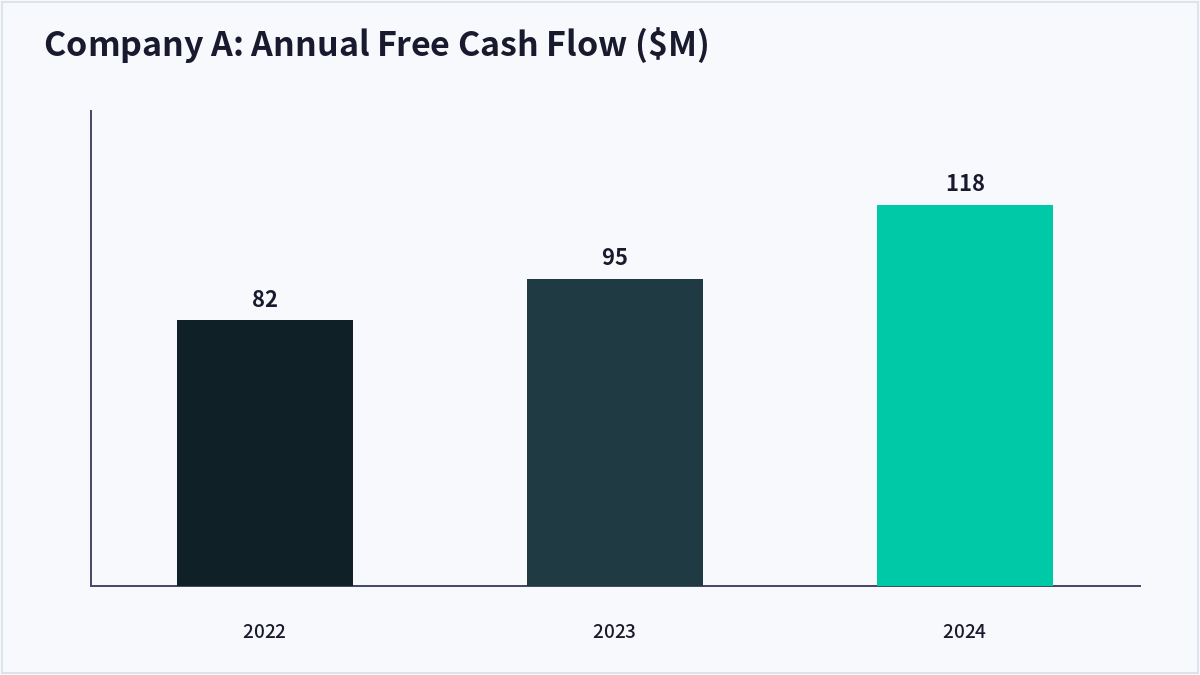
The standard formula is: FCF = Operating Cash Flow − Capital Expenditures. If Company A generated $150M in operating cash flow in 2024 and spent $32M on CapEx, its FCF is $150M minus $32M, or $118M. Because this figure isn’t affected by non-cash charges like depreciation, it’s harder to distort than reported net income.
FCF Yield
Dividing FCF by market capitalization produces the FCF yield. If Company A’s market cap is $1.5B, its FCF yield is $118M divided by $1.5B, or roughly 7.9%. When this yield sits meaningfully above prevailing bond yields, some investors read it as a signal the stock may be undervalued relative to its cash generation.
Why FCF Matters for Valuation
Discounted cash flow (DCF) models project future free cash flows and discount them back to present value to estimate intrinsic worth. Net income can be distorted by depreciation methods, inventory accounting, and one-off items, while FCF reflects cash that actually accumulates in the company’s accounts, making it a more reliable basis for judging dividend sustainability and financial health.
When Negative FCF Isn’t a Red Flag
Negative FCF doesn’t automatically signal trouble. Early-stage growth companies making heavy capital investments can post negative FCF for extended periods. In these cases, the key questions are whether the investment is translating into rising operating cash flow over time and whether the company is relying excessively on external borrowing to fund the gap.
| Metric | 2022 | 2023 | 2024 |
|---|---|---|---|
| Operating Cash Flow | $105M | $124M | $150M |
| CapEx | $23M | $29M | $32M |
| Free Cash Flow (FCF) | $82M | $95M | $118M |
Frequently Asked Questions
How is FCF different from operating income?
Operating income includes non-cash charges like depreciation, while FCF reflects only actual cash movements. A capital-intensive company can post positive operating income while still generating negative FCF.
Is a high FCF always a good sign?
Usually, but a company delaying necessary investment can also show elevated FCF temporarily. It’s worth checking CapEx trends and industry norms alongside the raw figure.
How is FCF used to assess dividend safety?
Subtracting actual dividends paid from FCF and checking whether the result stays positive shows whether dividends are covered by real cash rather than by drawing down retained earnings.
What’s the difference between FCFF and FCFE?
FCFF (Firm) is cash flow available to both debt and equity holders, while FCFE (Equity) adjusts for interest expense and net borrowing to show cash available to shareholders alone. FCFF is typically discounted at WACC, and FCFE at the cost of equity.
Key Takeaways
Free Cash Flow equals operating cash flow minus capital expenditures, and it shows the real cash available for dividends, buybacks, and debt repayment. Because it’s less prone to accounting distortion than net income, it’s a core input for DCF valuation and financial health analysis. This article is for informational purposes only and does not constitute investment advice.

QuantPro: AI Finds the Trade Before You Do
From AI-powered chart analysis to real-time market intelligence — everything a serious investor needs, in one platform.
- Automated AI chart analysis with precision trend timing
- Bull Radar: real-time visualization of geopolitical & economic shifts
- Live market-moving news and insights, curated for you
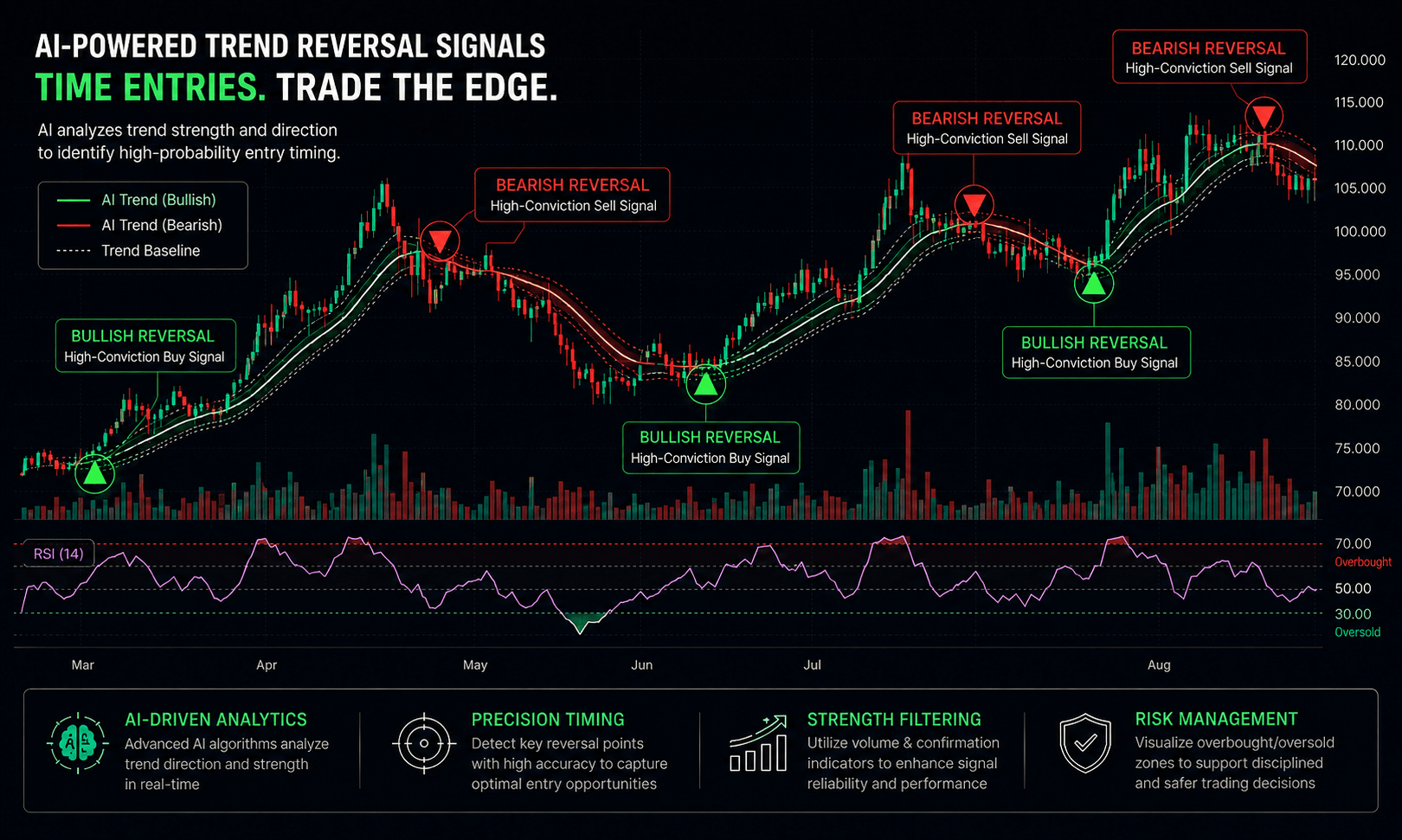
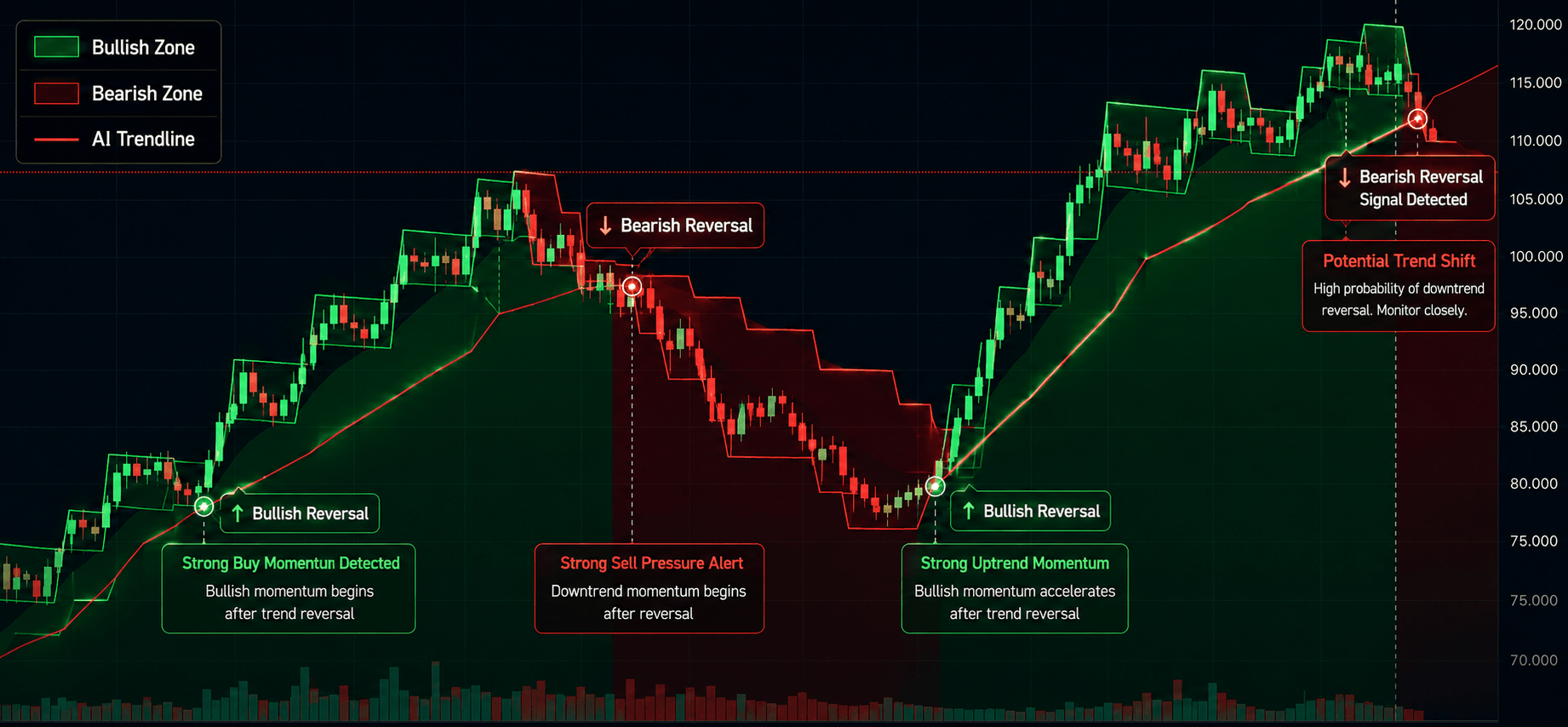
Bull Wave / Bear Wave Forecast Model
Engineered to help you read market direction and momentum faster than the crowd.
- Instantly separate bullish momentum from bearish pressure
- Pinpoint high-probability entry zones with confidence
- Chart signals clear enough for beginners, sharp enough for pros
Winning Pattern Detection
Instantly surfaces the high-probability setups that repeat across the charts — a trusted edge for timing your entries and exits.
- Spot momentum building in real time
- Catch trend-reversal points before they break
- Built for active traders who need results, not theory

AI Live Economic Dashboard
AI analyzes real-time market data — turning complex, global investment flows into clear insight in seconds.
- Track global stock markets in real time
- See exactly which assets are strong — and which are fading
- Watch how geopolitical events move the markets
About the Author