What Is a Municipal Bond?
A municipal bond, often called a “muni,” is a debt security issued by a state, city, county, or other local government entity to fund public projects such as schools, roads, hospitals, and infrastructure. Investors who buy municipal bonds are effectively lending money to the issuing government in exchange for periodic interest payments and return of principal at maturity.
The defining feature of most municipal bonds is that their interest income is exempt from federal income tax, and in many cases also exempt from state and local taxes if the investor resides in the issuing state, making them especially attractive to investors in higher tax brackets.
General Obligation Bonds vs Revenue Bonds
General obligation bonds are backed by the full taxing power of the issuing government and are generally considered lower risk, since the issuer can raise taxes if needed to meet debt obligations. Revenue bonds are backed specifically by the income generated from the project they fund, such as toll roads or utility fees, making their risk more closely tied to the performance of that particular project.
Why Investors Choose Municipal Bonds
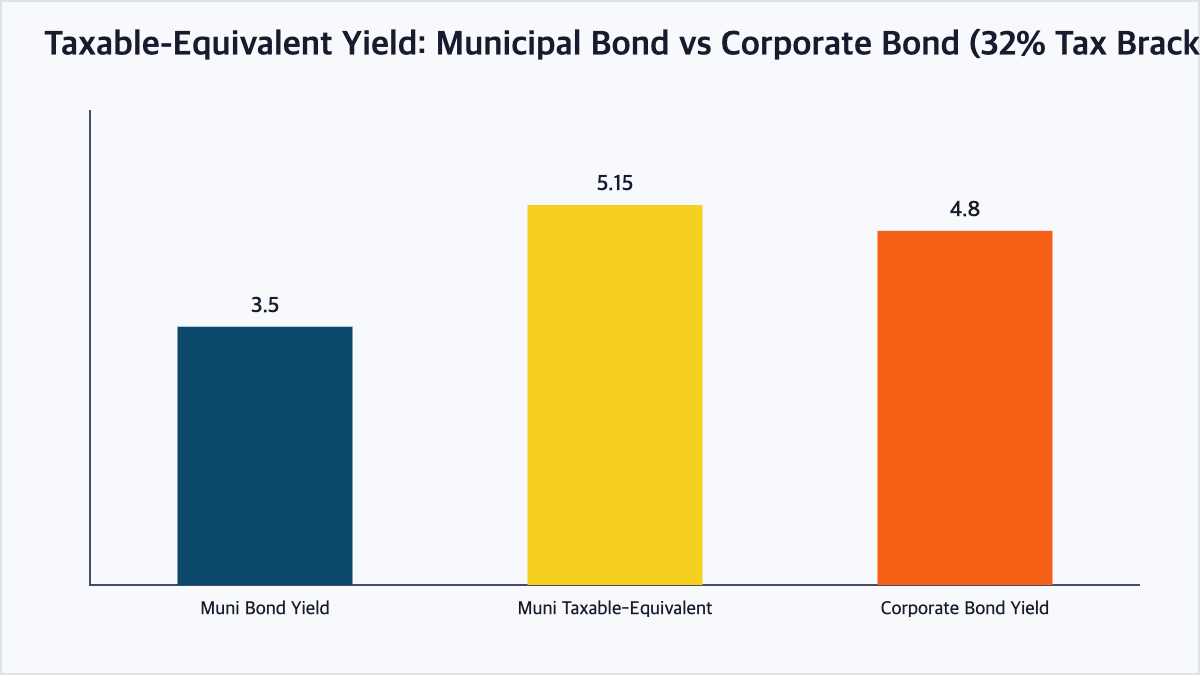
Because municipal bond interest is often tax-exempt, investors in higher tax brackets can compare munis to taxable bonds using a “taxable-equivalent yield” calculation, which shows what a taxable bond would need to yield to match the after-tax return of a tax-exempt municipal bond.
Credit Risk in Municipal Bonds
While often considered relatively safe, municipal bonds are not risk-free; local governments and municipal issuers can and occasionally do default, particularly revenue bonds tied to underperforming projects, which is why credit ratings from agencies remain an important consideration before investing.
Municipal Bonds vs Corporate Bonds
| Feature | Municipal Bond | Corporate Bond |
|---|---|---|
| Tax Treatment | Often federal (and state) tax-exempt | Fully taxable |
| Typical Yield | Lower nominal yield | Higher nominal yield |
| Issuer | State/local government | Private corporation |
| Best Suited For | Higher tax bracket investors | Tax-advantaged or lower-bracket accounts |
Frequently Asked Questions
Are all municipal bonds tax-exempt?
Most municipal bonds are exempt from federal income tax, but some, known as taxable municipal bonds, do not carry this exemption, and state tax exemption typically applies only if the investor resides in the state where the bond was issued.
How do I calculate the taxable-equivalent yield of a municipal bond?
The taxable-equivalent yield is calculated by dividing the municipal bond’s yield by one minus the investor’s marginal tax rate, allowing a direct comparison to the yield a taxable bond would need to offer to provide the same after-tax return.
Do municipal bonds ever default?
Yes, though defaults are historically rarer than corporate bond defaults, particularly for general obligation bonds. Revenue bonds tied to specific, underperforming projects carry somewhat higher default risk, making credit analysis and ratings important before investing.
Are municipal bonds a good fit for tax-advantaged retirement accounts?
Generally, municipal bonds are more tax-efficient when held in taxable brokerage accounts, since their tax-exempt benefit is largely redundant inside a tax-advantaged retirement account, where taxable bonds might otherwise offer a comparable or higher after-tax return.
Key Takeaways
Municipal bonds offer investors, particularly those in higher tax brackets, a way to earn largely tax-exempt interest income by lending to state and local governments, though credit risk still varies depending on the type of bond and issuer. This article is for informational purposes only and does not constitute investment advice.

QuantPro: AI Finds the Trade Before You Do
From AI-powered chart analysis to real-time market intelligence — everything a serious investor needs, in one platform.
- Automated AI chart analysis with precision trend timing
- Bull Radar: real-time visualization of geopolitical & economic shifts
- Live market-moving news and insights, curated for you
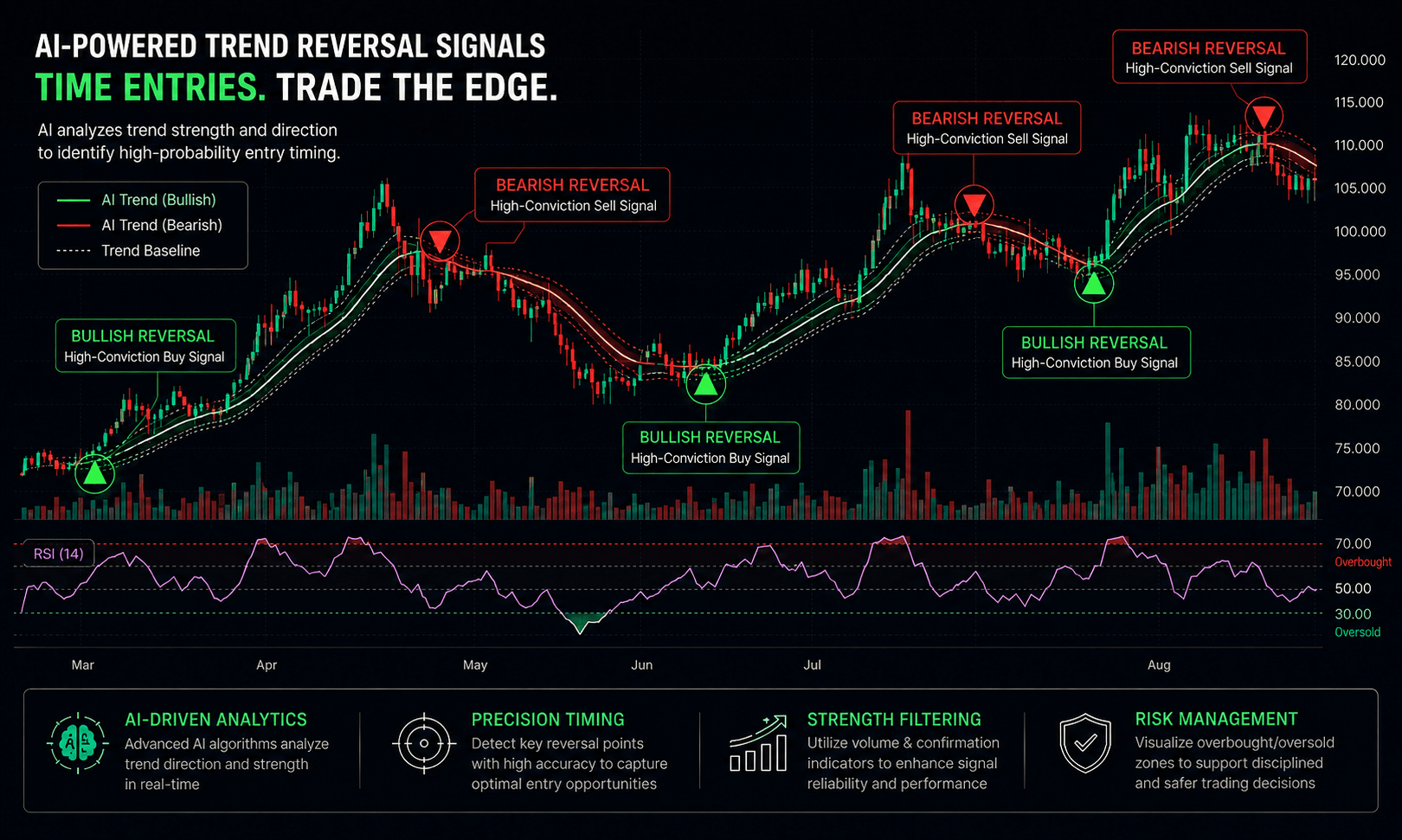
Bull Wave / Bear Wave Forecast Model
Engineered to help you read market direction and momentum faster than the crowd.
- Instantly separate bullish momentum from bearish pressure
- Pinpoint high-probability entry zones with confidence
- Chart signals clear enough for beginners, sharp enough for pros
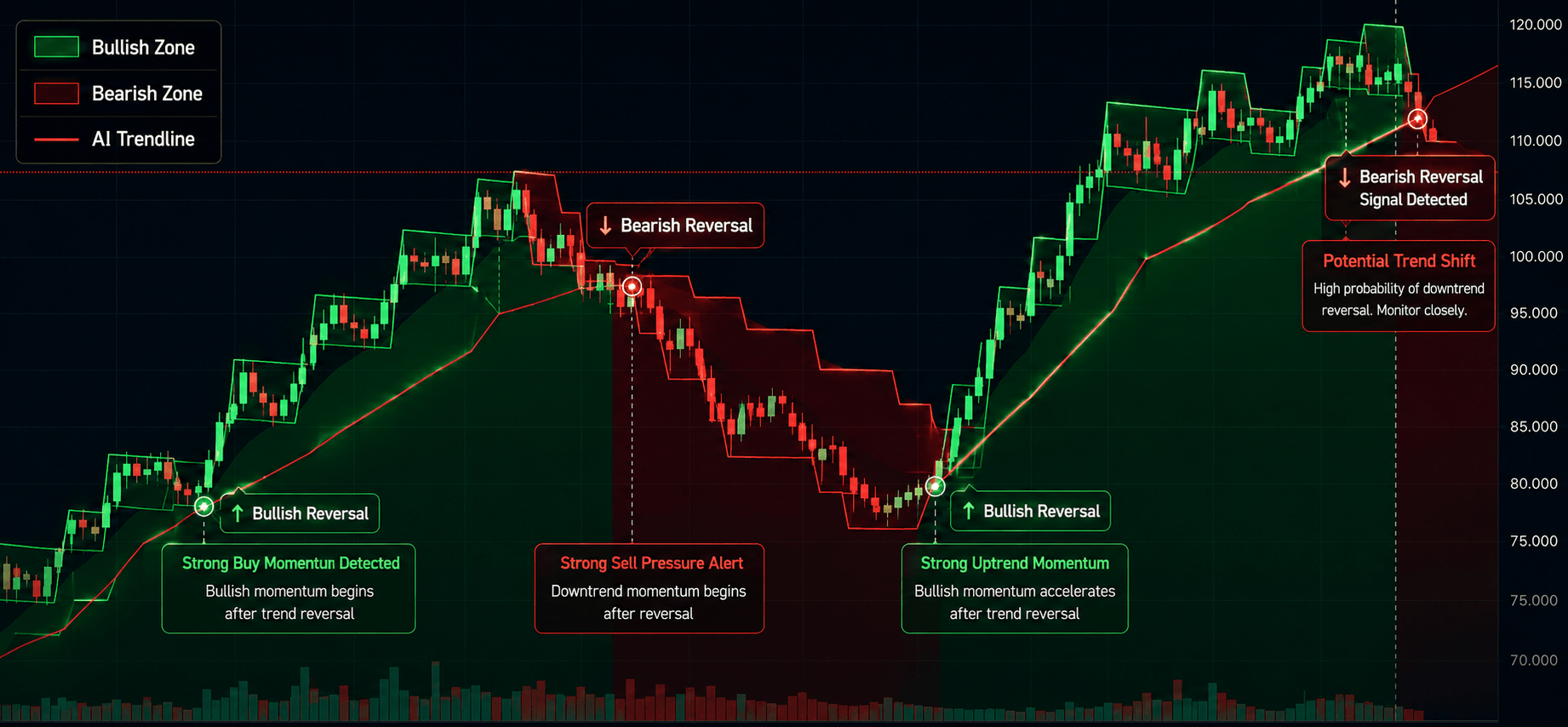
Winning Pattern Detection
Instantly surfaces the high-probability setups that repeat across the charts — a trusted edge for timing your entries and exits.
- Spot momentum building in real time
- Catch trend-reversal points before they break
- Built for active traders who need results, not theory

AI Live Economic Dashboard
AI analyzes real-time market data — turning complex, global investment flows into clear insight in seconds.
- Track global stock markets in real time
- See exactly which assets are strong — and which are fading
- Watch how geopolitical events move the markets
About the Author