What Is the Reserve Requirement Ratio?
The reserve requirement ratio (RRR) is the percentage of customer deposits that commercial banks are required to hold in reserve — either as cash in their vaults or as deposits with the central bank — rather than lending out to borrowers. It is one of the tools central banks can use to influence how much money circulates through the banking system.
How the Reserve Requirement Affects Money Creation
The Money Multiplier
Because banks can lend out the portion of deposits not held in reserve, and those loans typically get redeposited into the banking system and lent out again, a single deposit can theoretically support a much larger expansion of the total money supply. The maximum size of this expansion is called the money multiplier, calculated as 1 divided by the reserve requirement ratio.
A Worked Example
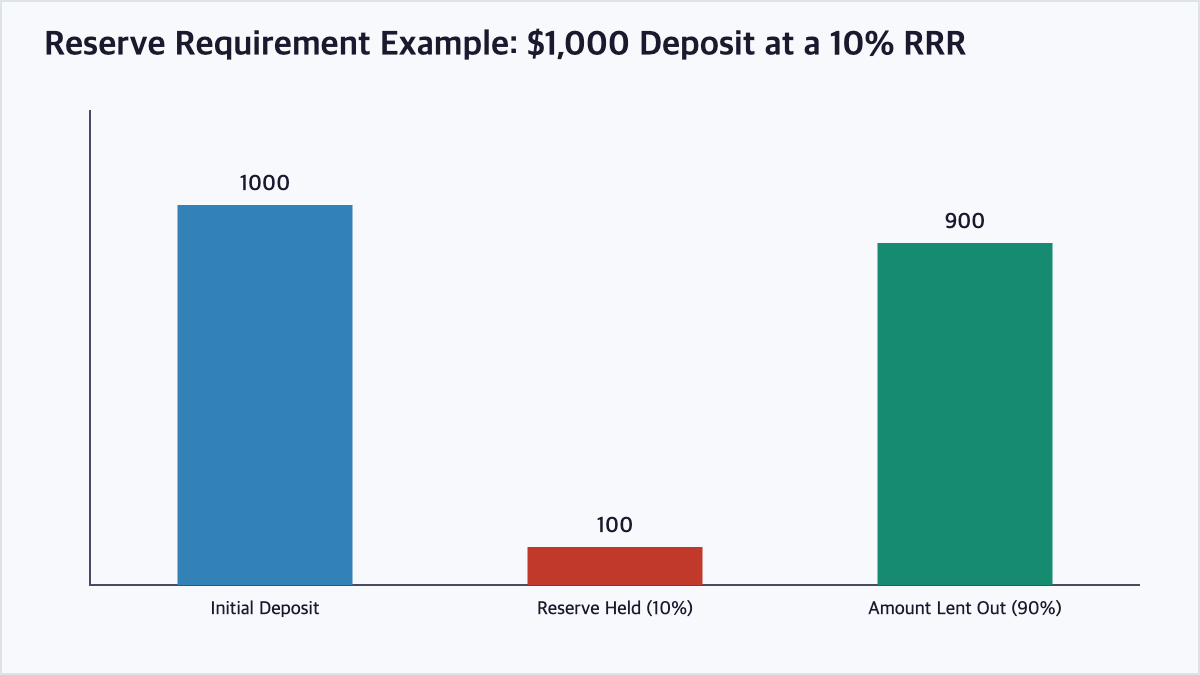
Suppose the reserve requirement ratio is 10% and a bank receives an initial deposit of $1,000. The bank must hold $100 in reserve and can lend out the remaining $900. If that $900 is deposited into another bank, that bank holds $90 in reserve and lends out $810, and the cycle continues. In theory, with a 10% reserve requirement, the initial $1,000 deposit can support up to $10,000 in total money supply — a money multiplier of 1÷0.10=10.
How the Reserve Requirement Ratio Affects Policy Stance
Central banks can raise or lower the reserve requirement to influence how much banks are able to lend, and therefore how quickly the money supply can grow.
| Reserve Requirement Ratio | Money Multiplier (1/RRR) | Policy Stance |
|---|---|---|
| 5% | 20x | Very loose (expansionary) |
| 10% | 10x | Moderate |
| 20% | 5x | Tighter (contractionary) |
| 50% | 2x | Very tight (restrictive) |
Reserve Requirements in Modern Monetary Policy
While adjusting the reserve requirement ratio was historically a common monetary policy tool, many central banks today rely more heavily on interest rate policy and open market operations to manage the money supply and economic conditions, with reserve requirements playing a smaller or more static role in some jurisdictions.
Frequently Asked Questions
What is the reserve requirement ratio?
The reserve requirement ratio is the percentage of customer deposits that a bank is required by the central bank to hold in reserve, either as cash in its vault or as a deposit at the central bank, rather than lending it out.
How does the reserve requirement affect the money supply?
A lower reserve requirement allows banks to lend out a larger share of each deposit, which increases the potential money multiplier and expands the money supply through repeated rounds of lending and redepositing; a higher reserve requirement does the opposite.
What is the money multiplier?
The money multiplier is the theoretical maximum amount the money supply can expand from an initial deposit, calculated as 1 divided by the reserve requirement ratio, assuming banks lend out the maximum allowed amount at each stage.
Do all central banks still actively use reserve requirements?
Not all central banks rely heavily on reserve requirements as an active policy tool anymore; some, including major central banks in recent years, have shifted toward using interest rates and other tools as their primary means of implementing monetary policy, while still keeping reserve requirements in place at low or even zero levels.
Key Takeaways
The reserve requirement ratio determines how much of each bank deposit must be held back rather than lent out, directly influencing the money multiplier and the broader money supply. While some central banks still adjust this ratio as a policy lever, many now lean more heavily on interest rate tools, making the reserve requirement one part of a broader monetary policy toolkit. This article is for informational purposes only and does not constitute investment advice.

QuantPro: AI Finds the Trade Before You Do
From AI-powered chart analysis to real-time market intelligence — everything a serious investor needs, in one platform.
- Automated AI chart analysis with precision trend timing
- Bull Radar: real-time visualization of geopolitical & economic shifts
- Live market-moving news and insights, curated for you
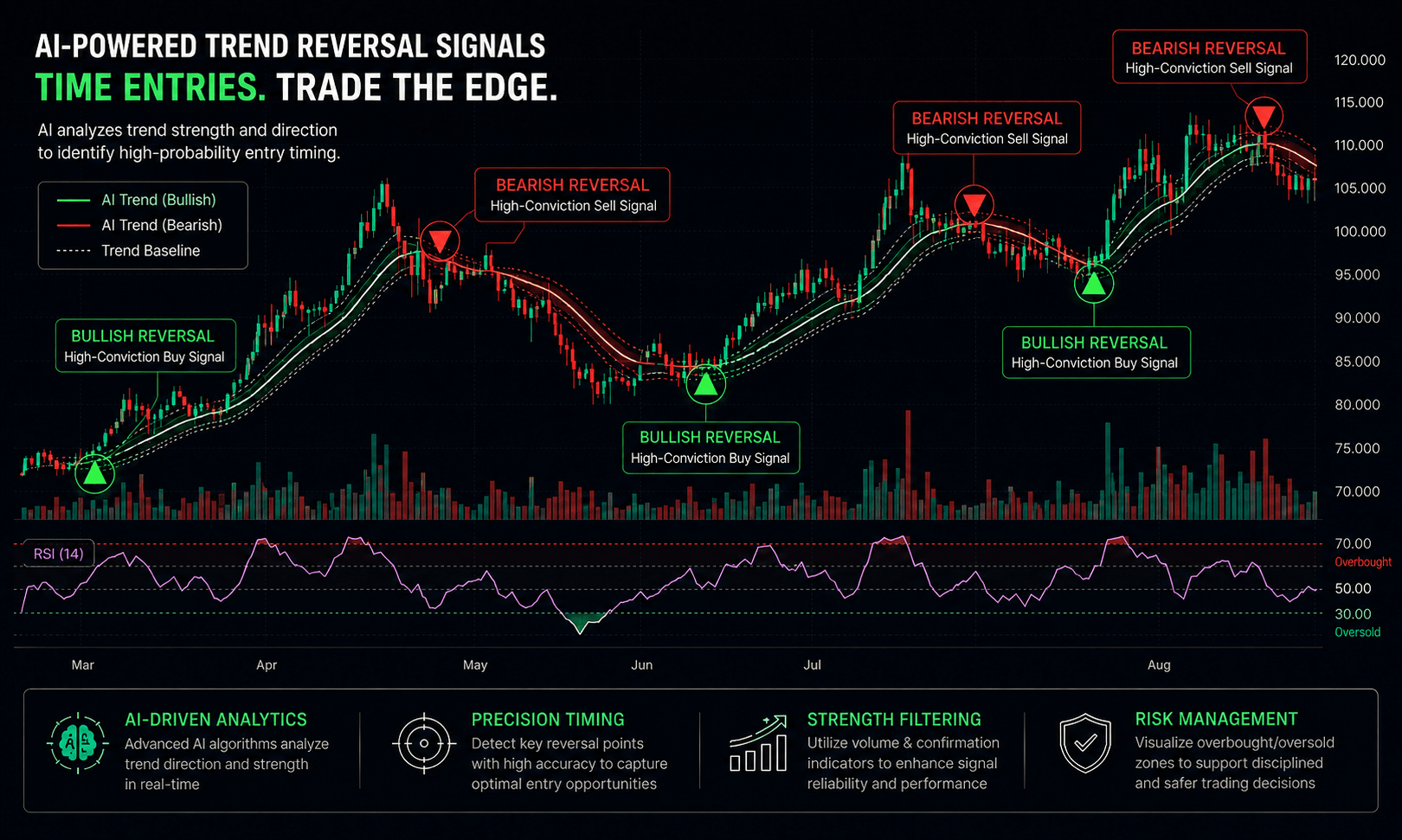
Bull Wave / Bear Wave Forecast Model
Engineered to help you read market direction and momentum faster than the crowd.
- Instantly separate bullish momentum from bearish pressure
- Pinpoint high-probability entry zones with confidence
- Chart signals clear enough for beginners, sharp enough for pros
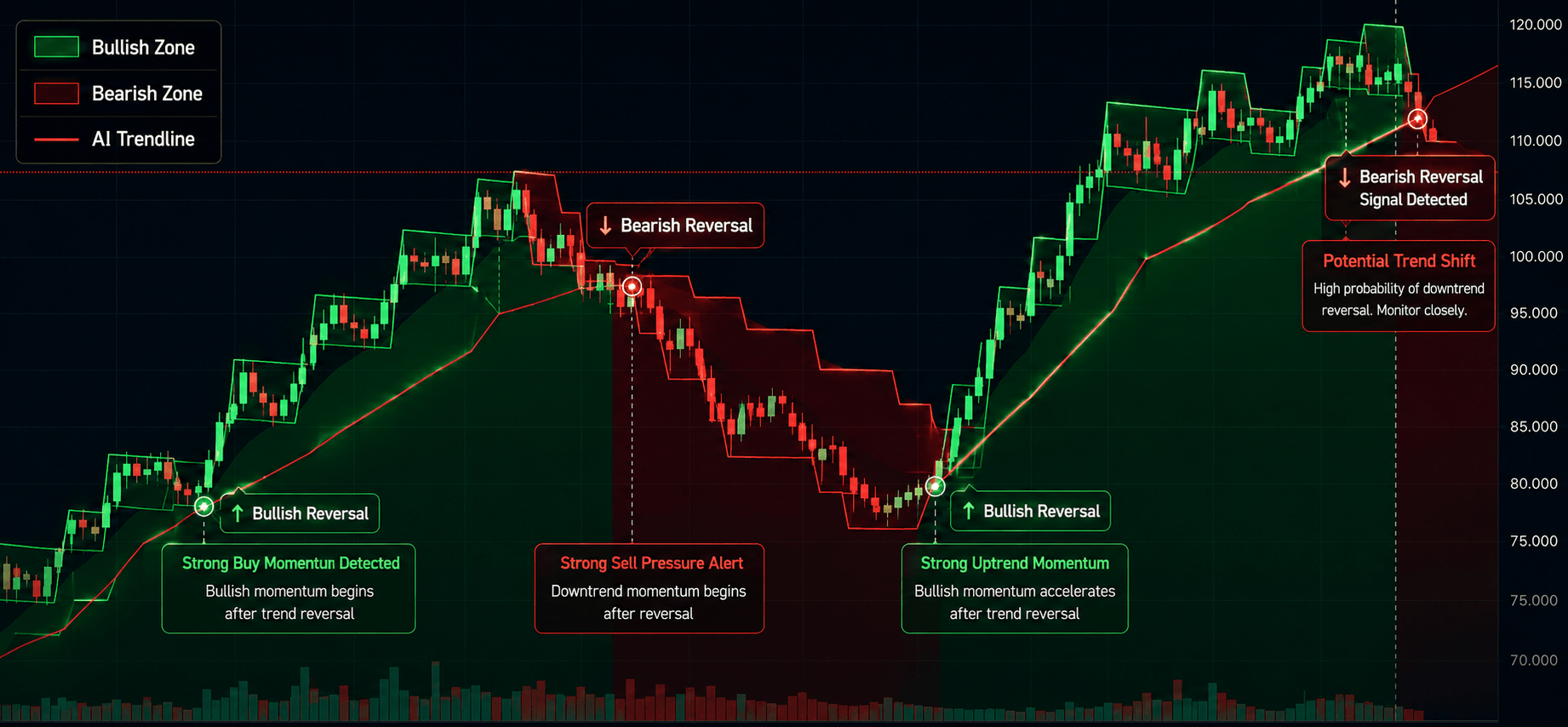
Winning Pattern Detection
Instantly surfaces the high-probability setups that repeat across the charts — a trusted edge for timing your entries and exits.
- Spot momentum building in real time
- Catch trend-reversal points before they break
- Built for active traders who need results, not theory

AI Live Economic Dashboard
AI analyzes real-time market data — turning complex, global investment flows into clear insight in seconds.
- Track global stock markets in real time
- See exactly which assets are strong — and which are fading
- Watch how geopolitical events move the markets
About the Author