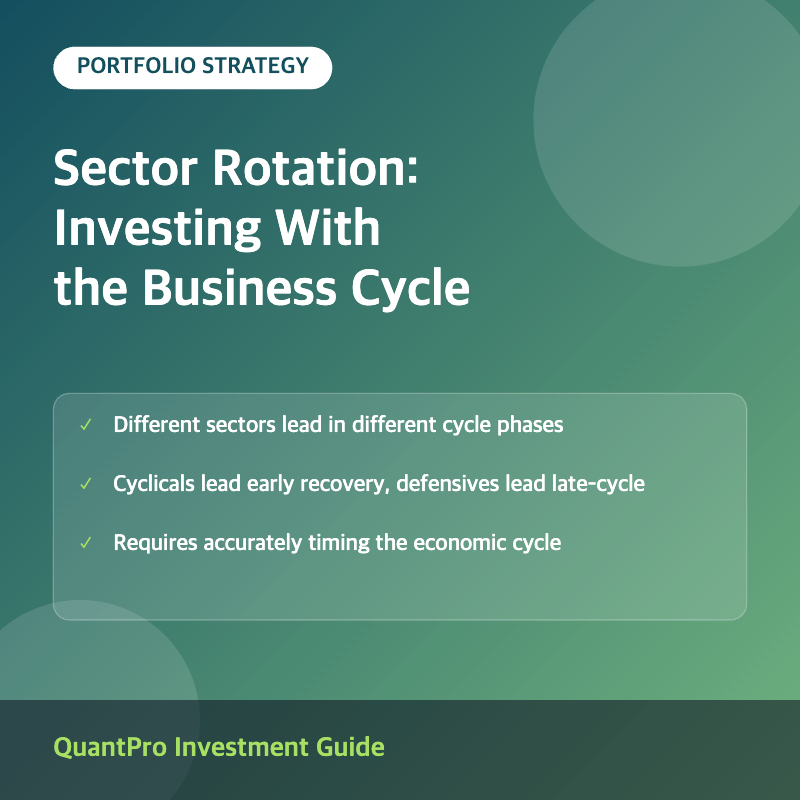
What Is Sector Rotation?
Sector rotation is an investment strategy that involves shifting portfolio allocations between different market sectors based on the current or anticipated phase of the economic business cycle. The strategy rests on the observation that different sectors tend to outperform or underperform at different stages of economic expansion and contraction.
The business cycle is typically divided into phases: early recovery, mid-cycle expansion, late-cycle expansion, and recession, each with distinct characteristics in interest rates, consumer spending, and corporate earnings that favor certain sectors over others.
Cyclical vs Defensive Sectors
Cyclical sectors, such as technology, consumer discretionary, and industrials, tend to perform well during economic expansions when consumer and business spending are rising. Defensive sectors, such as utilities, consumer staples, and healthcare, tend to hold up better during economic contractions since demand for their products and services remains relatively stable regardless of the economic environment.
Sector Performance Across the Business Cycle
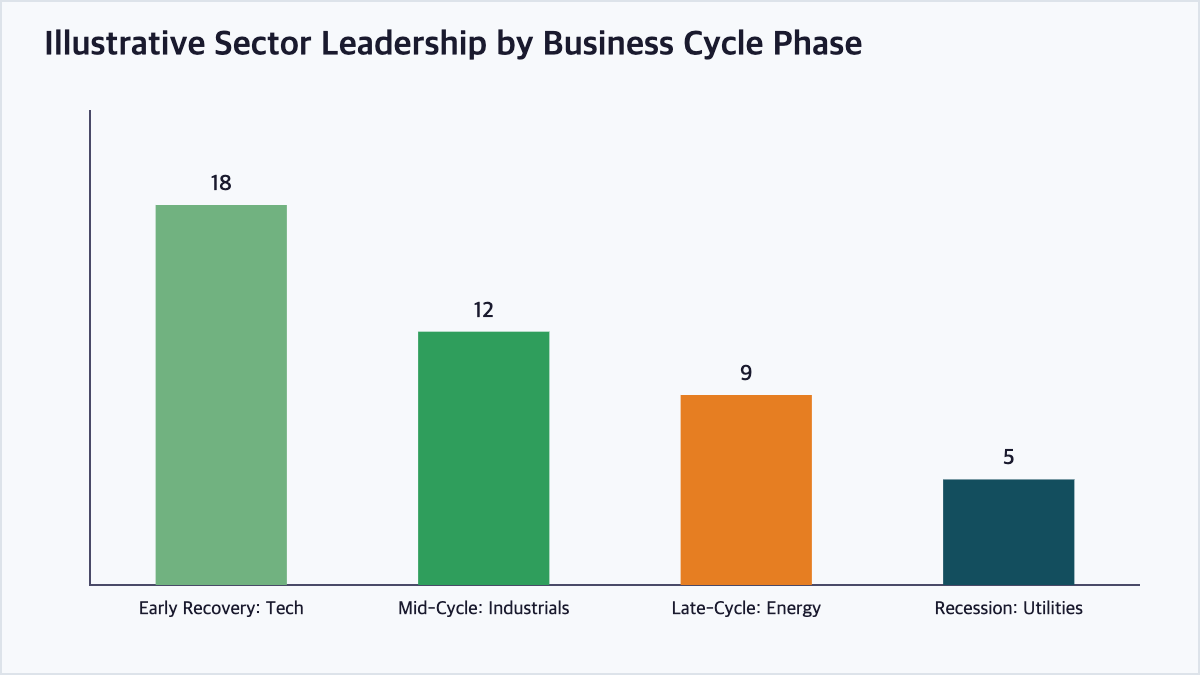
During early recovery, technology and consumer discretionary stocks often lead as confidence returns and borrowing costs remain low. During mid-cycle expansion, industrials and materials often benefit from rising business investment. In late-cycle expansion, energy and commodity-related sectors can outperform as inflationary pressures build. During recessions, defensive sectors like utilities and consumer staples often outperform as investors seek stability.
Challenges of Sector Rotation
Successfully executing a sector rotation strategy requires accurately identifying which phase of the business cycle the economy is currently in, which is notoriously difficult even for professional economists, since cycle turning points are often only clear well after the fact.
Sector Leadership by Business Cycle Phase
| Cycle Phase | Often-Leading Sectors | Economic Backdrop |
|---|---|---|
| Early Recovery | Technology, Consumer Discretionary | Low rates, rising confidence |
| Mid-Cycle | Industrials, Materials | Rising business investment |
| Late-Cycle | Energy, Commodities | Inflationary pressures building |
| Recession | Utilities, Consumer Staples, Healthcare | Falling demand, flight to safety |
Frequently Asked Questions
Is sector rotation suitable for buy-and-hold investors?
Sector rotation is generally more active and research-intensive than a traditional buy-and-hold approach, requiring ongoing monitoring of economic indicators and periodic portfolio adjustments, making it better suited to investors willing to actively manage their allocations.
What economic indicators help identify the current cycle phase?
Commonly used indicators include GDP growth trends, unemployment rates, the yield curve shape, manufacturing indices like the ISM PMI, and central bank interest rate policy, all of which together can help characterize the current economic phase.
Can sector rotation be implemented using ETFs?
Yes. Sector-specific ETFs make sector rotation more accessible for individual investors, allowing exposure to a broad basket of stocks within a chosen sector without needing to select individual companies.
Does sector rotation guarantee outperformance?
No. Sector rotation carries the risk of mistiming the economic cycle or misjudging which sectors will actually lead, and transaction costs from frequent rebalancing can also erode returns compared to a passive, diversified approach.
Key Takeaways
Sector rotation seeks to capture outperformance by shifting allocations toward sectors expected to lead during the current business cycle phase, but it requires accurate economic timing and carries higher complexity than passive investing. This article is for informational purposes only and does not constitute investment advice.

QuantPro: AI Finds the Trade Before You Do
From AI-powered chart analysis to real-time market intelligence — everything a serious investor needs, in one platform.
- Automated AI chart analysis with precision trend timing
- Bull Radar: real-time visualization of geopolitical & economic shifts
- Live market-moving news and insights, curated for you
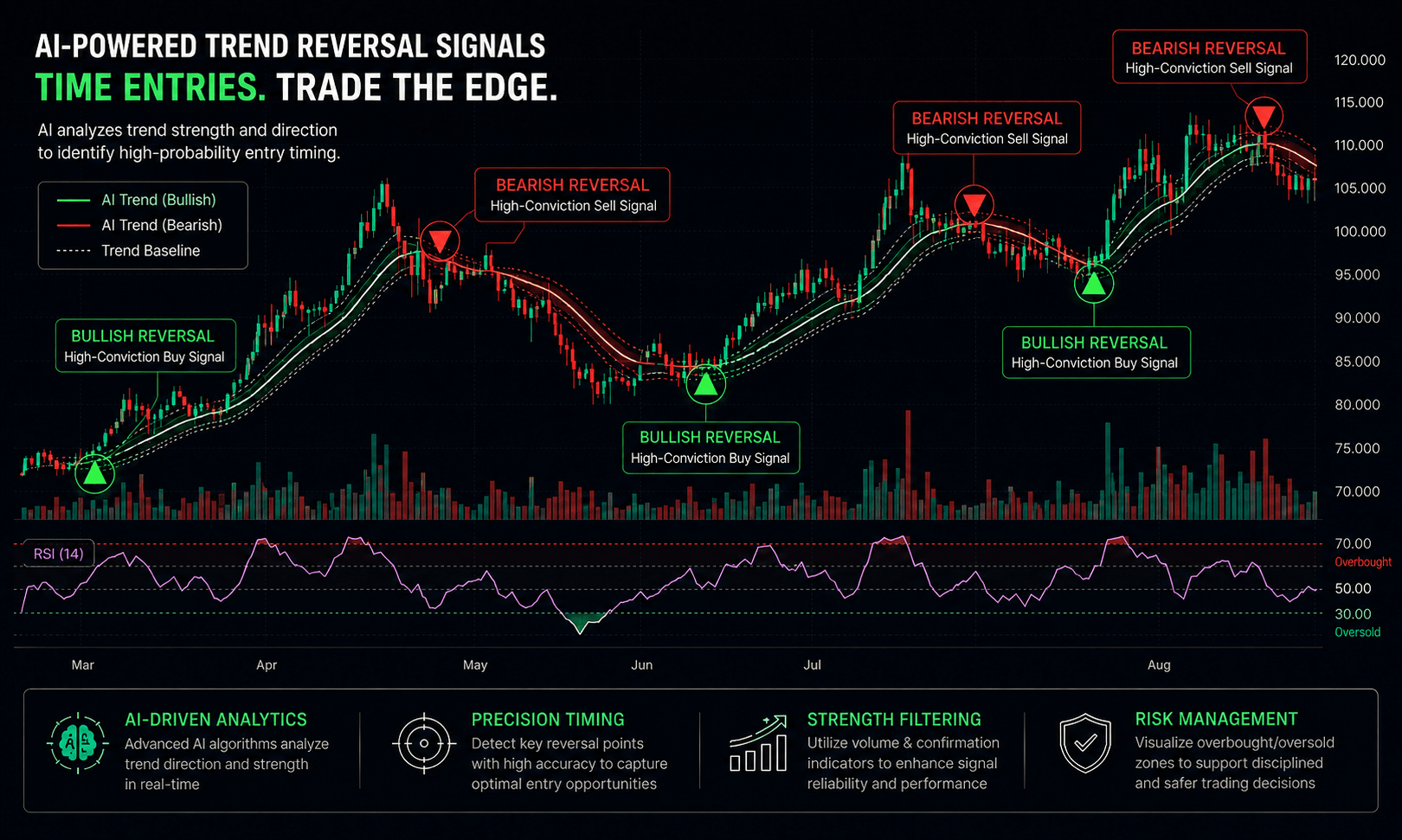
Bull Wave / Bear Wave Forecast Model
Engineered to help you read market direction and momentum faster than the crowd.
- Instantly separate bullish momentum from bearish pressure
- Pinpoint high-probability entry zones with confidence
- Chart signals clear enough for beginners, sharp enough for pros
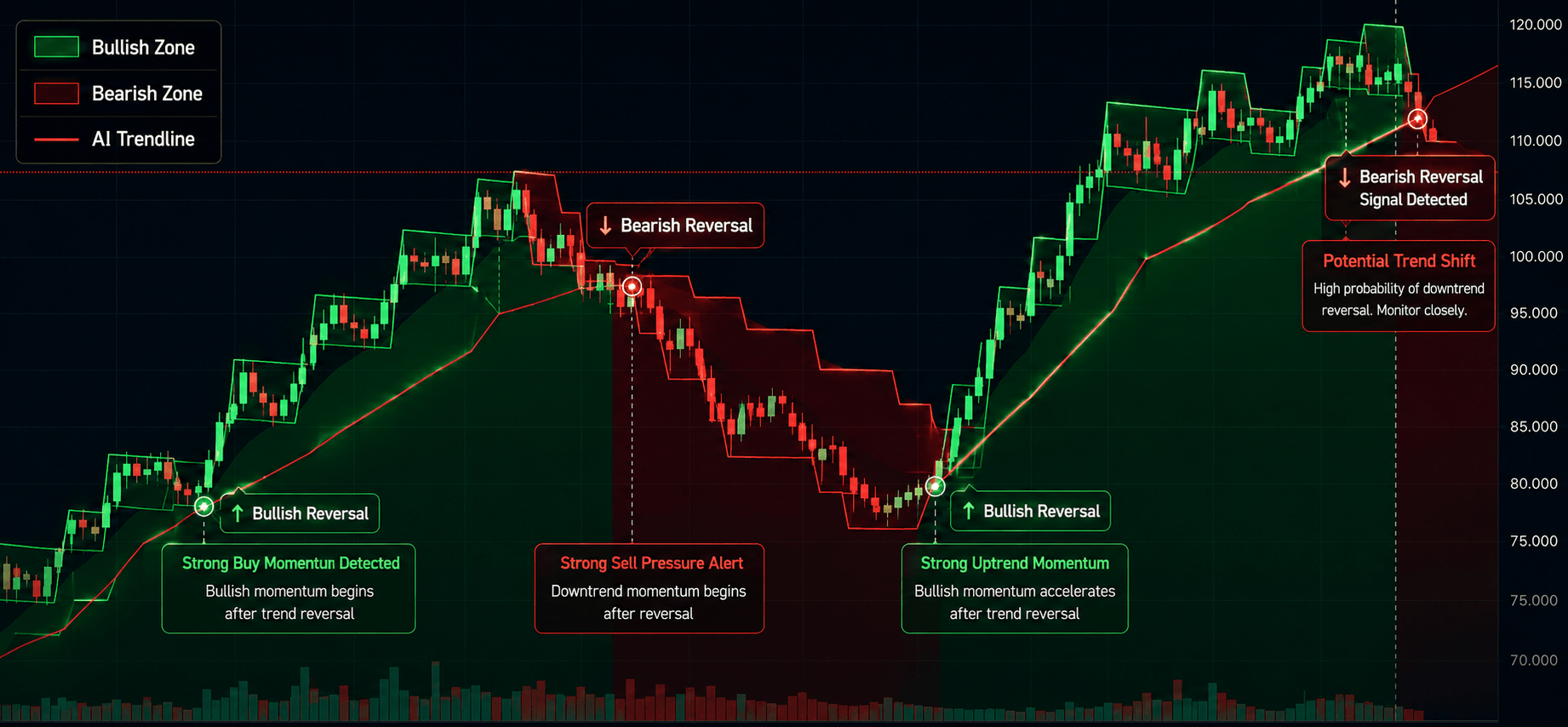
Winning Pattern Detection
Instantly surfaces the high-probability setups that repeat across the charts — a trusted edge for timing your entries and exits.
- Spot momentum building in real time
- Catch trend-reversal points before they break
- Built for active traders who need results, not theory
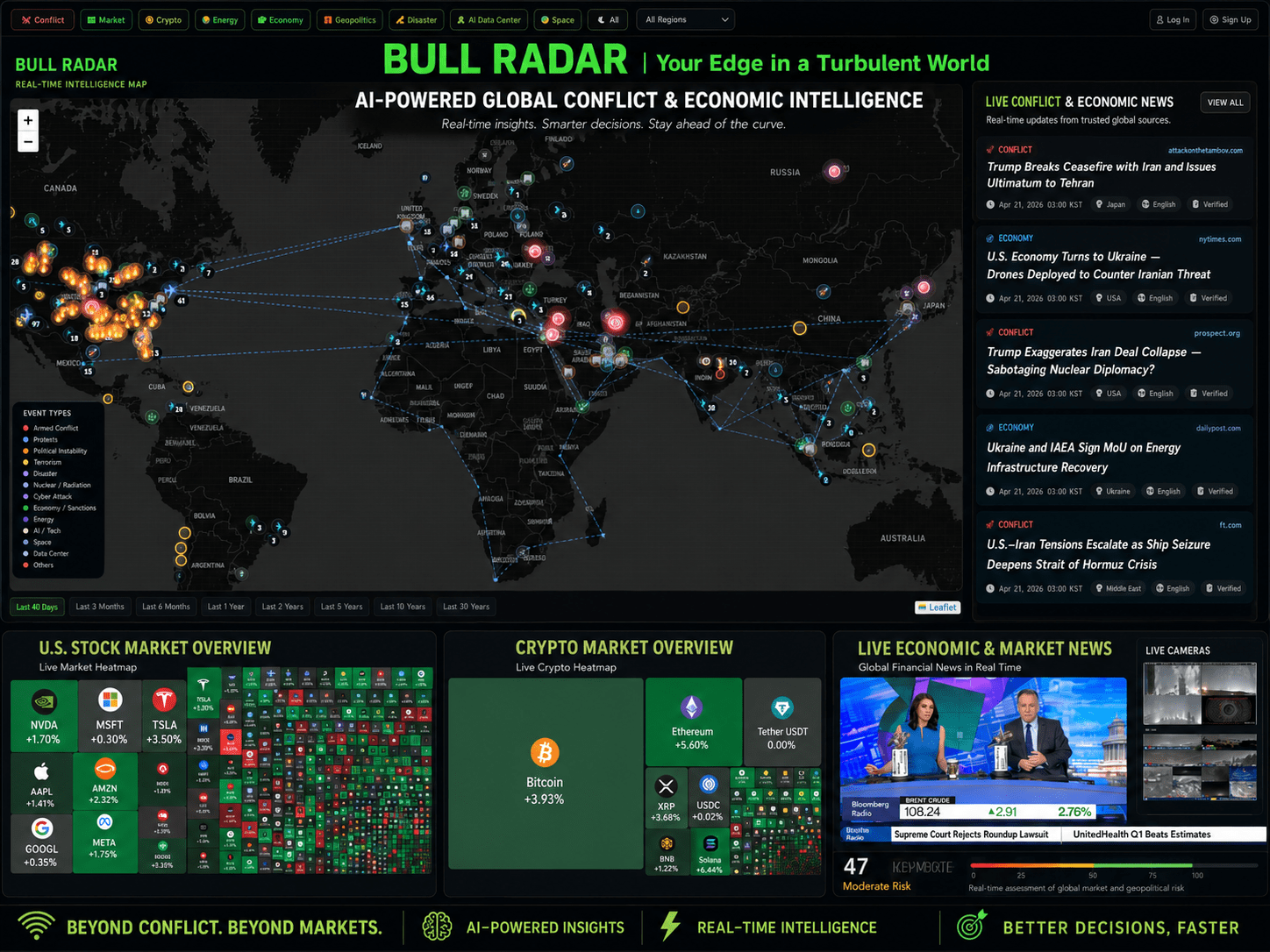
AI Live Economic Dashboard
AI analyzes real-time market data — turning complex, global investment flows into clear insight in seconds.
- Track global stock markets in real time
- See exactly which assets are strong — and which are fading
- Watch how geopolitical events move the markets
About the Author