What Is Value Investing?
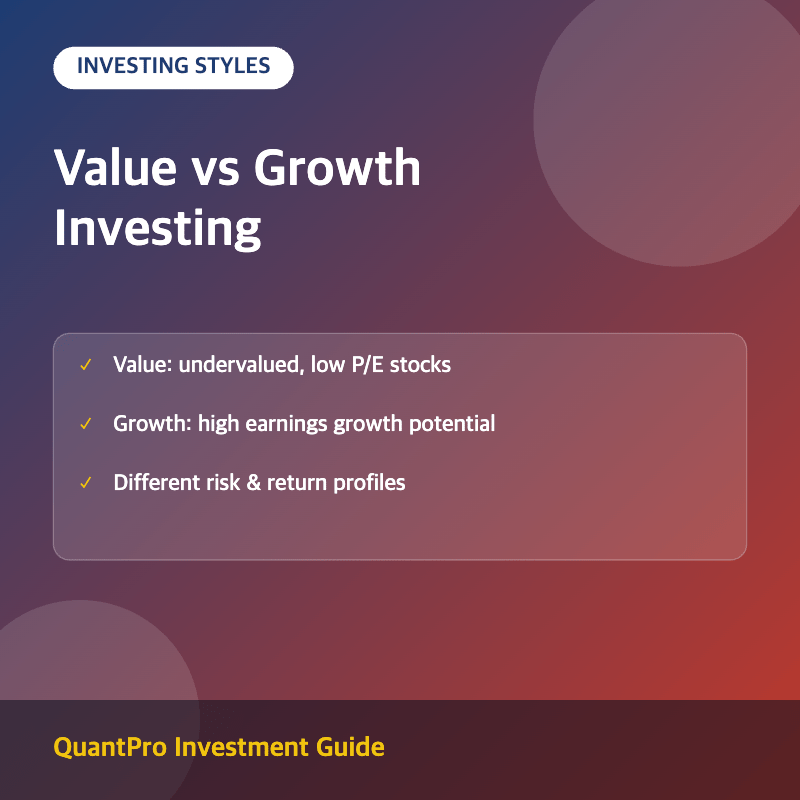
Value investing is a strategy that focuses on buying stocks trading below their intrinsic worth, often identified through low price-to-earnings (P/E) ratios, low price-to-book (P/B) ratios, and strong fundamentals relative to market price. The approach was pioneered by Benjamin Graham and popularized by investors like Warren Buffett.
Key Value Investing Metrics
Value investors typically screen for low P/E and P/B ratios, high dividend yields, strong free cash flow, and low debt levels. The goal is to find companies the market has temporarily mispriced relative to their underlying business quality.
What Is Growth Investing?
Growth investing targets companies expected to grow revenue and earnings faster than the overall market, even if current valuations appear expensive by traditional metrics. Growth investors prioritize future potential over present-day price discounts.
Key Growth Investing Metrics
Growth investors focus on revenue growth rate, earnings growth rate, total addressable market size, and competitive positioning, often accepting higher P/E ratios in exchange for higher expected future returns.
Value vs. Growth: Side-by-Side Comparison
| Feature | Value Investing | Growth Investing |
|---|---|---|
| Valuation Focus | Low P/E, low P/B | High P/E, future potential |
| Typical Sector | Financials, industrials, utilities | Technology, biotech, consumer |
| Dividend Yield | Often higher | Often lower or none |
| Volatility | Generally lower | Generally higher |
| Best Market Conditions | Rising rates, market downturns | Low rates, bull markets |
Which Style Performs Better?
Historical performance rotates between value and growth depending on the economic cycle. Growth stocks tend to outperform during periods of low interest rates and strong economic expansion, while value stocks often outperform during rising rate environments and market corrections.
Blending Both Styles
Many investors combine value and growth principles, sometimes called “growth at a reasonable price” (GARP), seeking companies with solid growth prospects that still trade at reasonable valuations relative to their fundamentals.
Frequently Asked Questions
Is value investing safer than growth investing?
Value stocks are generally considered less volatile because they are already priced conservatively and often pay dividends, but they are not risk-free and can underperform for extended periods.
What is a good example of a growth stock?
Growth stocks are typically found in fast-expanding sectors like technology and biotechnology, where companies reinvest earnings into research, expansion, and market share growth rather than paying dividends.
Can a stock be both value and growth?
Yes. A stock can transition between categories over time, and some companies exhibit characteristics of both, which is why the GARP (growth at a reasonable price) strategy exists as a hybrid approach.
How do I choose between value and growth investing?
The choice depends on your risk tolerance, time horizon, and market outlook. Many financial advisors recommend diversifying across both styles rather than committing exclusively to one.
Key Takeaways
Value investing seeks undervalued companies trading below intrinsic worth, while growth investing targets companies with above-average earnings and revenue growth potential, often at higher valuations. Both strategies carry distinct risk-return profiles and tend to outperform in different market environments, making diversification across styles a common approach. This article is for informational purposes only and does not constitute investment advice.

QuantPro: AI Finds the Trade Before You Do
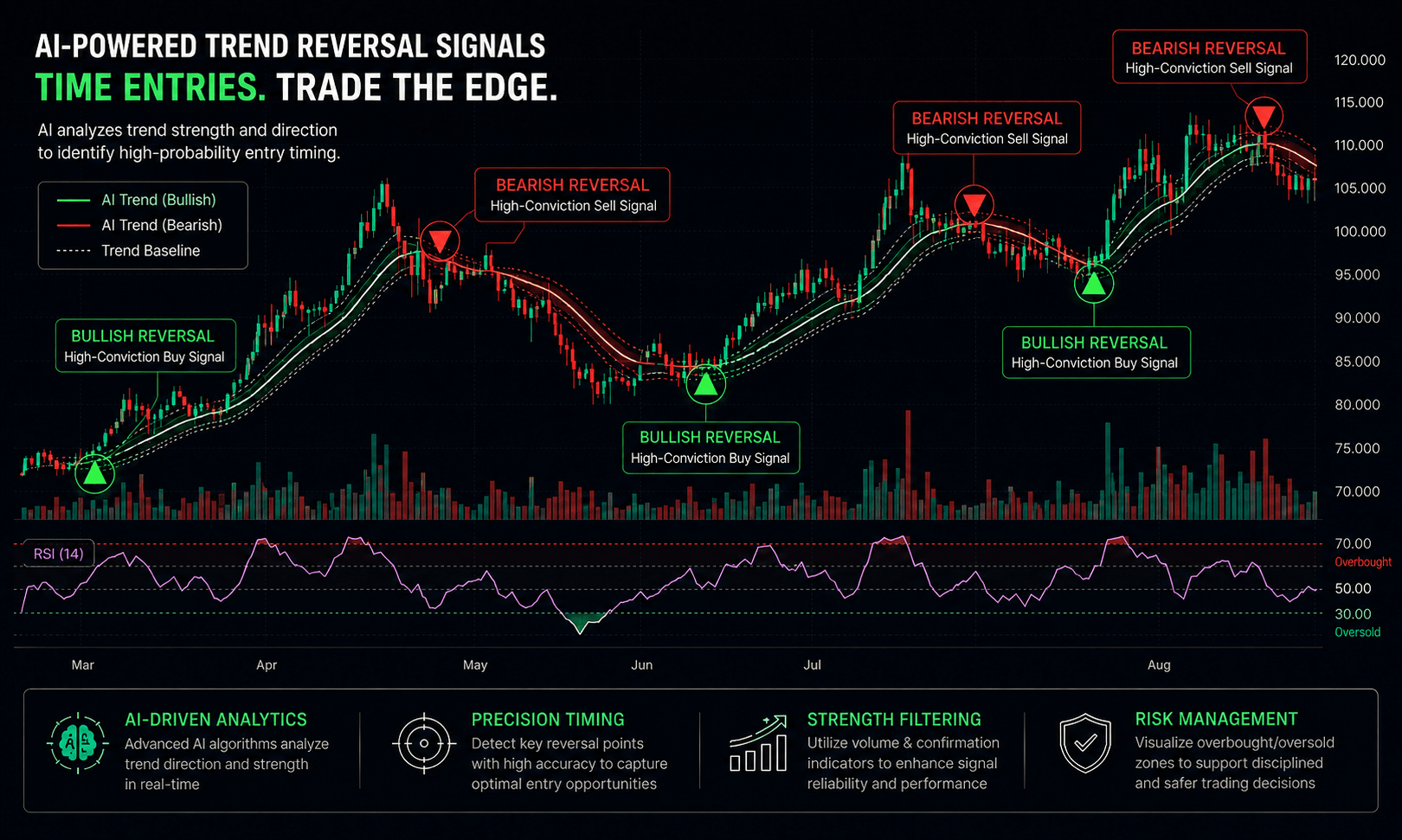
From AI-powered chart analysis to real-time market intelligence — everything a serious investor needs, in one platform.
- Automated AI chart analysis with precision trend timing
- Bull Radar: real-time visualization of geopolitical & economic shifts
- Live market-moving news and insights, curated for you
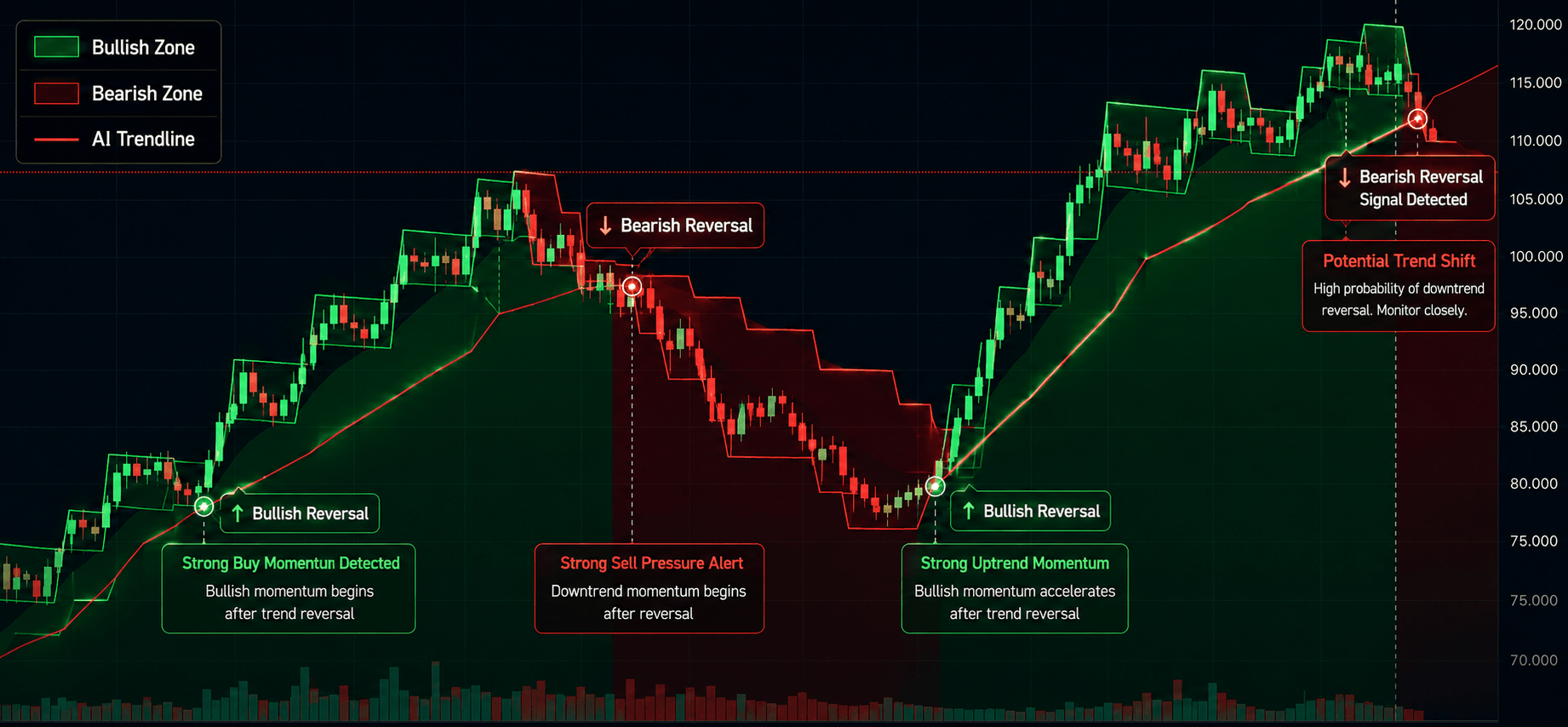
Bull Wave / Bear Wave Forecast Model
Engineered to help you read market direction and momentum faster than the crowd.
- Instantly separate bullish momentum from bearish pressure
- Pinpoint high-probability entry zones with confidence
- Chart signals clear enough for beginners, sharp enough for pros
Winning Pattern Detection
Instantly surfaces the high-probability setups that repeat across the charts — a trusted edge for timing your entries and exits.
- Spot momentum building in real time
- Catch trend-reversal points before they break
- Built for active traders who need results, not theory

AI Live Economic Dashboard
AI analyzes real-time market data — turning complex, global investment flows into clear insight in seconds.
- Track global stock markets in real time
- See exactly which assets are strong — and which are fading
- Watch how geopolitical events move the markets
About the Author