Understanding the Price-to-Book Ratio
Definition of the P/B Ratio
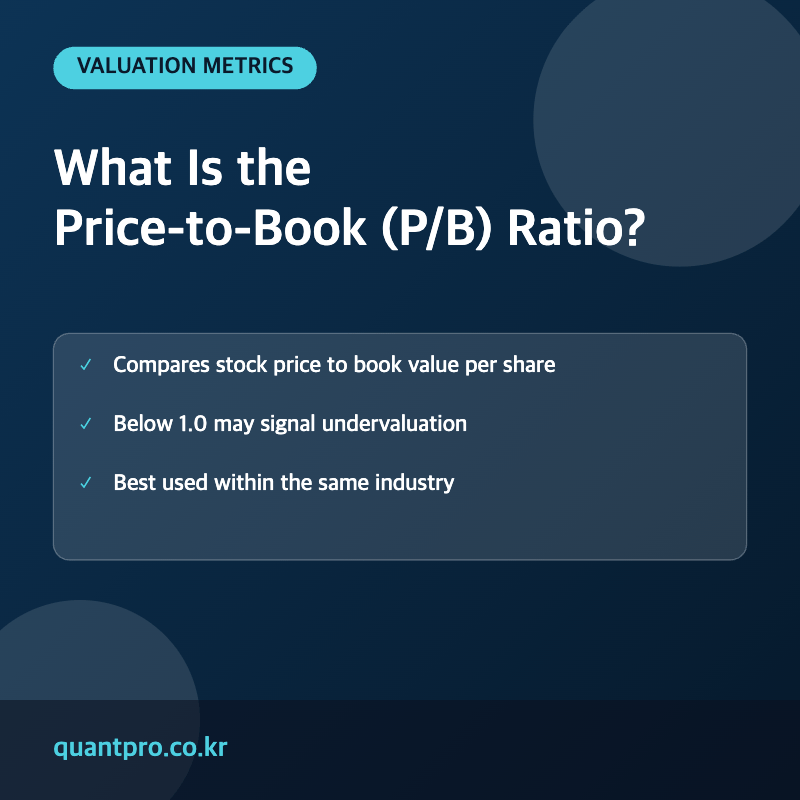
The Price-to-Book (P/B) Ratio is a valuation metric that compares a company’s market price per share to its book value per share, which is calculated by dividing total shareholders’ equity by the number of outstanding shares. The formula is market price per share divided by book value per share, so a company trading at $30 per share with a book value of $20 per share has a P/B ratio of 1.5. This means investors are paying 1.5 times the accounting value of the company’s net assets to own a share.
What Book Value Represents
Book value, also called shareholders’ equity, represents what would theoretically remain for shareholders if a company sold all its assets and paid off all its liabilities, making it a snapshot of accounting net worth rather than market perception. Because book value is based on historical cost accounting for many assets, it can diverge significantly from a company’s true economic value, particularly for asset-light businesses like software companies where intangible assets such as brand value and intellectual property are often not fully reflected on the balance sheet.
P/B Ratio Interpretation Guide
| P/B Ratio | General Interpretation | Common Context |
|---|---|---|
| Below 1.0 | Trading below book value | Potentially undervalued or distressed |
| 1.0 to 3.0 | Moderate valuation | Typical range for many industries |
| 3.0 to 10.0 | Premium valuation | Growth companies, strong brands |
| Above 10.0 | Very high premium to book value | Asset-light tech and software firms |
Using the P/B Ratio in Investment Analysis
Why Industry Comparison Matters
The P/B ratio is most meaningful when comparing companies within the same industry, since capital-intensive sectors like banking, manufacturing, and real estate typically carry substantial tangible assets and trade at lower P/B multiples, while asset-light sectors like software and services often trade at much higher multiples because their value comes primarily from intangible factors like intellectual property and growth potential rather than physical assets. Comparing a bank’s P/B ratio to a software company’s P/B ratio without adjusting for this structural difference would produce a misleading conclusion.
A Low P/B Ratio Is Not Automatically a Bargain
A low P/B ratio can indicate an undervalued stock, but it can equally reflect a company facing genuine business deterioration, declining profitability, or asset quality concerns that the market has already priced in accurately. This is sometimes referred to as a value trap, where a statistically cheap valuation coincides with a legitimately worsening business, so investors typically pair the P/B ratio with profitability measures like return on equity and an assessment of the underlying business trends before drawing conclusions.
Frequently Asked Questions
What is considered a good P/B ratio?
There is no single universal benchmark since the appropriate range varies significantly by industry, but historically a P/B ratio below 1.0 combined with solid fundamentals has often been viewed as a potential value opportunity worth further investigation.
How is the P/B ratio different from the P/E ratio?
The P/B ratio compares price to a company’s net asset value on the balance sheet, while the P/E ratio compares price to a company’s earnings on the income statement, so the two metrics capture different dimensions of valuation and are often used together.
Why do some profitable companies have very high P/B ratios?
Companies with strong brands, proprietary technology, or high returns on equity often trade at high P/B ratios because the market is pricing in future earnings power and intangible value that is not captured in the accounting book value shown on the balance sheet.
Can the P/B ratio be negative?
Yes, if a company has negative shareholders’ equity due to accumulated losses or heavy debt exceeding assets, the P/B ratio becomes negative and is generally not a meaningful valuation measure in that situation.
Key Takeaways
The Price-to-Book Ratio compares a company’s market price to its accounting net asset value per share, offering a useful lens for valuation, particularly in asset-heavy industries like banking and real estate. Because book value can understate the true worth of asset-light businesses, the ratio is most reliable when compared within the same industry and combined with other metrics like return on equity rather than used in isolation. This article is for informational purposes only and does not constitute investment advice.

QuantPro: AI Finds the Trade Before You Do
From AI-powered chart analysis to real-time market intelligence — everything a serious investor needs, in one platform.
- Automated AI chart analysis with precision trend timing
- Bull Radar: real-time visualization of geopolitical & economic shifts
- Live market-moving news and insights, curated for you
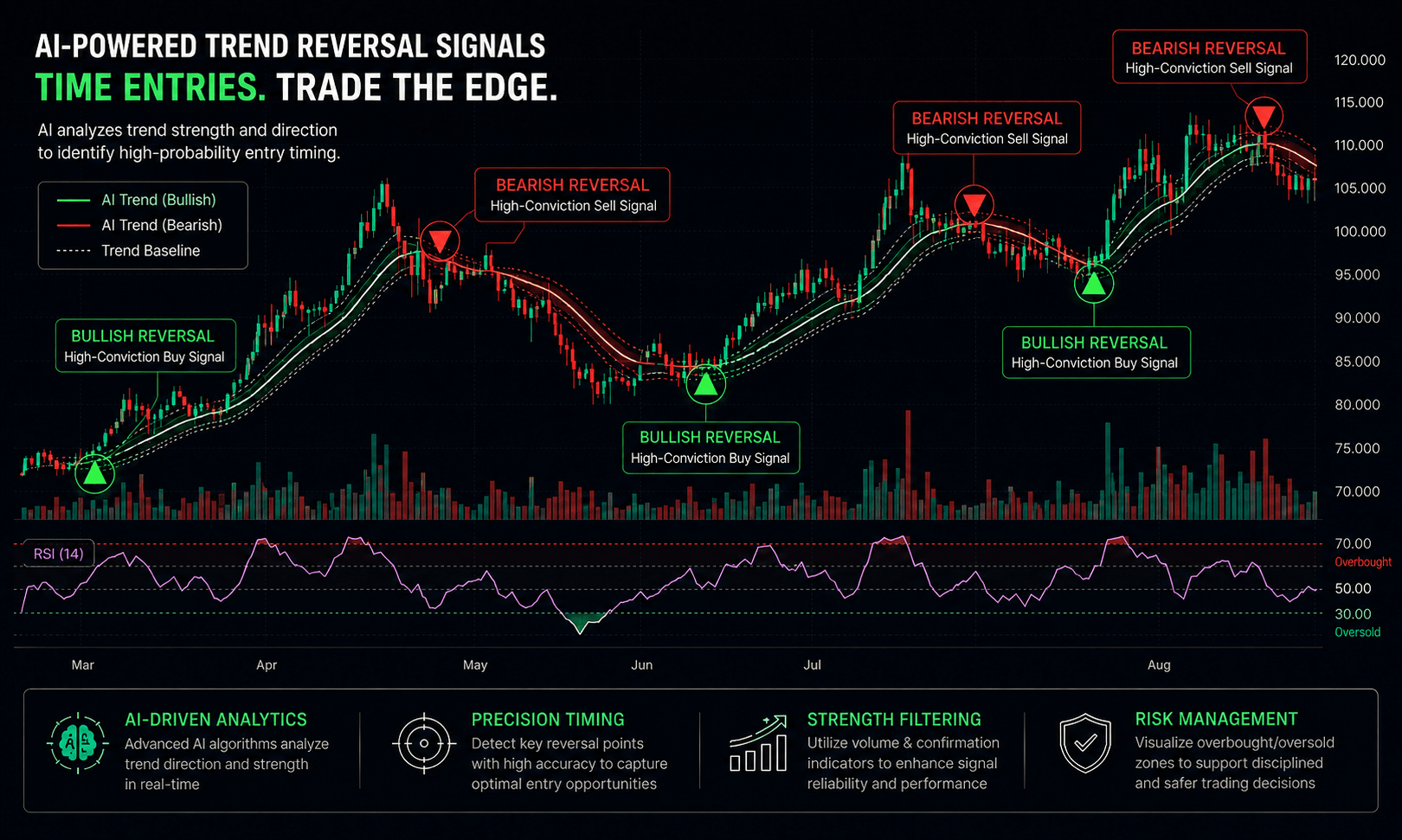
Bull Wave / Bear Wave Forecast Model
Engineered to help you read market direction and momentum faster than the crowd.
- Instantly separate bullish momentum from bearish pressure
- Pinpoint high-probability entry zones with confidence
- Chart signals clear enough for beginners, sharp enough for pros
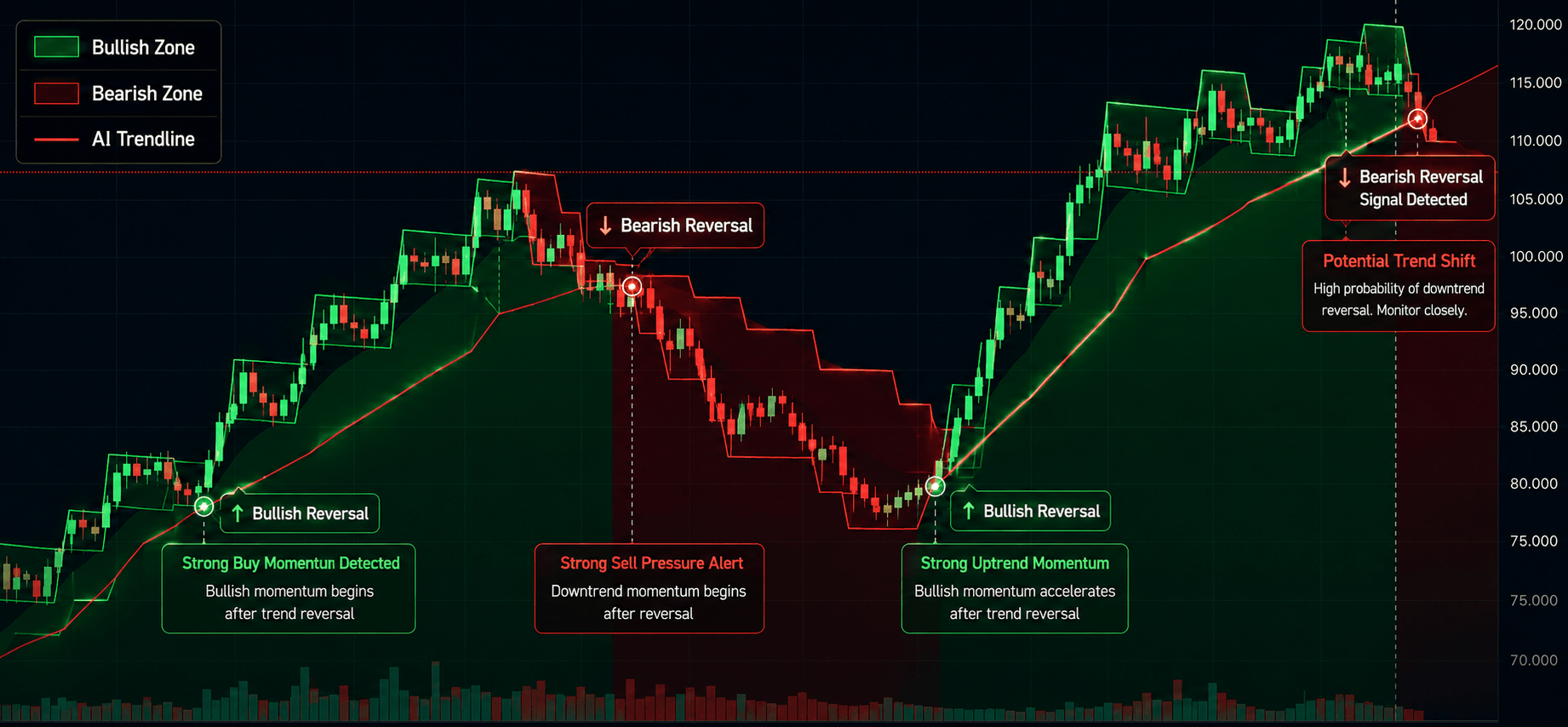
Winning Pattern Detection
Instantly surfaces the high-probability setups that repeat across the charts — a trusted edge for timing your entries and exits.
- Spot momentum building in real time
- Catch trend-reversal points before they break
- Built for active traders who need results, not theory

AI Live Economic Dashboard
AI analyzes real-time market data — turning complex, global investment flows into clear insight in seconds.
- Track global stock markets in real time
- See exactly which assets are strong — and which are fading
- Watch how geopolitical events move the markets
About the Author