Understanding the Efficient Frontier
Definition of the Efficient Frontier
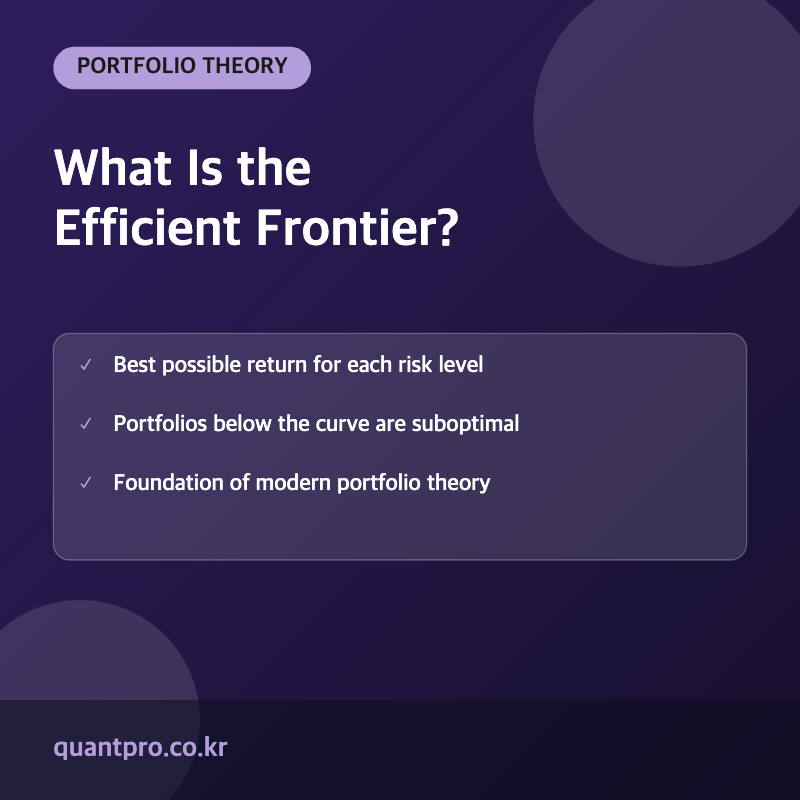
The Efficient Frontier is a curve on a risk-return graph that represents the set of optimal portfolios offering the highest expected return for each given level of risk, or equivalently, the lowest risk for each given level of expected return. Introduced by economist Harry Markowitz in 1952 as part of Modern Portfolio Theory, the concept plots portfolio volatility (standard deviation) on the horizontal axis and expected return on the vertical axis, with the frontier forming an upward-curving boundary that represents the best possible combinations achievable through diversification.
Why Diversification Creates the Curve
The Efficient Frontier exists because combining assets that are not perfectly correlated can reduce a portfolio’s overall volatility without proportionally reducing expected return. For example, blending stocks and bonds, which often move somewhat independently, can produce a combined portfolio with better risk-adjusted characteristics than either asset held alone. Any portfolio sitting below the frontier is considered suboptimal because an investor could achieve either higher return at the same risk, or lower risk at the same return, simply by reallocating along the curve.
Portfolio Positions Relative to the Frontier
| Position | Description | Investor Implication |
|---|---|---|
| On the frontier | Optimal risk-return combination | Efficient use of diversification |
| Below the frontier | Suboptimal, excess risk for the return | Room to improve via reallocation |
| Left endpoint | Minimum variance portfolio | Lowest possible risk combination |
| Above the frontier | Theoretically unachievable | Not attainable with given assets |
Applying the Efficient Frontier to Portfolio Building
Finding Your Position on the Curve
Where an investor should sit along the Efficient Frontier depends on individual risk tolerance rather than a single universally correct answer. A conservative investor might select a portfolio near the minimum-variance point with lower volatility and lower expected return, while a growth-oriented investor might choose a position further along the curve that accepts higher volatility in exchange for higher expected return. The Capital Market Line, which connects the risk-free rate to the frontier, is often used alongside it to identify the theoretically optimal portfolio when a risk-free asset is available.
Real-World Limitations
Constructing a true Efficient Frontier requires accurate estimates of expected returns, volatilities, and correlations between assets, all of which are inherently uncertain and can shift over time, especially during market stress when correlations tend to rise. Because of this, the Efficient Frontier is best understood as a conceptual framework for thinking about diversification rather than a precise, static map that investors should follow exactly, and many practitioners combine it with other risk management approaches for real portfolio construction.
Frequently Asked Questions
Can individual investors calculate their own Efficient Frontier?
It requires historical return, volatility, and correlation data along with optimization software or spreadsheet modeling, so while technically possible for individual investors, many rely on portfolio management tools or advisors that perform this analysis.
Does the Efficient Frontier change over time?
Yes. Because it depends on expected returns, volatilities, and correlations, which shift as market conditions change, the frontier is not fixed and should be periodically reassessed rather than treated as permanent.
What is the difference between the Efficient Frontier and the Capital Market Line?
The Efficient Frontier is built from risky assets only, while the Capital Market Line extends from the risk-free rate to a tangent point on the frontier, representing combinations of the risk-free asset and the optimal risky portfolio.
Is a portfolio on the Efficient Frontier automatically the right choice?
Not necessarily. Being on the frontier only means the portfolio is mathematically optimal for its risk level based on the input assumptions; suitability still depends on an investor’s goals, time horizon, and comfort with the assumptions used.
Key Takeaways
The Efficient Frontier represents the set of portfolios offering the best possible return for a given level of risk, forming the theoretical foundation of Modern Portfolio Theory and the case for diversification. While the concept is powerful for understanding how uncorrelated assets improve risk-adjusted outcomes, it relies on assumptions that shift over time, so it works best as a framework rather than a precise prediction. This article is for informational purposes only and does not constitute investment advice.

QuantPro: AI Finds the Trade Before You Do
From AI-powered chart analysis to real-time market intelligence — everything a serious investor needs, in one platform.
- Automated AI chart analysis with precision trend timing
- Bull Radar: real-time visualization of geopolitical & economic shifts
- Live market-moving news and insights, curated for you
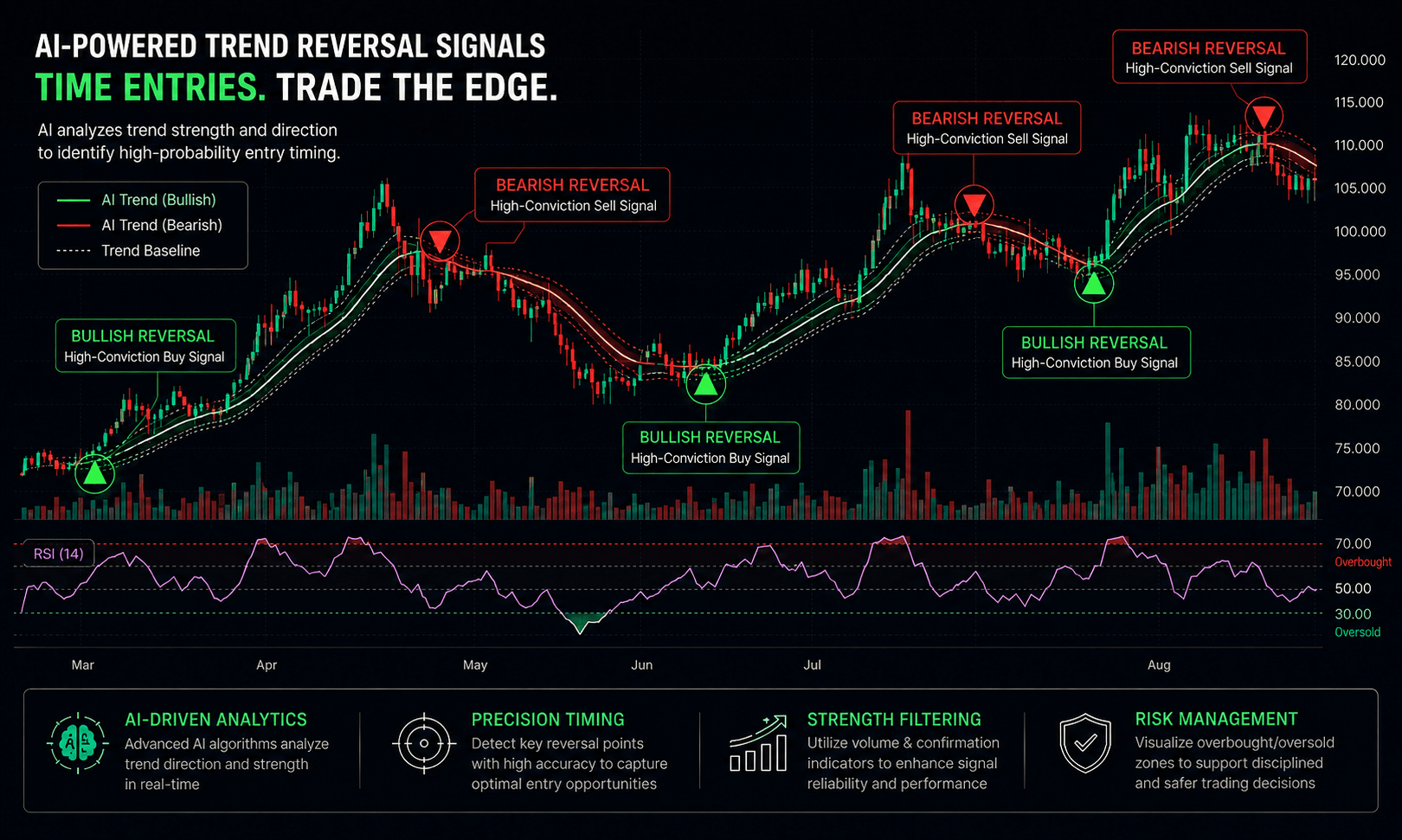
Bull Wave / Bear Wave Forecast Model
Engineered to help you read market direction and momentum faster than the crowd.
- Instantly separate bullish momentum from bearish pressure
- Pinpoint high-probability entry zones with confidence
- Chart signals clear enough for beginners, sharp enough for pros
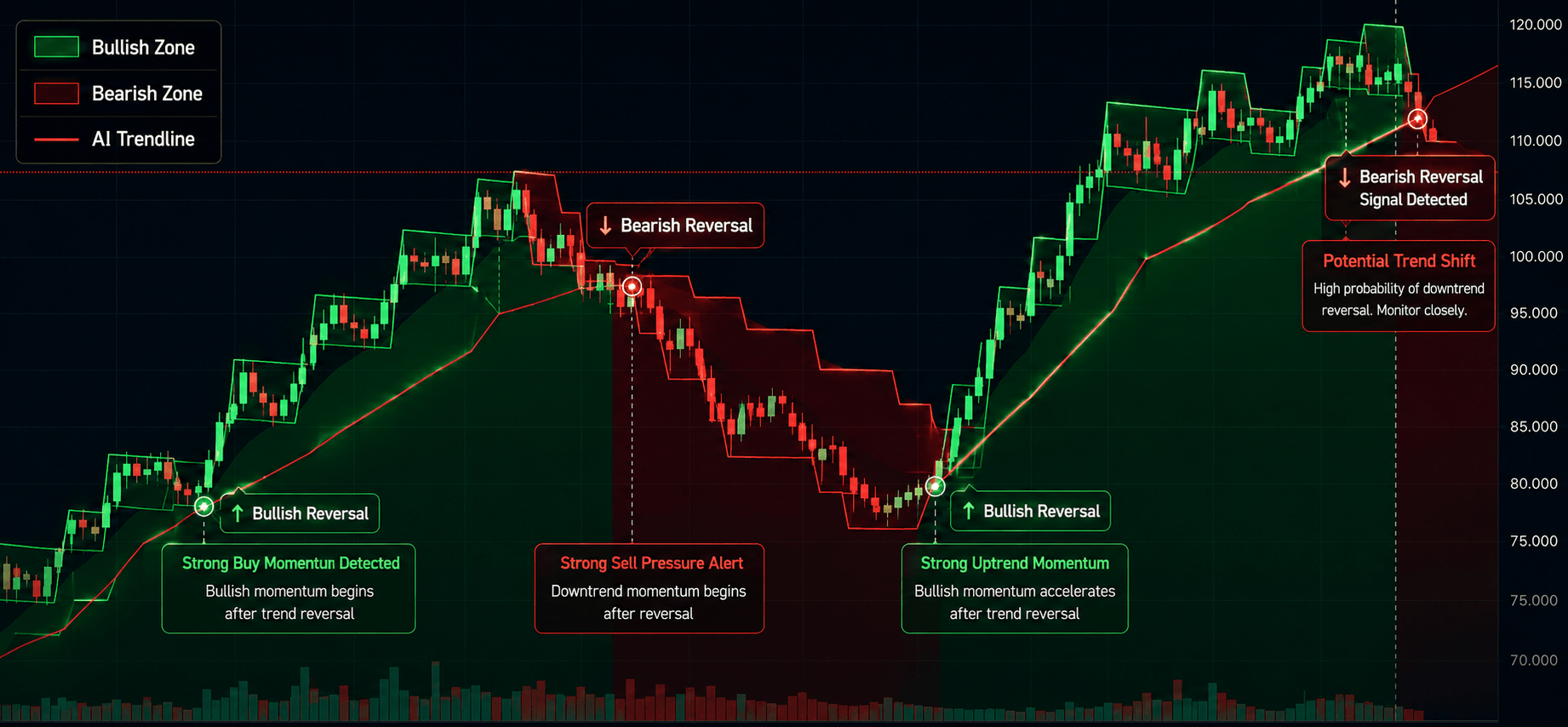
Winning Pattern Detection
Instantly surfaces the high-probability setups that repeat across the charts — a trusted edge for timing your entries and exits.
- Spot momentum building in real time
- Catch trend-reversal points before they break
- Built for active traders who need results, not theory

AI Live Economic Dashboard
AI analyzes real-time market data — turning complex, global investment flows into clear insight in seconds.
- Track global stock markets in real time
- See exactly which assets are strong — and which are fading
- Watch how geopolitical events move the markets
About the Author