Understanding Yield to Maturity
Definition of Yield to Maturity
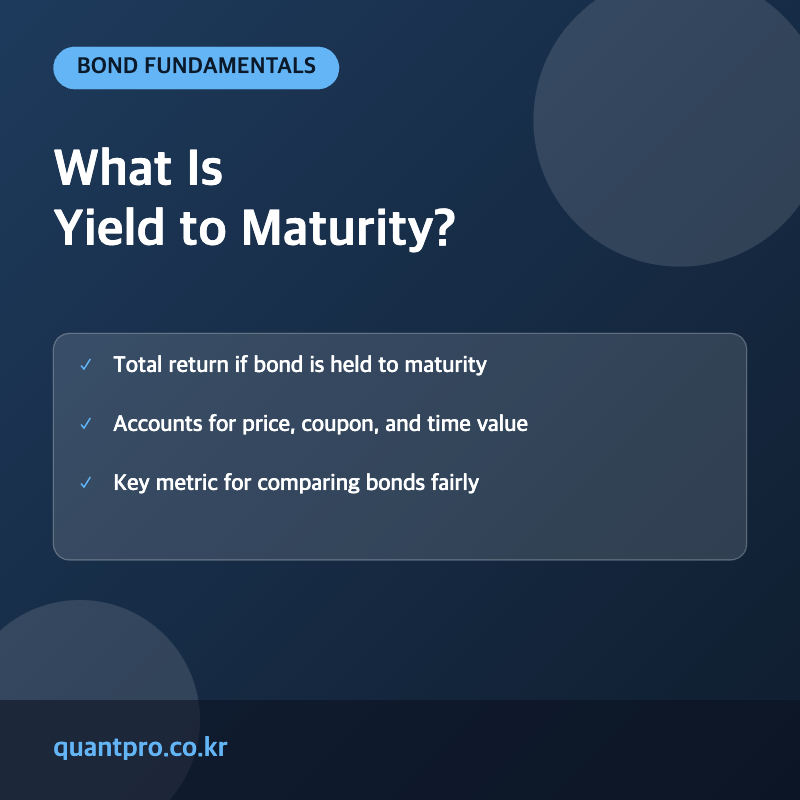
Yield to Maturity (YTM) is the total annualized return an investor can expect to earn if a bond is held until it matures, assuming all coupon payments are reinvested at the same rate and the issuer makes all payments as scheduled. Unlike the coupon rate, which is fixed at issuance and based on the bond’s face value, YTM accounts for the bond’s current market price, its coupon payments, the face value to be repaid at maturity, and the time remaining until that maturity date, making it a more complete measure of a bond’s true return than the coupon rate alone.
Why Bond Price and YTM Move in Opposite Directions
When a bond’s market price falls below its face value, meaning it is trading at a discount, its YTM rises above the coupon rate because the investor buying it at a lower price will receive the full face value at maturity in addition to coupon payments, generating extra return. Conversely, when a bond trades at a premium above face value, YTM falls below the coupon rate because the investor pays more upfront than they will recover at maturity. This inverse relationship between bond price and yield is a foundational concept in fixed income investing.
Bond Price, Coupon Rate, and YTM Relationship
| Bond Trading At | Price vs. Face Value | YTM vs. Coupon Rate |
|---|---|---|
| Discount | Below face value | YTM higher than coupon rate |
| Par | Equal to face value | YTM equal to coupon rate |
| Premium | Above face value | YTM lower than coupon rate |
Using Yield to Maturity in Bond Analysis
Comparing Bonds With Different Structures
YTM allows investors to compare bonds with different coupon rates, prices, and maturities on a standardized, apples-to-apples basis, which is why it is the most commonly quoted yield figure in bond markets rather than the coupon rate. Two bonds from similar issuers with different coupon rates and prices could have very similar YTMs, revealing that the market is pricing their overall risk and return characteristics comparably despite their different structures.
Key Assumptions and Limitations
YTM calculations rest on the assumption that all coupon payments will be reinvested at the same rate as the YTM itself, which may not hold true in practice if market interest rates change over the bond’s life, a limitation sometimes called reinvestment risk. YTM also assumes the bond is held to maturity and that the issuer makes every payment as scheduled, so it does not account for the possibility of default, nor does it reflect what an investor would actually earn if the bond is sold before maturity at a different market price.
Frequently Asked Questions
How is Yield to Maturity calculated?
YTM is found by solving for the discount rate that equates the present value of all future coupon payments and the face value repayment to the bond’s current market price, a calculation typically performed using financial calculators or spreadsheet functions since it requires iterative approximation for most bonds.
What is the difference between YTM and current yield?
Current yield only divides the annual coupon payment by the bond’s current market price and ignores the capital gain or loss that will occur when the bond reaches face value at maturity, while YTM incorporates that price convergence, making YTM a more complete measure of total return.
Does a higher YTM always mean a better bond?
Not necessarily. A higher YTM often reflects higher perceived credit risk or longer duration, so investors should evaluate the issuer’s creditworthiness and the bond’s interest rate sensitivity rather than selecting bonds based on YTM alone.
What happens to YTM if a bond is sold before maturity?
YTM is only realized in full if the bond is held to maturity; selling earlier means the investor’s actual return depends on the bond’s market price at the time of sale, which can be higher or lower than the price implied by the original YTM calculation.
Key Takeaways
Yield to Maturity represents the total annualized return an investor would earn by holding a bond until maturity, incorporating price, coupon payments, and time value in a single standardized figure that makes bonds with different structures comparable. While a powerful tool for bond analysis, YTM relies on assumptions about reinvestment and payment certainty that may not hold in practice, so it works best alongside credit analysis and an understanding of interest rate risk. This article is for informational purposes only and does not constitute investment advice.

QuantPro: AI Finds the Trade Before You Do
From AI-powered chart analysis to real-time market intelligence — everything a serious investor needs, in one platform.
- Automated AI chart analysis with precision trend timing
- Bull Radar: real-time visualization of geopolitical & economic shifts
- Live market-moving news and insights, curated for you
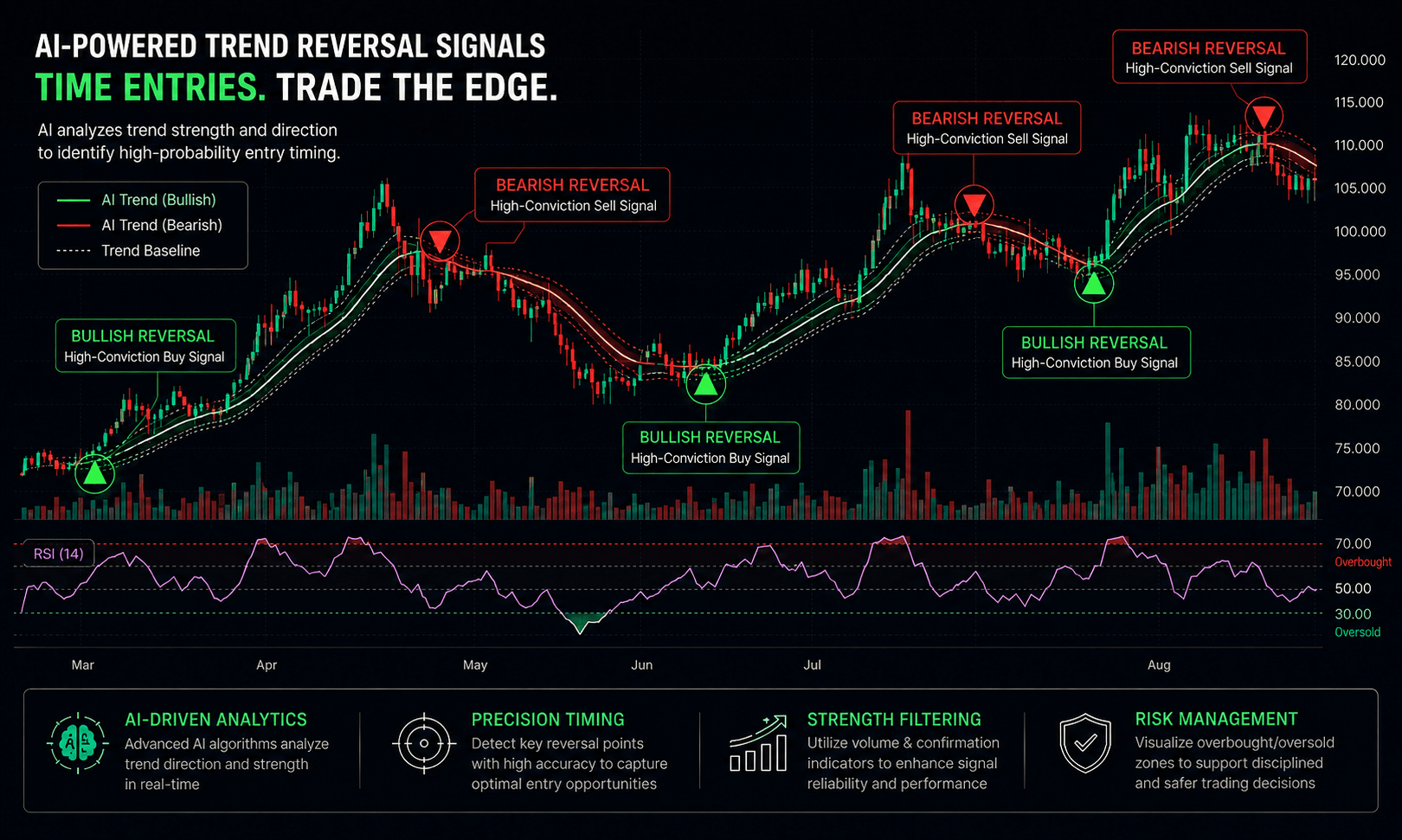
Bull Wave / Bear Wave Forecast Model
Engineered to help you read market direction and momentum faster than the crowd.
- Instantly separate bullish momentum from bearish pressure
- Pinpoint high-probability entry zones with confidence
- Chart signals clear enough for beginners, sharp enough for pros
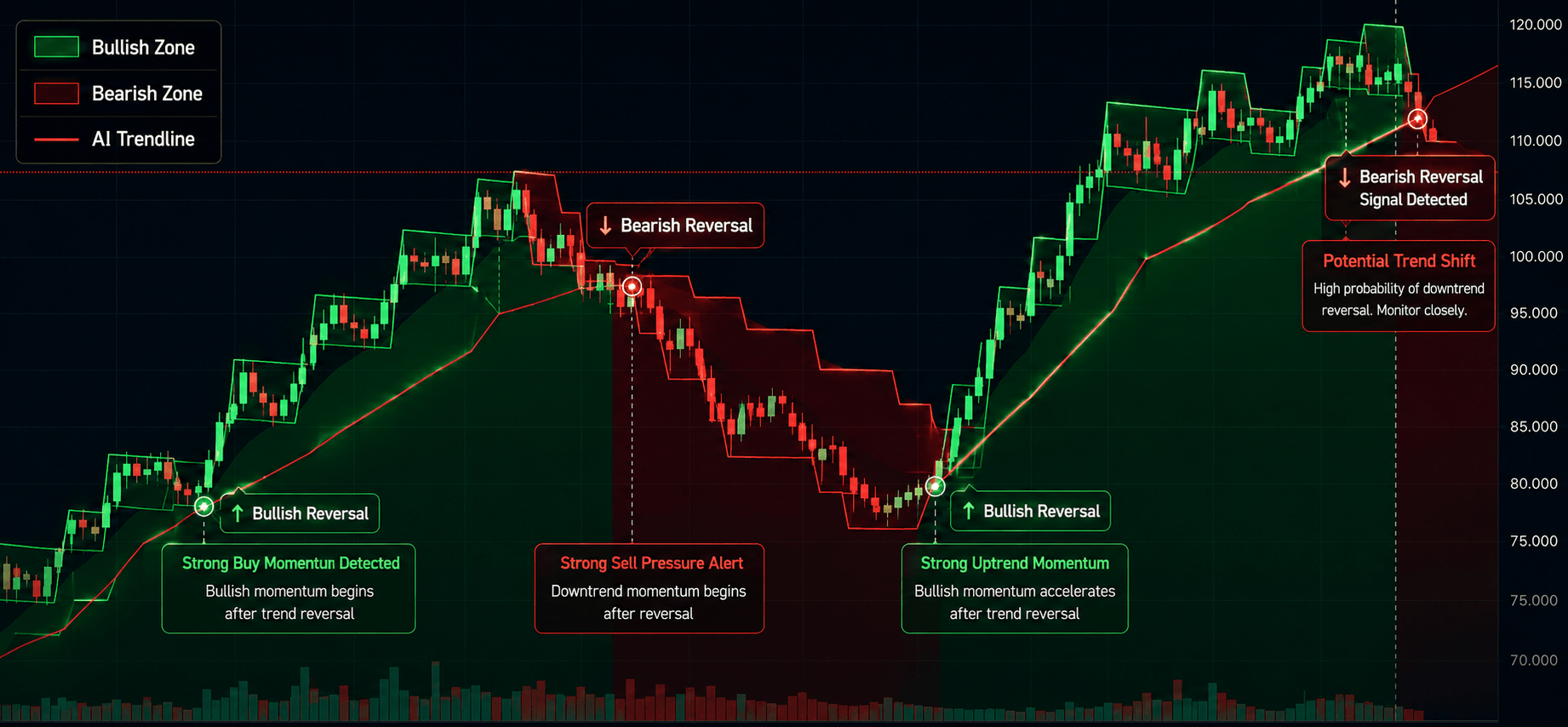
Winning Pattern Detection
Instantly surfaces the high-probability setups that repeat across the charts — a trusted edge for timing your entries and exits.
- Spot momentum building in real time
- Catch trend-reversal points before they break
- Built for active traders who need results, not theory

AI Live Economic Dashboard
AI analyzes real-time market data — turning complex, global investment flows into clear insight in seconds.
- Track global stock markets in real time
- See exactly which assets are strong — and which are fading
- Watch how geopolitical events move the markets
About the Author