What Is the Altman Z-Score?
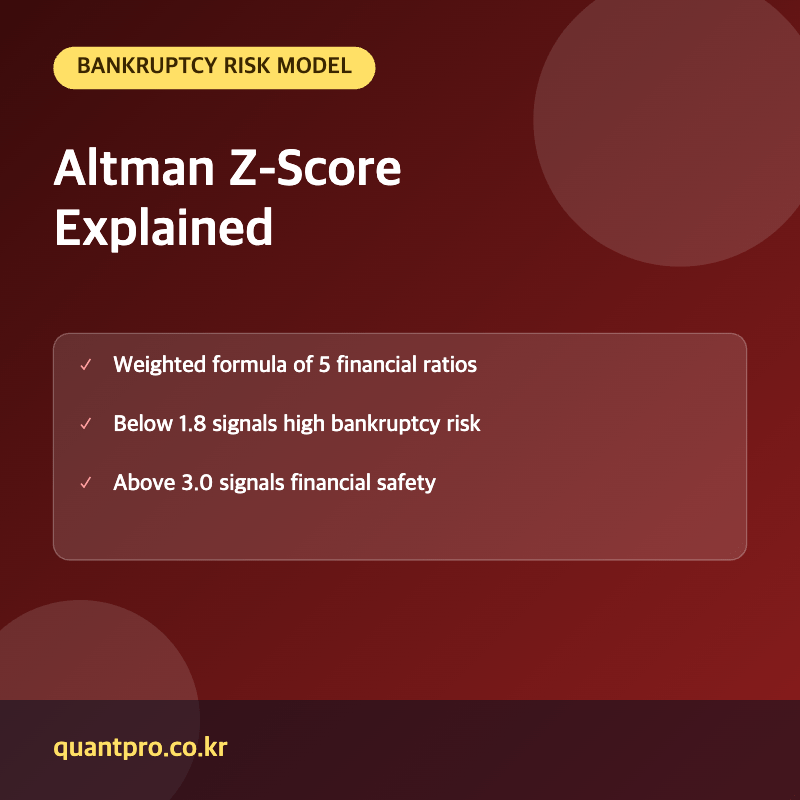
The Altman Z-Score is a formula developed by economist Edward Altman in 1968 that combines five weighted financial ratios into a single score used to predict the likelihood of a company entering bankruptcy within two years. The formula blends measures of liquidity, profitability, leverage, solvency, and activity into one composite number.
The original model was designed for publicly traded manufacturing companies, using the formula Z = 1.2(Working Capital/Total Assets) + 1.4(Retained Earnings/Total Assets) + 3.3(EBIT/Total Assets) + 0.6(Market Value of Equity/Total Liabilities) + 1.0(Sales/Total Assets), with modified versions later developed for private companies and non-manufacturing sectors.
Interpreting the Z-Score
The Z-Score is typically divided into three zones: a “safe” zone above 3.0 where bankruptcy risk is low, a “grey” zone between 1.8 and 3.0 where risk is uncertain and requires closer monitoring, and a “distress” zone below 1.8 where bankruptcy risk is considered high within the next two years.
Why Investors Use the Z-Score
The Altman Z-Score offers a quick, standardized way to screen for financial distress across a large number of companies without needing to build a full credit analysis from scratch. It is especially useful as an early warning signal, though it should be combined with qualitative analysis and industry context rather than used as a standalone decision tool.
| Z-Score Range | Zone | Bankruptcy Risk Interpretation |
|---|---|---|
| Above 3.0 | Safe Zone | Low probability of bankruptcy |
| 1.8 to 3.0 | Grey Zone | Uncertain, requires monitoring |
| Below 1.8 | Distress Zone | High probability of bankruptcy within 2 years |
Frequently Asked Questions
Does a low Z-Score guarantee a company will go bankrupt?
No. The Z-Score is a statistical predictor based on historical patterns, not a certainty, so a low score should prompt further investigation rather than be treated as a definitive outcome.
Can the Altman Z-Score be used for any company?
The original formula was built for publicly traded manufacturers, so modified versions exist for private companies and service or non-manufacturing firms — using the wrong version can produce misleading results.
How often does a company’s Z-Score change?
Since the Z-Score relies on quarterly or annual financial statement data and market value of equity, it typically updates whenever new financial reports or significant stock price movements occur.
Is the Z-Score still relevant today?
While newer credit risk models exist, the Altman Z-Score remains widely used due to its simplicity and long track record, and it continues to serve as a useful first-pass screening tool for financial distress.
Key Takeaways
The Altman Z-Score combines five financial ratios into a single score that estimates a company’s bankruptcy risk, with scores above 3.0 considered safe and below 1.8 signaling high distress risk, though it should be used alongside other analysis. This article is for informational purposes only and does not constitute investment advice.

QuantPro: AI Finds the Trade Before You Do
From AI-powered chart analysis to real-time market intelligence — everything a serious investor needs, in one platform.
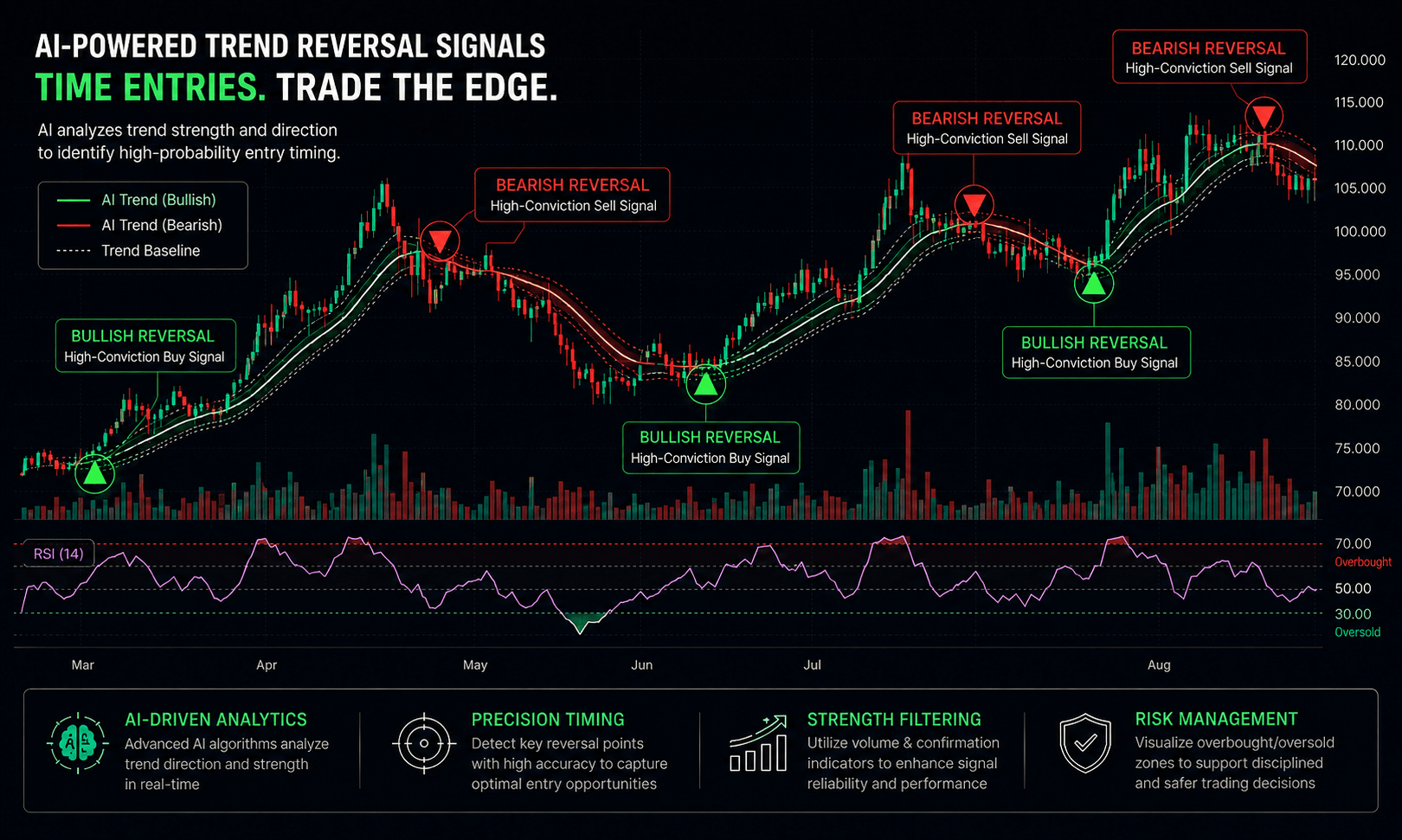
- Automated AI chart analysis with precision trend timing
- Bull Radar: real-time visualization of geopolitical & economic shifts
- Live market-moving news and insights, curated for you
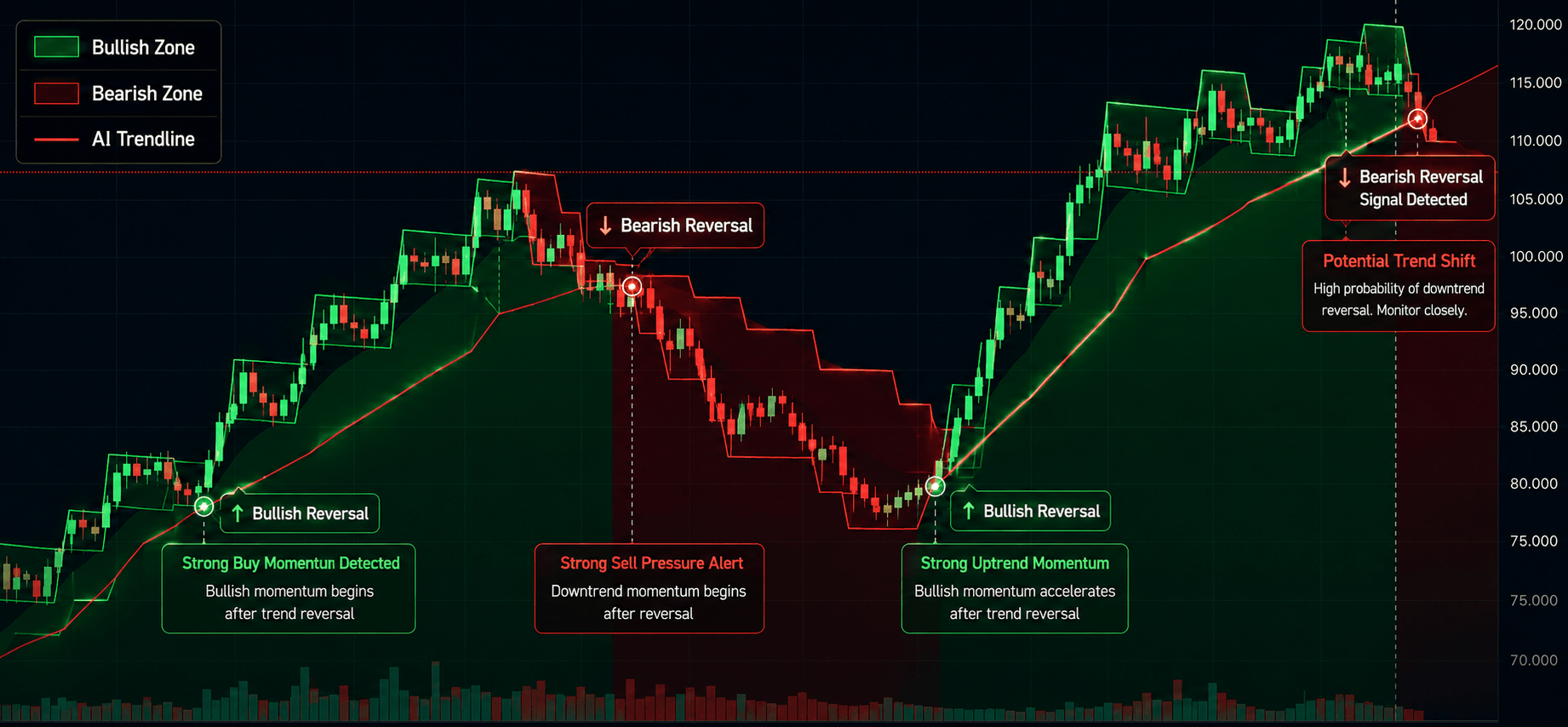
Bull Wave / Bear Wave Forecast Model
Engineered to help you read market direction and momentum faster than the crowd.
- Instantly separate bullish momentum from bearish pressure
- Pinpoint high-probability entry zones with confidence
- Chart signals clear enough for beginners, sharp enough for pros
Winning Pattern Detection
Instantly surfaces the high-probability setups that repeat across the charts — a trusted edge for timing your entries and exits.
- Spot momentum building in real time
- Catch trend-reversal points before they break
- Built for active traders who need results, not theory
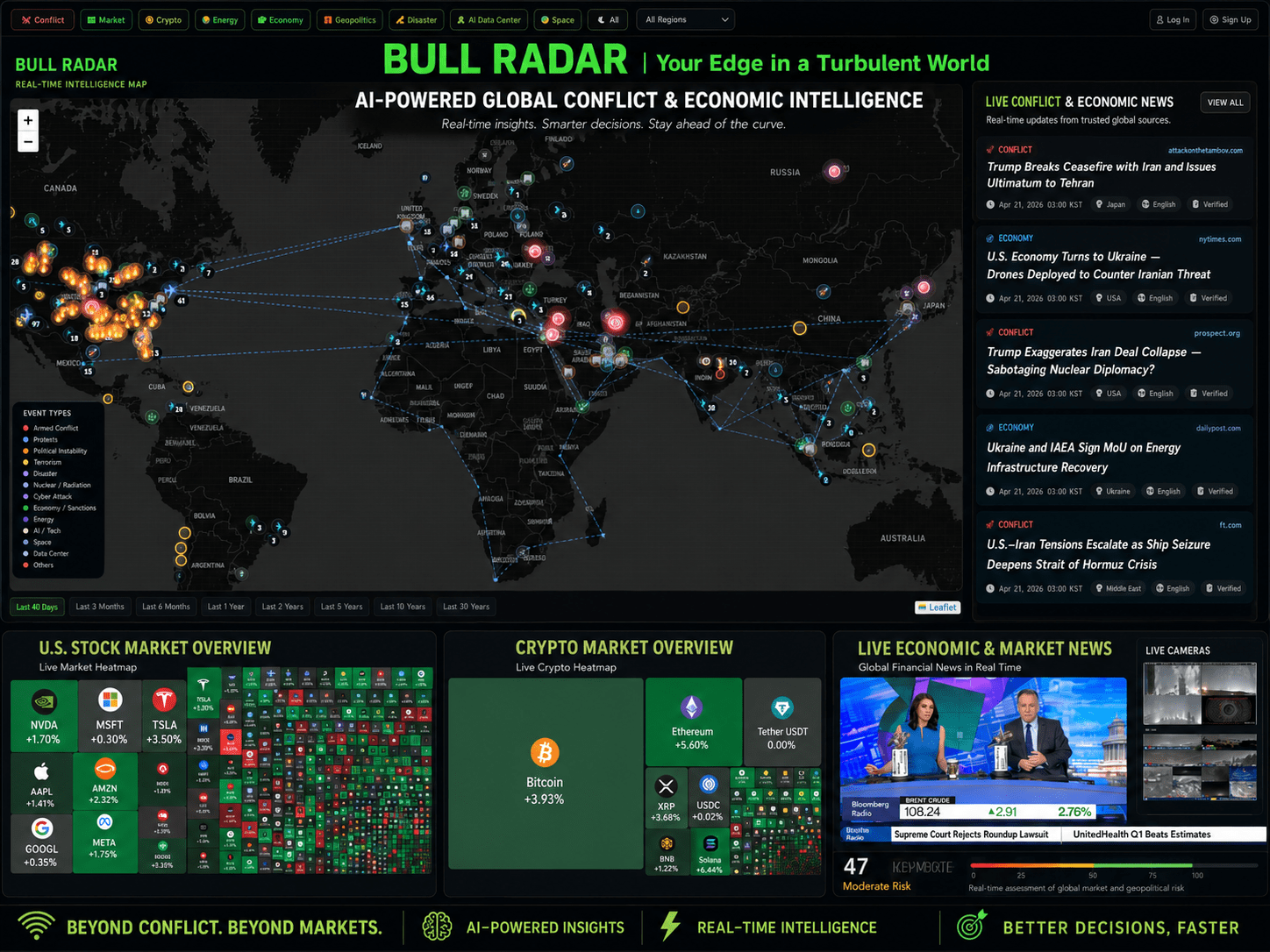
AI Live Economic Dashboard
AI analyzes real-time market data — turning complex, global investment flows into clear insight in seconds.
- Track global stock markets in real time
- See exactly which assets are strong — and which are fading
- Watch how geopolitical events move the markets
About the Author