What Is the Beta Coefficient?
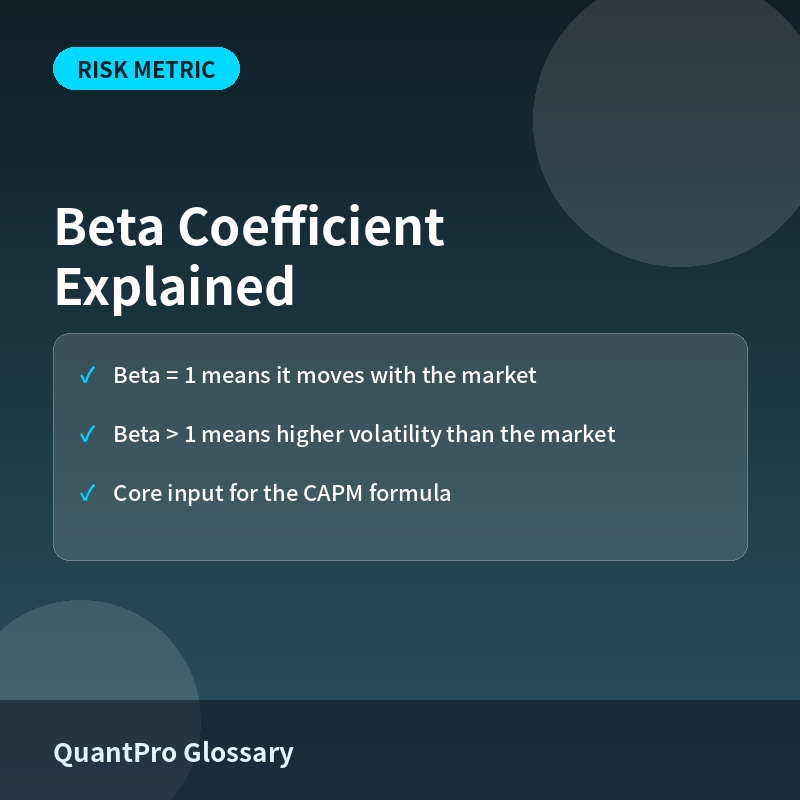
Beta is a single number that measures how sensitive a stock’s or portfolio’s returns are to movements in the overall market, such as the S&P 500. The market itself is set as the baseline at a beta of 1, and every asset’s beta is measured relative to that baseline — showing whether it tends to move more, less, or in the opposite direction.
For example, if a stock rises 1.2% on average whenever the S&P 500 rises 1%, that stock has a beta of roughly 1.2, meaning it’s about 20% more volatile than the broad market.
How Beta Is Calculated
The Formula
Beta is calculated as the covariance between the asset’s returns and the market’s returns, divided by the variance of the market’s returns: Beta = Cov(asset return, market return) / Var(market return). In practice, this is usually estimated with a regression on 3-5 years of monthly or weekly return data.
Interpreting Beta Ranges
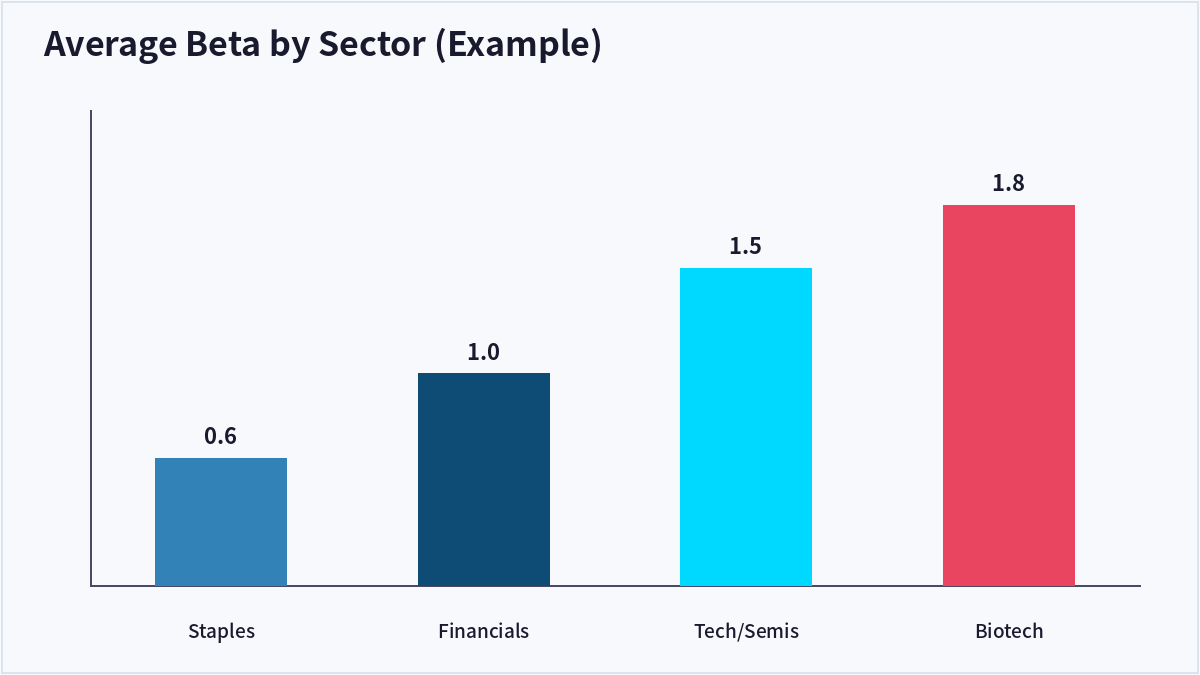
A beta below zero means the asset tends to move opposite the market (some inverse funds or gold at times), a beta between 0 and 1 signals a defensive asset that moves less than the market, a beta of exactly 1 tracks the market closely, and a beta above 1 signals an aggressive asset that amplifies market moves. The chart below shows how differently this plays out across sectors.
Why Beta Matters
Beta is a key input for gauging a portfolio’s overall risk level. Loading up on high-beta stocks can boost returns in a rally but magnify losses in a downturn, while a low-beta portfolio dampens swings at the cost of potentially lagging the market during rallies. Beta is also the central variable in the Capital Asset Pricing Model (CAPM), which uses it to estimate a stock’s expected return.
Beta Range Comparison
The table below summarizes what each beta range typically implies about an asset’s behavior.
| Beta Range | Meaning | Typical Profile |
|---|---|---|
| Beta < 0 | Moves opposite the market | Hedging / diversification |
| 0 < Beta < 1 | Less volatile than market | Defensive investing |
| Beta = 1 | Moves with the market | Index tracking |
| Beta > 1 | More volatile than market | Aggressive / growth investing |
Frequently Asked Questions
Does a low beta always mean a stock is safe?
Not necessarily. Beta only measures volatility relative to the market, not company-specific risks like weak earnings or high debt, so a low-beta stock can still decline sharply for reasons unrelated to the broad market.
Is beta a fixed number over time?
No. Beta is estimated from a chosen data window and frequency, so it can shift as a company’s business mix, leverage, or the measurement period changes.
What kinds of assets tend to have negative beta?
Gold and certain safe-haven or inverse assets sometimes show negative beta by rising when markets fall, though this relationship isn’t always stable across every period.
How do investors use beta in practice?
Investors often calculate a portfolio’s weighted-average beta to gauge overall market sensitivity, then tilt toward lower-beta holdings when they want to reduce downside exposure ahead of expected volatility.
Key Takeaways
Beta measures how sensitive an asset is to overall market movements, making it a central tool for managing portfolio risk and estimating expected returns through CAPM. Adjusting the mix of high- and low-beta holdings based on market outlook is a practical starting point for risk management. This article is for informational purposes only and does not constitute investment advice.

QuantPro: AI Finds the Trade Before You Do
From AI-powered chart analysis to real-time market intelligence — everything a serious investor needs, in one platform.
- Automated AI chart analysis with precision trend timing
- Bull Radar: real-time visualization of geopolitical & economic shifts
- Live market-moving news and insights, curated for you
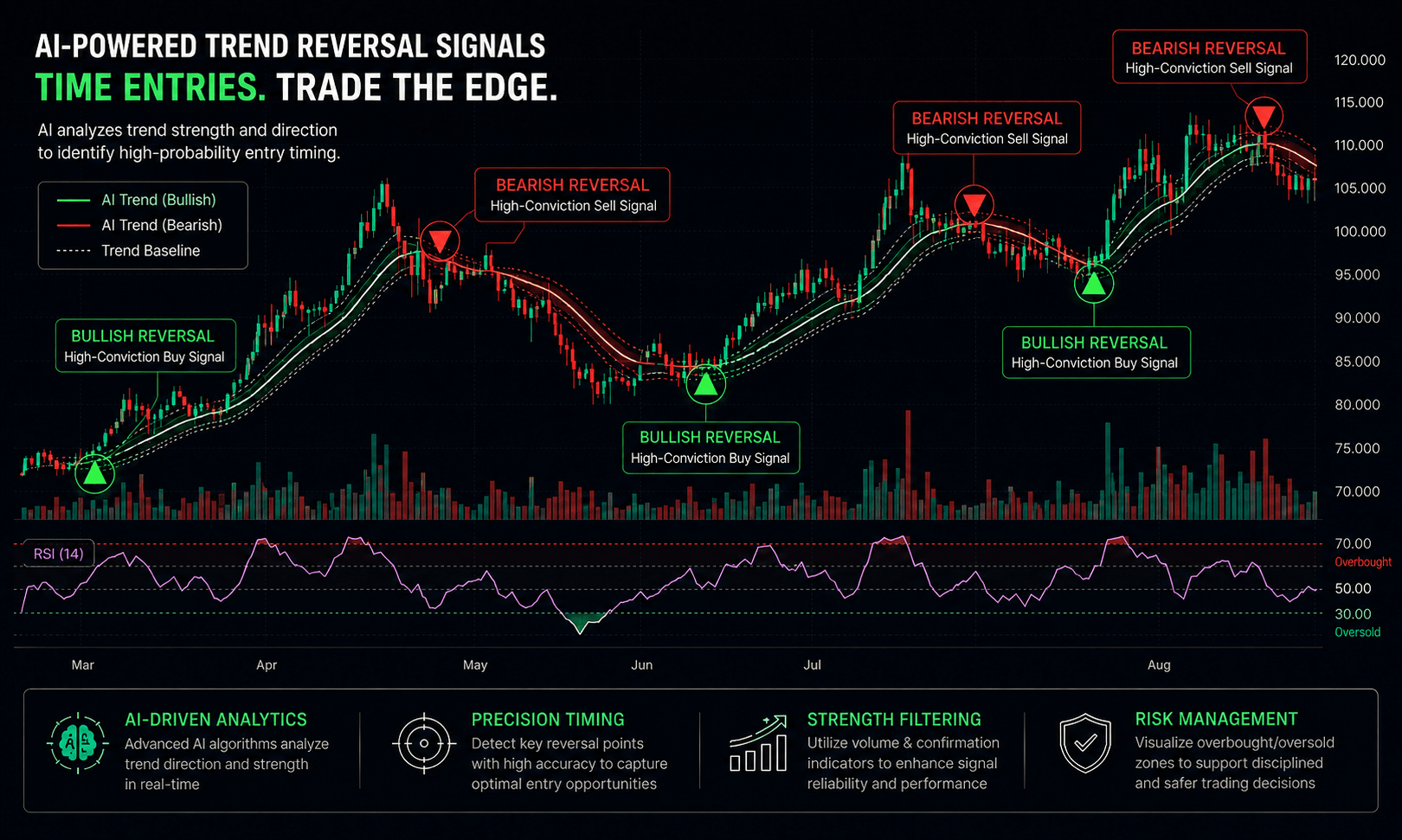
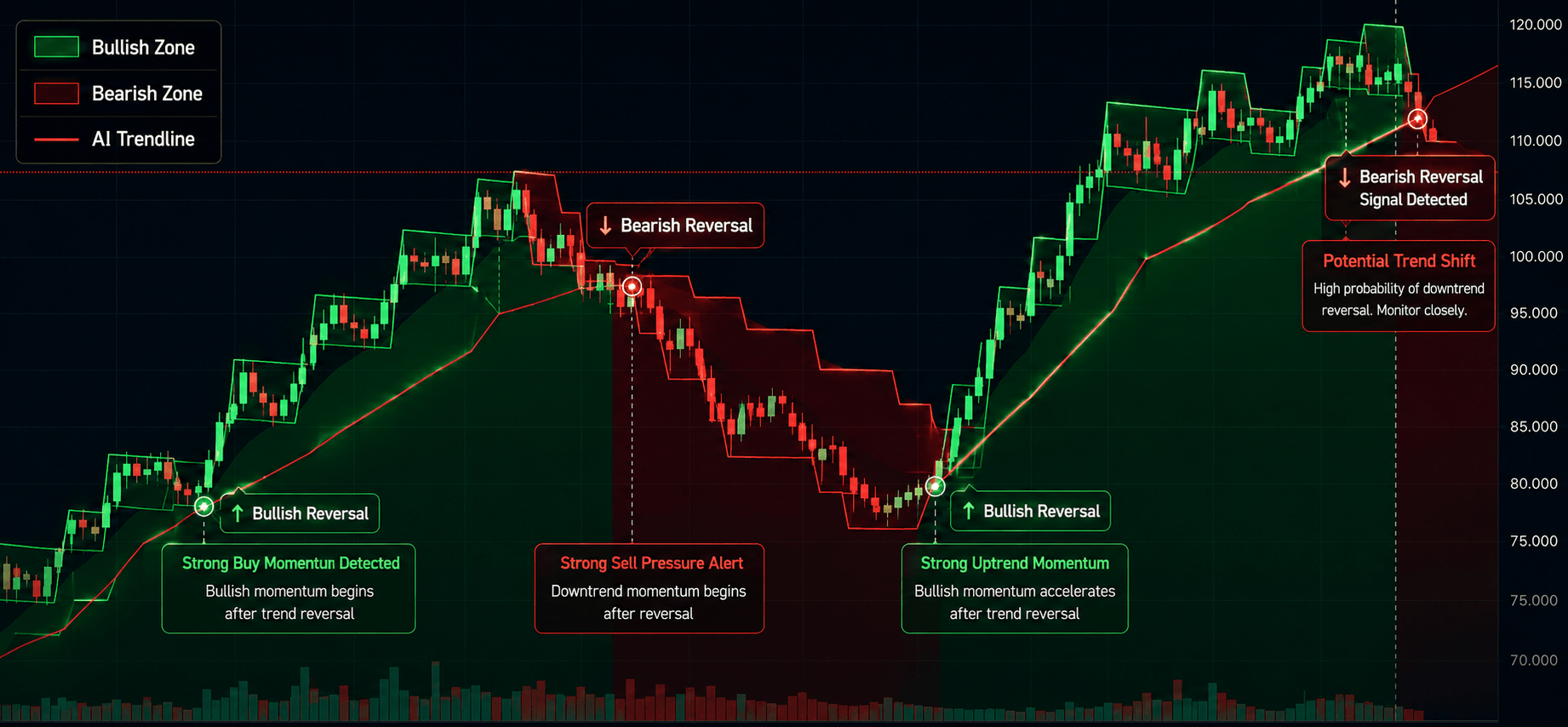
Bull Wave / Bear Wave Forecast Model
Engineered to help you read market direction and momentum faster than the crowd.
- Instantly separate bullish momentum from bearish pressure
- Pinpoint high-probability entry zones with confidence
- Chart signals clear enough for beginners, sharp enough for pros
Winning Pattern Detection
Instantly surfaces the high-probability setups that repeat across the charts — a trusted edge for timing your entries and exits.
- Spot momentum building in real time
- Catch trend-reversal points before they break
- Built for active traders who need results, not theory

AI Live Economic Dashboard
AI analyzes real-time market data — turning complex, global investment flows into clear insight in seconds.
- Track global stock markets in real time
- See exactly which assets are strong — and which are fading
- Watch how geopolitical events move the markets
About the Author