What Is the P/E Ratio?
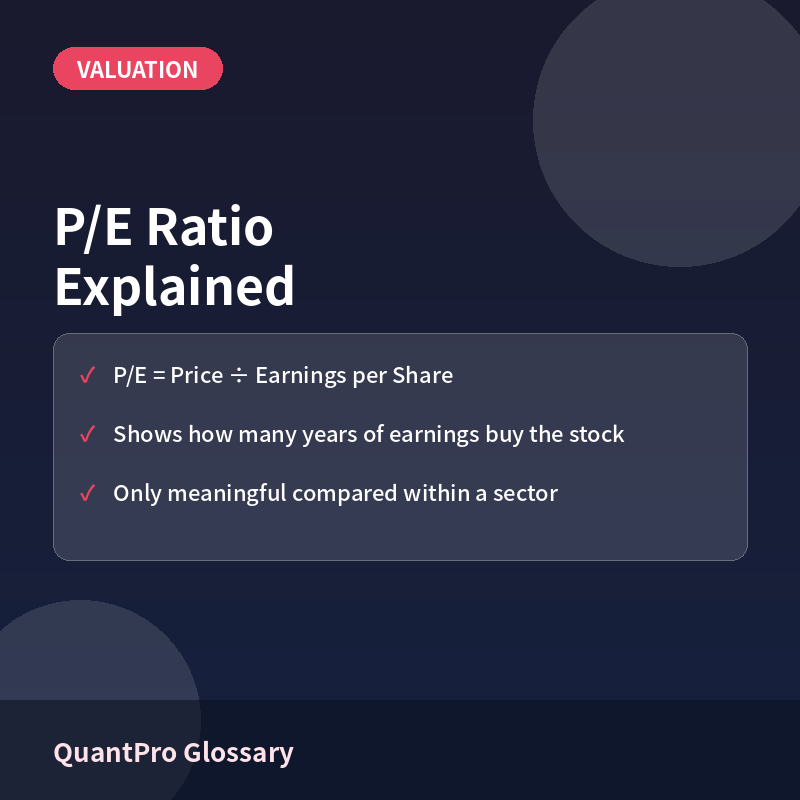
The price-to-earnings (P/E) ratio measures how many times a stock’s price exceeds its earnings per share (EPS), showing whether a stock’s price is expensive or cheap relative to the profit the company actually generates. It’s one of the most widely used valuation metrics in equity investing.
P/E Ratio Formula and Example
The Formula
P/E = Stock Price ÷ Earnings per Share (EPS). If a stock trades at $50 and its EPS is $5, the P/E ratio is 10x, which is often interpreted as meaning it would take roughly 10 years of current earnings to recoup the purchase price, assuming profits stayed flat.
Why Sector Context Matters
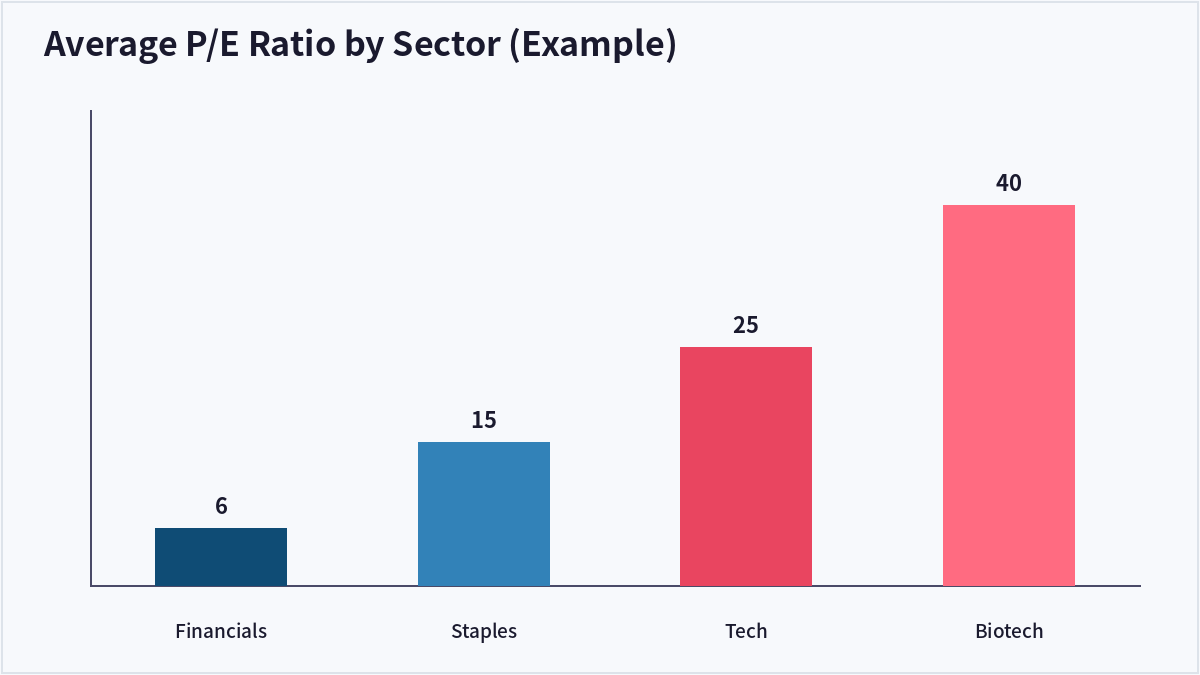
A P/E of 10x might look cheap in one industry and expensive in another. Fast-growing sectors like technology or biotech typically command higher P/E multiples because investors are paying up for expected future earnings growth, while mature, capital-intensive sectors like banking or utilities usually trade at lower multiples. The chart below illustrates how average P/E levels vary meaningfully by sector.
Why the P/E Ratio Matters
P/E is most useful when comparing companies within the same industry, since it helps investors quickly gauge whether a stock is priced cheaply or richly relative to peers. A low P/E can signal undervaluation, but it can also reflect the market pricing in slower growth or declining earnings quality, so the ratio should never be used in isolation.
P/E vs P/B Ratio Comparison
The table below compares the P/E ratio with the related price-to-book (P/B) ratio, which values a stock against its net asset value instead of its earnings.
| Metric | P/E Ratio | P/B Ratio |
|---|---|---|
| Basis | Earnings per share | Book value per share |
| Best suited for | Companies with stable profits | Asset-heavy or loss-making firms |
| Key weakness | Undefined for negative earnings | May not reflect true asset value |
| Typical use | Peer comparison within a sector | Judging discount to liquidation value |
Frequently Asked Questions
Does a low P/E ratio always mean a stock is a bargain?
Not necessarily. A low P/E can reflect genuine undervaluation, but it can also mean the market expects earnings to decline, so it’s important to check growth trends and sector averages alongside the ratio.
What happens to the P/E ratio if a company has negative earnings?
The ratio becomes meaningless or undefined when EPS is negative, which is why analysts often turn to alternative metrics like price-to-sales for unprofitable companies.
Why do growth stocks usually have higher P/E ratios?
Investors are often willing to pay a premium for expected future earnings growth, so fast-growing companies in sectors like technology tend to trade at higher multiples than slower-growing, mature businesses.
Should P/E be compared across different industries?
Comparing P/E across unrelated industries can be misleading since normal valuation levels differ widely by sector; it’s generally more reliable to compare a company’s P/E to its direct industry peers.
Key Takeaways
The P/E ratio shows how a stock’s price compares to its earnings, and it’s most useful when compared against sector peers rather than viewed as an absolute number. Combining it with growth expectations gives a fuller picture of whether a stock is fairly valued. This article is for informational purposes only and does not constitute investment advice.

QuantPro: AI Finds the Trade Before You Do
From AI-powered chart analysis to real-time market intelligence — everything a serious investor needs, in one platform.
- Automated AI chart analysis with precision trend timing
- Bull Radar: real-time visualization of geopolitical & economic shifts
- Live market-moving news and insights, curated for you
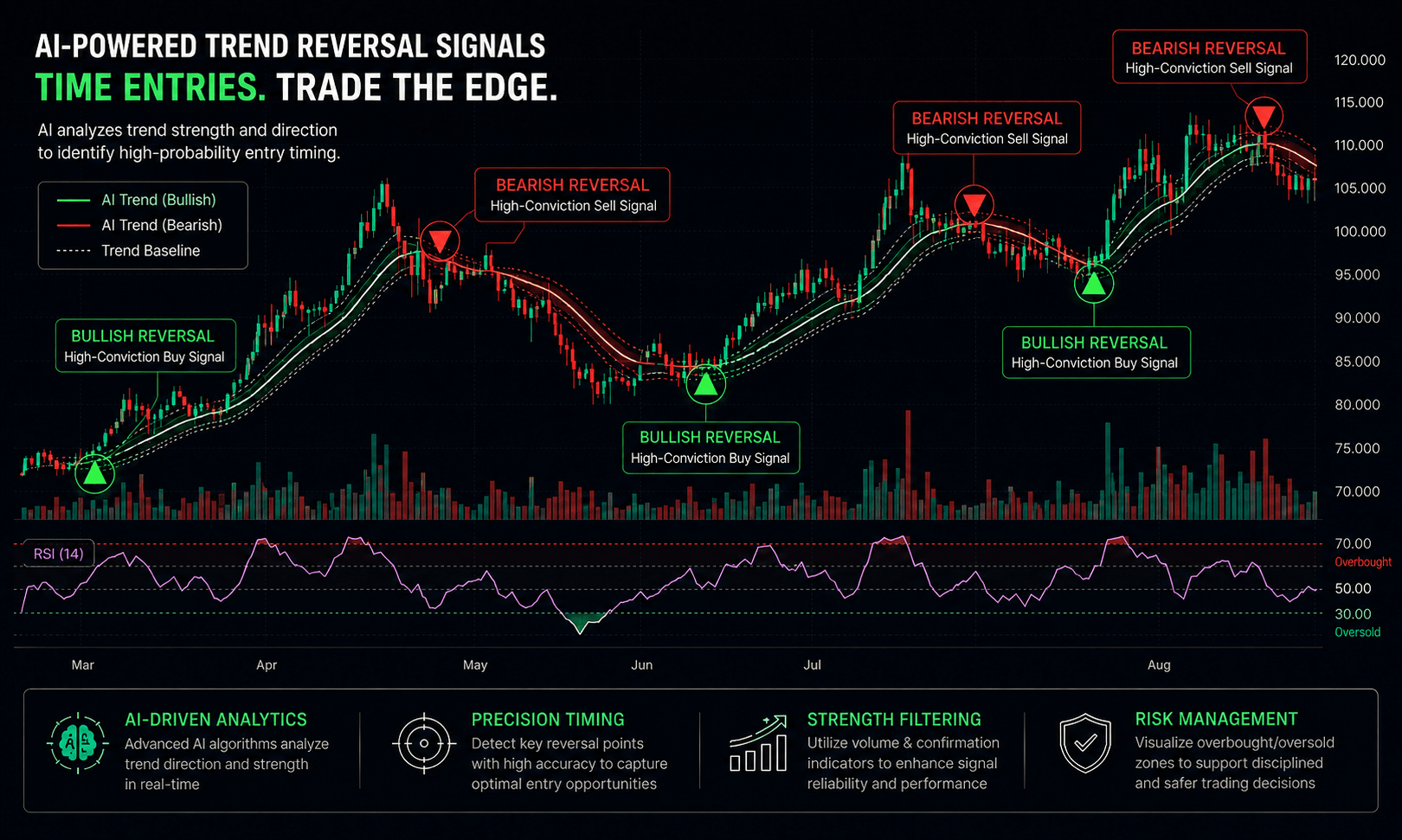
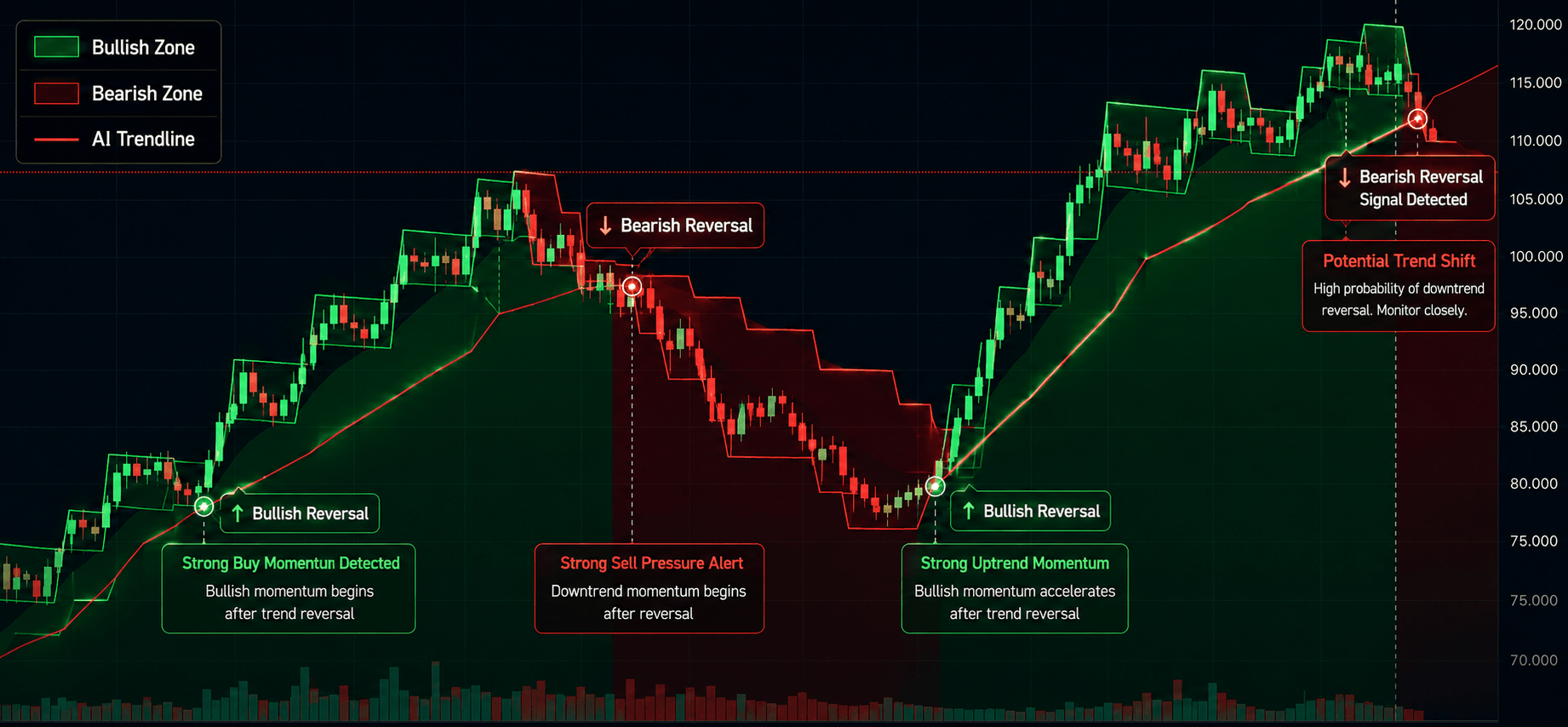
Bull Wave / Bear Wave Forecast Model
Engineered to help you read market direction and momentum faster than the crowd.
- Instantly separate bullish momentum from bearish pressure
- Pinpoint high-probability entry zones with confidence
- Chart signals clear enough for beginners, sharp enough for pros
Winning Pattern Detection
Instantly surfaces the high-probability setups that repeat across the charts — a trusted edge for timing your entries and exits.
- Spot momentum building in real time
- Catch trend-reversal points before they break
- Built for active traders who need results, not theory

AI Live Economic Dashboard
AI analyzes real-time market data — turning complex, global investment flows into clear insight in seconds.
- Track global stock markets in real time
- See exactly which assets are strong — and which are fading
- Watch how geopolitical events move the markets
About the Author