What Is Book Value?
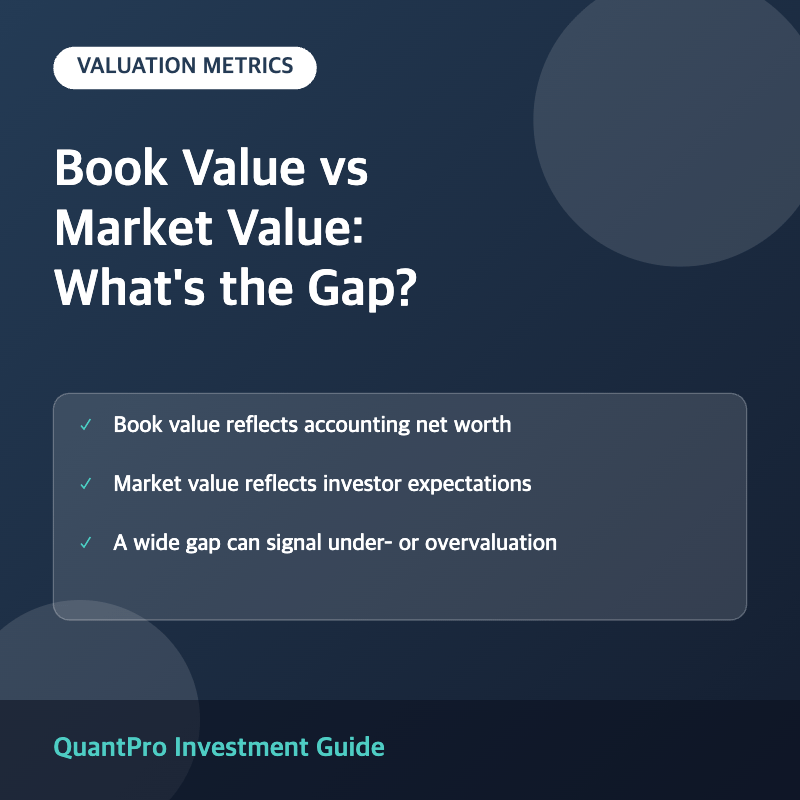
Book value, also called shareholders’ equity or net asset value, represents a company’s total assets minus its total liabilities as recorded on its balance sheet. It reflects the accounting value of what would theoretically remain for shareholders if the company sold all its assets and paid off all its debts at their recorded values.
Book value is often expressed on a per-share basis by dividing total shareholders’ equity by the number of shares outstanding, allowing investors to compare a company’s accounting net worth directly against its current stock price.
What Is Market Value?
Market value, also known as market capitalization, represents the total value the stock market currently assigns to a company, calculated by multiplying the current share price by the total number of shares outstanding. Unlike book value, market value reflects investor expectations about future growth, profitability, and risk, not just historical accounting figures.
Why Book Value and Market Value Often Differ
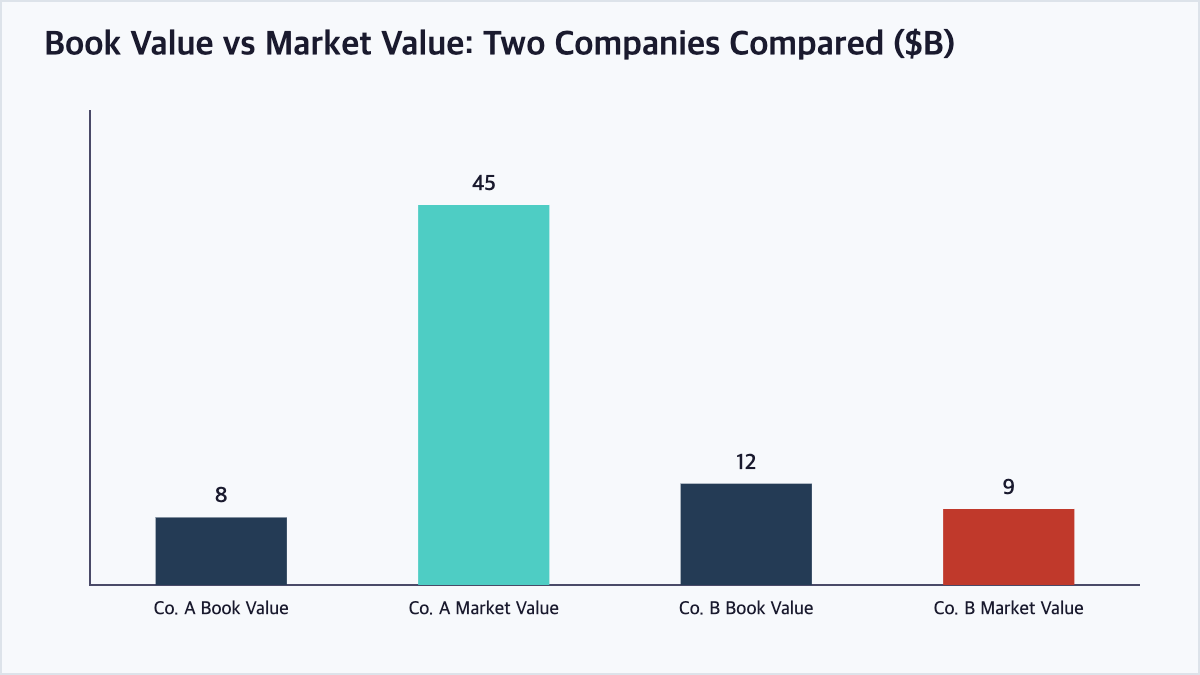
Market value frequently exceeds book value for growth companies with strong brand value, intellectual property, or future earnings potential that isn’t fully captured on the balance sheet, since accounting rules often don’t assign significant value to intangible assets like brand strength or proprietary technology.
When Market Value Trades Below Book Value
When a company’s market value falls below its book value, often measured through a price-to-book ratio below 1.0, it can signal that investors doubt the company’s reported asset values are accurate, anticipate future losses, or believe the company faces significant business challenges not yet reflected on the balance sheet.
Book Value vs Market Value: Key Differences
| Aspect | Book Value | Market Value |
|---|---|---|
| Basis | Historical accounting records | Current market trading price |
| Reflects | Assets minus liabilities | Investor expectations and sentiment |
| Volatility | Changes slowly, quarterly updates | Changes constantly with trading |
| Best Used For | Assessing balance sheet strength | Assessing current investor perception |
Frequently Asked Questions
Is a low price-to-book ratio always a good buying opportunity?
Not necessarily. A low price-to-book ratio can indicate an undervalued stock, but it can also reflect legitimate market concerns about asset quality, declining profitability, or industry disruption, so it should be evaluated alongside other fundamentals rather than in isolation.
Why do technology companies often trade far above book value?
Technology companies frequently derive much of their value from intangible assets like software, patents, brand recognition, and network effects, which accounting standards often do not fully capture on the balance sheet, leading to a wide gap between book and market value.
How is book value calculated?
Book value is calculated by subtracting total liabilities from total assets, both found on a company’s balance sheet, with the resulting figure representing total shareholders’ equity, which can then be divided by shares outstanding for a per-share value.
Does book value account for a company’s future earnings potential?
No. Book value is a backward-looking accounting measure based on historical asset and liability values, while future earnings potential is instead reflected in market value, which incorporates investor expectations about the company’s prospects.
Key Takeaways
Book value reflects a company’s accounting-based net worth, while market value reflects what investors are currently willing to pay based on growth expectations and sentiment. Comparing the two, often through the price-to-book ratio, can offer insight into how the market perceives a company relative to its balance sheet. This article is for informational purposes only and does not constitute investment advice.

QuantPro: AI Finds the Trade Before You Do
From AI-powered chart analysis to real-time market intelligence — everything a serious investor needs, in one platform.
- Automated AI chart analysis with precision trend timing
- Bull Radar: real-time visualization of geopolitical & economic shifts
- Live market-moving news and insights, curated for you
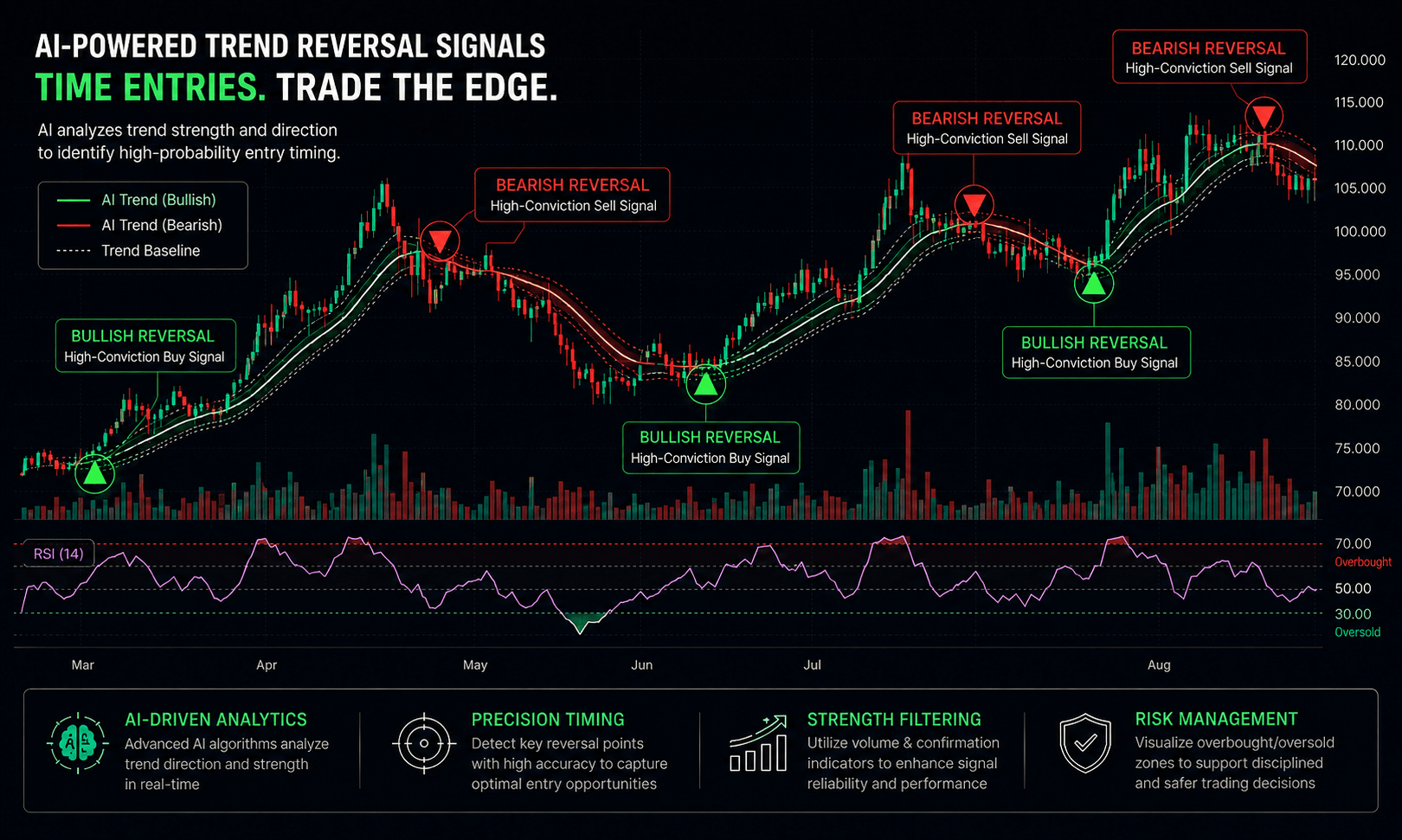
Bull Wave / Bear Wave Forecast Model
Engineered to help you read market direction and momentum faster than the crowd.
- Instantly separate bullish momentum from bearish pressure
- Pinpoint high-probability entry zones with confidence
- Chart signals clear enough for beginners, sharp enough for pros
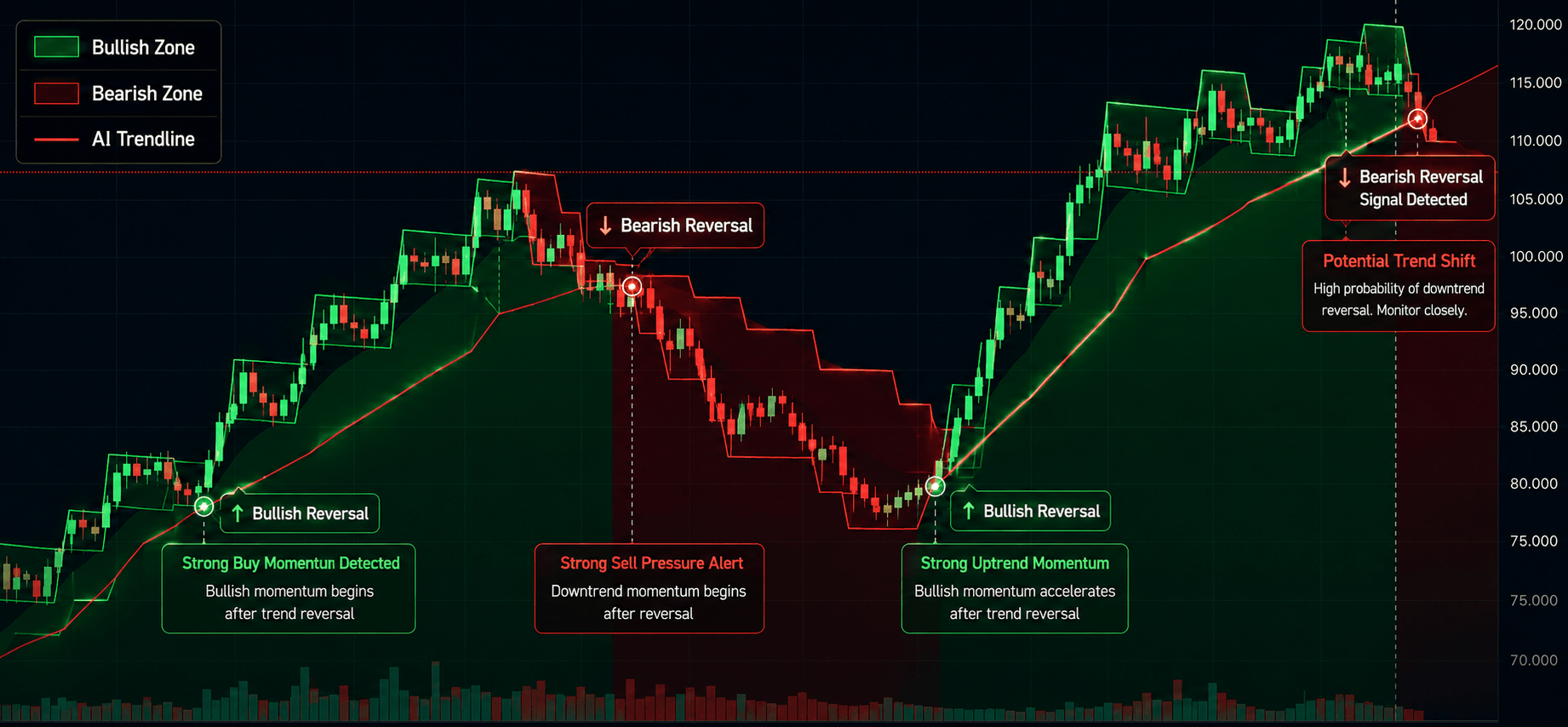
Winning Pattern Detection
Instantly surfaces the high-probability setups that repeat across the charts — a trusted edge for timing your entries and exits.
- Spot momentum building in real time
- Catch trend-reversal points before they break
- Built for active traders who need results, not theory

AI Live Economic Dashboard
AI analyzes real-time market data — turning complex, global investment flows into clear insight in seconds.
- Track global stock markets in real time
- See exactly which assets are strong — and which are fading
- Watch how geopolitical events move the markets
About the Author