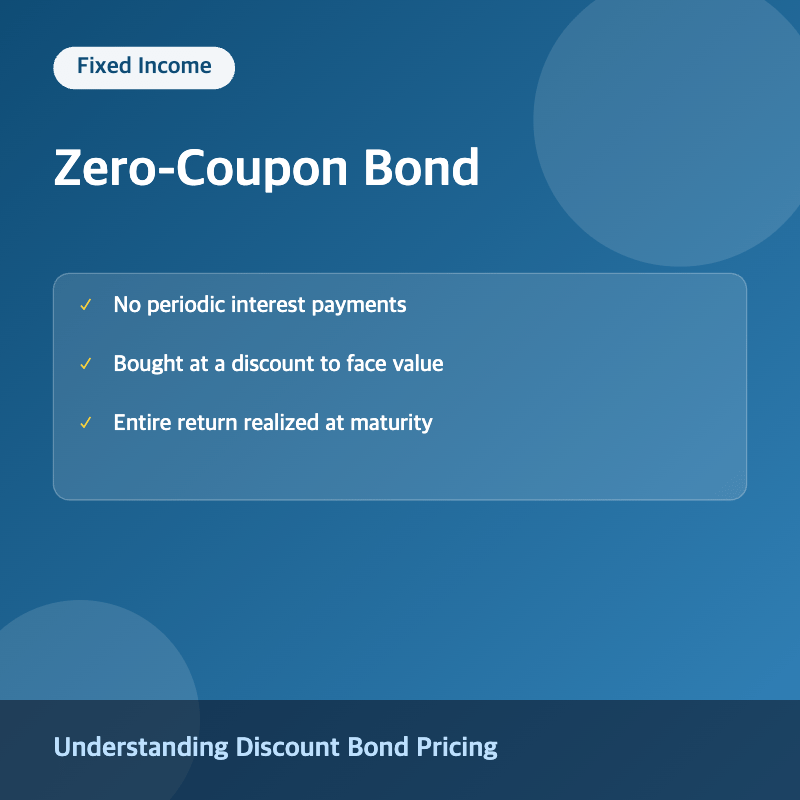
What Is a Zero-Coupon Bond?
A zero-coupon bond is a debt security that does not make periodic interest (coupon) payments to investors. Instead, it is issued at a price significantly below its face value (also called par value) and pays the full face value to the investor at maturity, with the difference between the purchase price and face value representing the investor’s entire return.
How Zero-Coupon Bond Pricing Works
The Discounting Formula
The price of a zero-coupon bond is calculated as: Price = Face Value ÷ (1 + Yield)^Years to Maturity. This formula discounts the single future cash flow (the face value received at maturity) back to its present value using the bond’s yield to maturity.
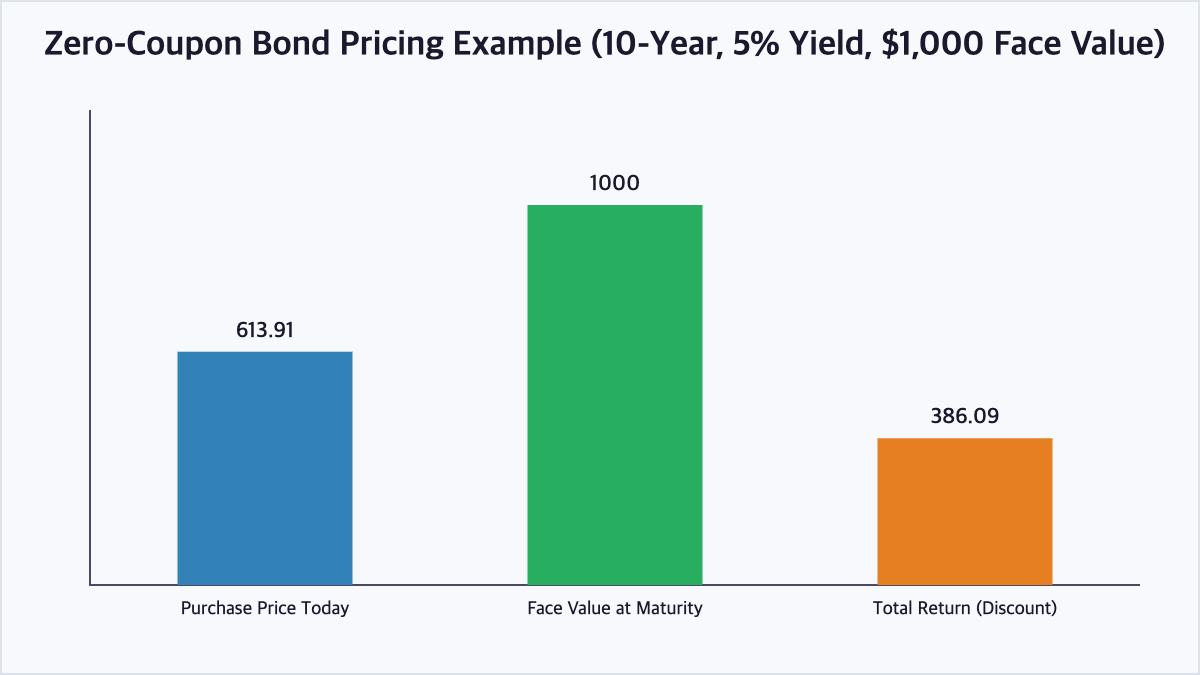
For example, suppose a zero-coupon bond has a face value of $1,000, matures in 10 years, and offers a yield to maturity of 5%. The price would be calculated as $1,000 ÷ (1.05)^10 = $1,000 ÷ 1.6289 ≈ $613.91. This means an investor would pay approximately $613.91 today to receive $1,000 in 10 years, with the $386.09 difference representing the investor’s total return over the holding period.
Yield to Maturity
Because zero-coupon bonds pay no periodic interest, their yield to maturity is entirely determined by the difference between the purchase price and the face value received at maturity, spread over the bond’s remaining life. Longer-maturity zero-coupon bonds are generally more sensitive to changes in interest rates than shorter-maturity ones, since their entire cash flow is concentrated at a single point far in the future.
Why Investors Use Zero-Coupon Bonds
Zero-coupon bonds are often used by investors seeking to match a future liability with a known, fixed amount, such as funding a child’s future college tuition or a specific retirement date, since the maturity value is known with certainty (assuming no default). They also eliminate reinvestment risk associated with periodic coupon payments, since there are no interim cash flows to reinvest.
Zero-Coupon Bonds vs. Regular Coupon Bonds
| Aspect | Zero-Coupon Bond | Regular Coupon Bond |
|---|---|---|
| Periodic Interest Payments | None | Regular fixed or variable payments |
| Purchase Price | Issued at a deep discount to face value | Typically issued closer to face value |
| Interest Rate Sensitivity | Generally higher for a given maturity | Generally lower for the same maturity |
Frequently Asked Questions
Do investors have to pay taxes on zero-coupon bonds even though there are no interest payments?
In many tax jurisdictions, investors must pay tax annually on the “imputed” or “phantom” interest that accrues each year, even though no actual cash payment is received until maturity. This tax treatment varies by country and by whether the bond is held in a tax-advantaged account, so investors should consult applicable tax rules or a tax professional.
What are common types of zero-coupon bonds?
Common examples include zero-coupon U.S. Treasury securities known as STRIPS (Separate Trading of Registered Interest and Principal of Securities), as well as zero-coupon corporate and municipal bonds issued directly at a discount by various issuers.
Why are zero-coupon bonds more sensitive to interest rate changes?
Because all of a zero-coupon bond’s cash flow occurs at a single point in the future rather than being spread across periodic payments, its price is more heavily affected by changes in the discount rate applied over that longer period, a concept closely related to a bond’s duration.
Can zero-coupon bonds default?
Yes, like any bond, a zero-coupon bond carries credit risk, and the issuer could default and fail to pay the face value at maturity. Investors typically evaluate the issuer’s credit quality, such as government backing or credit ratings, before investing in zero-coupon bonds.
Key Takeaways
A zero-coupon bond is purchased at a deep discount to its face value and pays no periodic interest, with the investor’s entire return coming from the difference between the purchase price and the face value received at maturity. Their predictable, single future cash flow makes them useful for matching specific future financial goals, though they tend to carry higher interest rate sensitivity than regular coupon bonds. This article is for informational purposes only and does not constitute investment advice.

QuantPro: AI Finds the Trade Before You Do
From AI-powered chart analysis to real-time market intelligence — everything a serious investor needs, in one platform.
- Automated AI chart analysis with precision trend timing
- Bull Radar: real-time visualization of geopolitical & economic shifts
- Live market-moving news and insights, curated for you
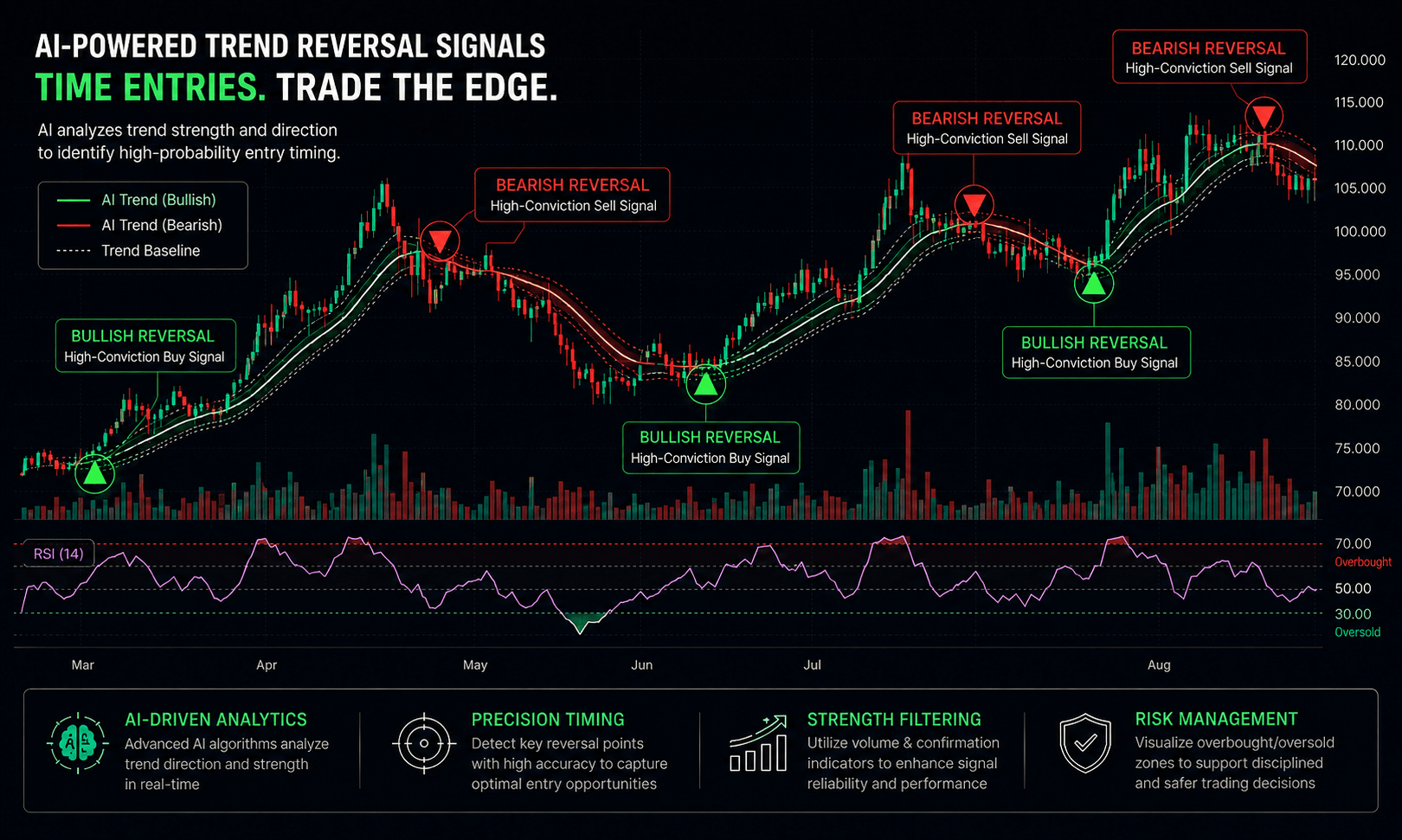
Bull Wave / Bear Wave Forecast Model
Engineered to help you read market direction and momentum faster than the crowd.
- Instantly separate bullish momentum from bearish pressure
- Pinpoint high-probability entry zones with confidence
- Chart signals clear enough for beginners, sharp enough for pros
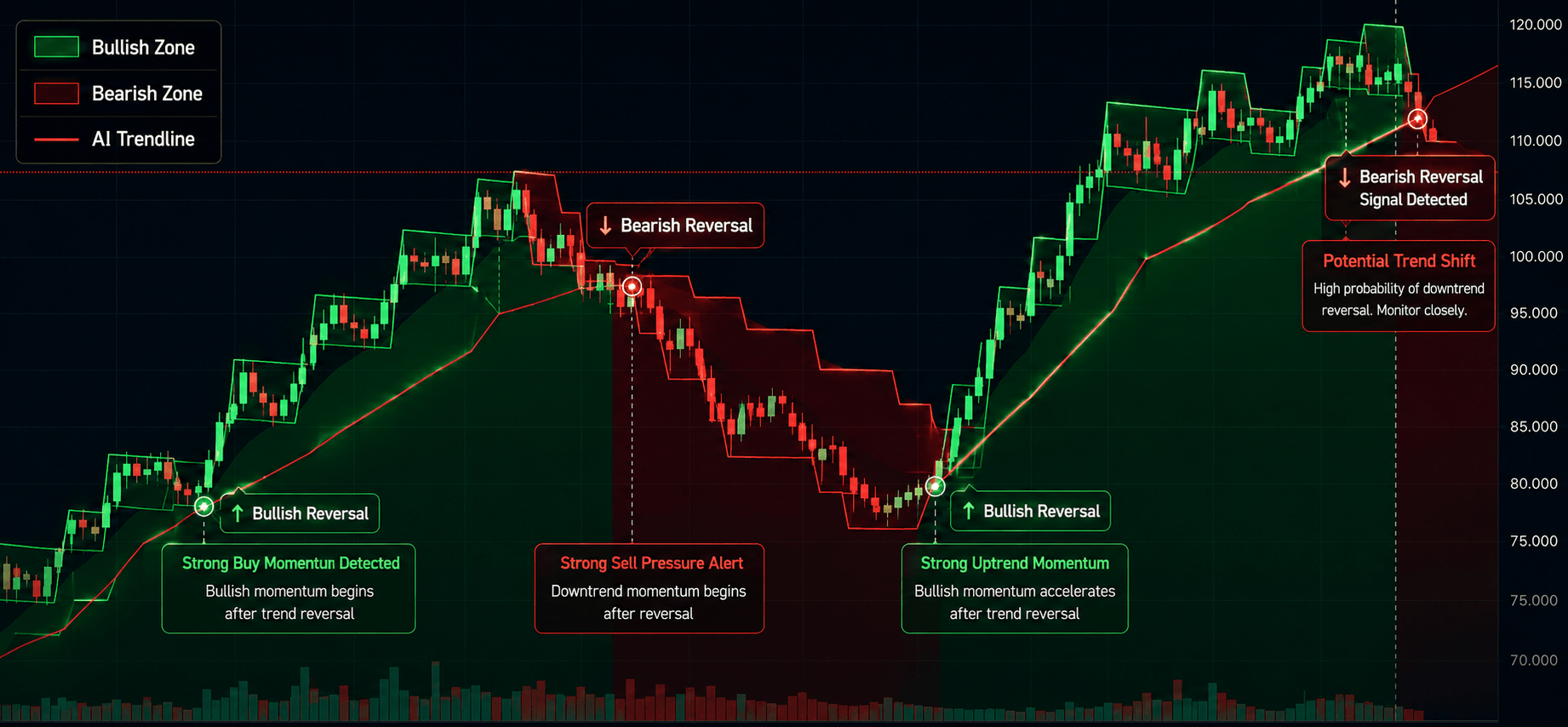
Winning Pattern Detection
Instantly surfaces the high-probability setups that repeat across the charts — a trusted edge for timing your entries and exits.
- Spot momentum building in real time
- Catch trend-reversal points before they break
- Built for active traders who need results, not theory
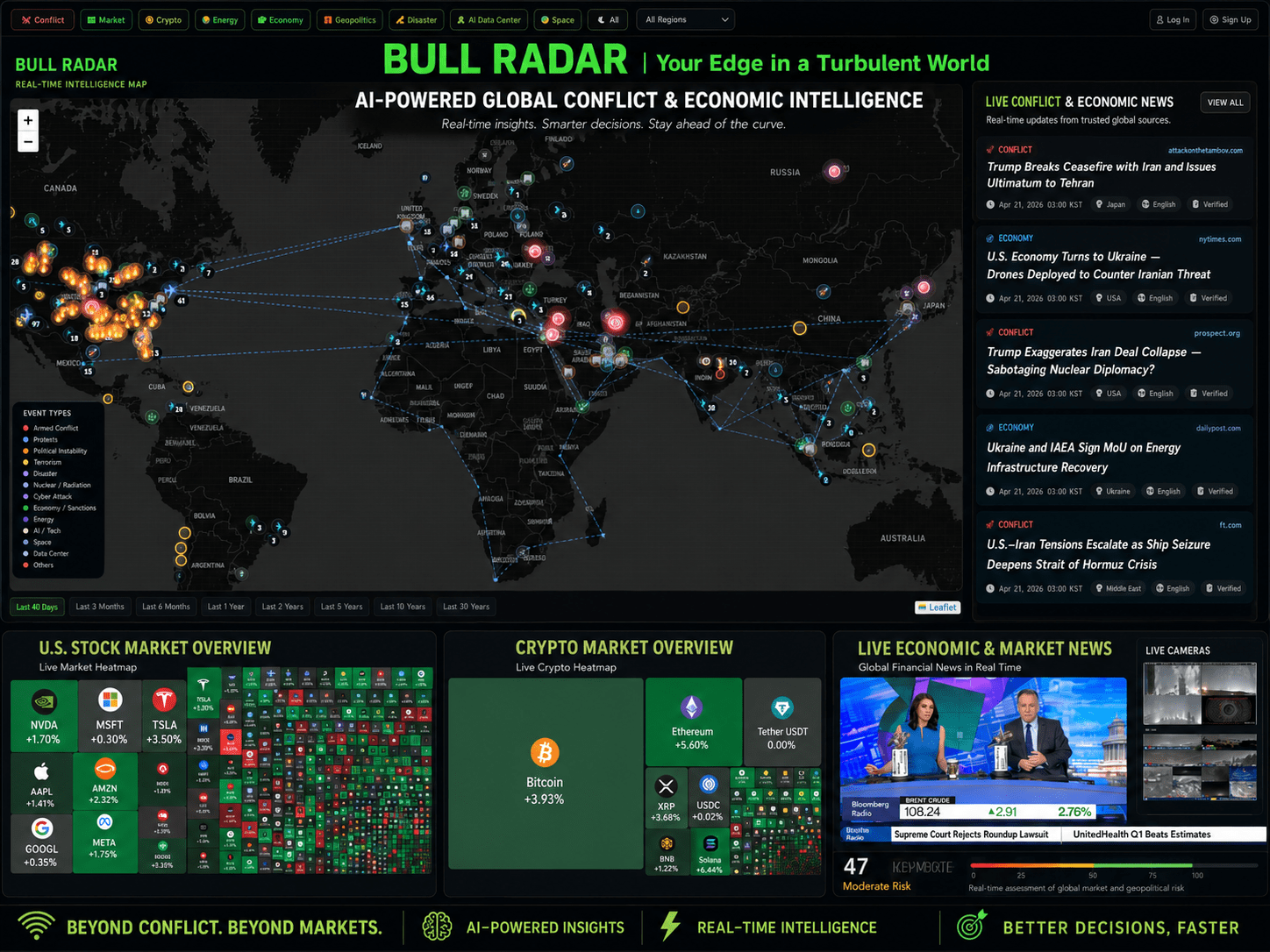
AI Live Economic Dashboard
AI analyzes real-time market data — turning complex, global investment flows into clear insight in seconds.
- Track global stock markets in real time
- See exactly which assets are strong — and which are fading
- Watch how geopolitical events move the markets
About the Author