What Is Debt Service Coverage Ratio (DSCR)?
Defining DSCR in Corporate and Real Estate Finance
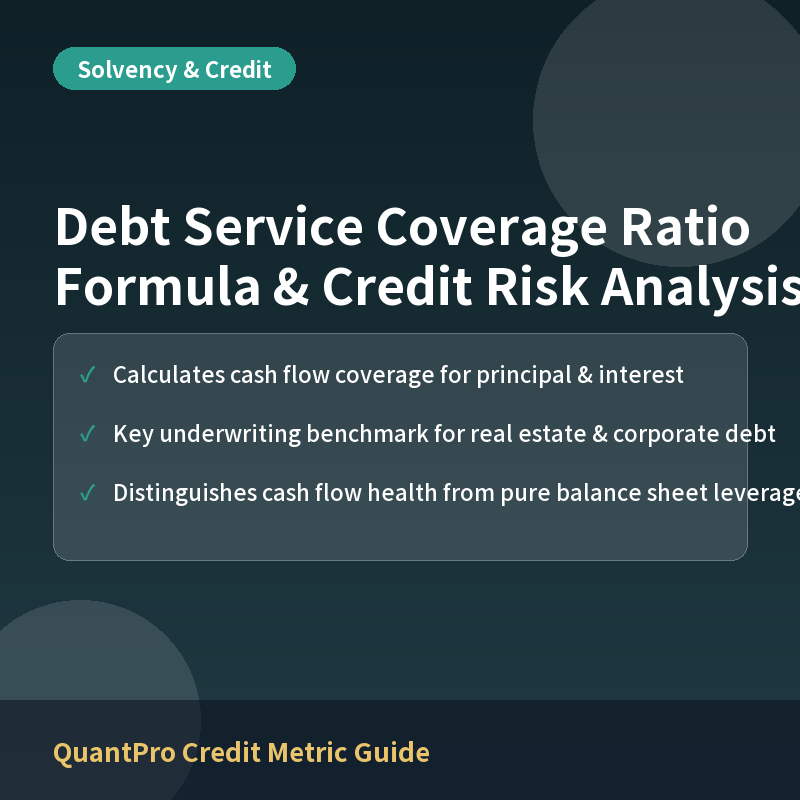
The Debt Service Coverage Ratio (DSCR) is a fundamental solvency metric used by commercial lenders, institutional investors, and financial analysts to evaluate an entity’s ability to cover its ongoing debt obligations using generated cash flow. Expressed as a multiple, DSCR compares Net Operating Income (NOI) or Earnings Before Interest, Taxes, Depreciation, and Amortization (EBITDA) directly against total annual principal and interest commitments.
Core Purpose of the Metric
The primary objective of DSCR is to quantify the financial buffer available to a borrower before cash flows become insufficient to service debt obligations. A ratio exceeding 1.00 indicates that the business or commercial asset generates sufficient income to meet its debt obligations, whereas a ratio below 1.00 signals negative cash flow relative to debt commitments.
How DSCR Is Calculated: Formula and Numerical Examples
The Mathematical Formula
The standard equation for DSCR is: Debt Service Coverage Ratio = Net Operating Income / Total Debt Service. Here, Net Operating Income (NOI) equals total operating revenues minus necessary operating expenses, while Total Debt Service includes all mandatory annual payments for principal repayments and interest fees.
Step-by-Step Calculation Scenarios
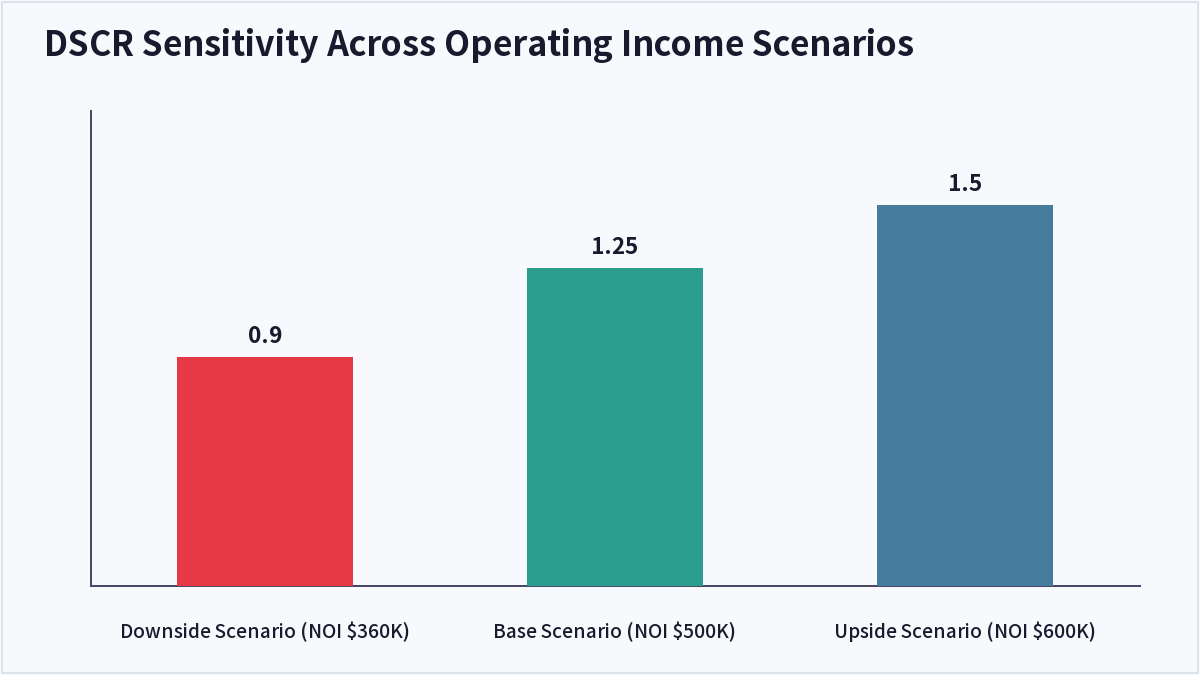
Consider a commercial entity with a fixed annual debt obligation of $400,000 ($300,000 in principal repayment and $100,000 in interest). In the Base Scenario, the property generates $500,000 in NOI, yielding a DSCR of 1.25 ($500,000 / $400,000). In an Upside Scenario with stronger revenues, NOI reaches $600,000, boosting the DSCR to 1.50 ($600,000 / $400,000). Conversely, in a Downside Scenario where NOI declines to $360,000, the DSCR drops to 0.90 ($360,000 / $400,000), representing cash flow insufficiency.
Why DSCR Matters: Lender Benchmarks and Risk Thresholds
Evaluating Debt Capacity and Solvency Risk
Lenders rely heavily on DSCR during credit underwriting to establish maximum borrowing limits and loan covenants. A higher ratio ensures a wider safety margin against economic downturns, tenant vacancies, or rising interest rates.
Industry Standard DSCR Requirements
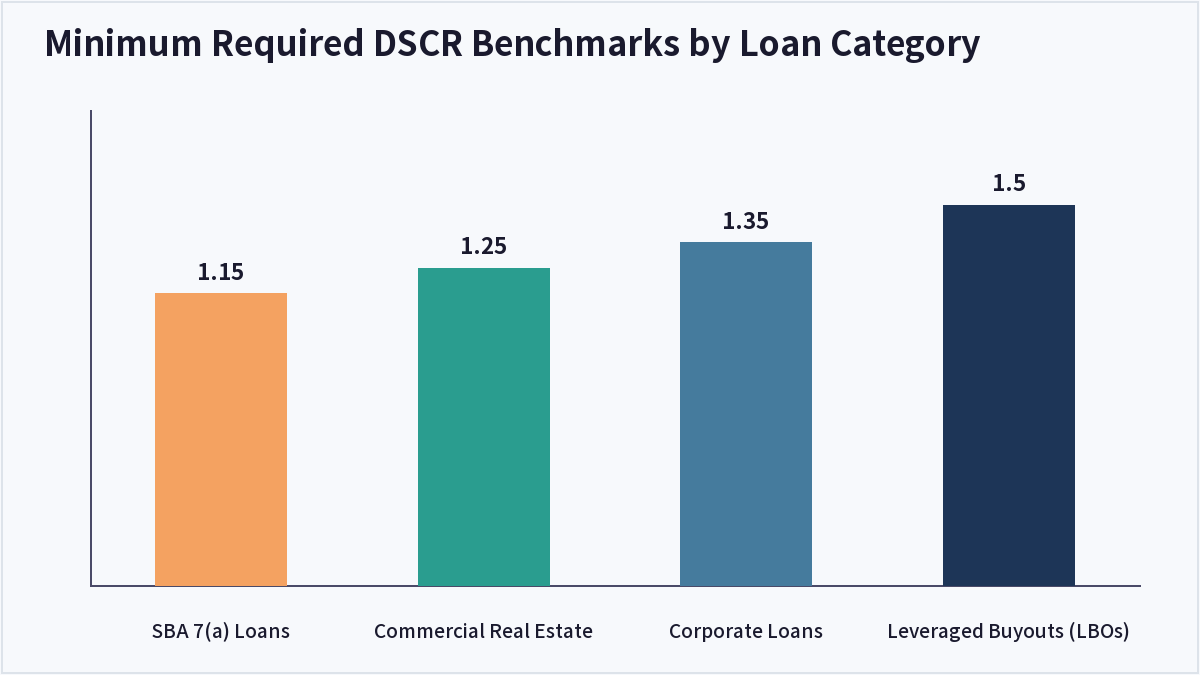
Minimum acceptable DSCR levels vary depending on loan structure and asset volatility. Small Business Administration (SBA 7a) loans typically mandate a baseline ratio of 1.15. Commercial Real Estate (CRE) lenders generally mandate a benchmark of 1.25. Corporate middle-market loans often require 1.35, while high-risk Leveraged Buyouts (LBOs) frequently set a conservative threshold of 1.50 to absorb market shocks.
DSCR vs. Interest Coverage Ratio vs. Debt-to-Equity
Comparing Solvency and Leverage Metrics
Financial analysts evaluate leverage using several complementary metrics. While Interest Coverage Ratio measures earnings against interest expenses alone, DSCR incorporates both principal and interest repayments. Meanwhile, Debt-to-Equity assesses capital structure balance sheet leverage rather than cash flow capacity.
Selecting the Appropriate Indicator for Decision-Making
For capital-intensive real estate properties and amortizing corporate loans, DSCR offers the most comprehensive view of debt sustainability because it evaluates total cash outlays against operating revenues.
| Metric | Formula | Debt Scope Included | Primary Focus |
|---|---|---|---|
| Debt Service Coverage Ratio (DSCR) | Net Operating Income / Total Debt Service | Principal + Interest Payments | Cash flow capacity to fulfill total mandatory debt obligations |
| Interest Coverage Ratio | EBIT / Annual Interest Expense | Interest Payments Only | Short-term operational capacity to meet periodic interest costs |
| Debt-to-Equity Ratio (D/E) | Total Liabilities / Shareholder Equity | Total Balance Sheet Liabilities | Overall capital structure leverage and asset financing mix |
Frequently Asked Questions
What is considered a healthy Debt Service Coverage Ratio (DSCR)?
A DSCR of 1.25 or higher is standard for commercial loans, indicating that net operating income exceeds annual debt service obligations by 25%.
What happens when a borrower’s DSCR drops below 1.00?
A DSCR below 1.00 signifies negative cash flow relative to debt obligations, meaning operating earnings are insufficient to make mandatory loan payments without supplementary capital.
How does DSCR differ from the Interest Coverage Ratio?
DSCR incorporates both mandatory principal repayments and interest costs into its denominator, whereas the Interest Coverage Ratio evaluates income solely against interest charges.
Why do commercial real estate lenders enforce DSCR covenants?
Lenders enforce DSCR loan covenants to ensure ongoing solvency, allowing them to initiate credit remediation or restructure debt before an actual default occurs.
Key Takeaways
The Debt Service Coverage Ratio (DSCR) evaluates an entity’s operating cash flow relative to its mandatory debt service obligations. By calculating Net Operating Income against combined principal and interest commitments, investors and lenders establish a quantitative measure of solvency risk. Maintaining appropriate DSCR buffers ensures financial stability and protects against revenue volatility. This article is for informational purposes only and does not constitute investment advice.

QuantPro: AI Finds the Trade Before You Do
From AI-powered chart analysis to real-time market intelligence — everything a serious investor needs, in one platform.
- Automated AI chart analysis with precision trend timing
- Bull Radar: real-time visualization of geopolitical & economic shifts
- Live market-moving news and insights, curated for you
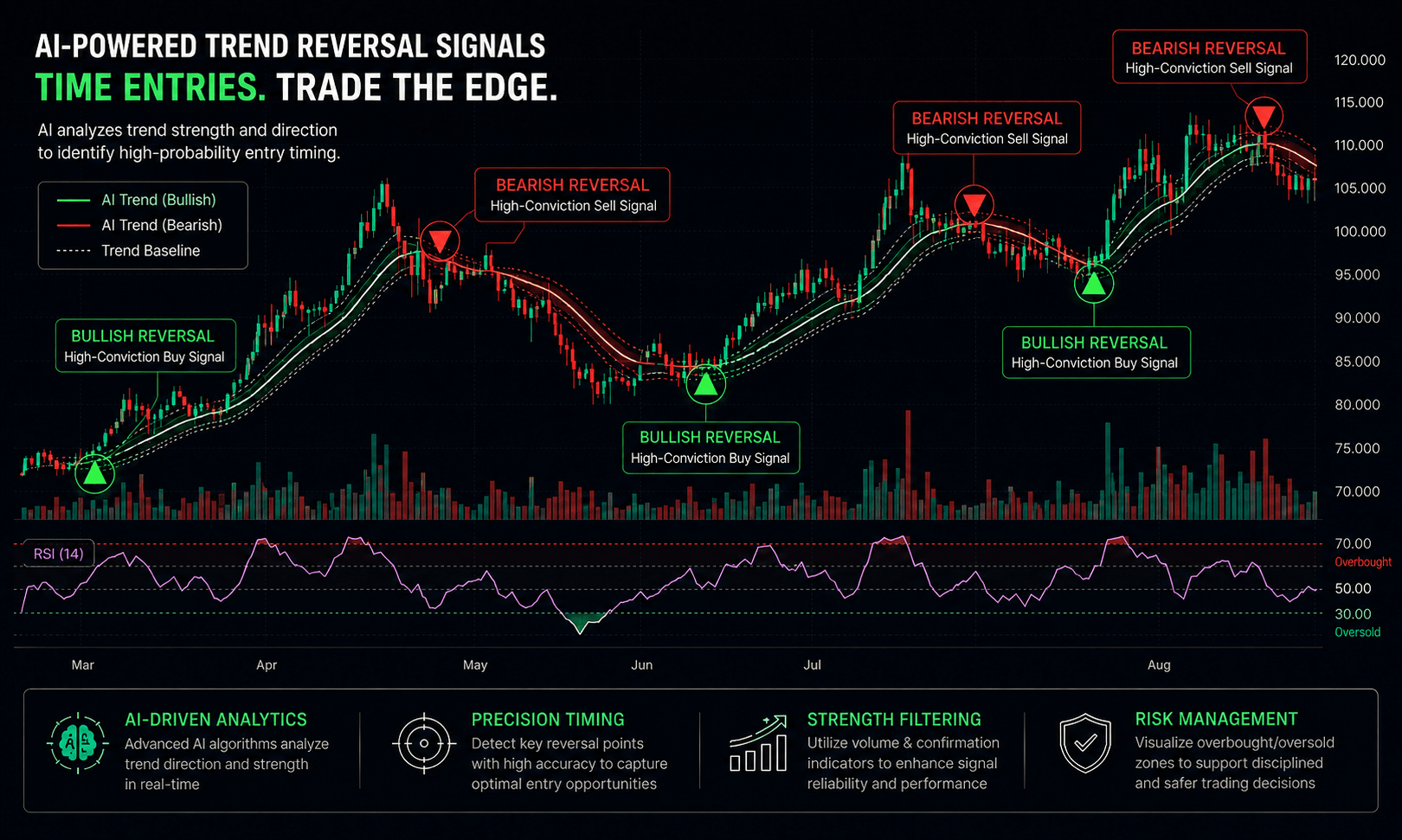
Bull Wave / Bear Wave Forecast Model
Engineered to help you read market direction and momentum faster than the crowd.
- Instantly separate bullish momentum from bearish pressure
- Pinpoint high-probability entry zones with confidence
- Chart signals clear enough for beginners, sharp enough for pros
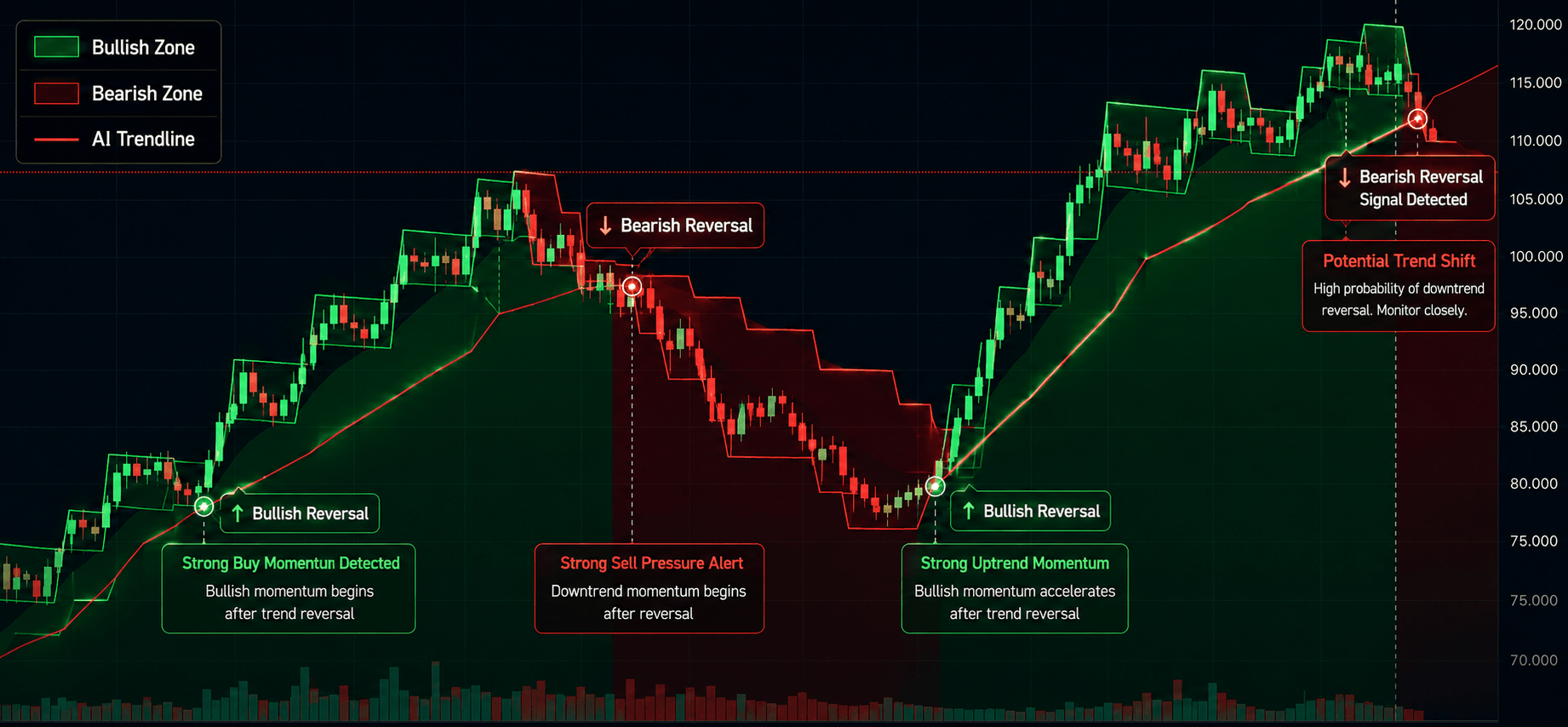
Winning Pattern Detection
Instantly surfaces the high-probability setups that repeat across the charts — a trusted edge for timing your entries and exits.
- Spot momentum building in real time
- Catch trend-reversal points before they break
- Built for active traders who need results, not theory

AI Live Economic Dashboard
AI analyzes real-time market data — turning complex, global investment flows into clear insight in seconds.
- Track global stock markets in real time
- See exactly which assets are strong — and which are fading
- Watch how geopolitical events move the markets
About the Author