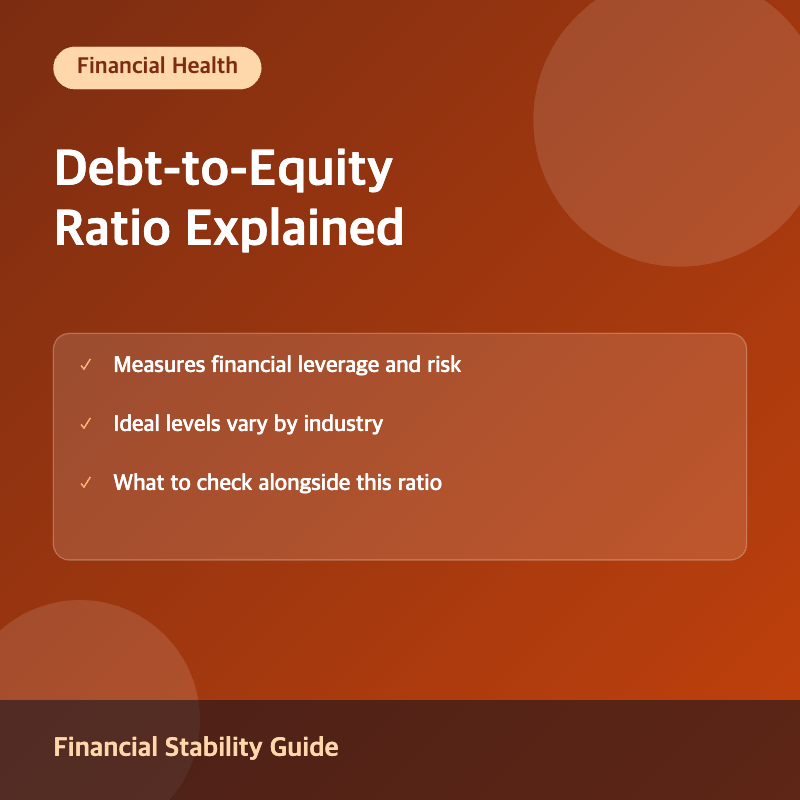
What Is the Debt-to-Equity Ratio?
The debt-to-equity (D/E) ratio compares a company’s total debt to its shareholders’ equity, serving as a key measure of financial leverage and risk. A lower ratio generally suggests a more conservative capital structure, while a very high ratio can signal elevated financial risk and interest burden.
How to Calculate the D/E Ratio
The formula is: D/E Ratio = Total Debt ÷ Shareholders’ Equity × 100. A company with $750 million in total debt and $500 million in equity has a D/E ratio of 150% ($750M ÷ $500M × 100), meaning it carries 1.5 times as much debt as equity.
Why Debt Isn’t Always a Bad Thing
Moderate debt can allow a company to fund growth opportunities it couldn’t finance with equity alone, and interest expense provides a tax deduction — debt becomes a genuine concern mainly when the return generated from borrowed capital fails to exceed its interest cost.
D/E Ratio Interpretation by Level
| D/E Ratio | General Interpretation | Investor Takeaway |
|---|---|---|
| Below 100% | Conservative financial structure | Relatively lower financial risk |
| 100% to 200% | Industry-average range | Compare against sector norms |
| 200% to 300% | Elevated leverage | Check interest coverage ratio further |
| Above 300% | Caution zone | Warrants closer scrutiny of default risk |
How Ideal D/E Levels Vary by Industry
Capital-Intensive Industries Run Higher
Industries requiring heavy infrastructure investment — shipbuilding, construction, airlines, and shipping — naturally tend to carry higher debt-to-equity ratios, making peer comparison within the same industry far more meaningful than an absolute benchmark.
Financial Sector Nuances
Banks and insurance companies classify customer deposits and policy liabilities as debt due to their business models, so applying standard manufacturing-industry D/E benchmarks isn’t appropriate — regulatory capital ratios are more relevant metrics for this sector.
Metrics to Check Alongside D/E Ratio
Interest Coverage Ratio
The interest coverage ratio (operating income ÷ interest expense) shows how comfortably a company can cover its interest payments from operating earnings — even a moderately elevated D/E ratio may not signal immediate danger if interest coverage remains strong.
The Mix of Short-Term and Long-Term Debt
A high proportion of debt due within one year raises the risk of short-term liquidity strain, so examining not just the total D/E ratio but also the maturity structure of a company’s debt provides a fuller picture of financial health.
Frequently Asked Questions
Is a low D/E ratio always better?
Not necessarily. An extremely low D/E ratio can indicate a company is being overly conservative and underutilizing debt financing for growth, potentially signaling inefficient capital allocation rather than strength.
Where can I find a company’s D/E ratio?
Total debt and shareholders’ equity figures appear directly on a company’s balance sheet, and the D/E ratio is also commonly displayed on brokerage platforms and financial data websites.
Are D/E ratio and debt repayment ability the same thing?
No. The D/E ratio is a static measure of capital structure at a point in time, while debt repayment ability is better assessed through dynamic measures like the interest coverage ratio and free cash flow generation.
Does the ideal D/E ratio differ by industry?
Yes. Capital-intensive industries tend to run higher D/E ratios as a normal part of their business model, while asset-light sectors like technology or services typically maintain lower ratios, making sector comparison essential.
Key Takeaways
The debt-to-equity ratio is a core measure of financial leverage and risk, showing how much debt a company carries relative to shareholder equity. Because appropriate D/E levels vary significantly by industry and debt itself isn’t inherently negative, this ratio should be examined alongside the interest coverage ratio and debt maturity structure for an accurate assessment of financial health. This article is for informational purposes only and does not constitute investment advice.

QuantPro: AI Finds the Trade Before You Do
From AI-powered chart analysis to real-time market intelligence — everything a serious investor needs, in one platform.
- Automated AI chart analysis with precision trend timing
- Bull Radar: real-time visualization of geopolitical & economic shifts
- Live market-moving news and insights, curated for you
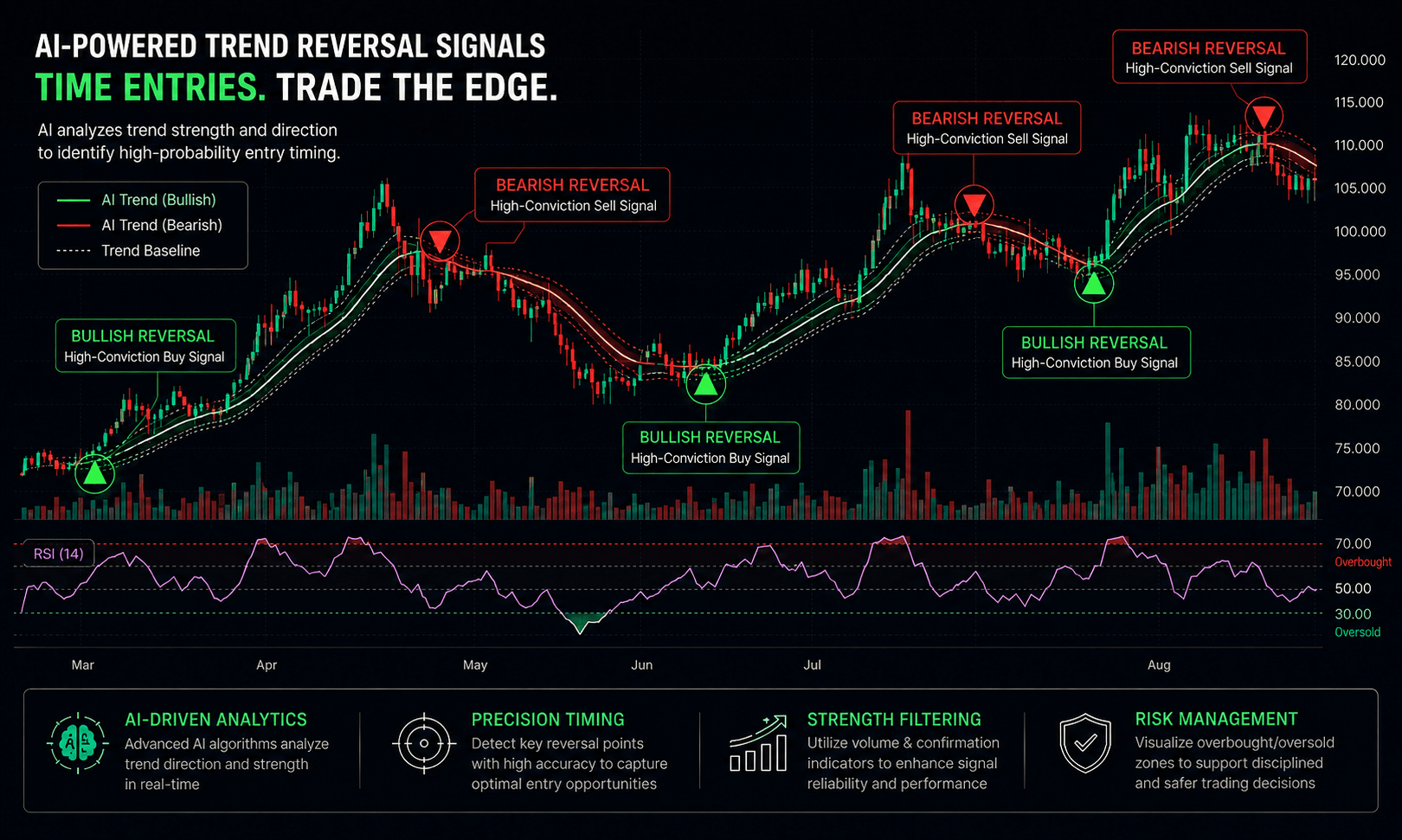
Bull Wave / Bear Wave Forecast Model
Engineered to help you read market direction and momentum faster than the crowd.
- Instantly separate bullish momentum from bearish pressure
- Pinpoint high-probability entry zones with confidence
- Chart signals clear enough for beginners, sharp enough for pros
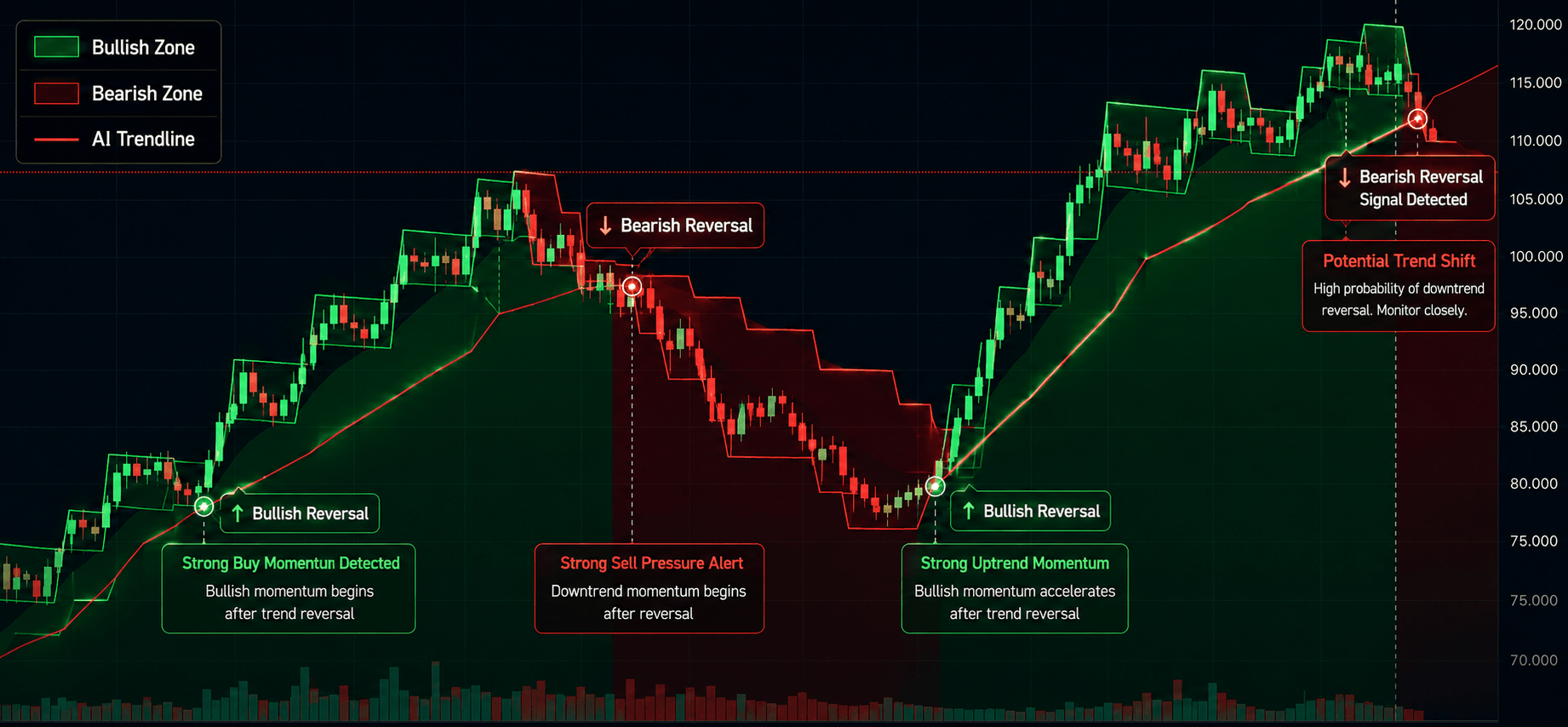
Winning Pattern Detection
Instantly surfaces the high-probability setups that repeat across the charts — a trusted edge for timing your entries and exits.
- Spot momentum building in real time
- Catch trend-reversal points before they break
- Built for active traders who need results, not theory

AI Live Economic Dashboard
AI analyzes real-time market data — turning complex, global investment flows into clear insight in seconds.
- Track global stock markets in real time
- See exactly which assets are strong — and which are fading
- Watch how geopolitical events move the markets
About the Author