What Is Return on Equity (ROE)?
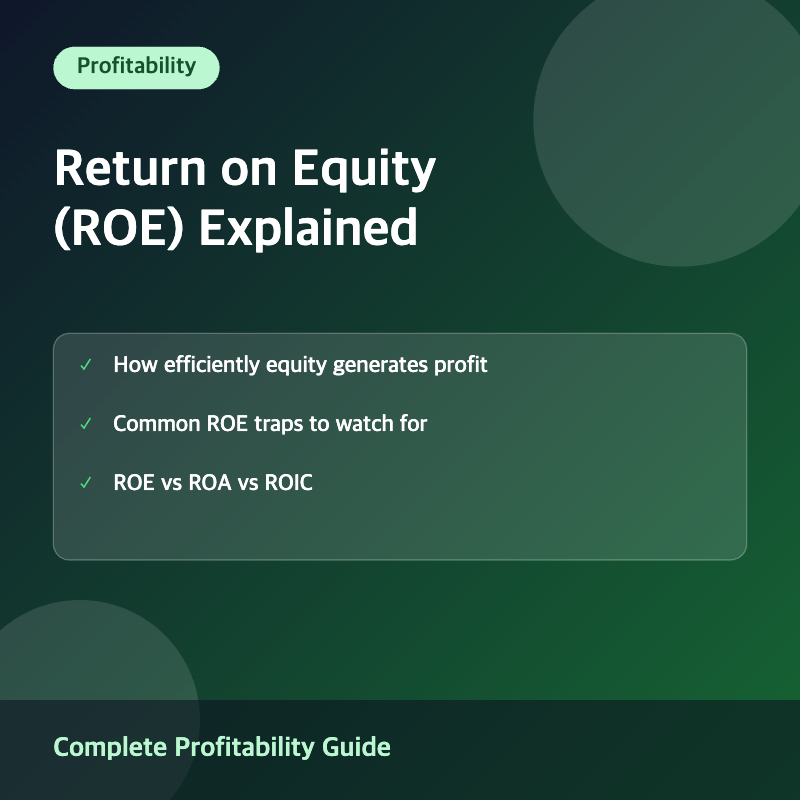
Return on Equity (ROE) is a key profitability ratio that measures how efficiently a company generates profit from the equity shareholders have invested. A higher ROE generally indicates a company is more effective at turning shareholder capital into net income.
How to Calculate ROE
The formula is: ROE = Net Income ÷ Shareholders’ Equity × 100. For example, a company with $150 million in net income and $1 billion in shareholders’ equity has an ROE of 15% ($150M ÷ $1B × 100), meaning it generates $15 of profit for every $100 of equity.
Breaking Down ROE with DuPont Analysis
DuPont analysis decomposes ROE into three components: Net Profit Margin × Asset Turnover × Financial Leverage (Equity Multiplier), allowing investors to see whether a high ROE stems from strong profitability, efficient asset use, or simply higher debt-driven leverage.
ROE vs ROA vs ROIC Comparison
| Metric | ROE | ROA | ROIC |
|---|---|---|---|
| Base measure | Shareholders’ equity | Total assets | Invested capital (equity + net debt) |
| What it captures | Profitability from shareholder capital | Efficiency of asset use | Profitability of core business operations |
| Leverage impact | Can be distorted by high leverage | Relatively less affected by debt | Minimizes capital structure effects |
| Best used for | Shareholder-focused profitability view | Assessing overall asset efficiency | Pure operational profitability comparison |
Common ROE Traps to Watch For
Leverage-Inflated ROE
Companies with high debt levels can show an artificially inflated ROE because their equity base is smaller, not necessarily because the underlying business is more profitable — checking the debt-to-equity ratio alongside ROE is essential to distinguish genuine profitability from leverage effects.
The Impact of Share Buybacks on ROE
When a company repurchases and retires shares, its equity base shrinks, which can push ROE higher even without any improvement in actual net income — investors should distinguish ROE gains driven by real earnings growth from those driven purely by a shrinking equity denominator.
Practical Applications of ROE
Comparing Across Peers and Over Time
ROE is most meaningful when compared to industry peers or tracked over several years for the same company, since a consistently high ROE relative to competitors often signals a durable competitive advantage.
Warren Buffett’s ROE Benchmark
Legendary investor Warren Buffett is well known for favoring companies that sustain an ROE above 15% consistently over long periods, using it as one important indicator of a high-quality business with a durable moat.
Frequently Asked Questions
Is a high ROE always a sign of a good company?
Not necessarily. A high ROE can result from excessive leverage or share buybacks rather than genuine operational improvement, so it should always be checked alongside the debt-to-equity ratio and earnings quality.
How should I interpret ROE for an unprofitable company?
A company with negative net income will show a negative ROE, indicating it is destroying shareholder value rather than generating returns from equity — though extremely small equity bases can also produce misleadingly extreme figures.
Where can I find a company’s ROE?
Most brokerage platforms and financial data providers display ROE directly, or it can be calculated using net income and shareholders’ equity figures found in a company’s financial statements.
How is ROE related to the P/B ratio?
Companies with higher ROE tend to command a premium price-to-book (P/B) ratio, since investors are generally willing to pay more per dollar of book value for more profitable use of equity capital — comparing both together helps assess relative valuation.
Key Takeaways
ROE measures how efficiently a company turns shareholder equity into profit, and DuPont analysis helps break down what’s driving that number — margins, asset efficiency, or leverage. Because leverage and share buybacks can artificially inflate ROE, it should always be analyzed alongside the debt-to-equity ratio and earnings quality rather than in isolation. This article is for informational purposes only and does not constitute investment advice.

QuantPro: AI Finds the Trade Before You Do
From AI-powered chart analysis to real-time market intelligence — everything a serious investor needs, in one platform.
- Automated AI chart analysis with precision trend timing
- Bull Radar: real-time visualization of geopolitical & economic shifts
- Live market-moving news and insights, curated for you
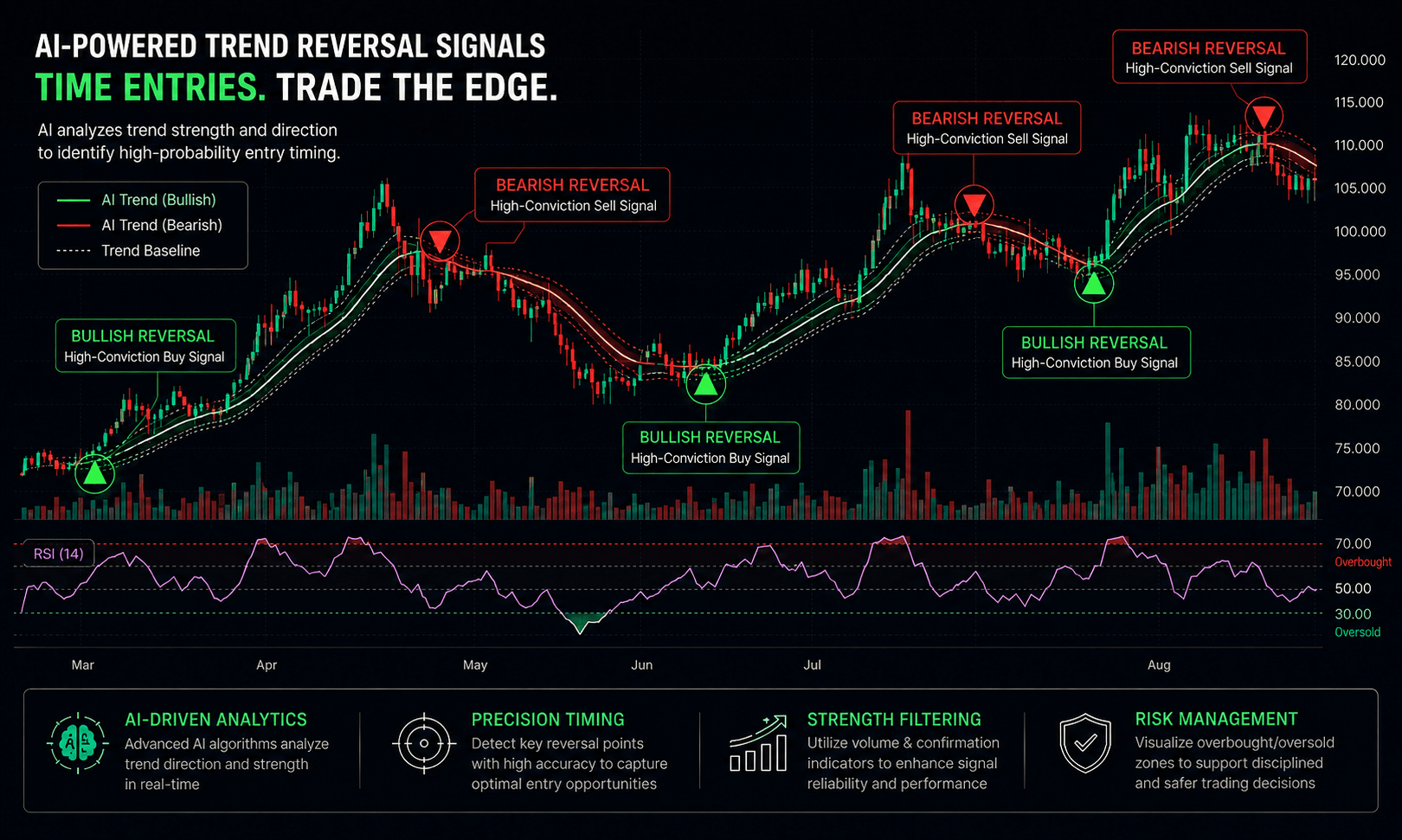
Bull Wave / Bear Wave Forecast Model
Engineered to help you read market direction and momentum faster than the crowd.
- Instantly separate bullish momentum from bearish pressure
- Pinpoint high-probability entry zones with confidence
- Chart signals clear enough for beginners, sharp enough for pros
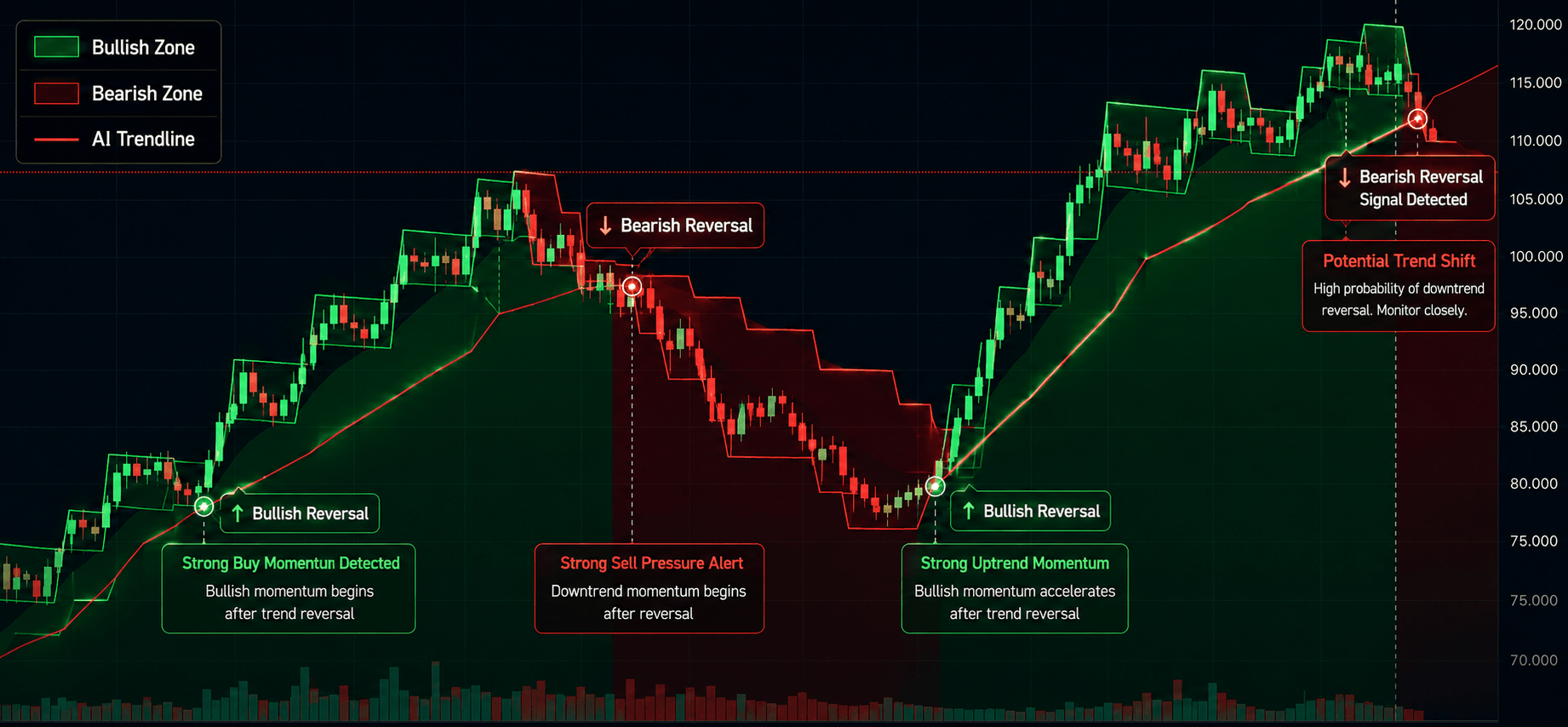
Winning Pattern Detection
Instantly surfaces the high-probability setups that repeat across the charts — a trusted edge for timing your entries and exits.
- Spot momentum building in real time
- Catch trend-reversal points before they break
- Built for active traders who need results, not theory

AI Live Economic Dashboard
AI analyzes real-time market data — turning complex, global investment flows into clear insight in seconds.
- Track global stock markets in real time
- See exactly which assets are strong — and which are fading
- Watch how geopolitical events move the markets
About the Author